
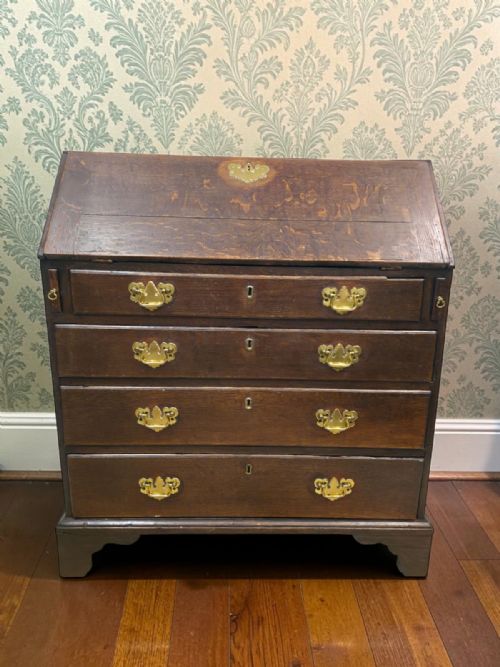
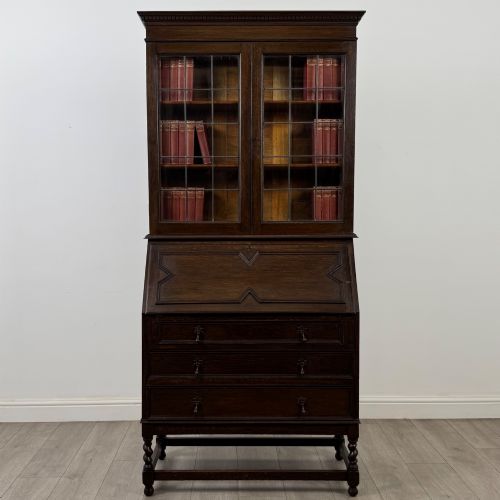
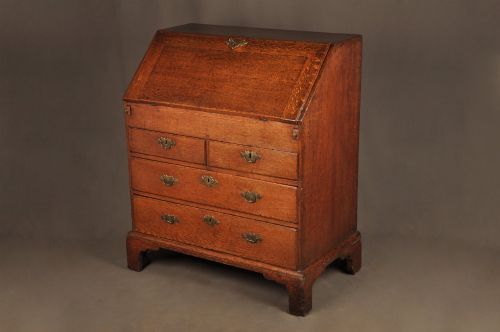
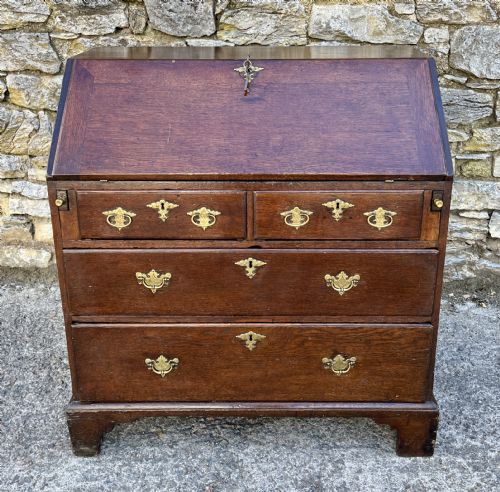
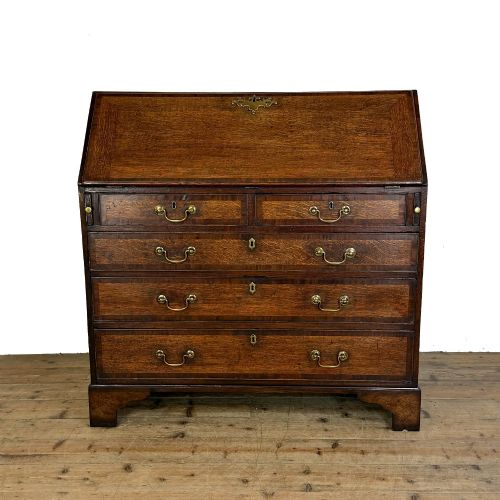

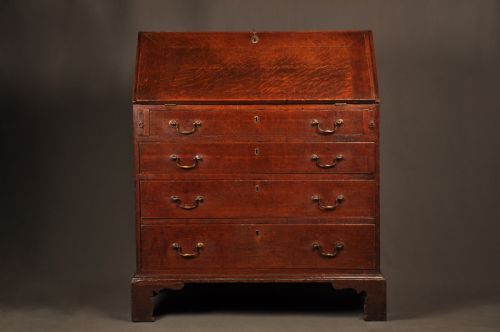

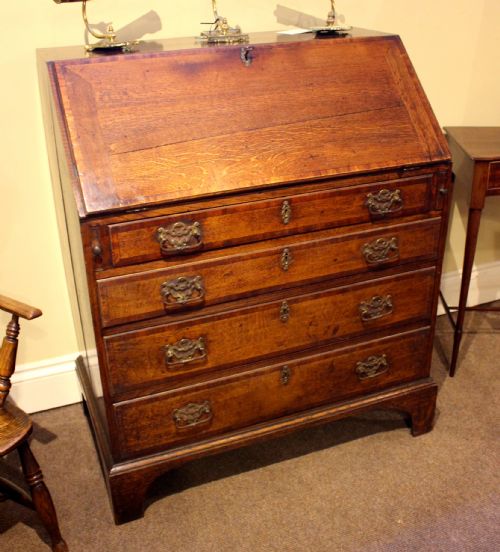


Georgian Oak Slant Desk
A georgian oak slant desk is a functional writing cabinet designed for storage and correspondence, built to last generations.
Georgian Oak Slant Desk
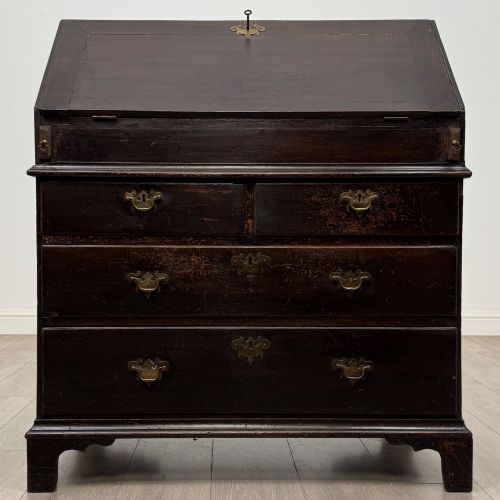
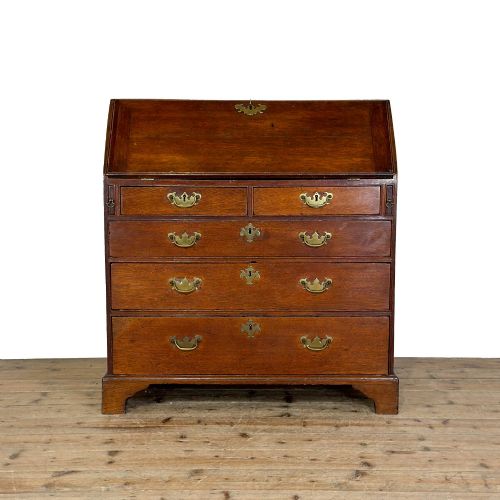
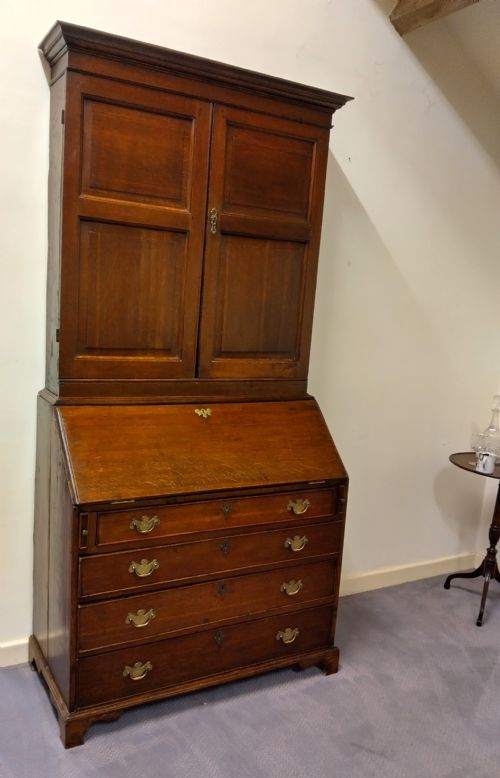
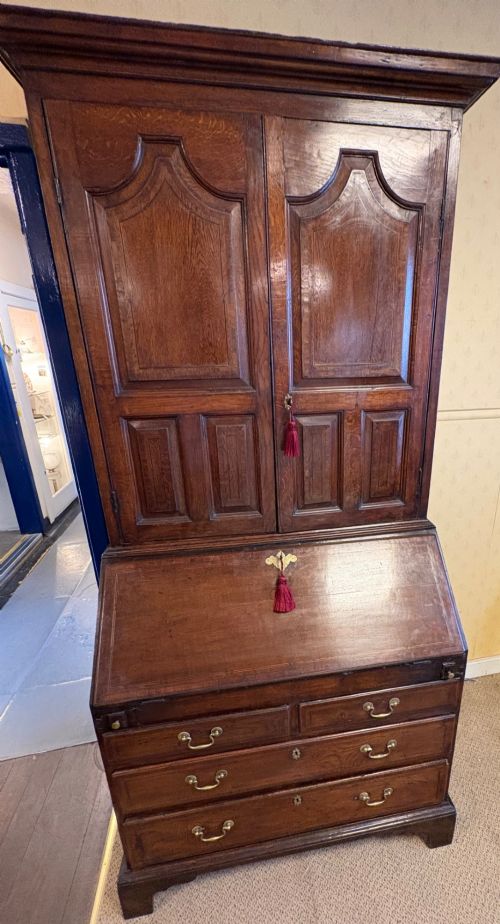
A georgian oak slant desk centres on a fall-front writing flap that opens to reveal a fitted interior with small drawers and pigeonholes. These pieces span the eighteenth century and the Georgian period, appearing in standard bureau forms as well as taller bureau bookcases. Buyers meet various examples ranging from vernacular tables to fitted cabinets with stepped interiors and secret drawers.
The material palette is predominantly oak, sometimes paired with mahogany crossbanding, pollard oak, or wood inlay, and fitted with brass handles and iron hinges. Certain pieces include glass doors on upper bookcase sections or leather writing inserts within the fall-front surface. Construction styles reflect regional cabinetmaking traditions alongside later revivals.
How They Were Made
Cabinetmakers constructed these writing furniture items primarily using solid oak timbers, applying crossbanding and wood inlay for subtle surface contrast. Interiors often utilised smaller drawer boxes with secret compartments, secured by brass locks and supported by iron hardware.
Joinery techniques relied on traditional framing and panel construction, accommodating timber movement across seasonal temperature shifts. Surfaces finished with polish or wax, while secondary woods and brass pull handles completed the interior and exterior detailing.
Listings feature oak material predominantly, alongside mahogany, brass, glass, iron, leather, and pollard oak.
What Varies in Quality
Quality rests on the selection of figured timber, the crispness of internal drawer joinery, and the proportion of the fall-front slope when closed. Superior examples display carefully matched grain patterns on the writing flap and well-organised stepped interiors without unnecessary alteration.
Condition varies according to the integrity of the original stand or bracket feet, the retention of brass hardware, and the presence of later adaptations such as fitted television spaces or replacement panels.
The Georgian Oak Slant Desk Glossary
- Bureau
- A writing cabinet featuring an angled fall-front flap that drops to create a desk surface over a bank of drawers. It typically conceals a fitted interior with pigeonholes and small compartments.
- Fall-front
- The hinged sloping board on a desk or bureau that opens downward to provide a flat writing surface. When closed, it conceals the inner compartment and protects correspondence.
- Crossbanded
- A decorative border technique where thin strips of veneer are applied across the grain of the primary wood. This method creates a contrasting frame around drawer fronts or writing flaps.
- Stepped interior
- An arrangement of internal drawers and pigeonholes arranged in ascending tiers within a bureau. It provides compartmentalised storage for letters and documents.
Georgian Oak Slant Desk: Frequently Asked Questions
What is a slant desk?
A slant desk is a writing cabinet featuring an angled fall-front writing surface that drops down for correspondence.
Inside, the desk typically contains a stepped interior with small drawers and pigeonholes for organising documents and stationery.
How do I date a bureau?
Dating relies on examining construction methods, timber choice, hardware style, and internal configuration. Eighteenth-century pieces often display hand-cut dovetails and vernacular oak framing.
Later revival pieces or altered examples show different secondary woods, machine-cut elements, or adjusted stands that distinguish them from period originals.
Where were these desks used?
These desks served primarily in studies, parlours, and bedchambers for private correspondence and household accounts.
The lockable fall-front protected sensitive papers and financial records from general view.