




Oak Serving Cart
An oak serving cart brings mobility and solid timber character to a room, offering practical tiers and trays for entertaining.
Oak Serving Cart
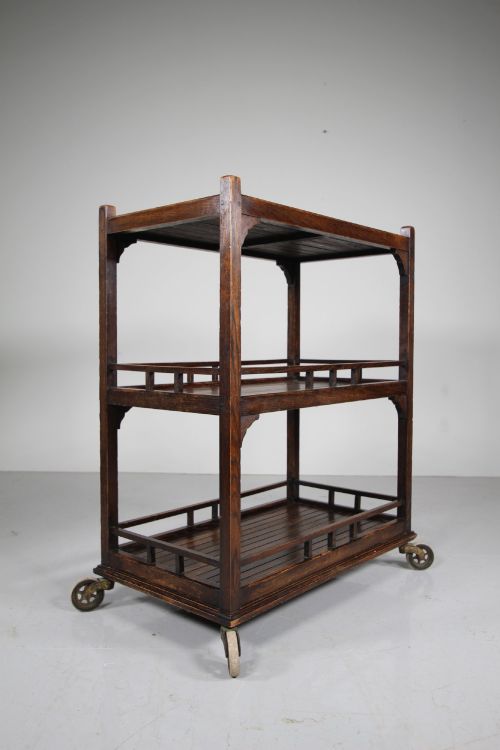
When buyers search for an oak serving cart, they encounter a range of moveable furniture designed for hospitality and refreshment, spanning tea trolleys, bar carts, side tables, and etageres. These pieces date across several distinct eras, incorporating Victorian, Edwardian, and mid-twentieth-century examples.
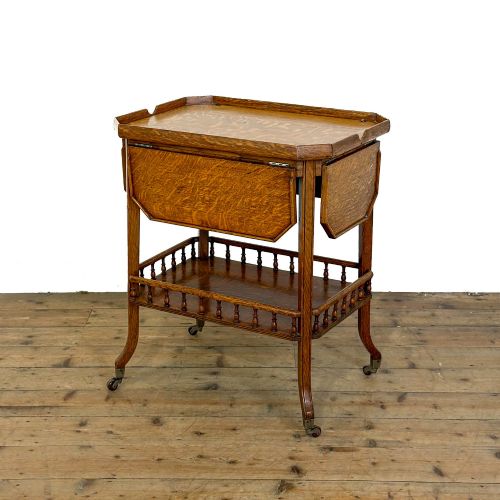
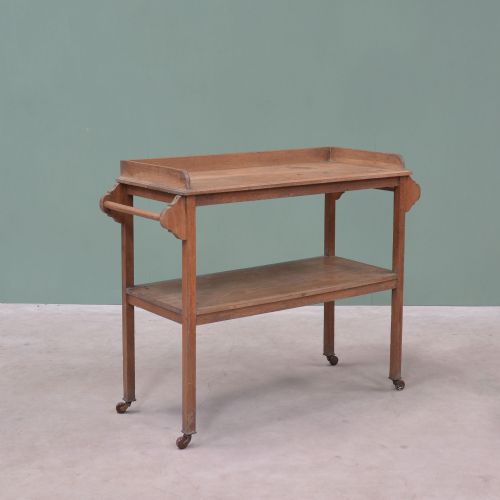
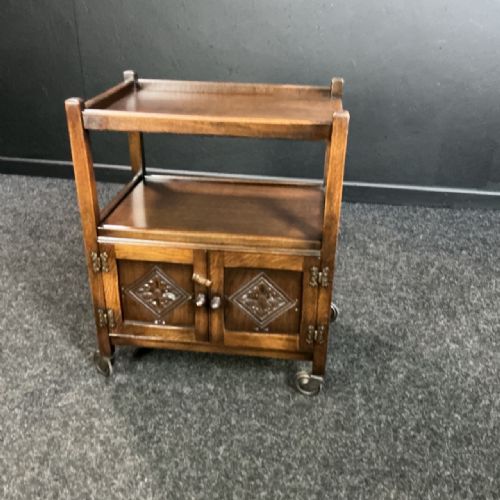
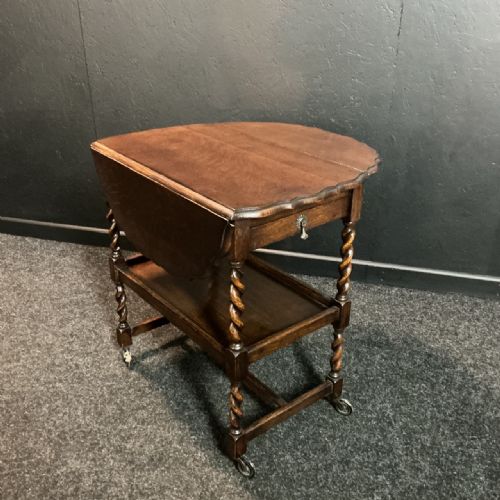
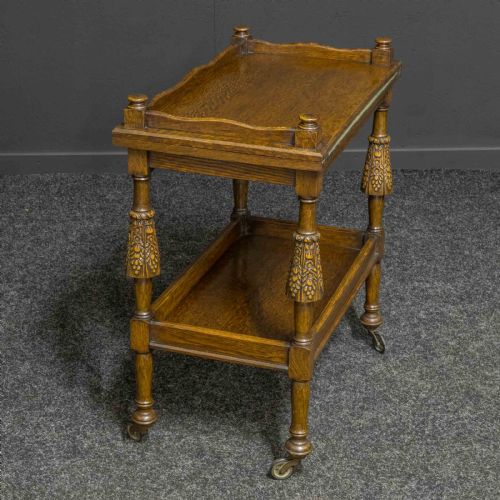
The most common forms on this page include tea trolleys and tray tables featuring multiple levels, often paired with wheels or castors for easy transport. Many of these items include removable trays, folding tops, or dropleaf surfaces.
Origins and styling lean heavily towards English Country and Jacobean Revival traditions, utilising sturdy timber construction built to serve domestic needs over generations.
Materials and construction
Construction relies primarily on oak, paired with functional metal, brass, and iron hardware for wheels, hinges, and castor assemblies. Later mid-century pieces occasionally introduce plywood alongside solid timber elements.
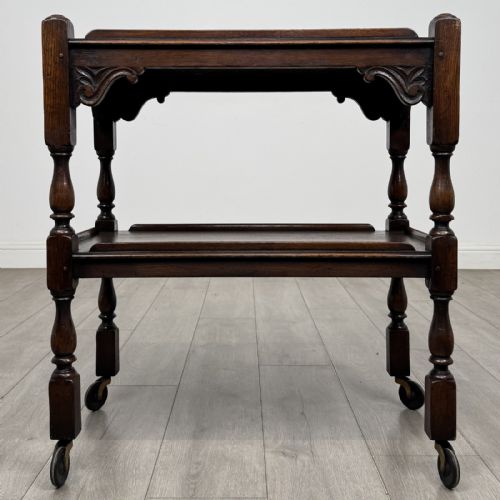
Joinery methods support everyday movement and weight bearing, while decorative turning techniques like barley twist legs appear frequently across Edwardian and nineteen-twenties models.
Oak Serving Cart Retail Price Guide 2026
Typical asking prices for oak serving cart among the pieces listed under this phrase on Sellingantiques today, from the lower quarter to the upper quarter. They describe what is for sale here now, not the wider market.
Some versatile examples double as card tables, proving that Victorians took their after-tea entertainment very seriously indeed.
Judging quality in oak serving carts
Quality reveals itself in the choice of timber and the precision of the turning, particularly in details like barley twist uprights and secure frame joinery. Superior examples maintain structural rigidity even when fitted with movable elements such as dropleaves and lift-off trays.
The integration of original metal hardware, castors, and matching removable trays distinguishes finer specimens from standard utility items.
The Oak Serving Cart Glossary
- Barley twist
- A decorative turning technique resembling a spiral rope, frequently seen on table legs and trolley uprights from the Edwardian period and the nineteen-twenties.
- Dropleaf
- A table top with hinged flaps that can be folded down to save space or raised to expand the surface area during service.
- Etagere
- A piece of furniture consisting of a set of open shelves for displaying or serving items, sometimes adapted with wheels for mobility.
- Castor
- A small wheel or set of wheels mounted on a swivel at the base of a leg, allowing the trolley to be easily rolled across a floor.
Oak Serving Cart: Frequently Asked Questions
What is an oak serving cart used for?
These pieces function primarily as mobile surfaces for serving afternoon tea, drinks, or meals within a home. Their multiple tiers allow users to transport glassware, bottles, and dishes easily between rooms.
Beyond hospitality, many owners utilise them as static side tables, card tables, or display stands when entertaining guests is finished.
Are the trays on these trolleys removable?
Many examples featured on this page include lift-off or removable trays integrated into the top tier. This design allowed users to carry food or drinks directly from the kitchen before placing the tray back onto the wheeled frame.
Buyers should examine the specific titles and descriptions to confirm whether a particular model includes a detachable surface or a folding top.
How do I maintain an oak serving cart?
Routine care involves dusting the timber surfaces gently and avoiding excessive moisture on the oak finish. Using coasters and placemats protects the wood from liquid rings and heat marks during daily use.
Periodically checking the tightness of joints and lubricating metal castors ensures the trolley remains stable and easy to wheel across floors.