



Oak Drinks Cart
An oak drinks cart brings mobility and character to a room, offering practical surface space combined with the warmth of solid timber.
Oak Drinks Cart
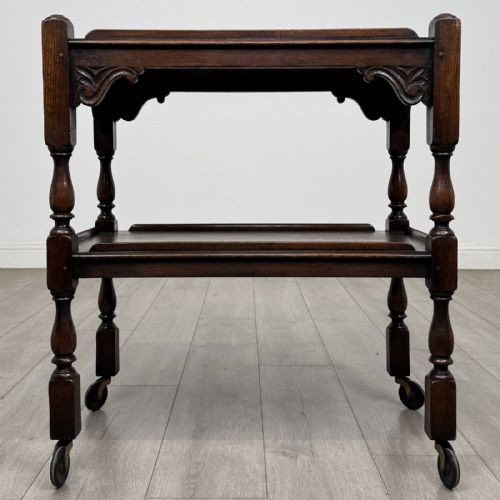
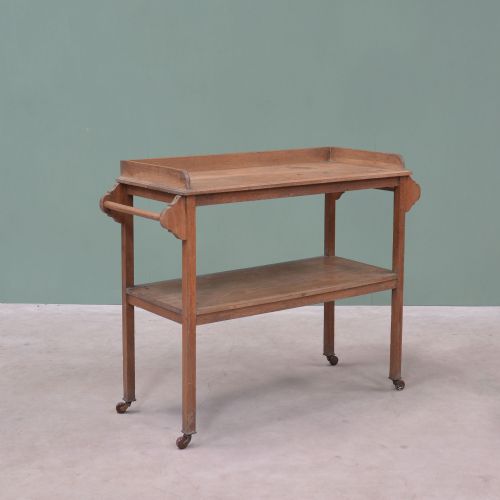
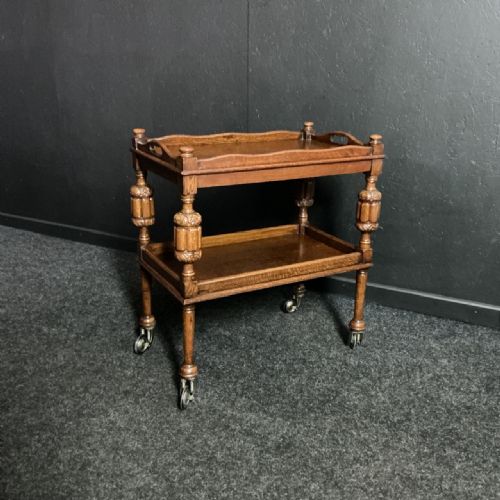
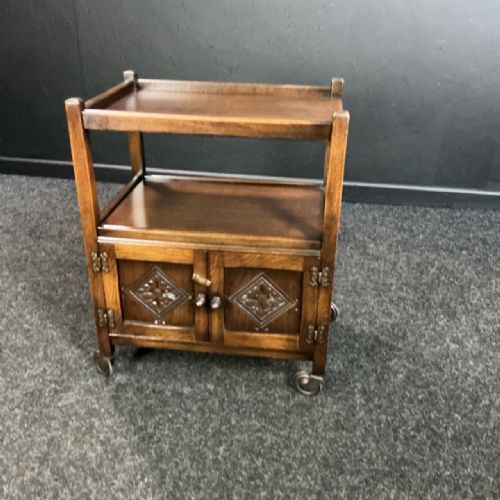
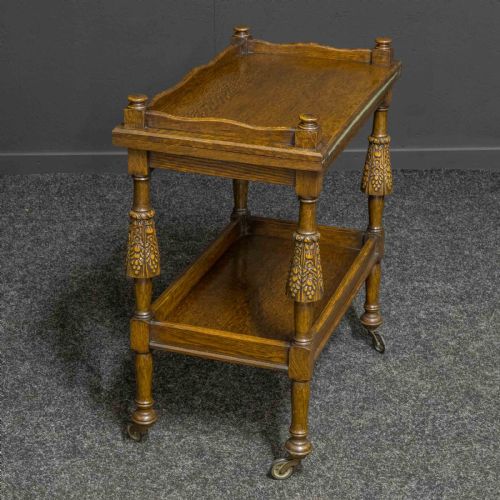
An oak drinks cart is a functional piece of furniture designed for serving and moving refreshments, appearing in forms such as tea trolleys, tray tables, serving trolleys, and bar carts. Buyers browsing this selection will most commonly encounter versatile two-tier models, serving trolleys, and tea trolleys equipped with wheels.
The pieces available span several distinct periods, including Victorian, Edwardian, nineteen-twenties, and nineteen-sixties designs. Styles range from English Country and Jacobean Revival to Edwardian utility, reflecting how these serving pieces evolved across generations of domestic life.
How they were made
Construction relies primarily on oak, utilised alongside supporting elements of brass, iron, and metal hardware. Workshops shaped the timber into structural frames, drop leaves, and removable trays designed for everyday hospitality.
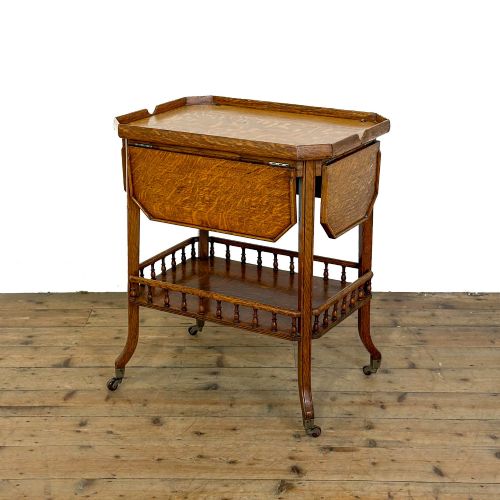
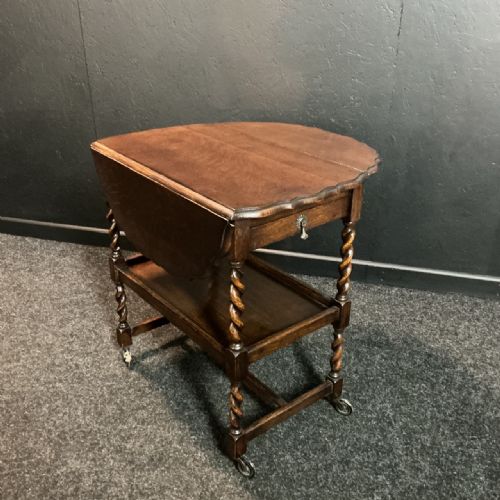
Detailing often includes turned woodwork, such as barley twist legs, alongside folding mechanisms and wheeled mountings. These techniques combined stability with mobility, allowing carts to transition smoothly between a static side table and an active serving trolley.
Oak Drinks Cart Retail Price Guide 2026
Typical asking prices for oak drinks cart among the pieces listed under this phrase on Sellingantiques today, from the lower quarter to the upper quarter. They describe what is for sale here now, not the wider market.
Some carts double quietly as card tables, proving that Victorians took their post-tea entertainment with utmost seriousness.
What varies in quality
The choice of timber grain and the execution of joinery differentiate simpler utilitarian pieces from more ornate revival styles. Superior execution ensures that moving the trolley remains balanced and steady regardless of the weight placed upon its tiers.
The Oak Drinks Cart Glossary
- Barley twist
- A decorative turning technique resembling a twisted rope, frequently seen on the legs of Edwardian and nineteen-twenties trolleys. This style adds visual movement to the upright supports.
- Dropleaf
- A hinged tabletop section that can be raised to expand the surface area or lowered when space is constrained. It allows the furniture to adapt to different room layouts.
- Etagere
- A set of open shelves for displaying or serving items across multiple levels. In this context, it functions as a multi-tier trolley.
- Butlers tray
- A portable wooden tray, sometimes fitted with folding stands or handles for carrying provisions. Removable versions allow the top surface to lift off independently.
Oak Drinks Cart: Frequently Asked Questions
What is an oak drinks cart used for?
These pieces were originally designed for serving afternoon tea, refreshments, and hosting guests in domestic entertaining spaces. Today, they serve equally well as mobile cocktail stations or accessible side tables.
Their tiered structure and wheels allow them to move easily between rooms depending on where surface space is required.
How do I date an oak tea trolley?
Dating relies on observing stylistic markers and construction materials recorded across the Victorian, Edwardian, and mid-century periods. For instance, barley twist legs and folding top mechanisms frequently point towards Edwardian and nineteen-twenties production.
Simpler lines and alternative materials like plywood often indicate later mid-century manufacturing dates.
Are the trays on these trolleys removable?
Many examples feature lift-off trays or folding tops designed to detach from the rolling base frame. This practical feature allowed servants or hosts to carry provisions directly to guests without moving the entire trolley.
Checking the listing details confirms whether a specific model includes a removable tray or a fixed surface.
How do I incorporate a cart into my home?
An oak cart fits naturally into living rooms, dining spaces, or hallways as a stationary accent table until hospitality demands its mobility. Placing glassware, bottles, or books upon its tiers makes practical use of the vertical storage.
The warm tones of the timber complement both traditional interiors and mixed modern decor.