


Oak Server with Mirror
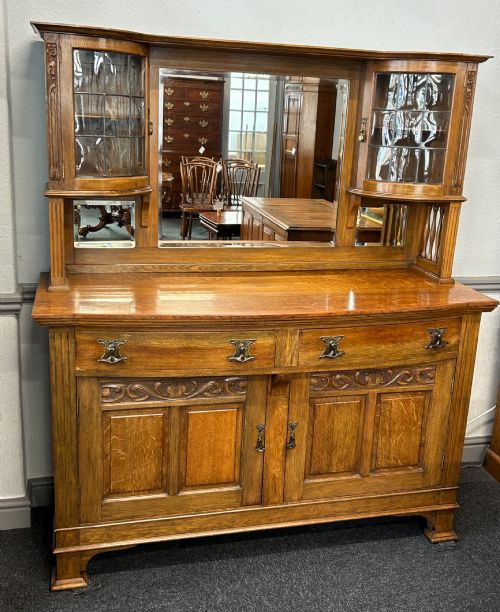
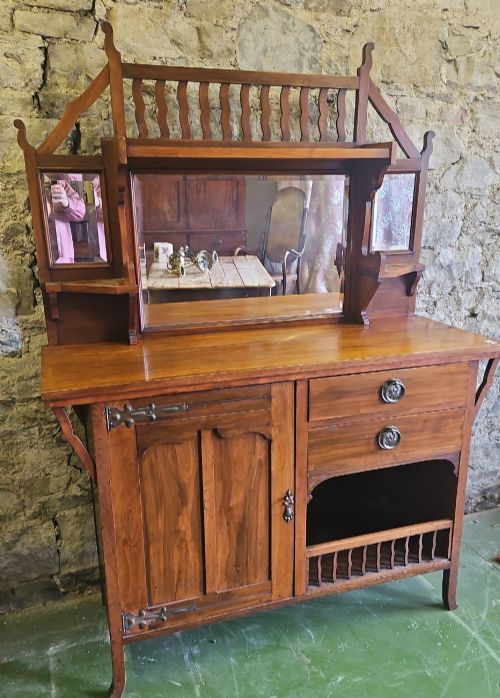
An oak server with mirror combines heavy timber storage with functional glass, appearing across Victorian, Edwardian, and later periods.
Oak Server with Mirror
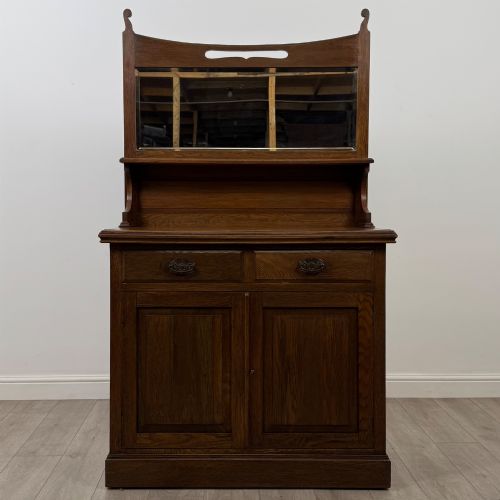
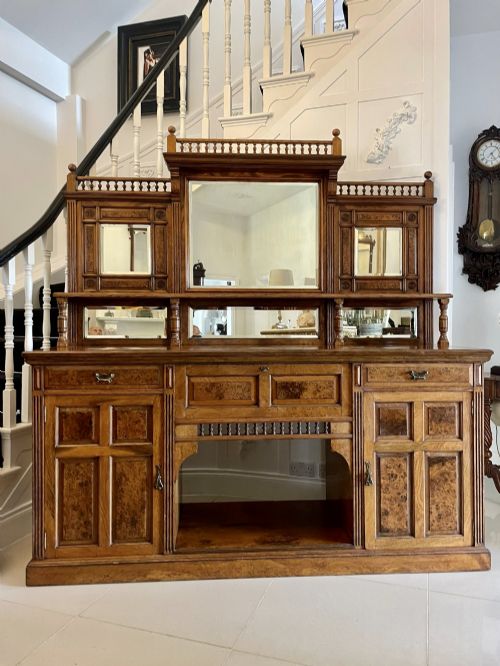
An oak server with mirror serves as a substantial dining room piece, functioning simultaneously as a sideboard and a display unit through its integrated glass back. Buyers find these items spanning Victorian, Edwardian, and early twentieth-century periods, capturing styles from robust revivalism to simpler vernacular forms.
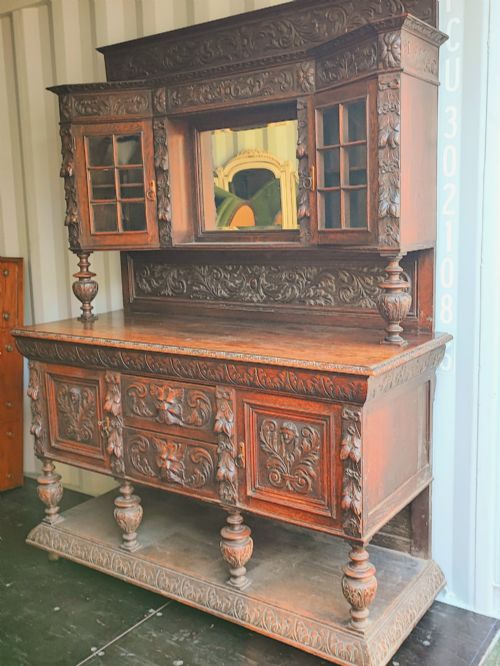
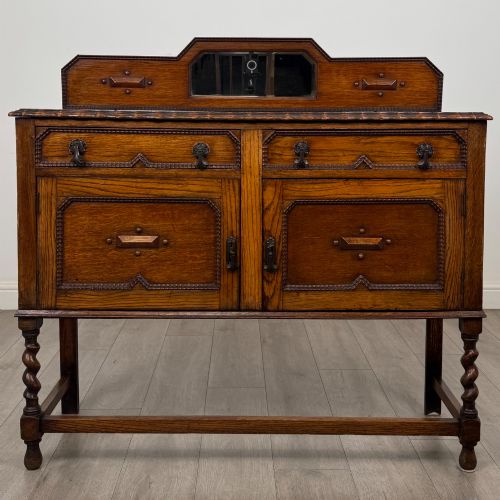
The most common examples on this page are heavy oak sideboards fitted with mirror backs, dating from the late nineteenth century onwards. These forms integrate cupboards and drawers beneath a standing mirror panel, often accented with carved detailing or barley twist supports.
How they were made
Cabinet makers utilised solid oak and pollard oak veneers over framing, constructing sturdy carcasses designed to endure heavy household use. Timber surfaces received hand-carved ornamentation, panel mouldings, and applied decorative turnings such as barley twists.
Fitted glass plates form the mirror backs, secured into rebated wooden frames above the main sideboard top. Brass hardware, including handles and drawer pulls, completes the construction alongside occasional ceramic components.
Oak Server with Mirror Retail Price Guide 2026
Typical asking prices for oak server with mirror among the pieces listed under this phrase on Sellingantiques today, from the lower quarter to the upper quarter. They describe what is for sale here now, not the wider market.
Listings feature oak and pollard oak items spanning the Victorian era, the Edwardian period, and the nineteen-twenties, incorporating brass and ceramic elements.
What varies in quality
Quality rests in the selection of timber figures, particularly the use of highly figured pollard oak versus plain, utilitarian boards. Deeper, crisper hand-carving distinguishes superior examples from mechanical or flat surface decoration.
Structural integrity of the mirror frame and the clarity of the original mirror glass set the best pieces apart from later replacements. Cabinet joinery methods, such as dovetailing in the drawers, indicate the standard of workshop execution.
The Oak Server with Mirror Glossary
- Mirror back
- A wooden sideboard featuring an integrated upright mirror plate attached to the rear of the top surface. This element reflects light and displays decorative objects.
- Pollard oak
- Timber taken from trees that have been pollarded, producing a distinctive clustered grain pattern with small knots. Cabinet makers utilised this timber for decorative veneer panels.
- Barley twist
- A turned wooden furniture leg or support resembling the spiral form of a barleycorn. This decorative technique appears frequently on nineteenth and twentieth-century supports.
- Jacobean Revival
- A nineteenth-century design style emulating seventeenth-century English furniture through heavy proportions, geometric moulding, and strapwork carving. Pieces in this style utilise dark oak and deep relief work.
Oak Server with Mirror: Frequently Asked Questions
How do I date an oak server?
Dating relies on observing stylistic markers, hardware, and timber preparation methods. Victorian examples often feature heavy carving and revival motifs, whereas Edwardian pieces tend toward lighter constructions.
Later items from the nineteen-twenties introduce specific turnings like barley twists alongside simpler framing. Examining construction details inside the drawers helps confirm the manufacturing era.
Where should I place a mirror back sideboard?
These pieces suit dining rooms or large hallways where the mirror can reflect natural light and open up the surrounding space. Ensure the wall behind the sideboard can support the height of the superstructure.
Positioning the item away from direct sunlight protects the oak finish and prevents damage to the silvering on the mirror glass.
Are these pieces heavy?
Solid oak construction combined with thick mirror glass makes these items exceptionally heavy and difficult to move alone. Most pieces require two people for safe relocation and positioning within a room.
The superstructure containing the mirror often detaches from the lower sideboard base to simplify transport through doorways.