



Barley Twist Sideboard
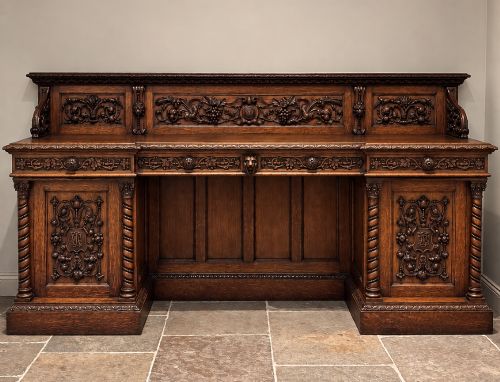
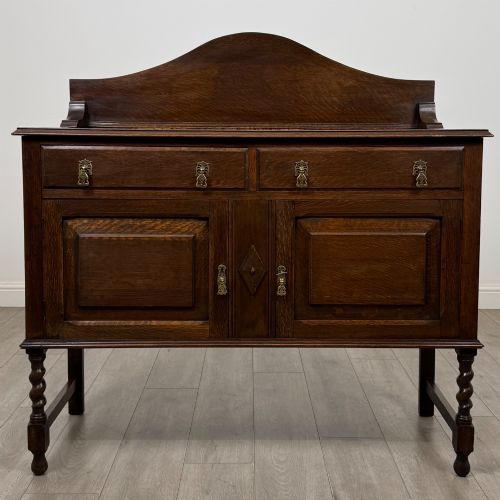
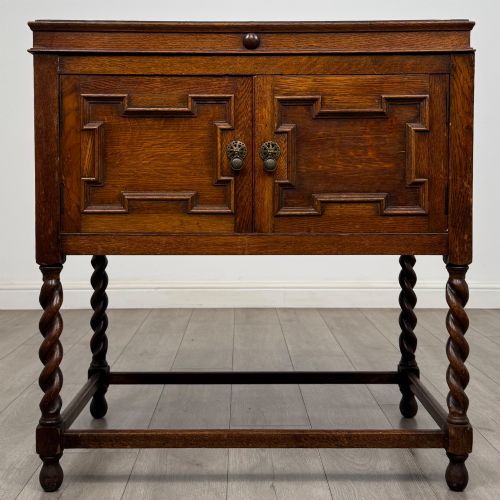
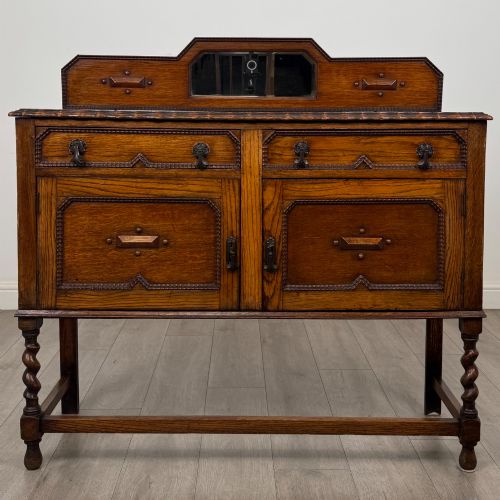
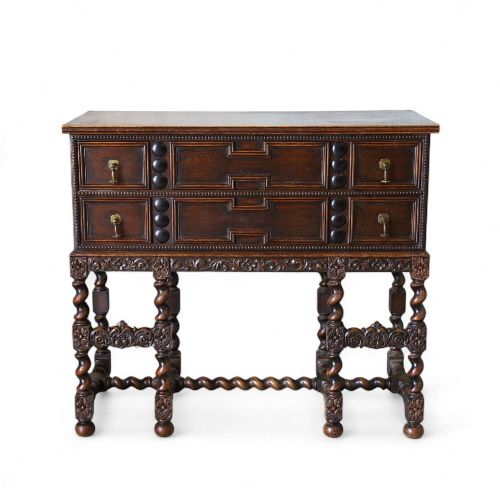
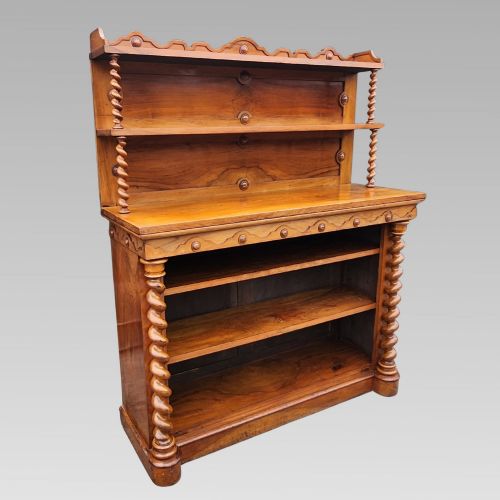
A barley twist sideboard brings solid Victorian and Edwardian timberwork into a dining room through turned legs and carved doors.
Barley Twist Sideboard
A barley twist sideboard is a substantial dining room storage piece defined by its distinctive rope-turned uprights and wooden construction. When you search for a barley twist sideboard, you encounter items predominantly built from oak, walnut and mahogany spanning the nineteenth and twentieth centuries.
The pieces appearing here range from Victorian and Edwardian examples to 1930s Carolean Revival items, alongside related forms like chiffoniers and dressers. Most versions are heavy wooden furniture items designed for serving and storage, featuring cupboards, drawers and display surfaces.
Jacobean Revival and Flemish Renaissance influences frequently appear alongside the signature turned columns, connecting these dining pieces to earlier seventeenth-century design traditions.

What varies in quality
Quality depends upon the depth and crispness of the carved details on the woodwork, separating standard production pieces from finely sculpted examples. The choice of timber also dictates standard, with figured walnut and dense early oak sitting above simpler secondary woods.
The precision of the turned barley twist columns and the solidity of the underlying cabinet construction determine how well the piece survives years of use. Original hardware, intact glass and well-fitted drawers distinguish superior specimens from altered ones.
Barley Twist Sideboard Retail Price Guide 2026
Typical asking prices for barley twist sideboard among the pieces listed under this phrase on Sellingantiques today, from the lower quarter to the upper quarter. They describe what is for sale here now, not the wider market.
The selection includes Jacobean Revival, Flemish Renaissance Revival and Carolean Revival styles.
The Barley Twist Sideboard Glossary
- Barley twist
- A form of woodturning where a column is shaped into a continuous spiral resembling a stalk of barley. This profile appears frequently on the legs and supports of Victorian and Edwardian furniture.
- Chiffonier
- A low sideboard or cabinet featuring enclosed cupboards below, sometimes topped with a small shelf or mirror. These items became popular during the nineteenth century for dining rooms and drawing rooms.
- Carolean Revival
- A nineteenth-century style that imitates the ornate, carved furnishings of the late seventeenth century. Pieces in this manner display rich ornamentation, scrolls and twisted uprights.
- Flemish Renaissance Revival
- An architectural furniture style incorporating heavy relief carving, grotesque masks, and architectural mouldings. It draws inspiration from sixteenth and seventeenth-century continental design.
- Credenza
- A sideboard or display cabinet originally standing against a wall, often fitted with glass doors and decorative columns. These pieces provide surface space for serving and display.
Barley Twist Sideboard: Frequently Asked Questions
How do I date a barley twist sideboard?
Dating relies on timber choice, construction methods, and stylistic revival cues visible across the piece. Victorian examples often display heavier proportions and darker finishes, whereas Edwardian and 1930s items can show lighter golden oak tones.
Hardware styles, drawer linings, and backboards also provide clues to age. Examining the joints and screw types helps distinguish nineteenth-century workshop methods from later twentieth-century production.
What rooms suit a barley twist sideboard?
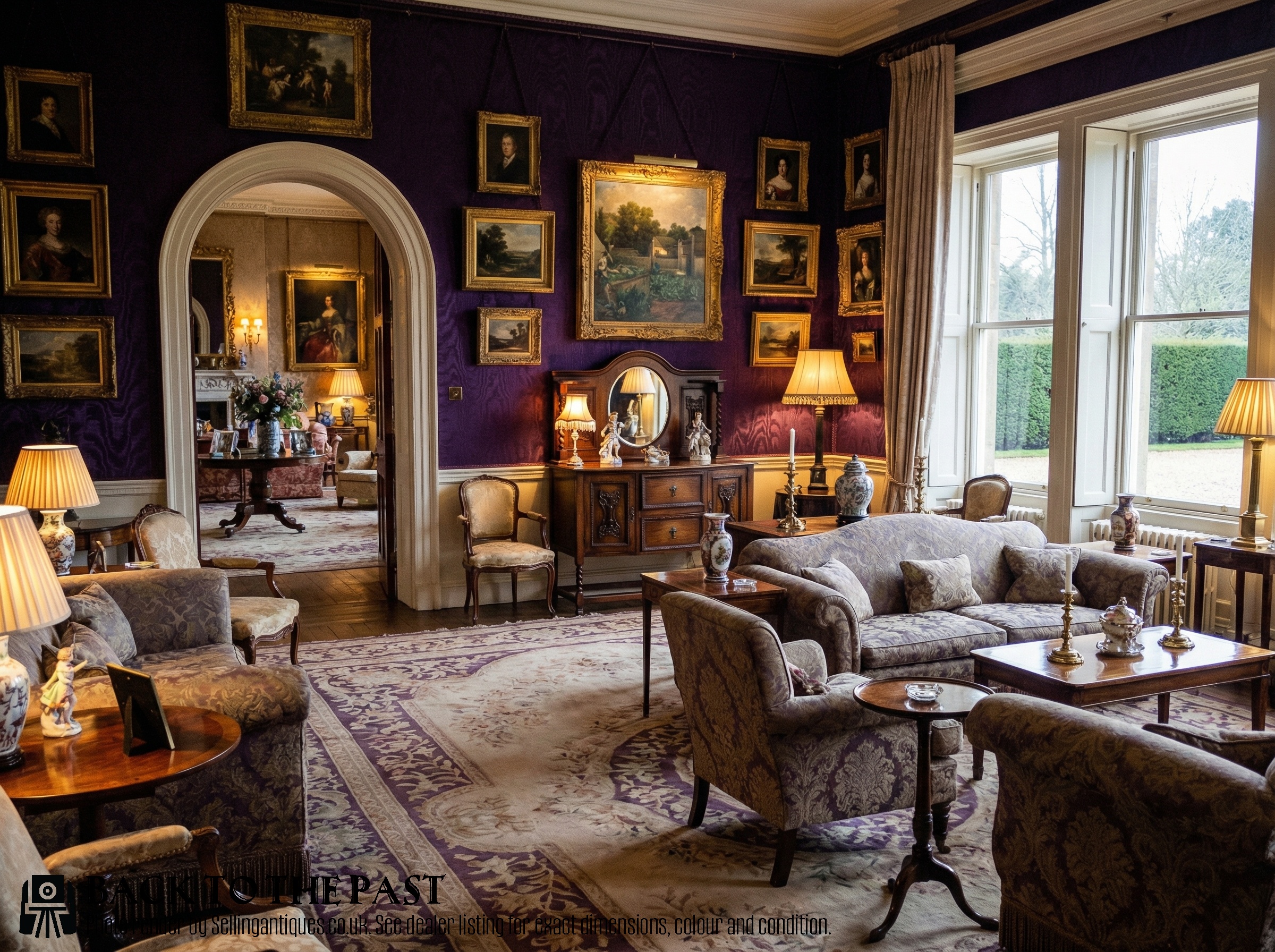
Dining rooms remain the traditional home for these large storage cabinets, serving as surface space for dinnerware and serving dishes. They also find placement in large hallways and living rooms as focal display surfaces.
The substantial timber presence pairs well with traditional and eclectic interiors. Their deep wood tones anchor a room, while glass-fronted or mirrorback variants help reflect light in darker spaces.
How do I care for antique oak furniture?
Maintain antique oak surfaces by dusting regularly with a soft, dry cloth and avoiding modern silicone sprays. Keep timber away from direct heat sources and strong sunlight to prevent wood splitting and finish fading.
Apply a traditional beeswax polish occasionally to nourish the grain and protect the patina. Ensure brass fittings remain clean without using abrasive cleaners that might damage the surrounding wood.
What is a Green Man carving?
A Green Man carving depicts a human face surrounded by or sprouting from foliage, leaves, or vines. This ancient decorative motif appears frequently on nineteenth-century revival furniture and architectural woodwork.
Carvers used this symbol to represent rebirth and the cycle of growth in nature. On sideboards and cabinets, these faces peer out from drawer fronts, friezes, and column capitals.