




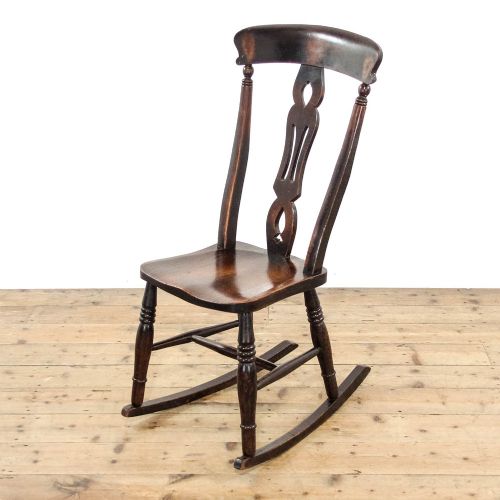
Oak Rocking Chair
An oak rocking chair brings heavy vernacular comfort to a fireside, pairing sturdy native timbers with a soothing motion.
Oak Rocking Chair
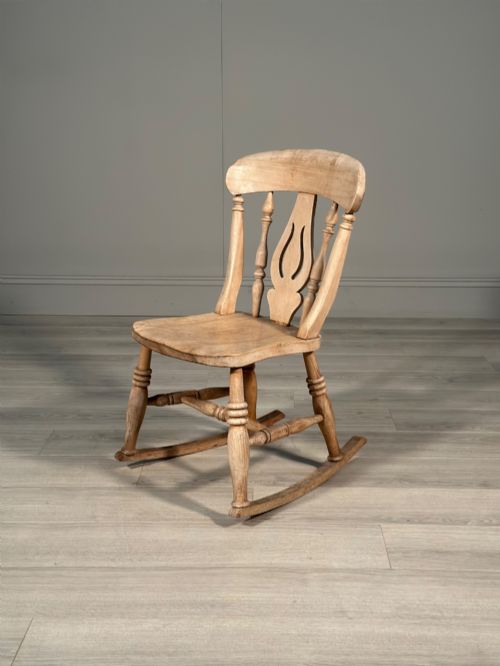
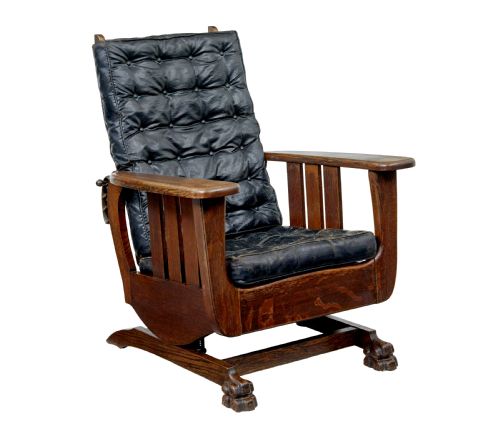
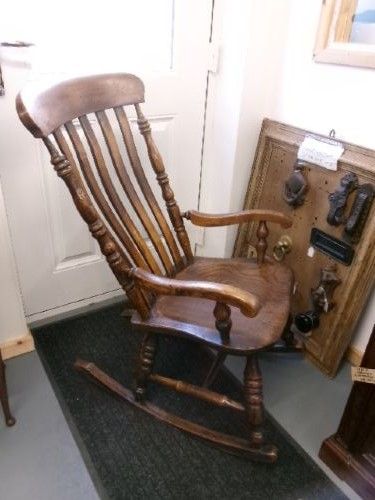
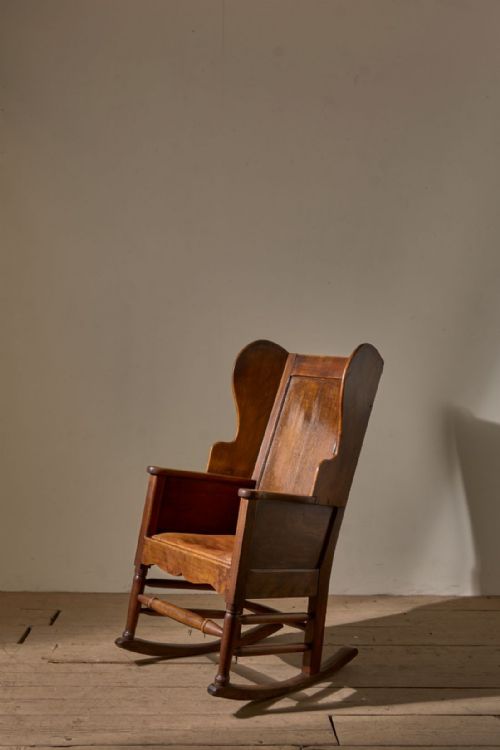
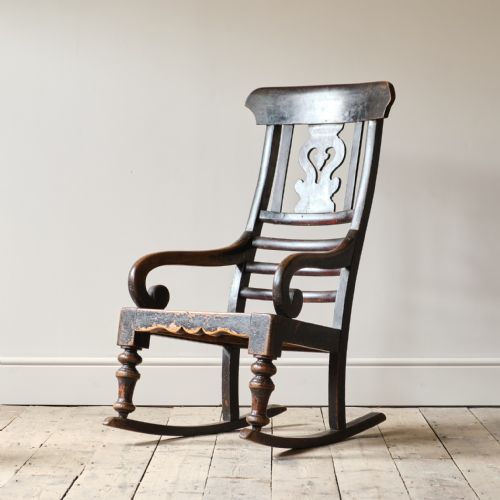
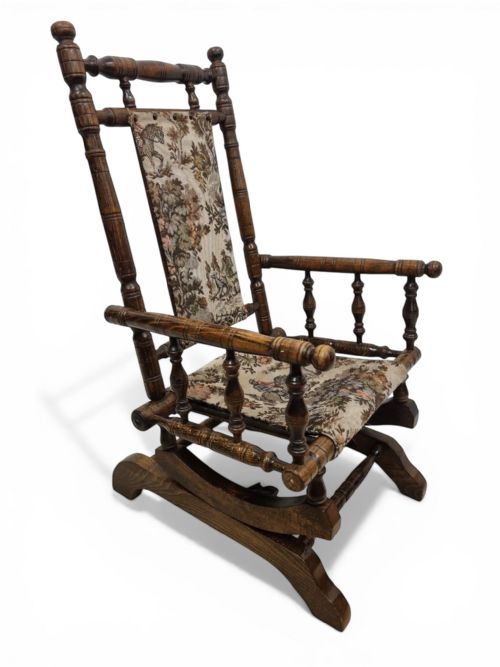
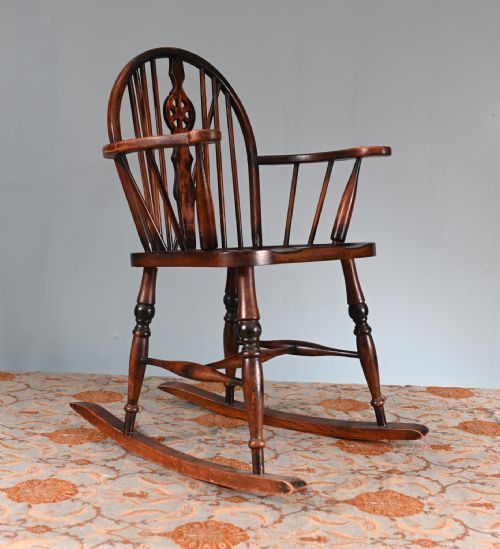
An oak rocking chair is a seating form built for domestic repose, combining a sturdy wooden frame with curved runners that permit gentle motion. You will encounter many regional variations here, ranging from robust farmhouse models to lighter vernacular seating.
Domestic seating of this type served various household roles, from fireside nursing to quiet parlour relaxation, producing adult and smaller child-sized editions alike. The forms remain remarkably honest in their construction, prioritising functional strength and tactile warmth above elaborate ornamentation.
Materials and construction
Makers built these frames using native hardwoods, pairing durable oak with flexible elm for seats and beech or ash for turned spindles and structural stretchers. This mix of timber utilised the specific mechanical strengths of each wood, ensuring the high-stress joints of a rocking base endured decades of constant movement.
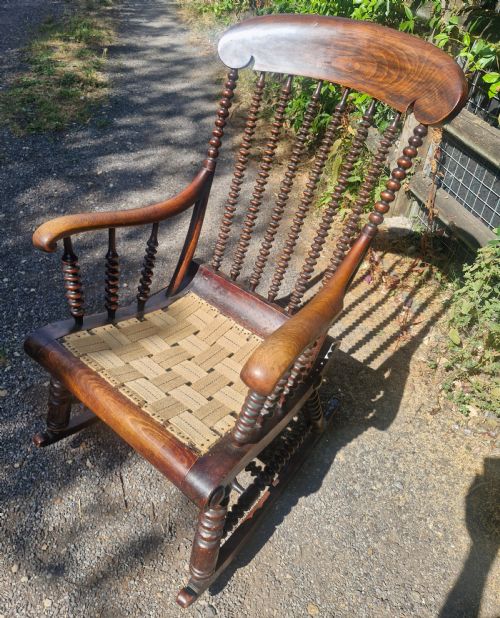
Joinery methods relied heavily on traditional pegged mortise and tenon frames, steam-bent components for curved armrests and crest rails, and turned elements shaped on foot-powered lathes. Seats were frequently carved from solid timber blocks into saddle shapes, or woven from natural rush to provide supportive seating platforms.
Oak Rocking Chair Retail Price Guide 2026
Typical asking prices for oak rocking chair among the pieces listed under this phrase on Sellingantiques today, from the lower quarter to the upper quarter. They describe what is for sale here now, not the wider market.
Listings feature regional variations from Yorkshire and Wales alongside Arts and Crafts iterations.
Judgements of quality
Quality in these seats rests on the harmony of proportions, the integrity of the timber selection, and the retention of original structural surfaces. Examples displaying deeply figured grain, well-turned spindles, and minimal timber replacement stand distinctly apart from heavily altered or fatigue-damaged chairs.
The refinement of the rocker profile dictates much of the physical merit, ensuring a balanced, smooth motion rather than an abrupt tilt. Superior craftsmanship shows in tight, uncompromised joints and untouched patination built up through centuries of handling.
Ed Gardiner·Liberty s
The Oak Rocking Chair Glossary
- Lambing chair
- An enclosed high-backed armchair featuring solid wooden wings designed to shield the sitter from cold draughts near an open hearth.
- Windsor chair
- A distinct seating construction where the legs, back spindles, and arms are wedged directly into a thick, sculpted wooden seat plank.
- Ladder back
- A traditional chair frame featuring multiple horizontal arched slats between the rear upright posts.
- Bobbin framing
- A decorative turning technique producing a series of rounded wooden beads resembling bobbins along the upright supports.
- Vernacular furniture
- Domestic objects made by local rural craftsmen using regional traditions and readily available native materials, rather than following urban stylistic dictates.
Oak Rocking Chair: Frequently Asked Questions
How do I date an old rocking chair?
Dating relies on observing construction details, tool marks left by manufacture, and stylistic traits associated with specific periods like the Georgian or Victorian eras. Examining the wear patterns on the wooden runners also offers clues regarding the age of the movement.
Changes in turning styles and assembly methods help narrow down the decade of production. Comparing the piece to documented regional vernacular designs provides further chronological context.
Were these chairs originally made as rockers?
Many traditional country chairs were constructed as static armchairs and fitted with wooden rockers at a later date to suit changing domestic fashions. Inspecting the base and the junction between the legs and runners reveals whether the rocking function is original.
Add-on rocking mechanisms often leave distinct fastener holes or mismatched timber patination around the feet. Genuine factory or workshop rockers display integrated design curves planned from the initial stage of construction.
How should I care for antique oak furniture?
Maintaining antique oak involves keeping the timber away from direct heat sources and sudden humidity shifts that cause wood to split. Regular dusting with a dry, soft cloth preserves the natural surface sheen without building up heavy chemical residues.
Applying traditional beeswax occasionally helps nourish dry timber and protects the historic patina. Avoid modern silicone sprays, which can penetrate porous historical finishes and damage the wood over time.