




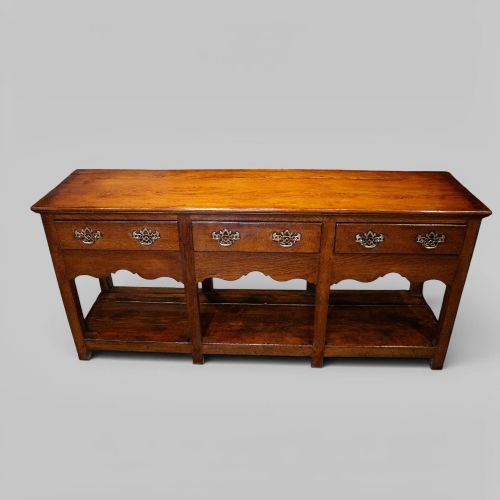

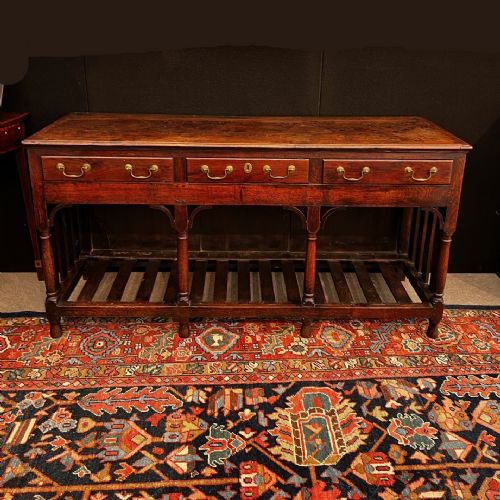

Oak Potboard Dresser Base
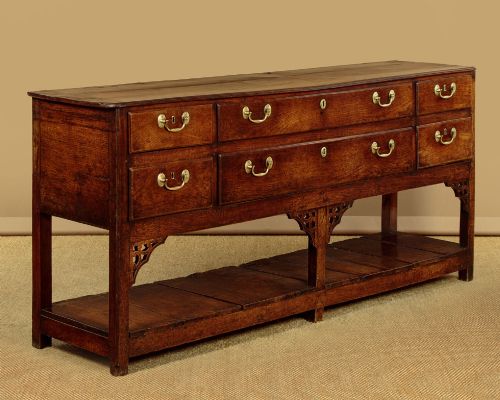
When you search for an oak potboard dresser base, you are looking at utilitarian kitchen furniture built to hold heavy provisions on a lower shelf beneath the working top.
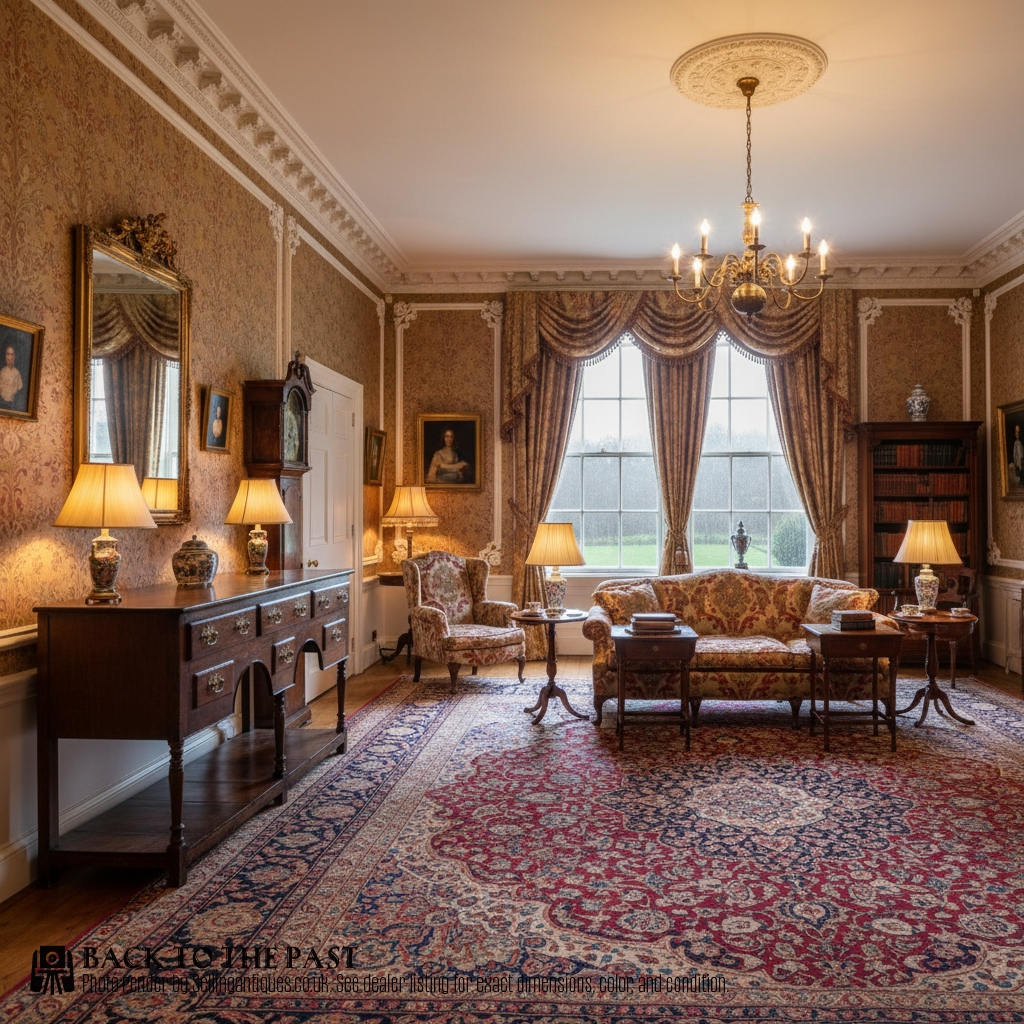
Oak Potboard Dresser Base
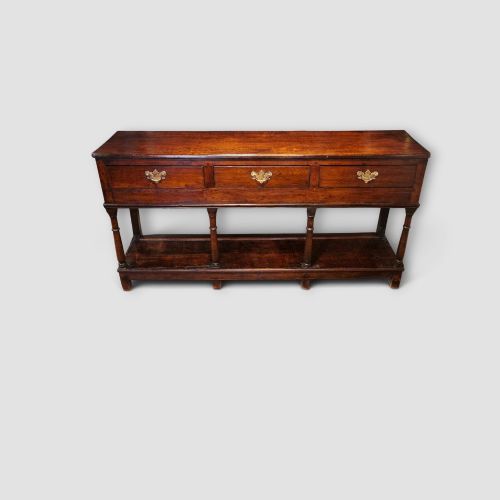
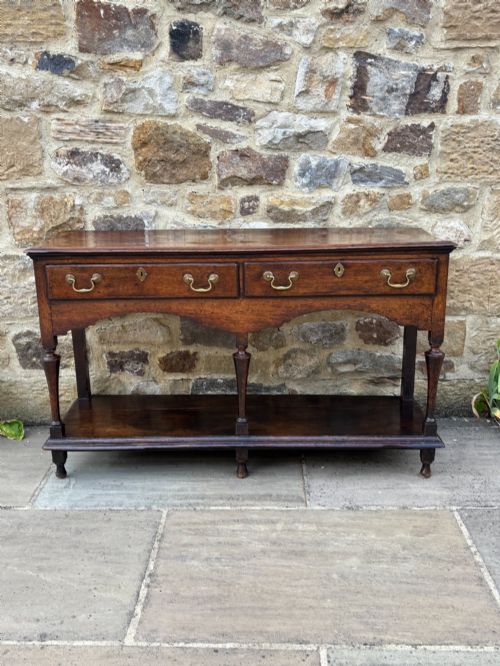
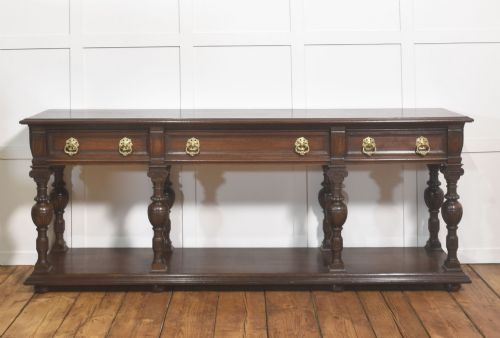
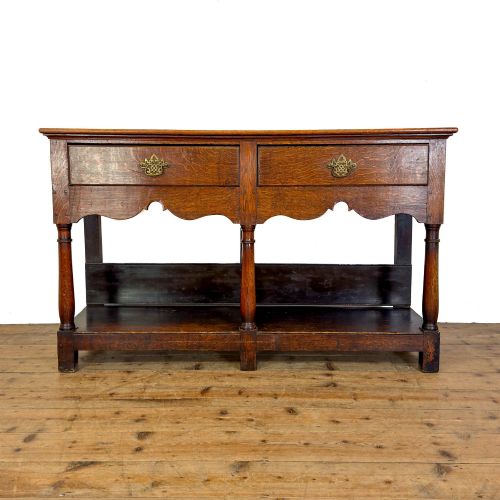
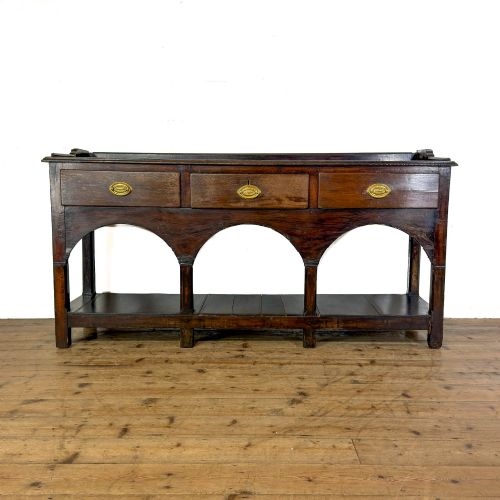
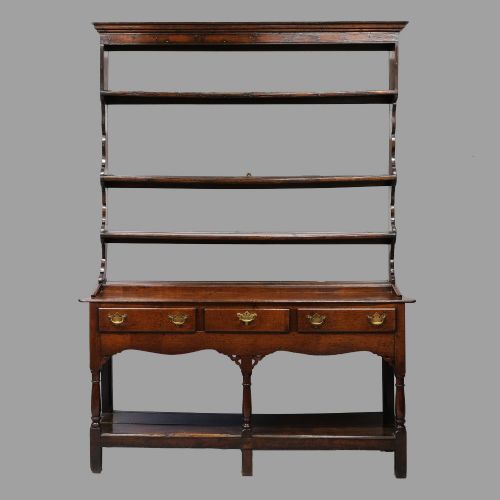
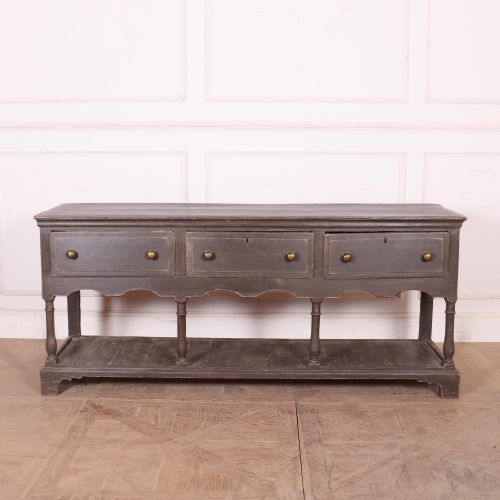
An oak potboard dresser base is a low wooden sideboard featuring a distinct open lower shelf, known as a potboard, positioned just above the floor between the legs. These pieces originate primarily from 18th century and 19th century rural households, emerging from English and Welsh country traditions where they served everyday domestic functions.
The versions most commonly met on this page date from the Georgian period, often reflecting regional styles associated with Welsh or English country workshops. They combine working drawer configurations with the characteristic low platform designed to store pots, pans, and heavy kitchen utensils.
What Varies in Quality
The proportion and scale dictate much of the desirability, with smaller country examples and pieces possessing unusual multi-drawer layouts commanding greater interest than standard utility formats. Timber selection also separates examples, as dense native oak grain and untouched original boards create a far richer visual depth than replacement timber sections.
The integrity of the construction defines the upper tier of survivals, seen in the retention of original potboards, feet, and backboards rather than reconstructed elements. Balance between the working top surface, drawer proportions, and the open lower shelf separates everyday utility pieces from finer regional cabinet work.
Oak Potboard Dresser Base Retail Price Guide 2026
Typical asking prices for oak potboard dresser base among the pieces listed under this phrase on Sellingantiques today, from the lower quarter to the upper quarter. They describe what is for sale here now, not the wider market.
Early potboards doubled as platforms to let heavy damp pots dry safely away from flagstone kitchen floors.
The Oak Potboard Dresser Base Glossary
- Potboard
- An open low shelf fixed near the base of a dresser, historically used for storing heavy pots and pans off the damp flagstone floor.
- Dresser base
- The lower portion of a Welsh dresser, functioning as a standalone sideboard with drawers and cupboards.
- George III
- The stylistic and historical period spanning the mid to late 18th and early 19th centuries, known for restrained country joinery and balanced proportions.
- Elm
- A tough native timber frequently utilised by country cabinet makers for internal drawer components and secondary structural parts.
- Patina
- The surface sheen and colour built up on wood over generations of handling, polishing, and environmental exposure.
Oak Potboard Dresser Base: Frequently Asked Questions
What is a potboard dresser base?
A potboard dresser base is a traditional wooden sideboard featuring drawers across the top and an open shelf near the floor.
This lower platform, or potboard, distinguished them from standard sideboards by providing accessible storage for heavy kitchenware.
Where were these dressers made?
These pieces originate primarily from domestic kitchens and farmhouses across England and Wales during the Georgian and Victorian eras.
Regional variations in drawer counts and leg turning often point to specific areas like South Wales or rural English counties.
How do I style one at home?
These dressers function effectively in modern dining rooms, kitchens, or hallways as practical surface space and storage.
The lower potboard provides an ideal platform to display heavy ceramics, baskets, or large books.
How can I tell the period?
Dating relies on construction methods, timber choice, drawer linings, and the style of the legs and hardware.
18th century pieces typically feature pegged joinery and hand-shaped boards, while later 19th century and revival examples show machine tooling.