
Oak Monastery Dining Table
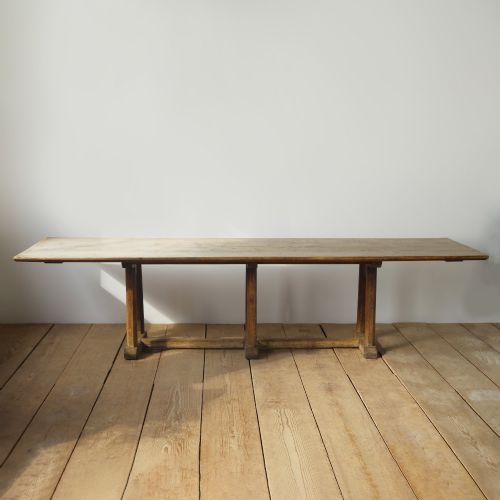
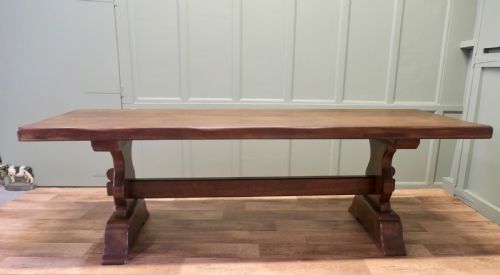
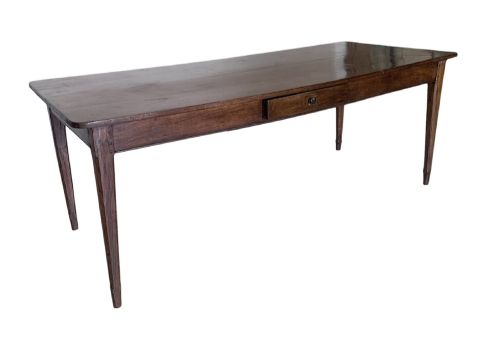
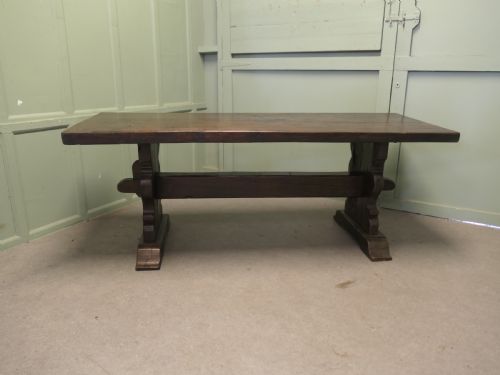
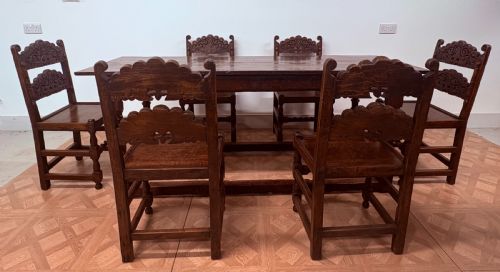
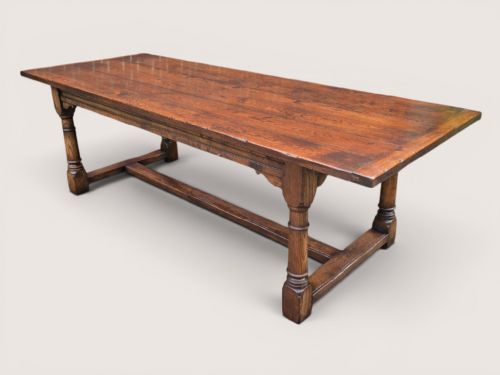
An oak monastery dining table brings heavy timber presence and long proportions into a room, offering vast surface area for gatherings.
Oak Monastery Dining Table
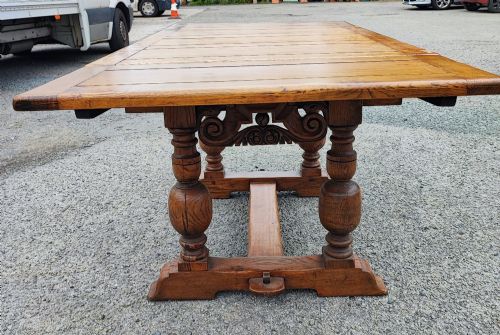
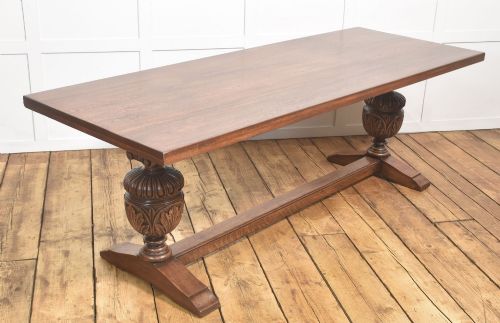
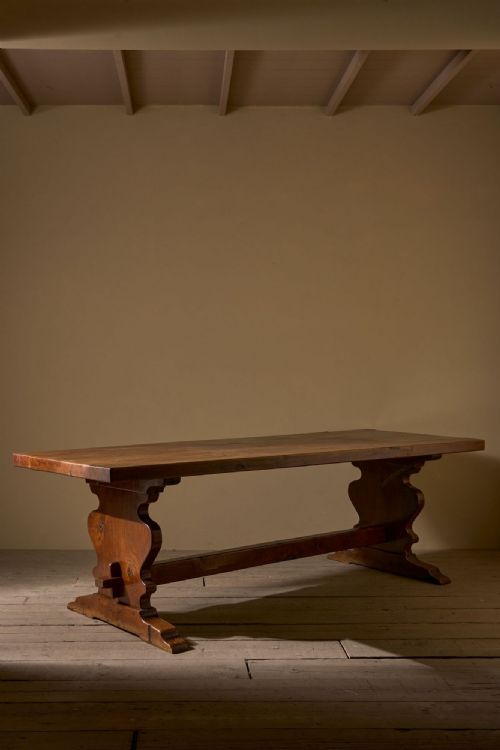
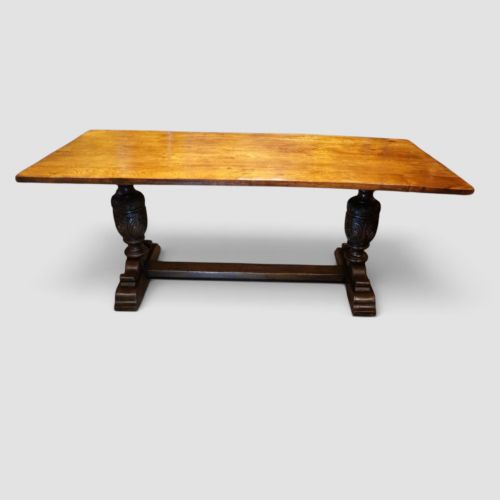
When you search for an oak monastery dining table, you encounter substantial dining surfaces rooted in refectory and farmhouse traditions. These pieces predominantly appear as long tables constructed from solid timber, drawing from French, English, and Jacobean styles.
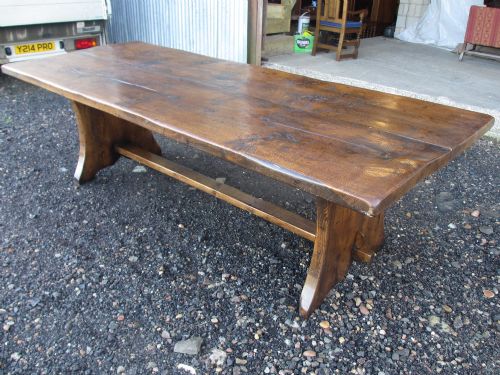
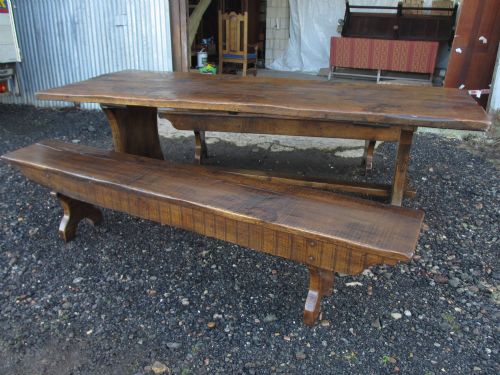
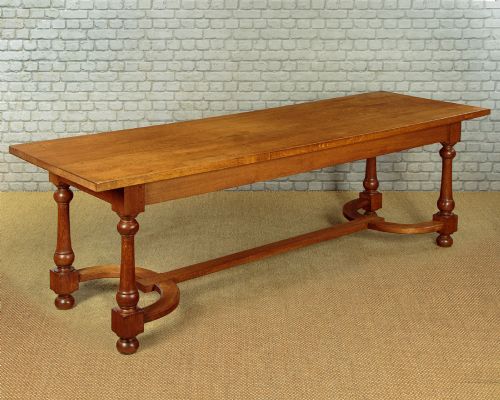
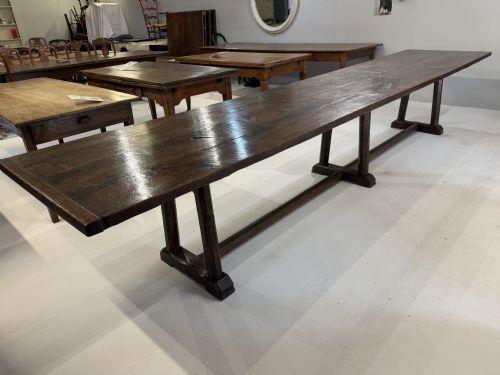
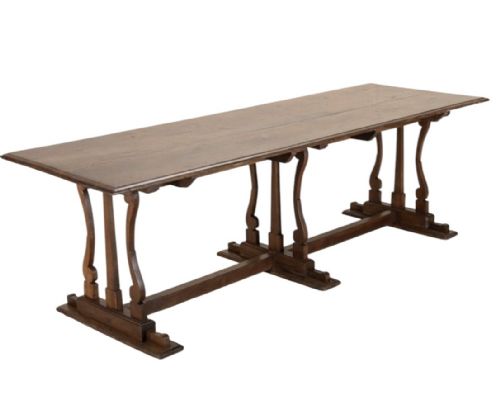
The versions most common on this page span from seventeenth-century originals to nineteenth-century interpretations and twentieth-century revivals. They typically feature heavy plank tops supported by trestle ends, shaped bases, or robust legs suited for communal dining.
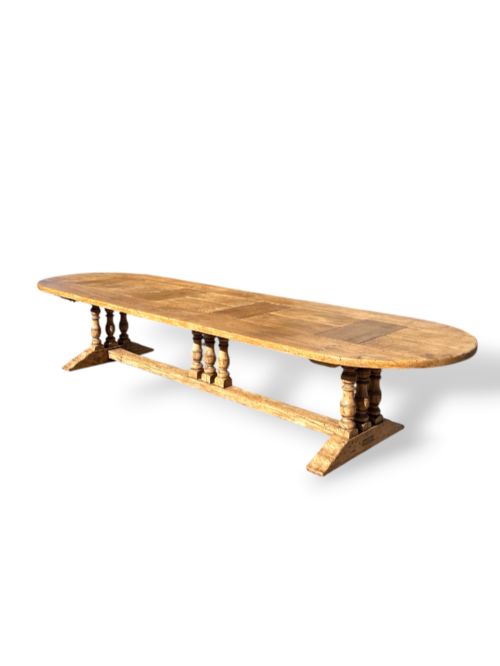
Origins vary between English country workshops and French provincial settings, with some examples utilising bleached finishes or extended draw-leaf mechanisms. The overarching form remains consistent: a commanding board designed to seat large numbers comfortably.
What separates examples in quality
Quality rests in the integrity of the timber top and the balance of the base construction. Single or double plank tops displaying deep, untouched grain patinas command greater appreciation than heavily altered surfaces.
The harmony between the base and the top dictates the character of the piece, with period-matching trestles offering superior structural continuity compared to mismatched elements.
Listings feature solid oak alongside elm, walnut, iron, and brass across seventeenth-century to twentieth-century periods.
The Oak Monastery Dining Table Glossary
- Refectory table
- A long narrow dining table originally built for monastic dining halls. This form provides the structural blueprint for most large oak monastery tables.
- Plank top
- A table surface constructed from boards running the full length of the piece. These boards display the grain pattern and age of the tree.
- Trestle base
- A supporting structure consisting of horizontal feet connected by a central beam and upright supports. This design maximises legroom beneath long tabletops.
- Bleached oak
- Timber treated to lighten the natural dark tone of the wood while retaining the grain texture. This finish appears frequently on French country examples.
- Draw leaf
- An extension mechanism where auxiliary leaves slide out from beneath the main top. This allows the table length to increase when needed.
Oak Monastery Dining Table: Frequently Asked Questions
How do I seat twelve people?
Look for tables measuring four metres or those specifically noted to accommodate large seating arrangements along the sides.
Bench forms or matching seating often accompany these extended frames to complete the setup.
Are seventeenth century tables stable?
Period pieces from the seventeen hundreds or earlier utilise heavy solid timber and pegged joinery that provides inherent rigidity.
Their weight keeps them firmly planted on the floor during daily use.
What is bleached oak?
Bleached oak is timber treated to achieve a lighter, softer colour tone while preserving the natural grain and texture.
This treatment is common on French farmhouse and provincial dining furniture.
How do I maintain an oak top?
Protect the solid wood surface by avoiding excessive moisture and using appropriate wax finishes to nourish the grain.
Regular dusting preserves the historic patina developed over centuries of use.