

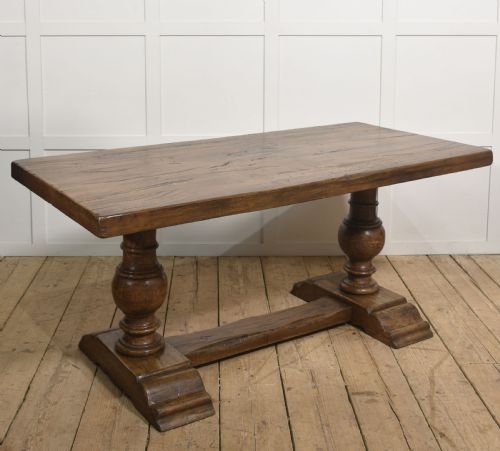


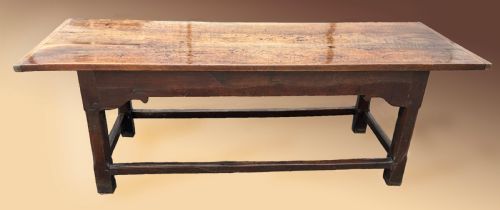
Heavy Oak Farmhouse Table
A heavy oak farmhouse table brings substantial timber and everyday utility into a room, offering the surface area needed for large gatherings and family life.
Heavy Oak Farmhouse Table
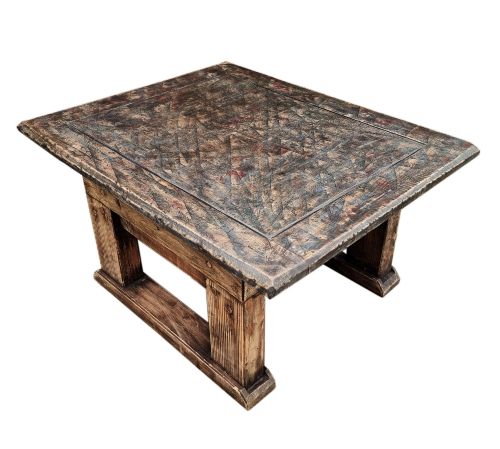
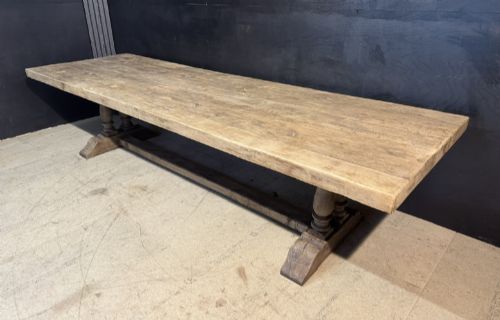
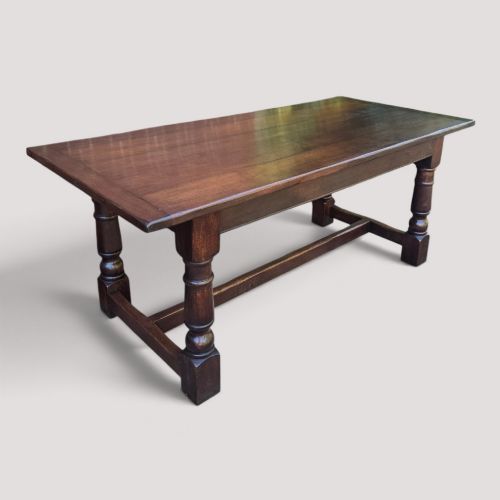
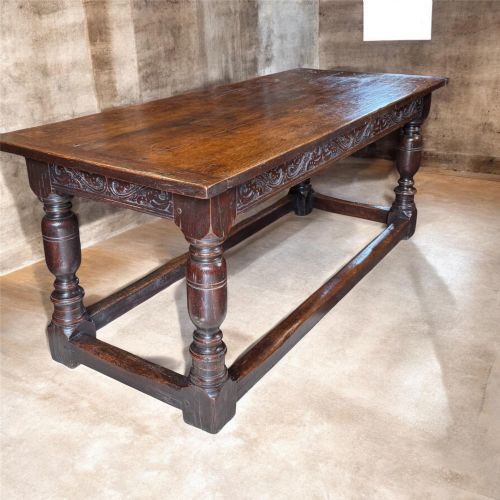
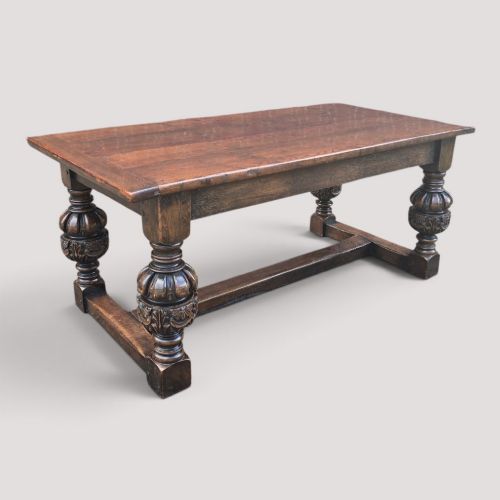
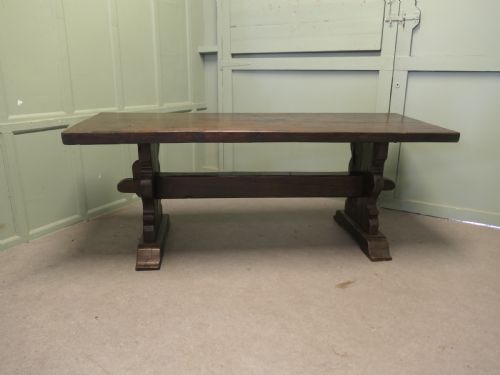
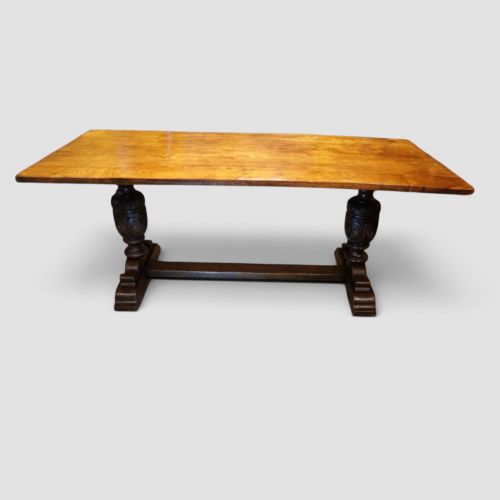
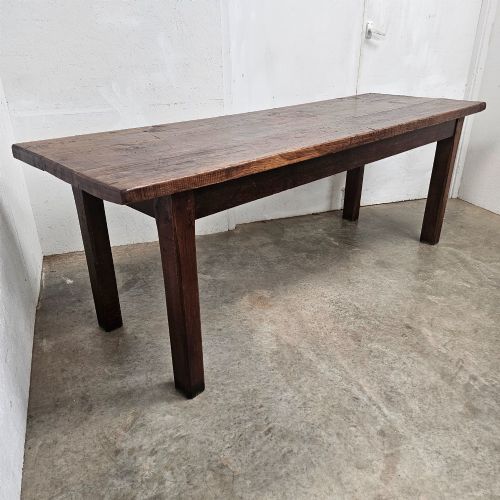
A heavy oak farmhouse table is a sturdy dining piece or workspace designed to anchor a room with solid timber construction. These tables appear in forms such as refectory tables, tavern tables, and French country designs that span from the eighteenth century through to the early twentieth century.
The versions most commonly met on this page include refectory tables and large French oak dining tables, alongside occasional variants like English tavern tables and French primitive work benches. These pieces showcase styles ranging from rustic farmhouse and French country to Tudor revival and seventeenth century English influences.
Buyers seek these tables for their robust build and capacity to seat large numbers comfortably, with examples accommodating up to twelve diners. The forms rely on enduring structural strength, utilising thick timber tops supported by solid frames.
How they were made
Construction relies heavily on solid oak, French oak, and timber planks, frequently built with thick tops consisting of multiple boards joined together. Examples include English oak three plank tops measuring specific widths, paired with substantial frames designed to withstand heavy daily use.
Secondary materials such as pine appear alongside the dominant oak timbers, supporting the primary structural work. Joinery techniques prioritise stability and load-bearing capacity, resulting in heavy refectory and tavern formats that endure across centuries.
Heavy Oak Farmhouse Table Retail Price Guide 2026
Typical asking prices for heavy oak farmhouse table among the pieces listed under this phrase on Sellingantiques today, from the lower quarter to the upper quarter. They describe what is for sale here now, not the wider market.
Listings feature oak as the primary material, alongside pine and general timber, spanning periods from the eighteenth century to nineteen-thirty.
What varies in quality
Quality differences lie in the thickness and selection of the timber used for the top, where boards with distinct grain patterns and substantial heft elevate a piece. The integrity of the frame and the proportions of the legs determine the visual balance and physical stability of the table.
Origin and period influence the character of the piece, with eighteenth-century examples and specific regional French or English interpretations offering distinct tactile qualities. The articulation of the refectory or tavern base distinguishes standard utility builds from superior examples.
The Heavy Oak Farmhouse Table Glossary
- Refectory table
- A long dining table traditionally used in monastic refectories and later adopted for domestic dining. These tables are characterised by their elongated proportions and sturdy underframes.
- Tavern table
- A compact or moderately sized wooden table built for commercial drinking and eating establishments. They typically feature thick tops and robust legs suited to heavy use.
- Three plank top
- A tabletop constructed from three distinct timber boards joined side by side. This method allows for wide surfaces using substantial widths of solid wood.
- French primitive
- A style category describing rustic furniture made in France without elaborate ornamentation. These pieces focus on utilitarian function and straightforward carpentry.
- Work bench
- A heavy sturdy table traditionally utilised by artisans and craftsmen for manual labour. Their robust construction and utilitarian surfaces have made them desirable for alternative domestic uses.
Heavy Oak Farmhouse Table: Frequently Asked Questions
How many people do these tables seat?
Many of these large refectory and country tables accommodate up to twelve diners comfortably due to their generous length and sturdy proportions.
Smaller tavern formats and work benches suit fewer seats but offer substantial surface depth for daily tasks.
What is the difference between refectory and tavern tables?
Refectory tables are traditionally long and narrow, designed for communal dining halls and large gatherings.
Tavern tables are generally shorter and more compact, originally built for public houses and smaller rooms.
How should I clean an oak table?
Maintain solid oak surfaces by wiping them gently with a damp cloth to remove everyday dust and debris.
Avoid harsh chemical cleaners that might strip the natural finish and character of the aged timber.
Are these tables suitable for modern kitchens?
The robust construction and generous surface area make these pieces practical as central dining hubs or prep spaces.
Their varied historical styles from rustic country to Elizabethan revival integrate easily into diverse interior schemes.