

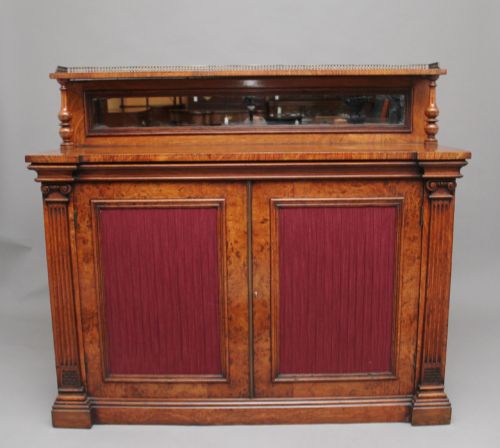

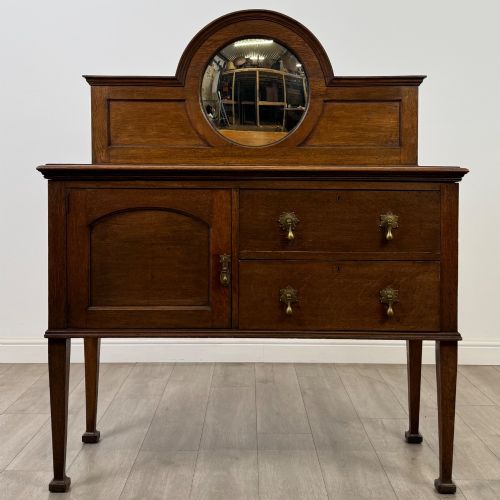
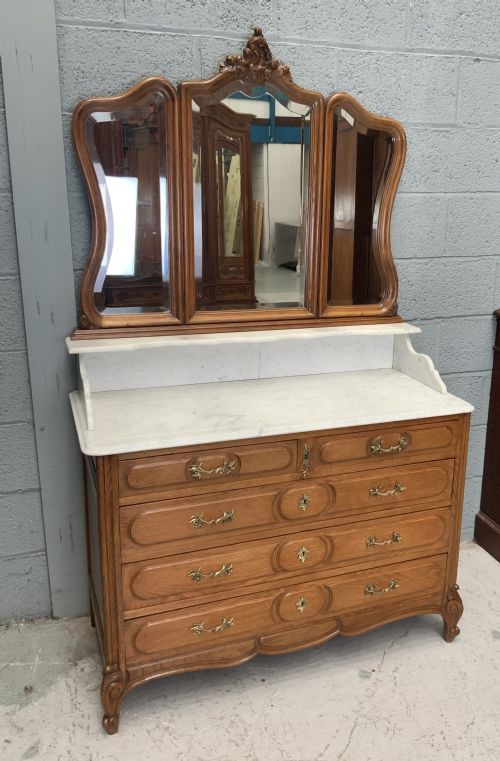


Oak Mirrored Sideboard
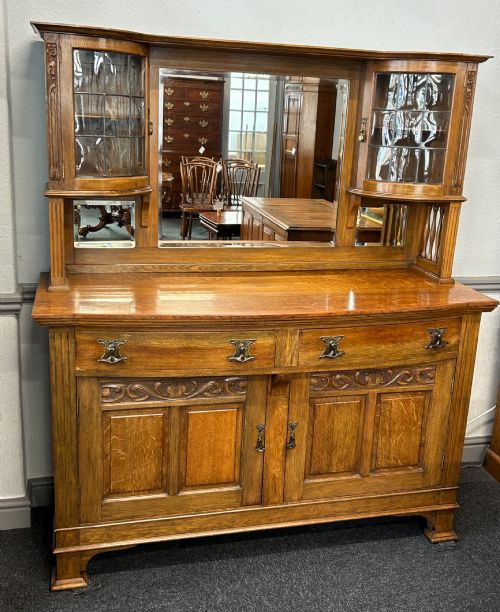
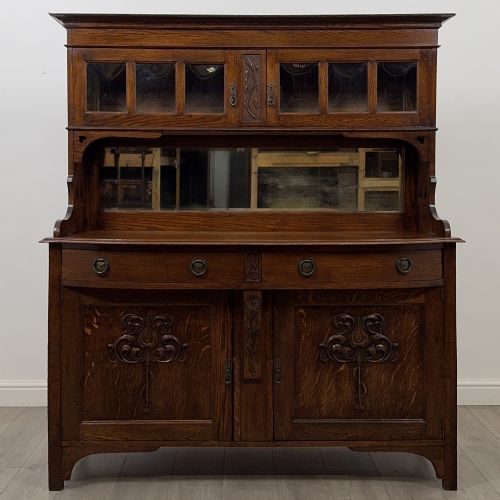
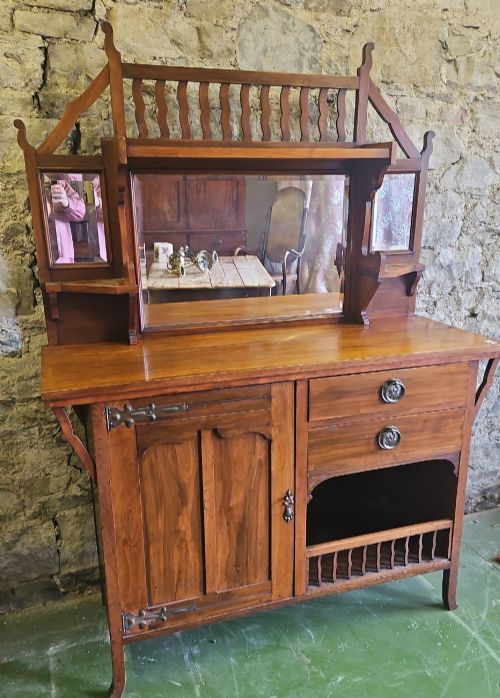
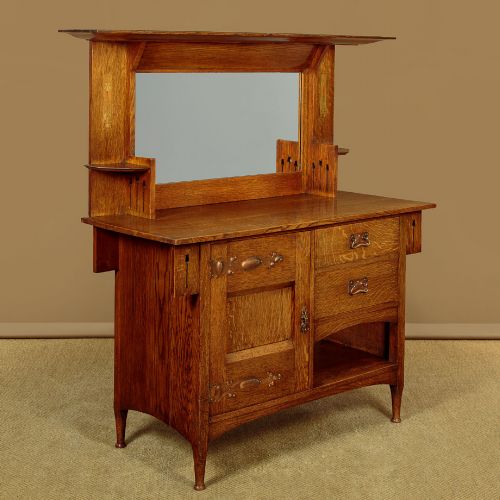
An oak mirrored sideboard brings timber grain and reflecting glass together, offering both display space and storage for the dining room.
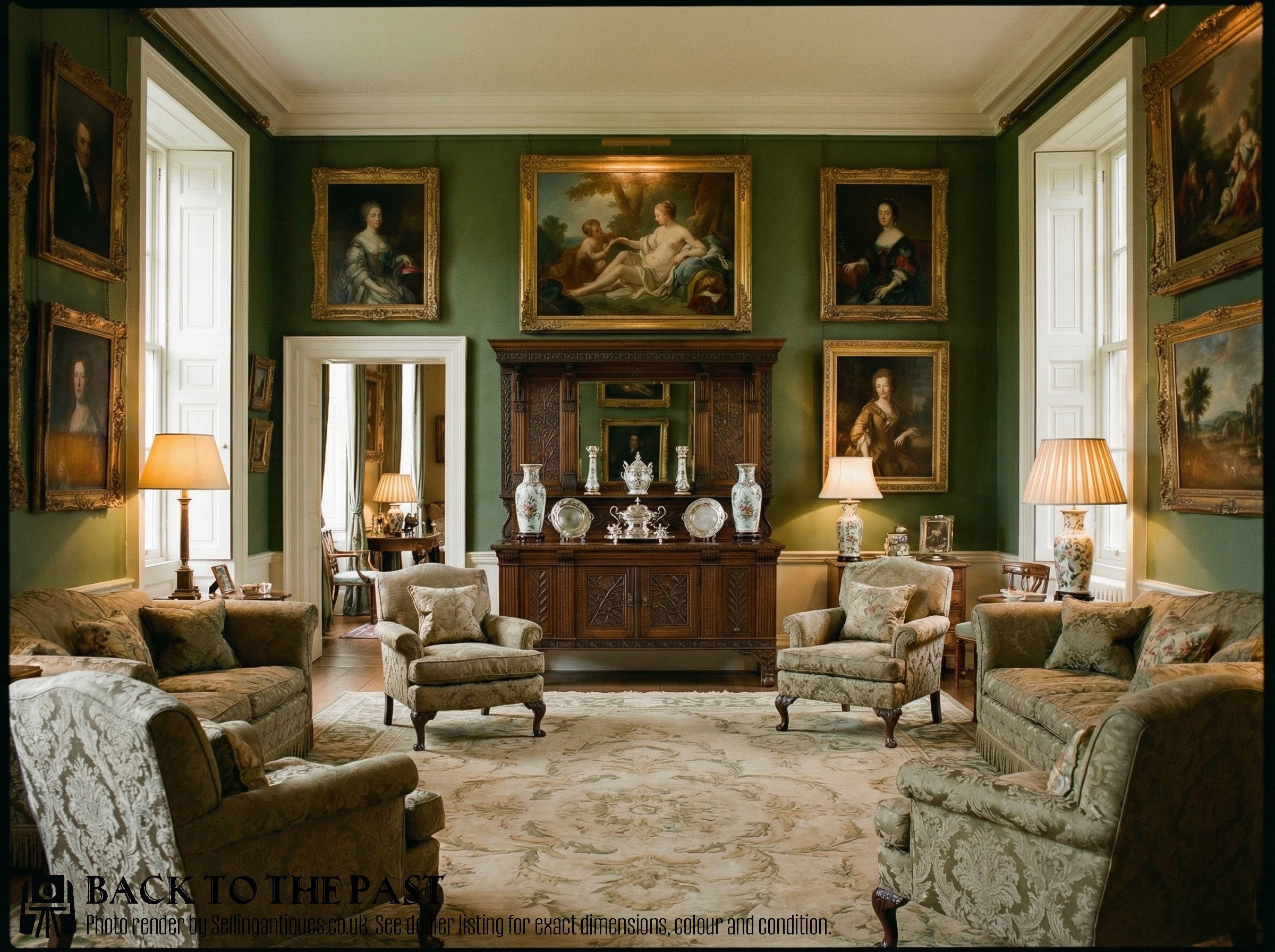
Identifying an oak mirrored sideboard
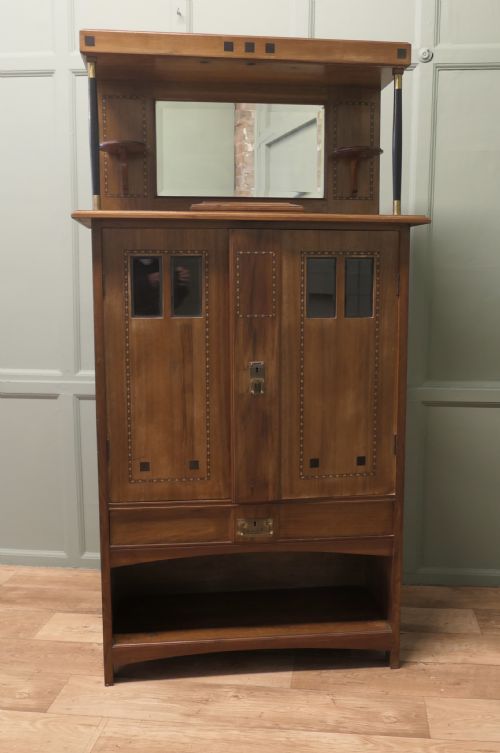
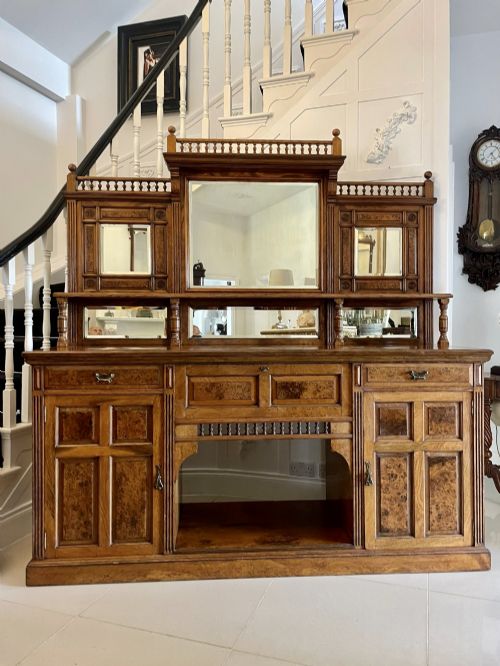
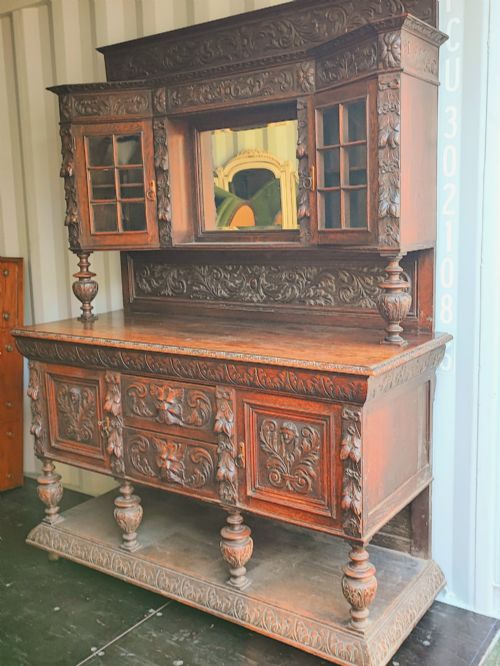
When you search for an oak mirrored sideboard, you encounter robust timber furniture designed for Victorian and Edwardian dining spaces. These pieces combine a low cabinet base with an upright wooden superstructure holding a central looking glass.
The versions most commonly met on this page span the Victorian and Edwardian eras, frequently showing the influence of the Arts and Crafts movement. They stand as practical storage units that double as display ledges for ceramics and silver.
Makers of the period built these sideboards to anchor large dining rooms, utilising heavy cuts of timber to match the architectural scale of domestic interiors. Surviving examples retain their original bevelled mirror glass and brass or iron hardware.
Materials and construction
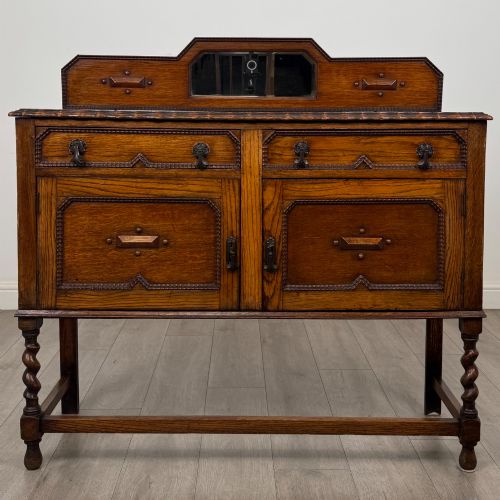
Carpenters constructed these sideboards primarily from solid oak and golden oak, selecting timber with pronounced medullary rays. The bases feature panelled doors and deep drawers, while the upper sections incorporate integrated mirror glass held within sturdy wooden frames.
Hardware details typically include brass and iron handles, hinges, and strapwork characteristic of the Arts and Crafts style. Joinery techniques rely on pegged mortise and tenon joints to support the heavy weight of the mirrored superstructure.
Retail Price Guide 2026
Typical UK retail prices for oak mirrored sideboard, calculated from the Sellingantiques database of over a million retail prices indexed since 2003. This retail price guide relies exclusively on Sellingantiques data; no external sources or auction records are used, so the figures do not describe the wider market.
A serpentine-edged top gives a gentle wave to an otherwise solid block of oak.
Distinguishing quality
The highest tier of these sideboards displays exceptional timber selection, such as richly figured golden oak, paired with thoughtful Arts and Crafts design details like hand-beaten metalwork. Lesser examples utilise simpler construction and plain timber with minimal decorative carving or structural flourish.
Proportion and balance separate fine pieces from standard production, as superior makers integrated the mirrored back harmoniously with the lower cabinet rather than treating it as an afterthought.
The Oak Mirrored Sideboard Glossary
- Oak
- A durable hardwood native to Britain and Europe, prized for its strength and prominent grain patterns. It forms the primary structural material for these sideboards.
- Arts and Crafts
- A design movement spanning the late Victorian and Edwardian periods that emphasised handcraftsmanship, simple forms, and honest materials. Pieces from this style often feature exposed joinery and understated metal fittings.
- Serpentine
- A gently undulating curved shape applied to the front edge of a sideboard top or drawer. This contour adds visual movement to heavy timber furniture.
- Bevelled glass
- Mirror glass with edges cut and polished at an angle to catch the light. It signifies a higher grade of manufacture in Victorian and Edwardian looking glasses.
Frequently Asked Questions
How do I date an oak mirrored sideboard?
You can determine the period by examining the overall style, decorative motifs, and hardware. Victorian examples often display heavier proportions, while Edwardian pieces sometimes show lighter Arts and Crafts influences.
Construction methods also help, as hand-cut dovetails and pegged joints indicate older craftsmanship. Examining the type of mirror glass and backboards provides further clues to the manufacturing era.
How do I care for antique oak furniture?
Maintain antique oak by keeping it away from direct sunlight and strong heat sources that can dry out the timber. Apply a traditional beeswax polish occasionally to nourish the wood surface.
Clean the mirror glass gently with a soft cloth and non-ammonia cleaner to avoid damaging the surrounding wooden frame. Ensure brass and iron fittings remain dry to prevent corrosion.
Where should I place a mirrored sideboard?
These sideboards suit dining rooms, large hallways, or spacious living areas where their substantial scale can be appreciated. Position them against a sturdy wall to support the weight of the base and superstructure.
Placing the piece opposite a window allows the mirror to reflect natural light across the room. Ensure the floor is level so the heavy timber doors and drawers operate correctly.