
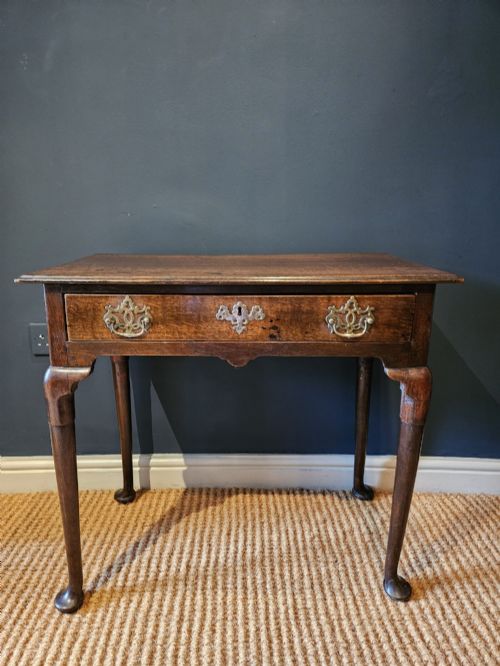
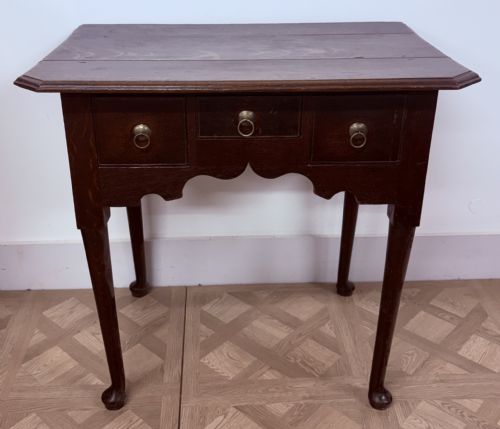
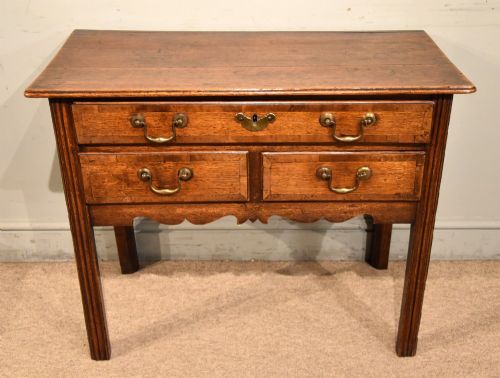
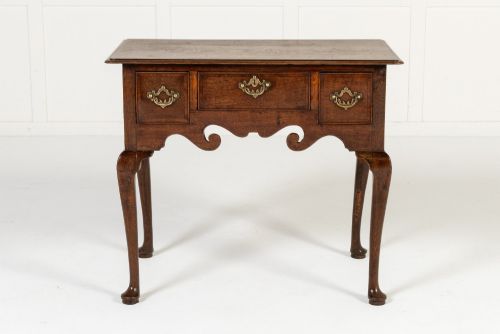
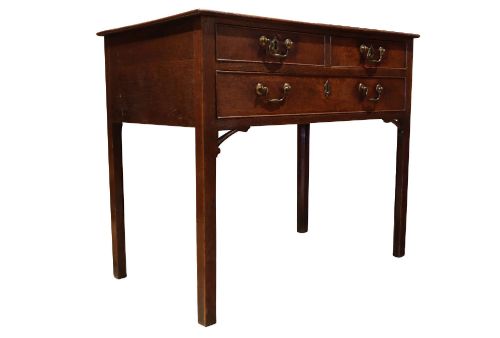
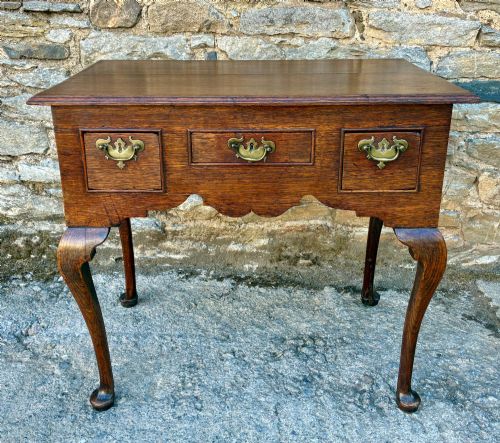
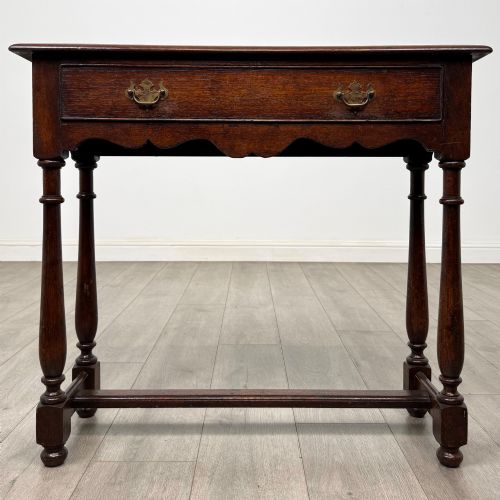
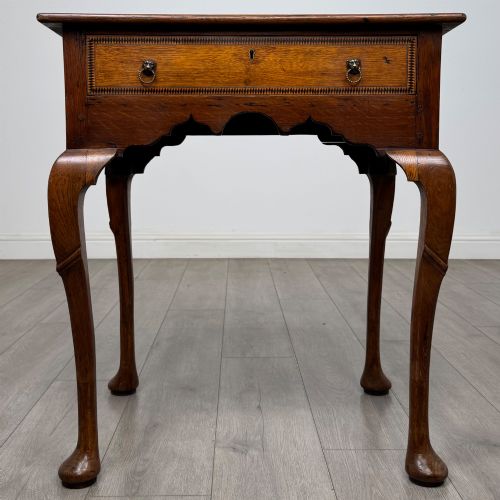
Oak Lowboy Dressing Table
An oak lowboy dressing table provides compact drawer storage and a writing surface, bringing centuries of practical British craftsmanship into a modern room.
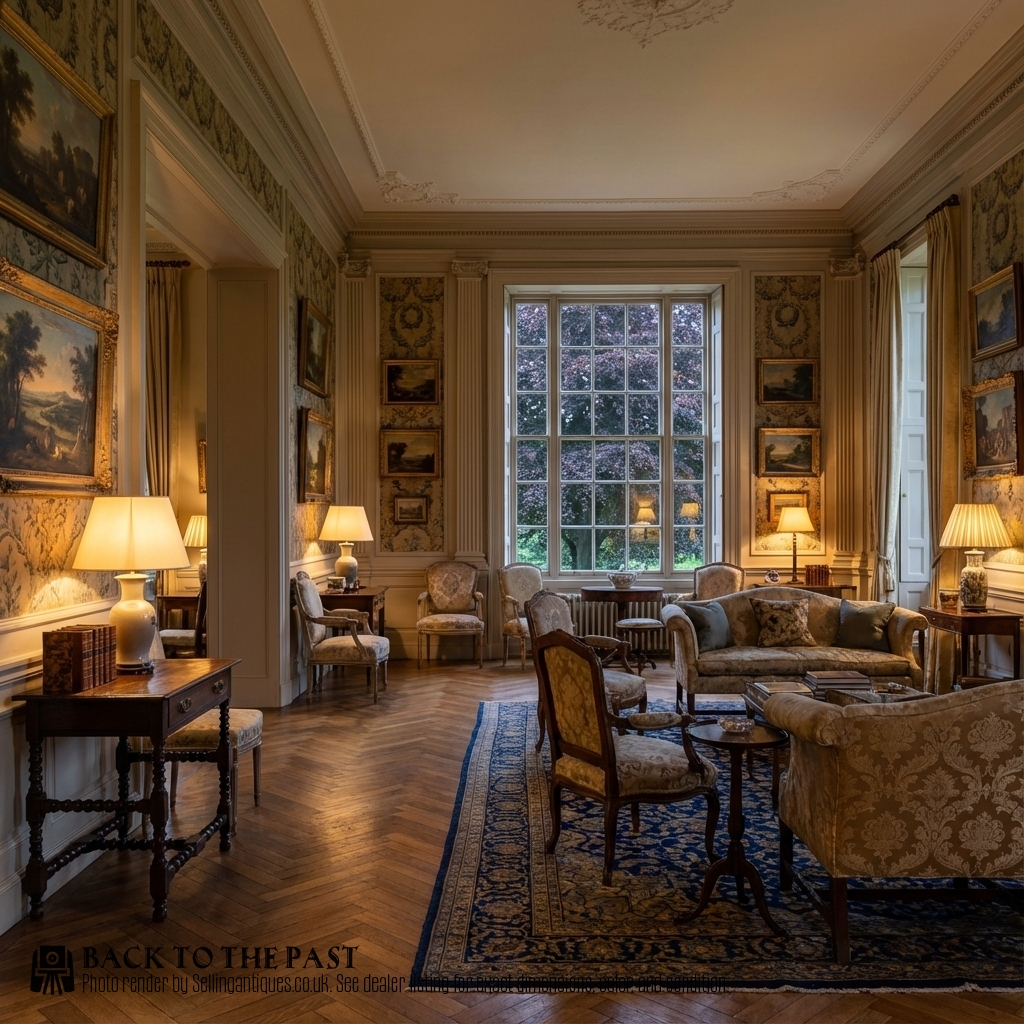
Oak Lowboy Dressing Table
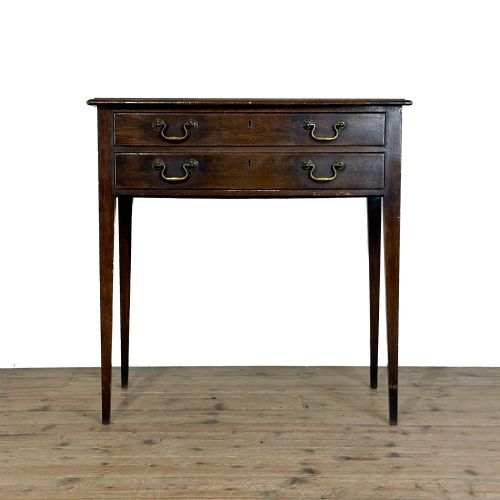
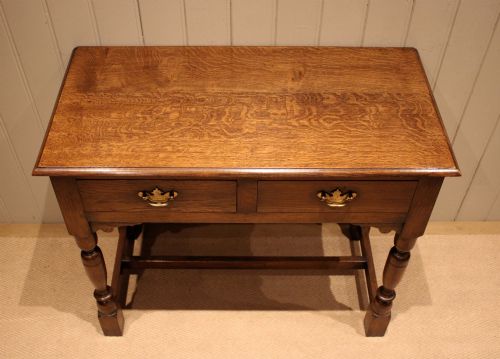
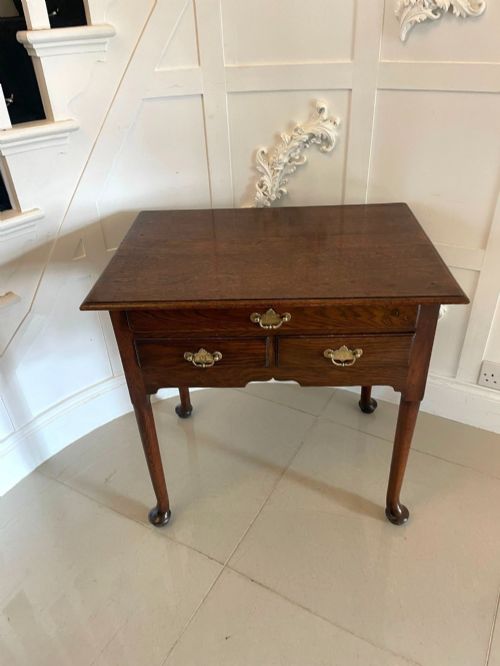
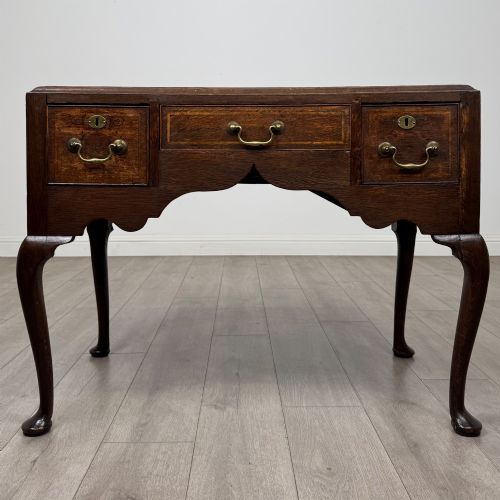
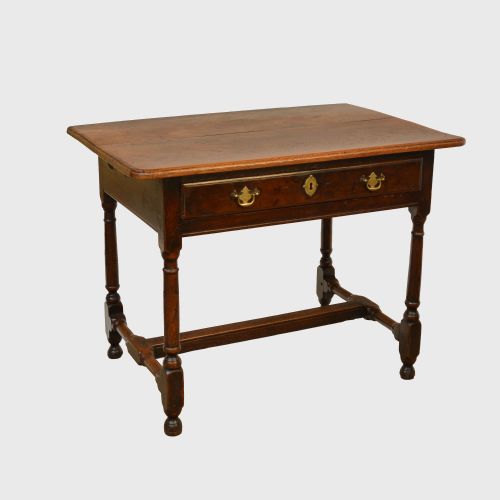
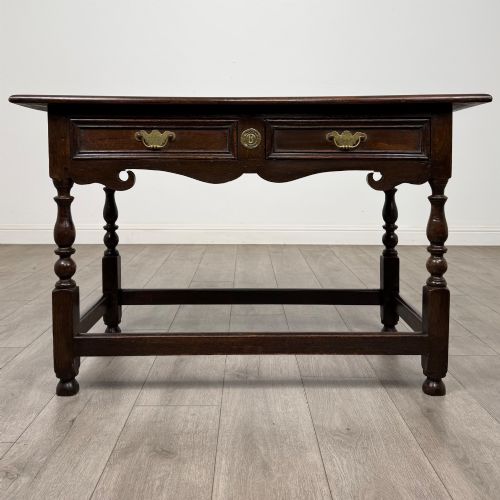
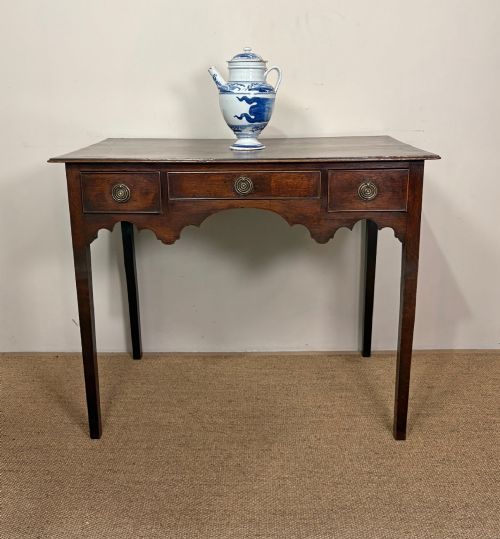
An oak lowboy dressing table stands as a low side table fitted with drawers, originating primarily in the seventeenth and eighteenth centuries during the Georgian and Queen Anne periods. These pieces frequently double as writing desks or occasional tables, showing the adaptable nature of early domestic furniture.
Most examples found in daily browsing date from the eighteenth century, finished in solid oak with occasional secondary woods such as elm, yew or fruitwood. They appear under various names including side tables and lowboys, reflecting their historical use for grooming and ablutions.
Materials and construction
Makers relied heavily on solid oak, selected for its durability and grained texture, sometimes pairing it with walnut, mahogany, cherrywood or fruitwood veneers and secondary timbers like elm and yew. Brass hardware, including drop handles and escutcheons, secures the drawer fronts on the finer Georgian examples.
Joinery methods involve traditional pegged mortise and tenon frames alongside hand-cut dovetails on the drawer construction. Surfaces display the tool marks of the period, from early hand-sawn boards to the softer patination accumulated over centuries of daily use.
Listings feature oak lowboy dressing tables spanning the seventeenth century, the Georgian era, and later revival periods utilising mahogany and walnut.
Distinctions in quality
Quality rests on the integrity of the timber selection and the restraint of the proportions, where crisp mouldings and undisturbed original drawer linings distinguish a superior piece from a later revival. Pieces displaying secondary woods like yew or elm alongside primary oak show greater regional variation and interest.
The survival of original brass hardware and the crispness of the drawer dovetails separate standard utility items from finer Georgian workshop production. A balanced stance and clean timber patination indicate a well-preserved survivor from the eighteenth century.
The Oak Lowboy Dressing Table Glossary
- Lowboy
- A small table with one or more drawers, standing on relatively short legs and traditionally used for personal grooming or dressing.
- Dovetail
- A joint formed by interlocking wedge-shaped fingers, commonly used to construct sturdy drawer boxes in period furniture.
- Escutcheon
- A protective plate surrounding the keyhole of a drawer or cabinet door, frequently cast in brass on eighteenth-century pieces.
- Patina
- The surface sheen and deep colour developed by wood over years of handling, polishing and exposure to light.
- Secondary wood
- The internal or less visible timber used in a piece of furniture, such as drawer linings or carcase backs.
Oak Lowboy Dressing Table: Frequently Asked Questions
How were lowboys used?
These tables served primarily for personal grooming, holding washing basins, mirrors, and brushes in bedrooms before fitted furniture became common.
They also functioned as compact writing desks or side tables in hallways and reception rooms for temporary storage.
Are these tables solid oak?
Most pieces utilise solid oak for the primary framework, top boards, and drawer fronts, adhering to the standard construction methods of the seventeenth and eighteenth centuries.
Secondary timbers like elm, yew, or fruitwood occasionally appear in drawer linings and internal framing.
How to date an oak lowboy?
Dating relies on examining the construction details, such as hand-cut dovetails, timber patination, and the presence of pegged joints typical of Georgian and earlier periods.
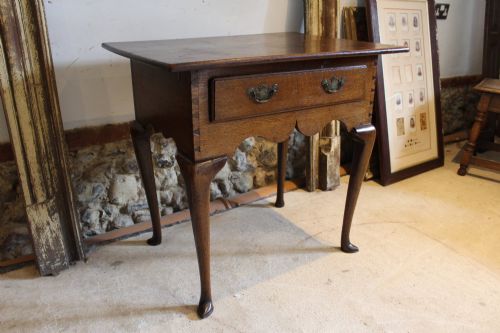
Stylistic cues like cabriole legs, bracket feet, and brass hardware styles further narrow the decade of manufacture.
Where do lowboys fit today?
Their compact footprint allows them to function effectively as hall consoles, bedside surfaces, or dressing tables in modern bedrooms.
The shallow drawers provide convenient storage for keys, stationery, or small accessories without dominating the floor space.