
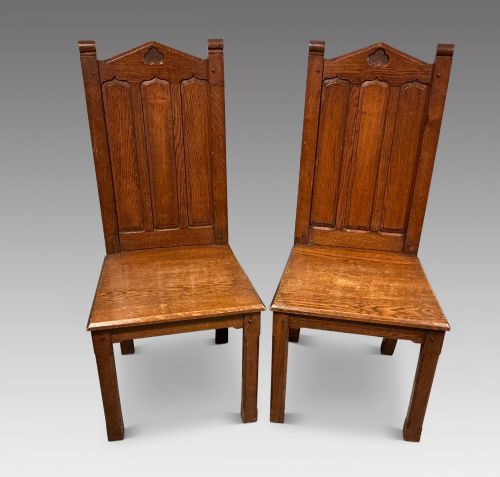
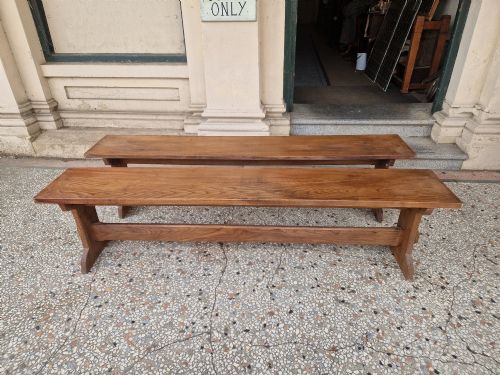
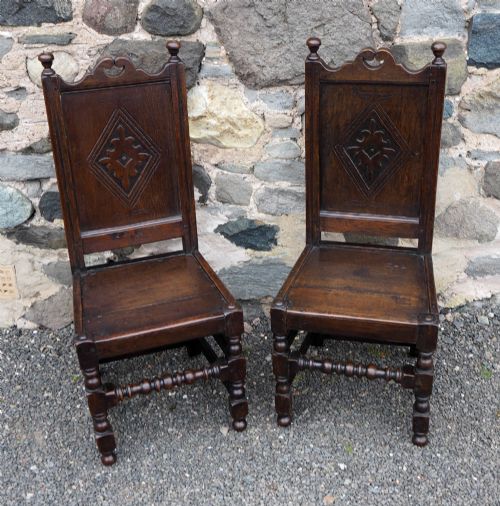

Oak Hall Seat Pair
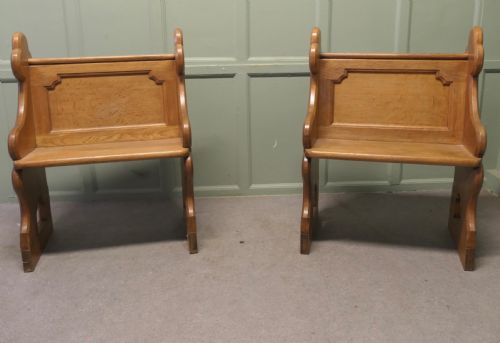
An oak hall seat pair brings immediate architectural presence and paired symmetry to an entrance, typically taking the form of high-backed wooden chairs or substantial benches.
Oak Hall Seat Pair
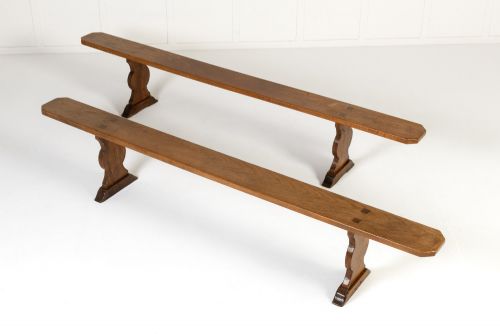
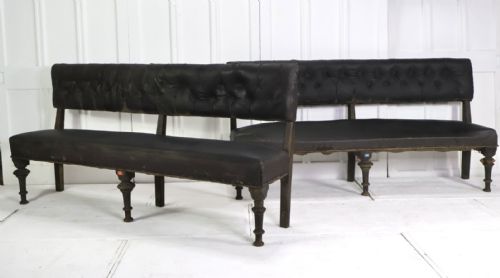
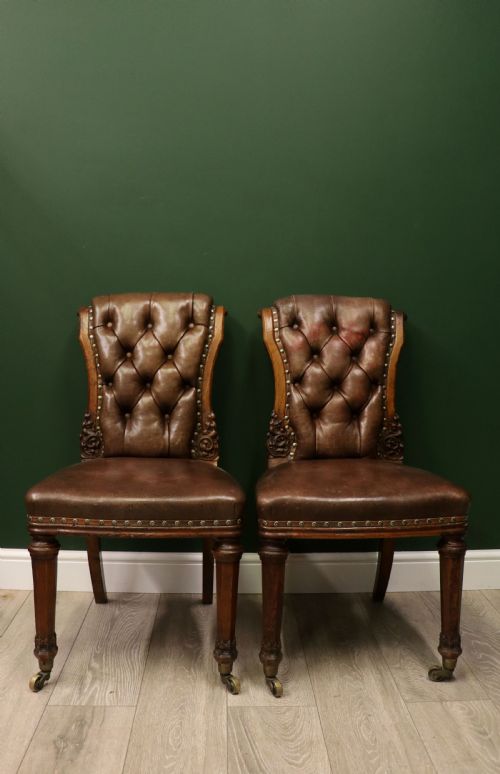
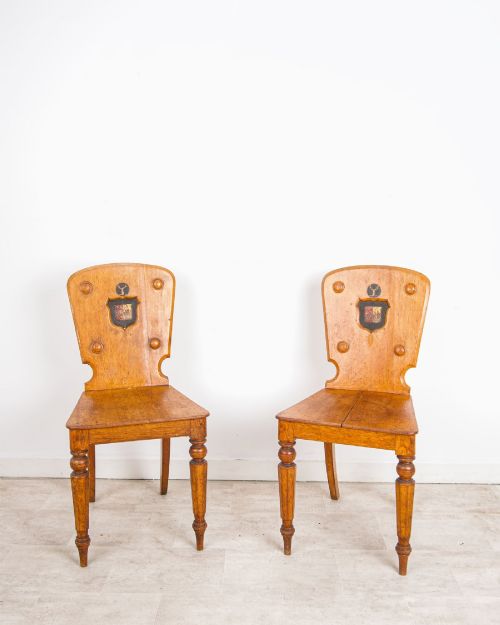
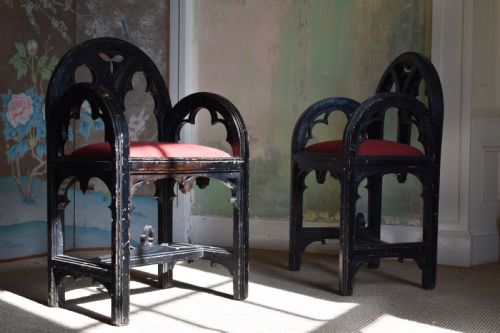
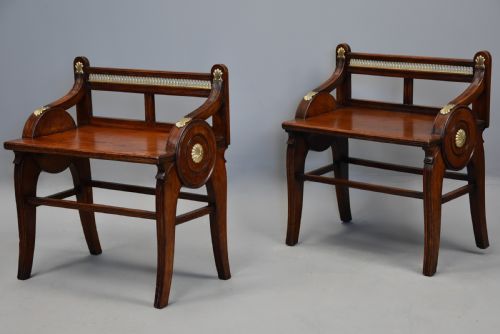
An oak hall seat pair comprises matching entryway furniture designed for reception areas, corridors, and landings, spanning side chairs, armchairs, and benches. These dual seating arrangements serve both decorative and functional purposes in domestic spaces.
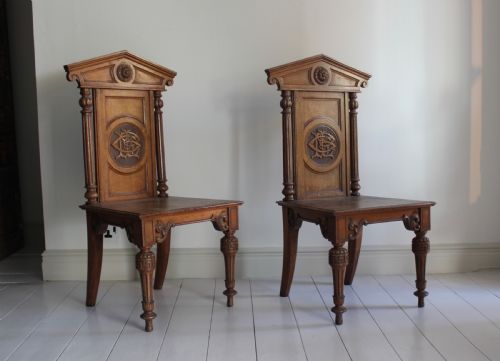
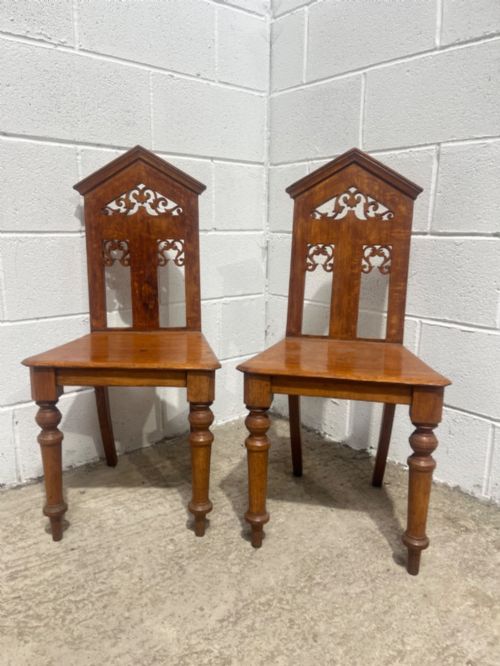
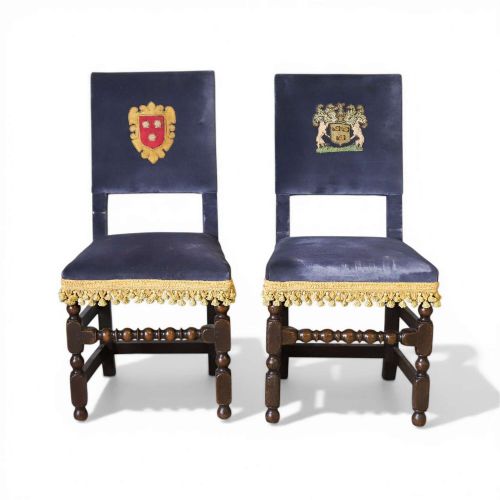
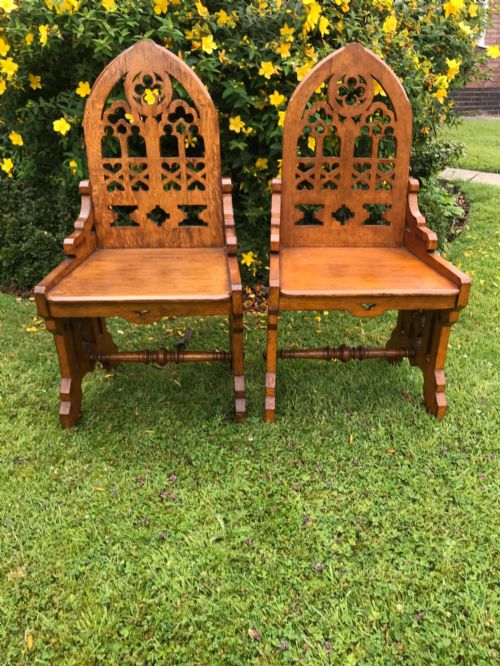
The most common versions encountered here date from the nineteenth century, reflecting Victorian tastes for Gothic Revival and Arts and Crafts aesthetics. Examples range from simple panelled timber forms to heavily carved throne chairs featuring heraldic motifs.
Origins vary widely across the inventory, encompassing English country house pieces, Scottish clan seats, and continental European workshops. Regional styles introduce distinct joinery methods and decorative vocabularies to the basic dual chair format.
How they were made
Construction relies heavily on solid timber joined through traditional mortise and tenon methods, frequently utilising turnings like barley twist and bobbin details. Carving ranges from shallow relief foliage to deep figural work depicting green men and armorial crests.
Upholstery materials appear selectively, incorporating leather, velvet, cane panels, and metallic fringes to soften the rigid timber frames. These secondary materials are secured with brass tacks or woven directly into the structural framework of the seat.
Listings feature oak hall seat pairs spanning the seventeenth century through to the 1930s, incorporating Gothic Revival and Arts and Crafts styles.
What varies in quality
Quality rests primarily on the crispness of the timber carving and the architectural ambition of the design, distinguishing standard workshop production from bespoke maker pieces. Heavy ornamentation requires skilled execution to avoid clutter, making proportion a key indicator of merit.
The integrity of the timber and the retention of original upholstery surfaces, such as stamped leather or woven cane, separate well-preserved examples from heavily restored counterparts. Matched pairs require consistent grain patterns and uniform ageing across both pieces to hold visual harmony.
James Shoolbred and Co·Gillows of Lancaster·Richard Bridgens·Mouseman
The Oak Hall Seat Pair Glossary
- Gothic Revival
- An architectural and decorative style drawing inspiration from medieval forms, frequently seen in pointed arches and trefoil details. This aesthetic dominated much nineteenth-century seating design.
- Sgabello
- A light wooden chair style originating in the Italian Renaissance, characterised by a high panelled back and trestle supports. These pieces often feature prominent carved decoration.
- Glastonbury chair
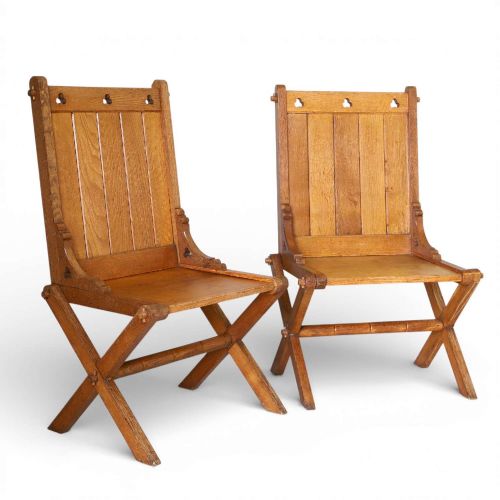
- A pegged wooden armchair with an X-frame base and a sloping panelled back, medieval in origin and revived during the nineteenth century. They are constructed without glue or metal fasteners.
- Curule
- An ancient chair shape featuring intersecting curved legs forming an X-frame, also known as a Dante chair. This form implies classical or Renaissance revival influences.
- Armorial
- Relating to heraldry, specifically featuring family crests or shields carved into the woodwork or embroidered on upholstery. Such details denote specific lineage or commissioned provenance.
Oak Hall Seat Pair: Frequently Asked Questions
Where were hall seats placed?
These dual seats traditionally stood in entrance halls, grand corridors, and reception rooms of large houses where guests waited before entering main living spaces.
Their substantial timber construction and upright posture discouraged prolonged lingering while offering a deliberate visual statement to arriving visitors.
How do I care for antique oak?
Maintenance requires keeping timber away from direct heat sources and sudden temperature shifts to prevent the wood from splitting or warping.
Regular dusting with a dry cloth and occasional application of traditional wax helps preserve the natural finish and grain of the oak.
What is a Glastonbury chair?
This specific form uses an intersecting X-frame construction derived from medieval folding chairs, designed to be easily dismantled.
Nineteenth-century revivals typically fixed these elements permanently while retaining the characteristic sloping back and pegged joints.