
Carved Oak Entryway Seating
Carved oak entryway seating brings heavy timber benches, settles and stiff-backed chairs into narrow hallways.
Carved Oak Entryway Seating
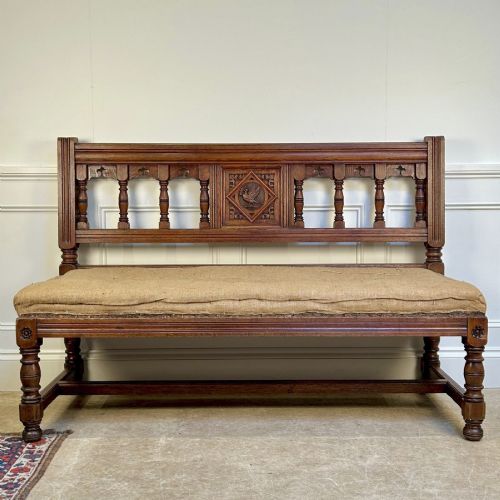
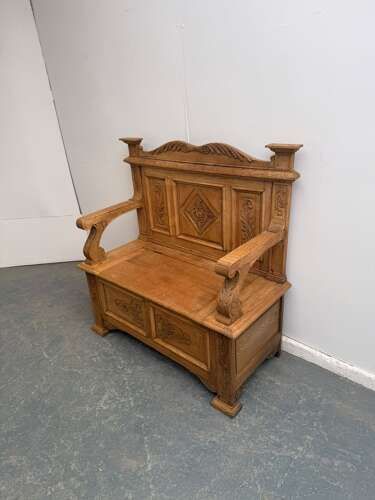
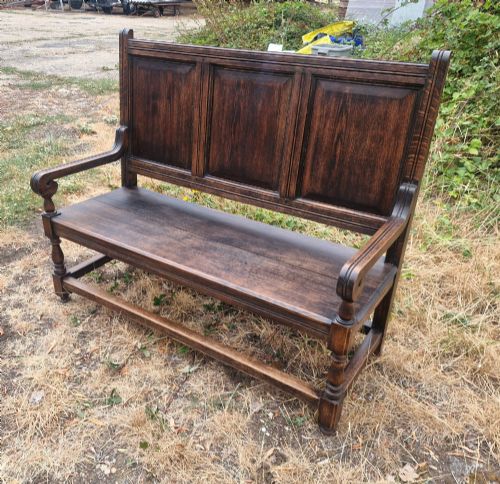
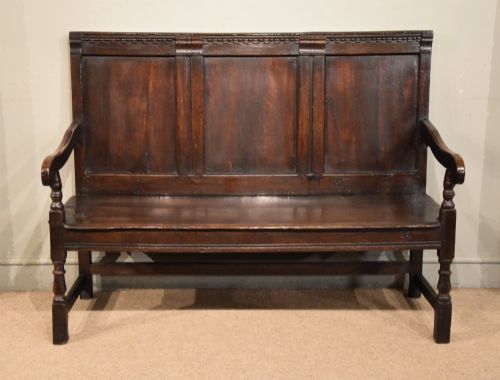
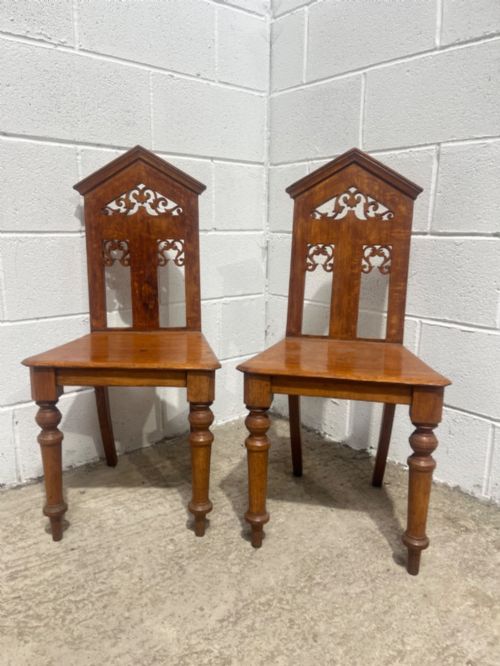
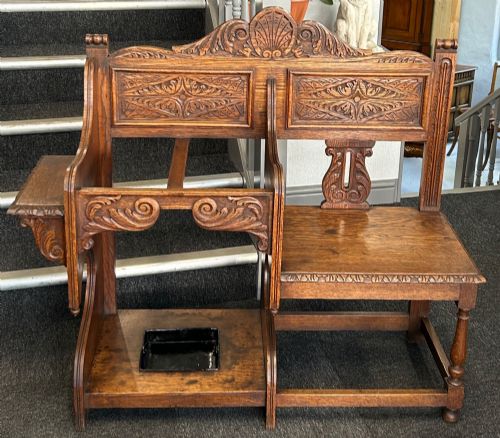
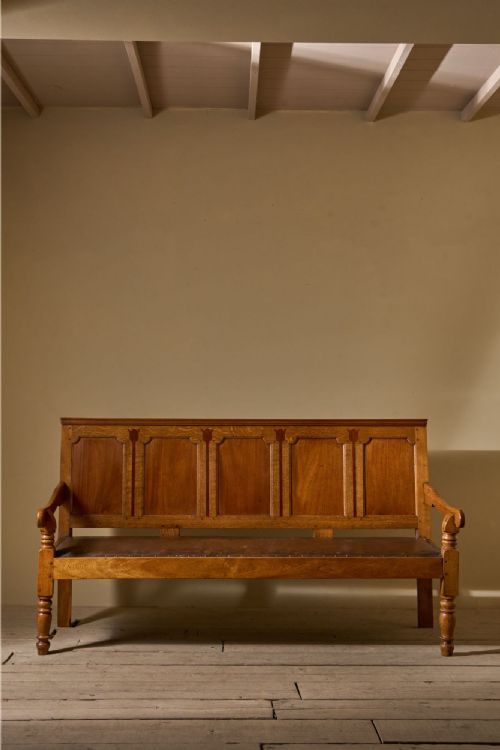
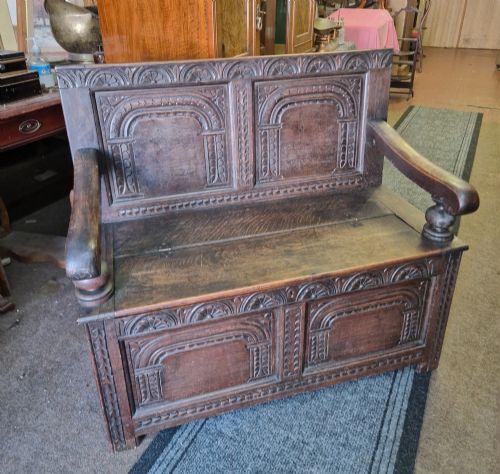
Carved oak entryway seating encompasses heavy timber benches, high-backed settles, box seats with storage and upright hall chairs meant for corridors and lobbies. These pieces serve immediate utilitarian purposes for putting on boots or storing outerwear while establishing a formal tone near the front door.
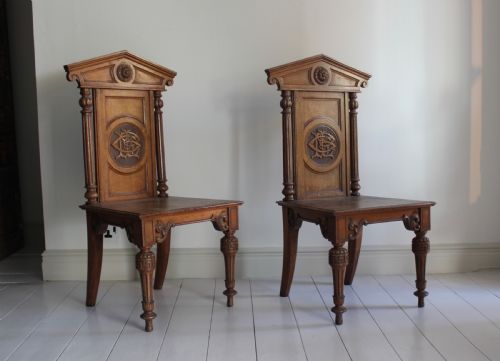
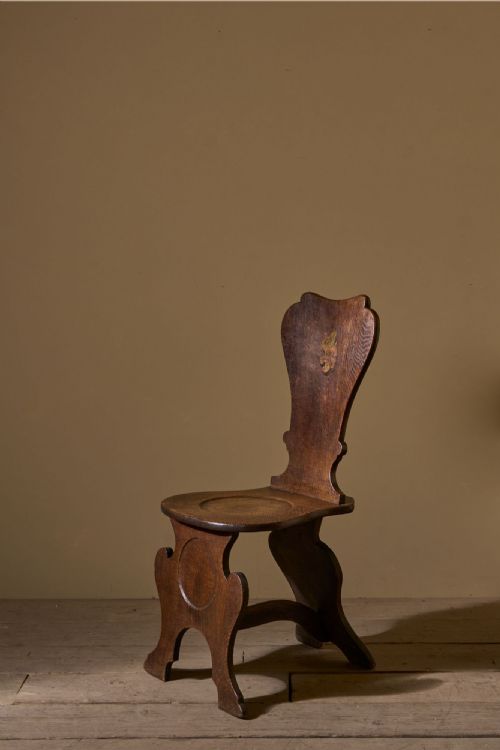
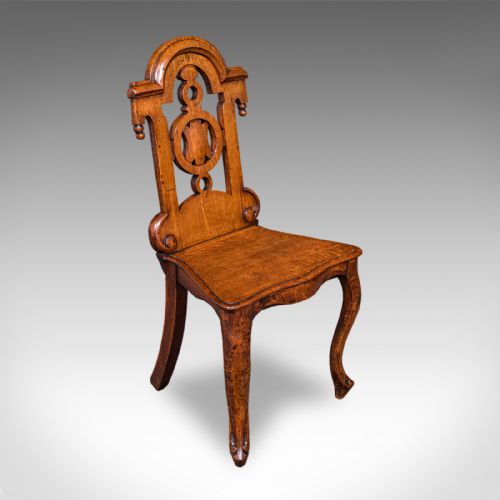
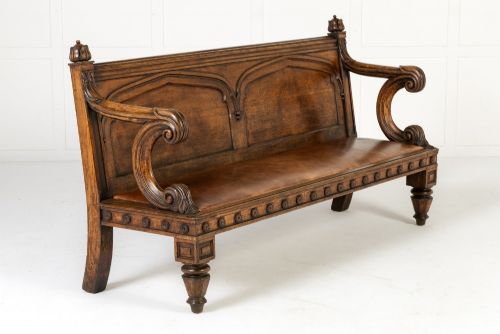
The selection here draws heavily on nineteenth-century revivals alongside eighteenth-century country examples, moving from monastic monks benches to elaborate Gothic settles. Buyers encounter sturdy individual chairs with heraldic shield backs as well as long benches incorporating boot stores and stick stands.
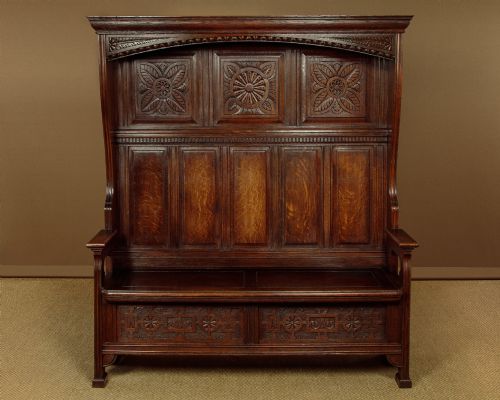
Origins range across English country workshops, Scottish establishments and prominent London cabinet makers. Forms stretch from simple panelled window seats to monumental canopy top box settles designed to block draughts in large reception spaces.
How they were made
Construction relies on solid timber boards joined by mortise and tenon frames, pegged securely to withstand heavy daily use in busy hallways. Craftsmen selected dense heartwood for durability, occasionally combining oak with secondary timbers like elm for structural elements.
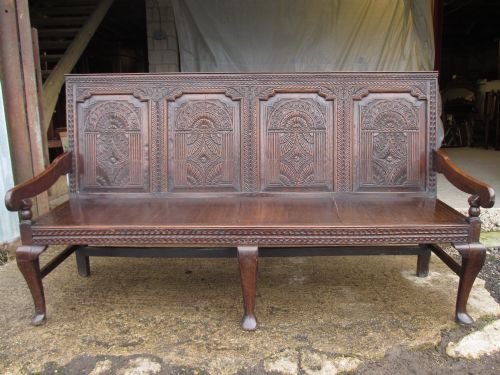
Surface enrichment involves chip carving, linenfold panelling, strapwork and relief motifs applied directly to the timber rather than veneered. Finish treatments vary from waxed patinas developed over centuries to stripped golden surfaces or applied limed effects.
Listings span the eighteenth, nineteenth and early twentieth centuries, featuring solid oak alongside brass and iron mounts.
What varies in quality
Quality rests in the crispness of the hand-carved ornamentation and the architectural proportion of the frame. Superior examples display deeply chiselled relief work and well-balanced linenfold or figural panels rather than shallow, mechanical stamping.
Structural integrity also separates standard utility pieces from high-end commissions. Original timber thickness, sound joinery without excessive modern replacement parts, and integrated hardware such as brass mounts or heavy iron hinges dictate the standing of a piece.
GIllows·James Shoolbred & Co.
The Carved Oak Entryway Seating Glossary
- Settle
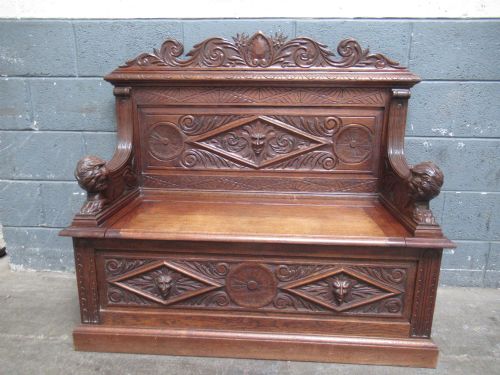
- A wooden bench with a high back, solid arms, and frequently a box compartment beneath the seat for storage. It originally served to keep draughts away from inhabitants sitting near the entrance.
- Monks bench
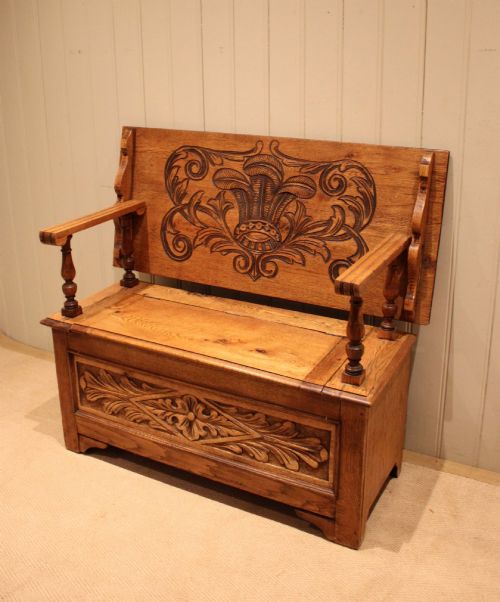
- A convertible piece featuring a pivoting back that folds forward over the seat to form a small table. This dual-purpose furniture suits compact vestibules.
- Box settle
- A hall bench incorporating a hinged seat lid that opens to reveal a deep storage well for blankets, boots or heavy coats. It combines seating with discreet hallway containment.
- Sgabello
- A light, portable wooden chair with trestle supports and an upright back, popular during the Renaissance revival. These decorative seats line narrow corridors where space remains at a premium.
- Gothic Revival
- A nineteenth-century design movement mimicking medieval architecture through pointed arches, tracery and heavy pointed motifs. Carved oak hall furniture often adopts these dramatic ecclesiastical details.
Carved Oak Entryway Seating: Frequently Asked Questions
What is a monks bench used for?
A monks bench serves as both a seat and a small table by allowing the back to pivot downward.
In a hallway, this dual function provides a surface for sorting post or a spot to sit while removing footwear.
Where should I place a settle?
Settles work best against a flat hallway wall or inside a spacious entrance lobby where their high panelled backs can block draughts.
Their solid wooden construction makes them durable enough for daily use near the front door.
How do I spot a Victorian Gothic piece?
Victorian Gothic furniture displays pointed arches, quatrefoils, heavy linenfold panelling and dark waxed oak surfaces.
These nineteenth-century revival pieces emulate medieval ecclesiastical architecture for domestic entrance halls.
What is the difference between a hall chair and a bench?
Hall chairs are single, upright seats designed for temporary waiting rather than long periods of relaxation.
Benches and settles accommodate multiple people and frequently incorporate integrated storage boxes beneath the seat.