
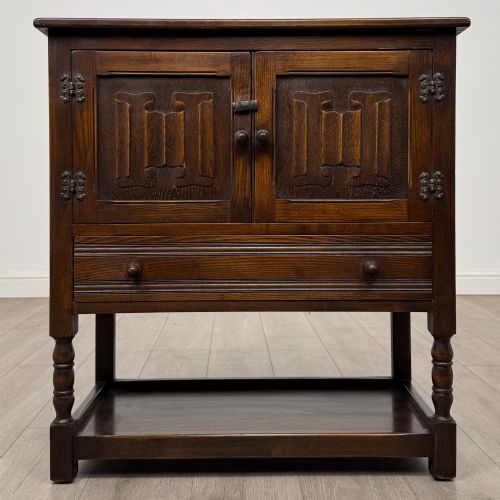

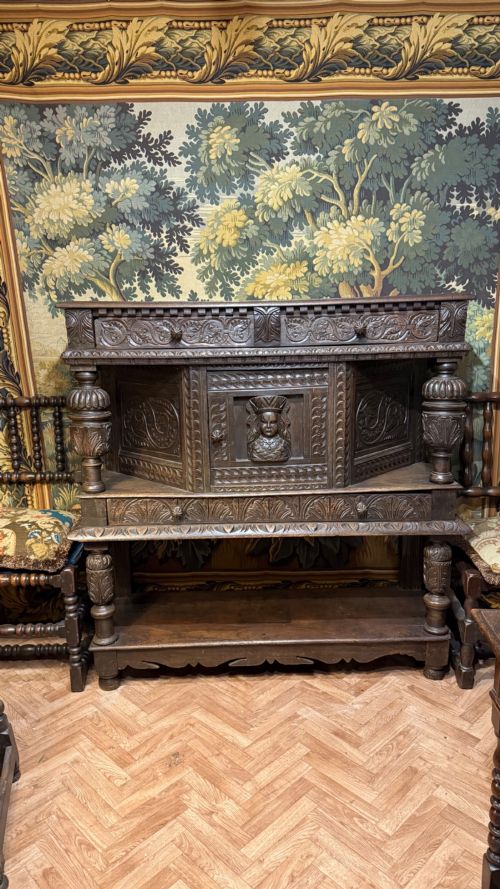
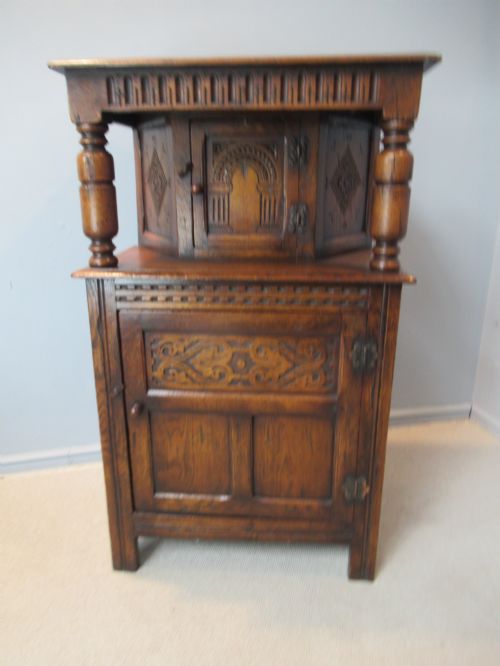
Oak Hall Cabinet
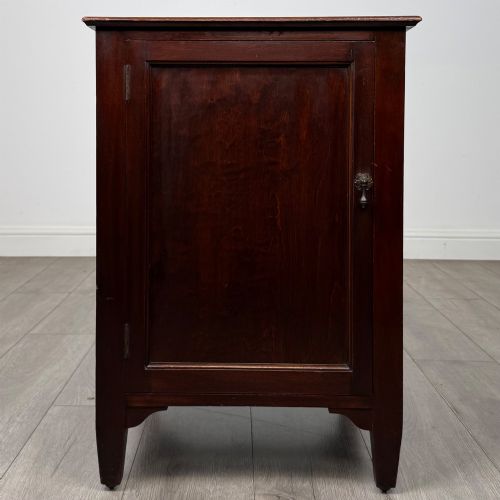
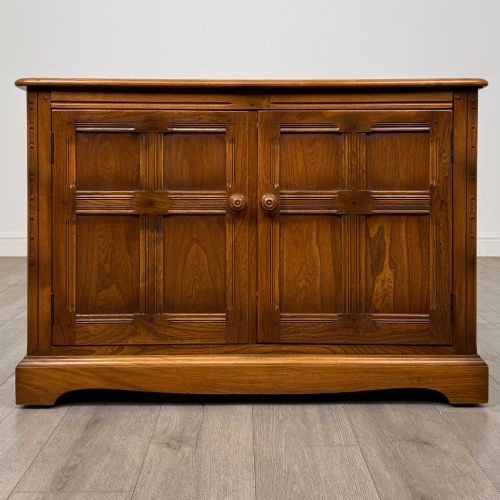
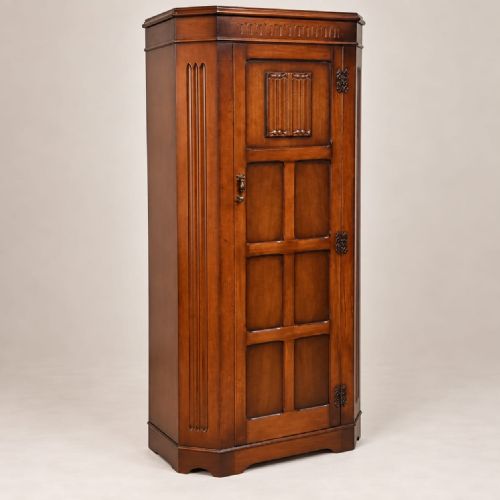
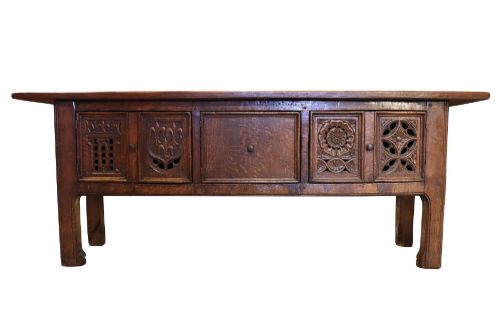
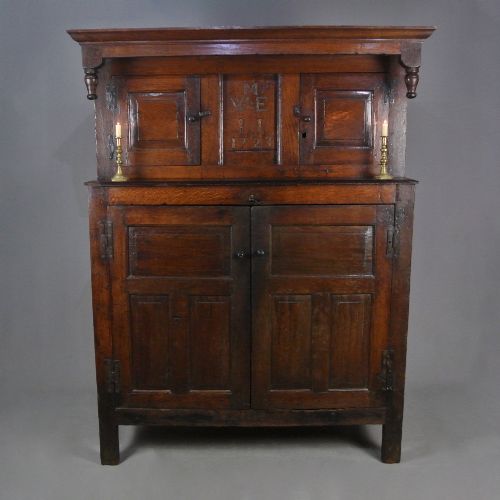
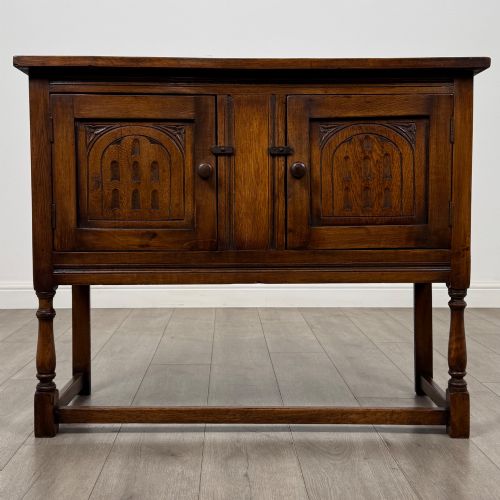
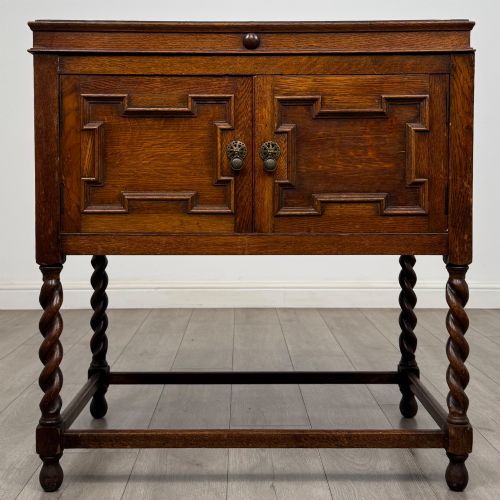
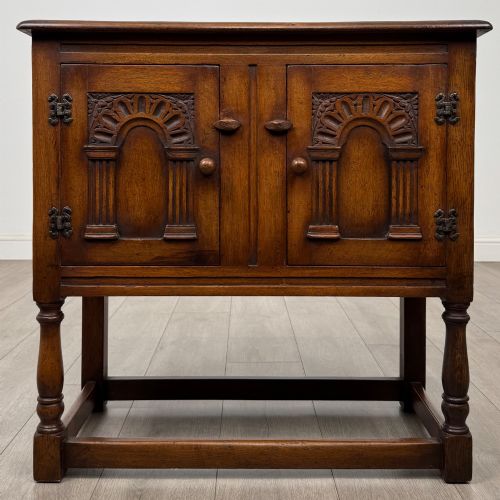
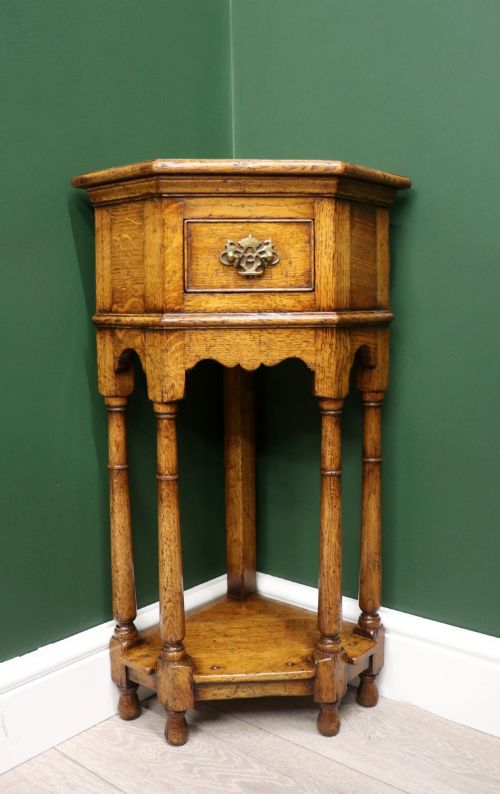
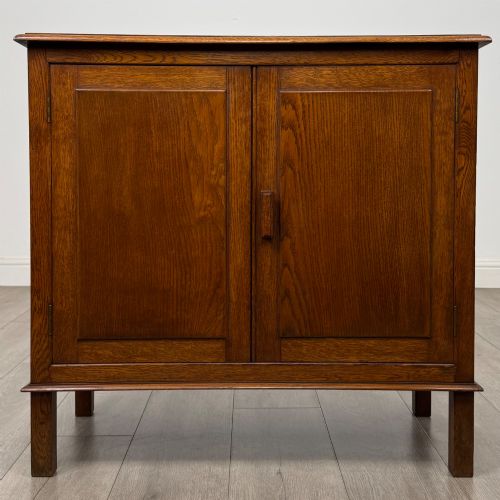
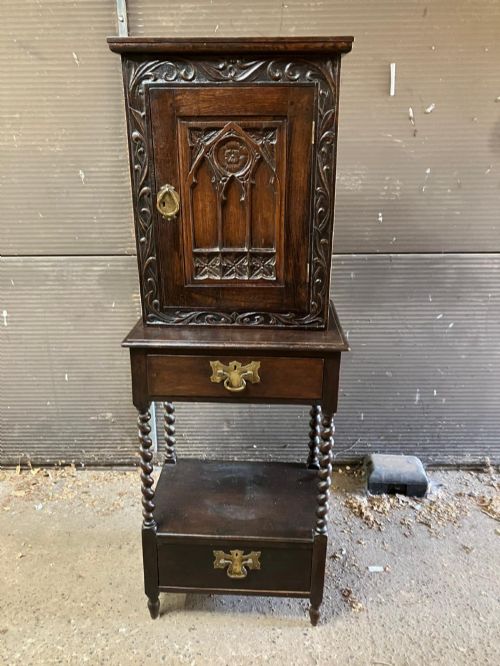
An oak hall cabinet stands ready to receive hats, coats and letters, offering sturdy timber and period character to an entranceway.
Oak Hall Cabinet
An oak hall cabinet provides enclosed storage for entranceways, ranging from tall wardrobes and livery cupboards down to compact side cabinets and wall-hanging shelves. These pieces solve the practical problem of corridor clutter by concealing garments, boots and correspondence behind panelled timber doors.
The selections span centuries of woodworking, featuring early seventeeth-century livery cupboards, eighteenth-century primitive pieces with original blacksmith hardware, and carved nineteenth-century revival designs. Edwardian and 1920s examples appear frequently on this page, often utilising golden or stained oak in proportions suited to smaller hallways.
How They Were Made
Joiners built these cabinets primarily from solid oak, sometimes combined with secondary softwoods and finished with stained or golden surfaces. Iron and brass provided structural reinforcement through strap hinges, escutcheons, and blacksmith-forged locks.
Construction relied on traditional framing techniques, including pegged mortise and tenon joints to secure the heavy timber panels against warping. Carvers applied ornamentation by hand, employing linenfold motifs, geometric strapwork, and Gothic revival tracery directly onto the door fronts.
One persistent eighteenth-century cabinet refuses all modern keys yet opens willingly to an ancient, hand-forged iron skeleton.
What Varies in Quality
The standard of a piece depends on the selection of the timber and the crispness of the hand-carving applied to the panels and cornices. Superior examples display thoughtful grain matching and deep, sharply defined relief work rather than shallow, mechanical stamping.
Original hardware elevates a piece significantly, with hand-wrought blacksmith hinges, working locks, and period brass furniture retaining higher integrity than later replacements. The internal configuration, from fitted shelves to original clothes hooks, also marks the distinction between utilitarian factory work and bespoke cabinet making.
Walker & Hall·Thurston & Co
The Oak Hall Cabinet Glossary
- Livery Cupboard
- A traditional storage piece originally used for provisions or clothing, featuring ventilated doors constructed with turned spindles or pierced panels. These early cupboards often date to the seventeenth or eighteenth centuries.
- Court Cupboard
- A two-stage enclosed piece of vernacular furniture, typically featuring a recessed upper section supported on carved columns above a larger base cupboard. They provide substantial profile and deep interior storage.
- Linenfold
- A style of wood carving depicting folded parchment or cloth, popular during the Tudor period and revived heavily by Victorian and Edwardian cabinet makers. It adds texture to flat panels on doors and ends.
- Lowboy
- A small side table with drawers, frequently standing on four legs, which functions in hallways as a surface for ledgers and correspondence. Eighteenth-century examples often display fine crossbanding.
- Dresser Base
- A heavy lower cabinet originally designed for domestic kitchens or dining rooms, repurposed in hallways for its wide surface and deep drawer storage. They frequently exhibit robust oak construction.
Oak Hall Cabinet: Frequently Asked Questions
What fits inside an oak hall cabinet?
These cabinets typically accommodate everyday entranceway items such as gloves, scarves, books, and small accessories behind their panelled doors. Larger wardrobe versions provide hanging space for coats and cloaks.
Interior layouts vary by period, with some offering fixed shelving, while others include dedicated compartments or fitted hooks for hats and walking sticks.
How do I date an oak hall cabinet?
Dating relies on observing construction methods, timber preparation, and decorative styles visible across the piece. Hand-cut dovetails, forged iron hardware, and vernacular joinery suggest earlier centuries, whereas machine-sawn elements point towards the Edwardian era or the 1920s.
Revival styles from the Victorian period often borrow motifs from Jacobean or Gothic eras, making it essential to examine the interior timber and backboards alongside external carving.
Where should I place a hall cabinet?
These pieces suit entrance halls, boot rooms, and wide corridors where surface space and concealed storage are required. Their shallow proportions allow them to sit against narrow walls without obstructing pathways.
Pairing a cabinet with a nearby mirror or coat hooks creates a functional cloakroom arrangement that echoes period country house layouts.
How do I care for antique oak?
Maintain the timber by applying a quality beeswax periodically to nourish the grain and protect the finish from moisture. Avoid placing the cabinet near direct heat sources or in fluctuating sunlight to prevent timber movement.
Dust regularly with a soft, dry cloth and address spills immediately to preserve the original surface patina.