
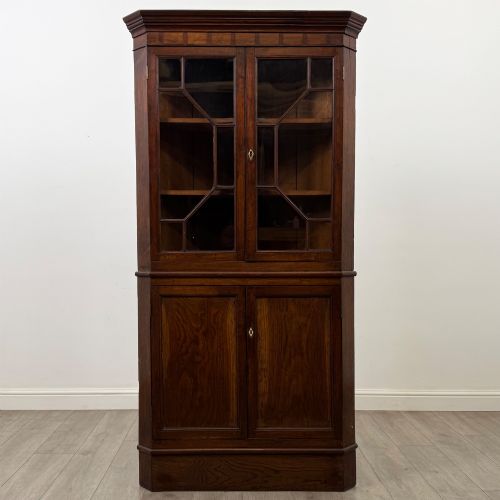
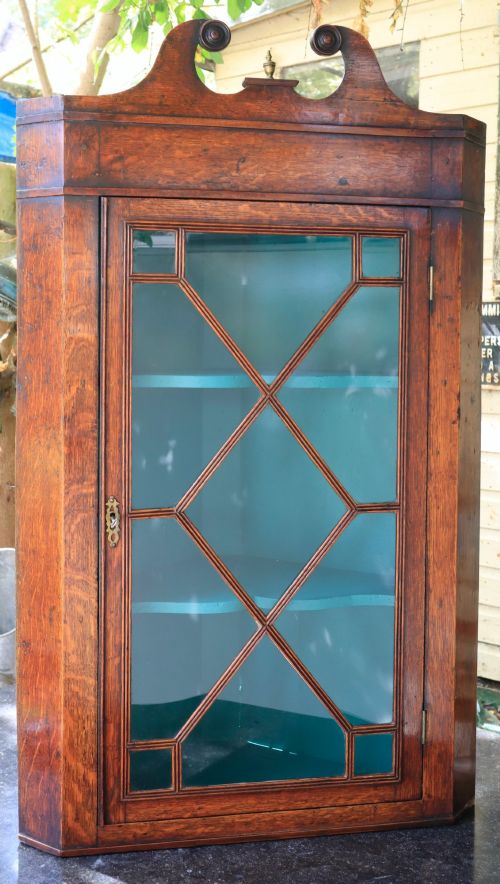
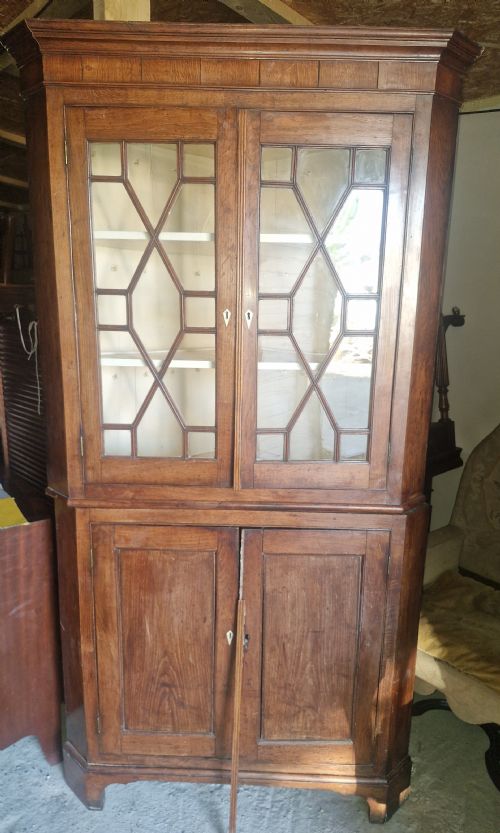
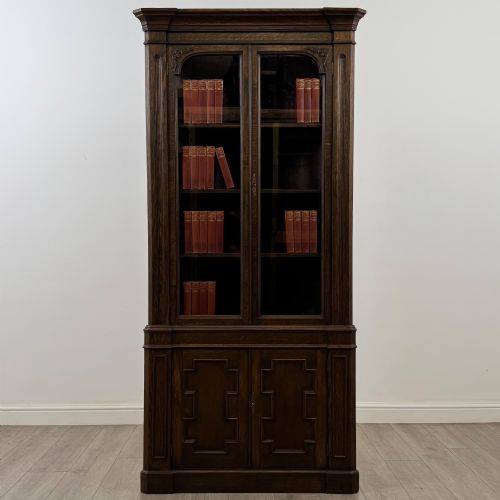
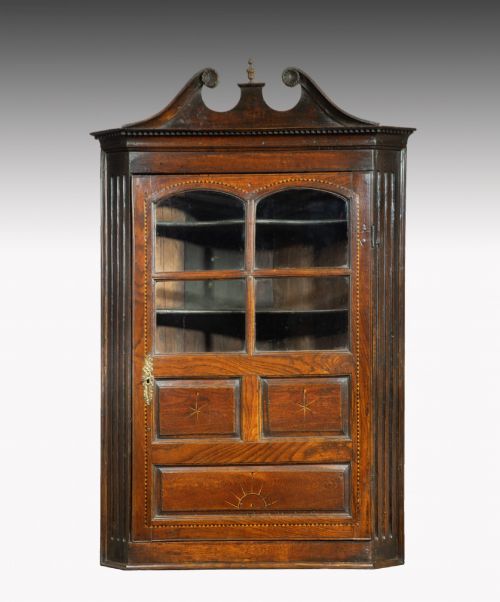
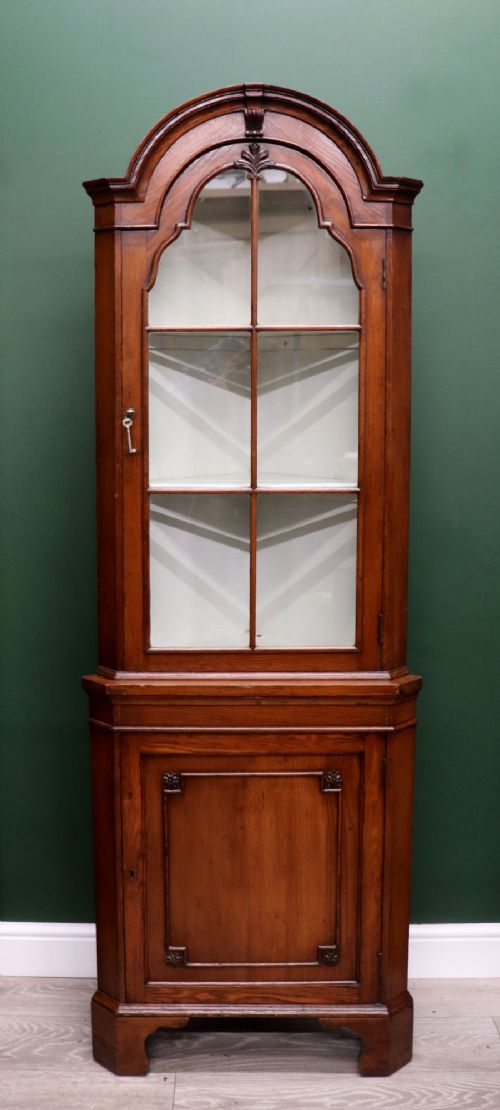


Oak Glazed Corner Cupboard
An oak glazed corner cupboard turns unused room angles into display space with timber and glass.
Oak Glazed Corner Cupboard
An oak glazed corner cupboard provides timber storage and glass display designed specifically to fit the intersection of two walls. These pieces turn awkward dead space into a functional asset, utilising room geometry efficiently.
The version most commonly met on this page is the Georgian model, typically constructed with a single glazed door showing multiple individual glass panes. These range from wall-hanging formats to tall floor-standing or two-part Welsh country pieces.
Beyond the 18th century examples, later pieces emerge from the Victorian, Edwardian, and 1930 periods, incorporating revival styles like Jacobean, Arts and Crafts, and the Cotswold School.
Materials and construction methods
Makers utilised solid oak as the principal timber, sometimes combining it with mahogany for cross-banding or interior elements. Brass hardware appears on hinges and escutcheons, supporting doors fitted with transparent window glass.
Joinery methods rely on traditional framing for the cabinet carcase and door construction, holding small glass panes in position with wooden glazing bars. Wall-hanging variants include structural hanging points, while floor-standing formats distribute weight through moulded plinths and cornices.
Some corner cupboards feature triple-aspect glass fronts, ensuring that even the darkest room corners catch stray glints of daylight.
Distinctions in quality
Quality rests in the precision of the timber selection and the refinement of the joinery, particularly in the slimness of the glazing bars holding the glass. Early pieces demonstrate tight panel fit and thoughtful grain matching across the visible surfaces.
Proportion and scale dictate the visual success of the piece, as well as whether the cabinet stands independently on the floor or hangs securely from a wall. Later revival works display varying adherence to traditional proportions compared to their 18th century predecessors.
The Oak Glazed Corner Cupboard Glossary
- Astragal
- Moulded timber bars that divide a glazed door into multiple smaller panes. These delicate wooden divisions define the window layout on traditional cabinet doors.
- Cornice
- The moulded projecting timber crown at the top of a cabinet. This architectural detail finishes the upper edge before the ceiling.
- Plinth
- The heavy horizontal base block upon which a floor-standing cabinet rests. It lifts the main body of the furniture clear of the floorboards.
- Escutcheon
- A protective metal plate surrounding a keyhole opening. Brass examples protect the surrounding oak timber from wear caused by the key.
- Welsh country
- A regional vernacular style associated with furniture originating from Wales. These pieces often exhibit robust construction and practical proportions suited to domestic use.
Oak Glazed Corner Cupboard: Frequently Asked Questions
How do I hang a wall cabinet?
Wall-hanging examples require secure fixing to solid wall studs or masonry using appropriate internal brackets or rear mounting plates.
Because these oak cabinets carry significant weight from the timber frame and glass door, proper wall anchors prevent structural failure.
What is the difference between hanging and floor standing?
Hanging cabinets mount directly to wall surfaces to save floor space, often featuring smaller proportions suited to compact rooms.
Floor-standing and two-part Welsh pieces rest entirely on the ground, offering greater interior storage capacity across multiple tiers.
How do I identify a Georgian piece?
Georgian examples date from the 18th century, displaying period construction techniques, hand-cut joinery, and traditional timber ageing.
They frequently feature astragal glazed doors and classic proportions that distinguish them from later 19th century or Edwardian revival interpretations.
Can these cabinets hold heavy items?
Internal wooden shelves support everyday display items like ceramics, glassware, and books comfortably under normal domestic conditions.
Extremely heavy loads should be avoided to protect the fixed shelf supports and the structural integrity of the corner carcase.