
Oak Geometric Panel
Oak geometric panel items are period storage pieces built with applied moulding patterns, offering tactile depth and seventeenth-century character for traditional interiors.
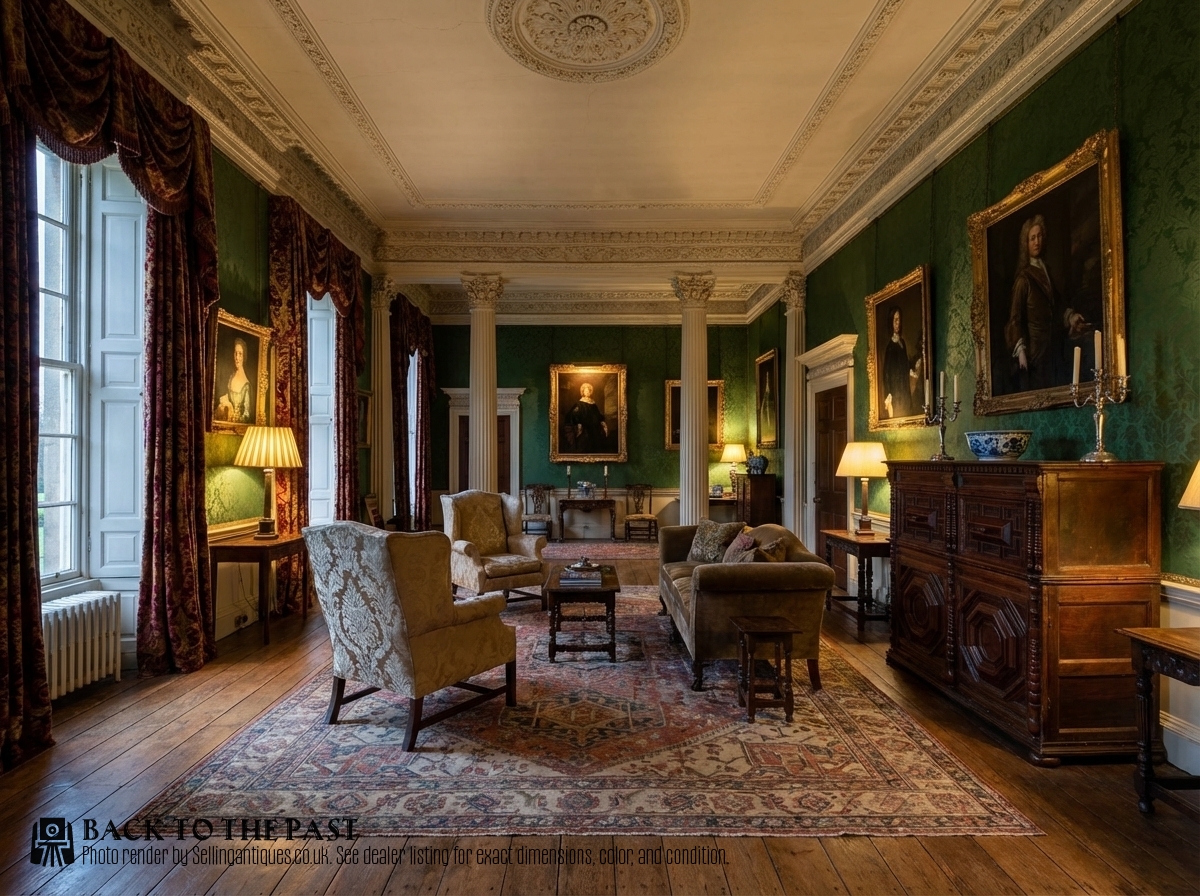
Oak Geometric Panel
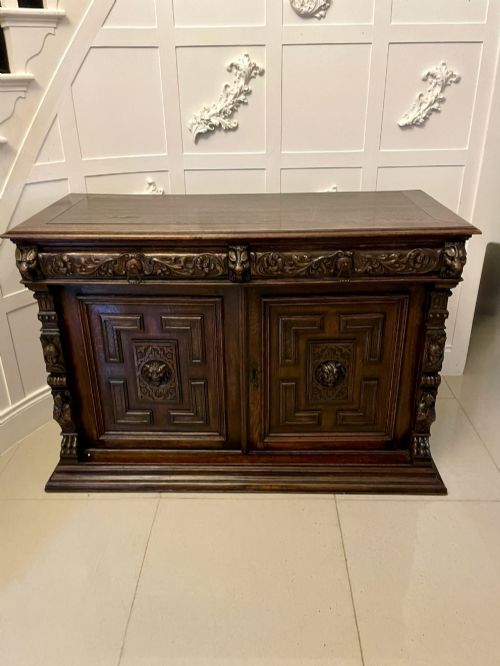
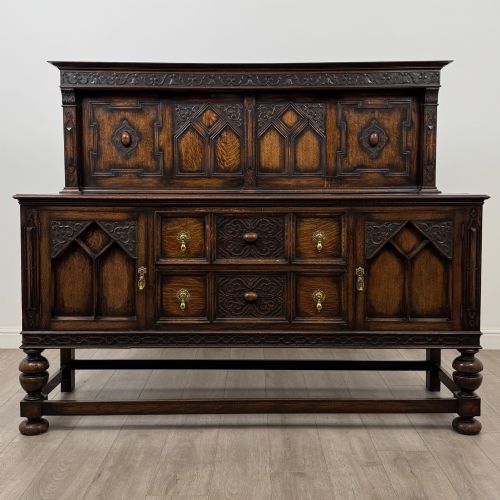
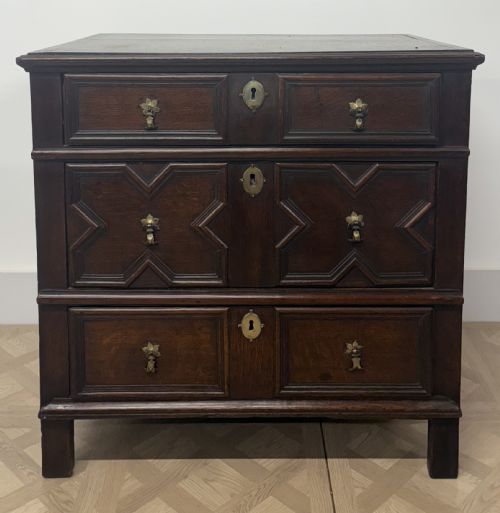
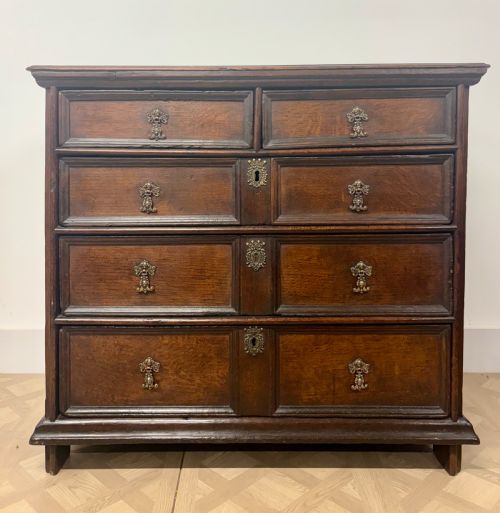
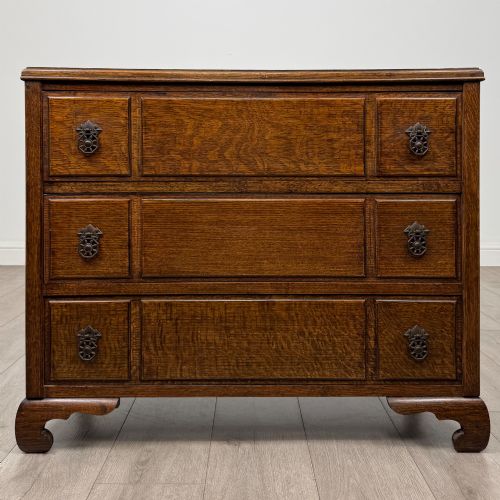
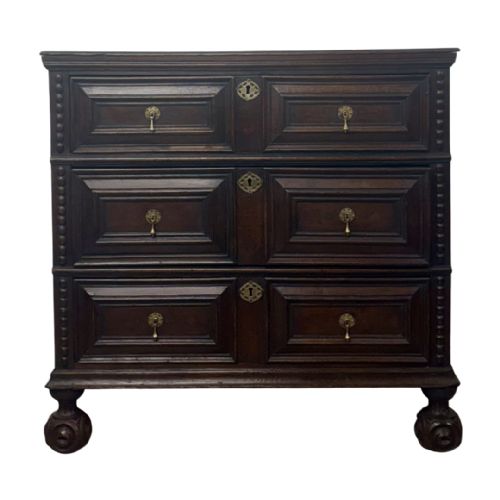
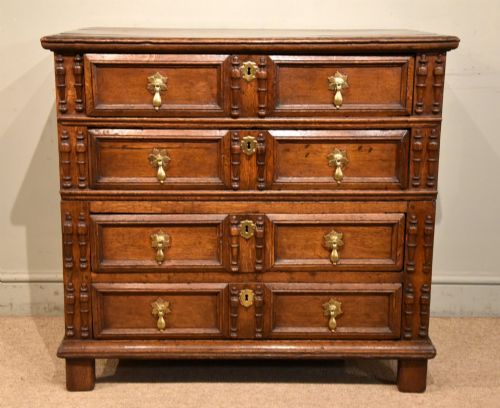
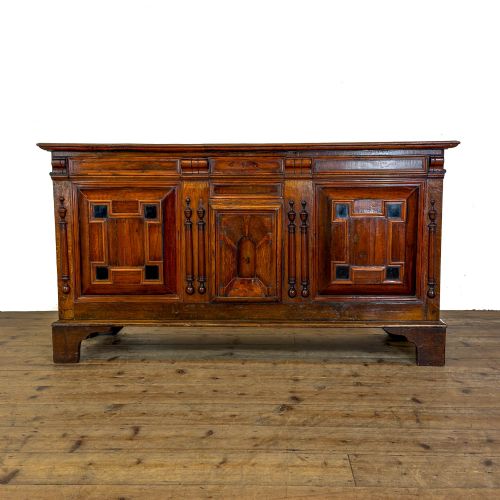
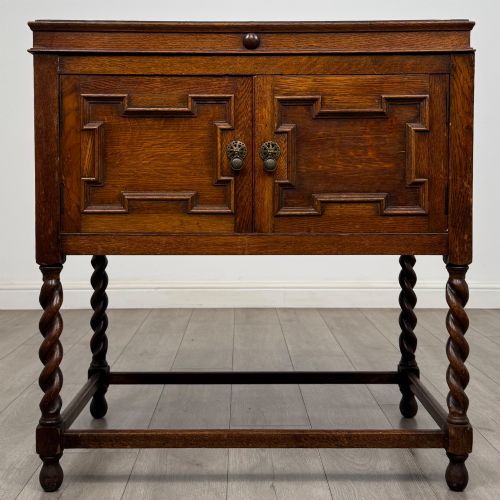
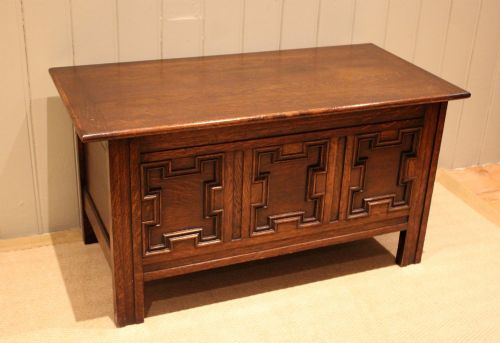
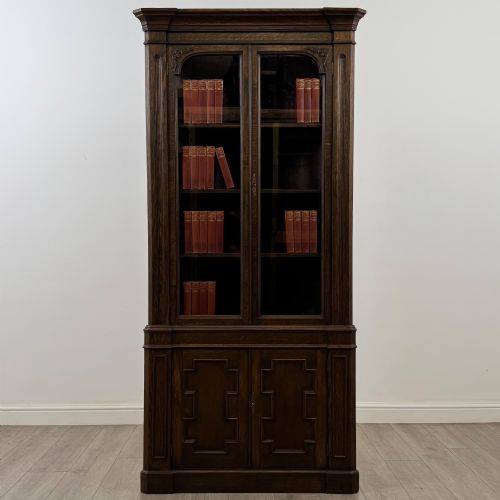
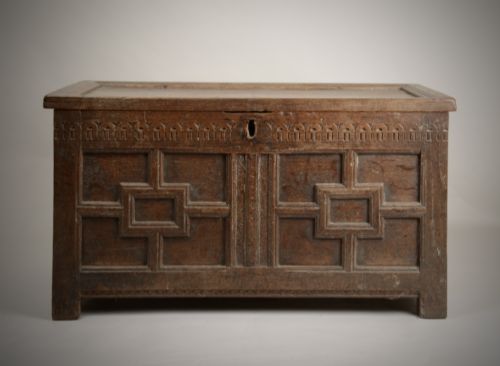
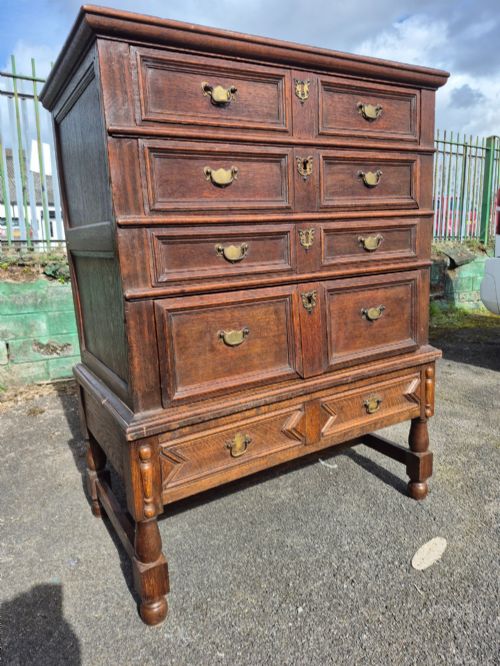
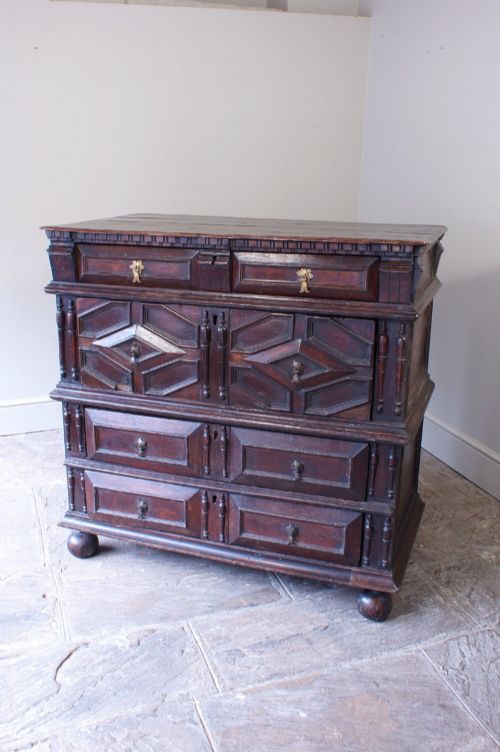
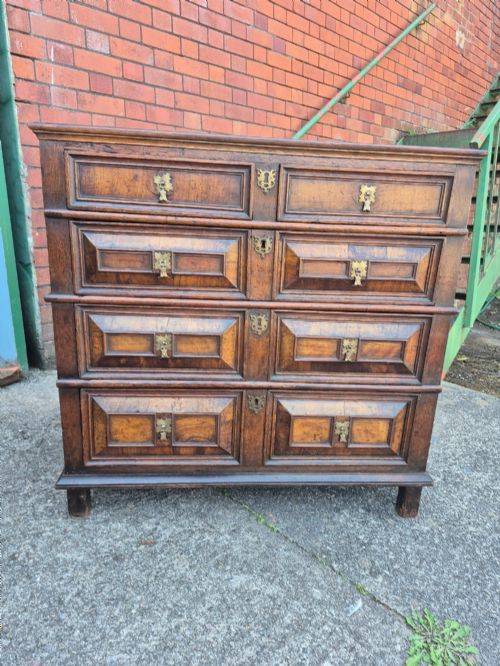
An oak geometric panel search uncovers substantial case furniture featuring applied mouldings arranged in repeating patterns across drawer fronts, doors, and coffers. These decorative elements create sunken panels in rectangles, octagons, and lozenges, giving flat timber a strong architectural relief.
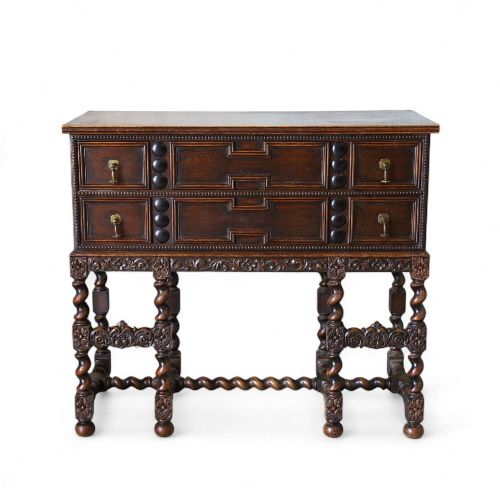
Buyers meet seventeenth-century originals alongside later revival pieces from the Edwardian era and the early twentieth century. The primary forms span chests of drawers, mule chests, dressers, sideboards, and cupboards constructed for domestic storage.
Original pieces originate mostly from the seventeenth century, often associated with the Charles II, William and Mary, and Jacobean periods. Revival examples from the late nineteenth and early twentieth centuries replicate these seventeenth-century joinery methods and geometric layouts.
How they were made
Joiners built these pieces using solid oak planks assembled with traditional frame and panel construction to accommodate seasonal wood movement. Secondary timbers such as fruitwood and walnut occasionally appear in contrasting mouldings or secondary drawer linings.
Workers shaped small sections of timber by hand, mitring them carefully to form the raised geometric shapes glued and pinned directly onto the flat drawer fronts or cupboard doors. Brass drop handles and iron hinges completed the functional hardware on these storage carcasses.
Listings span seventeenth-century originals alongside Edwardian and 1930s revivals, all constructed primarily from oak with occasional walnut and fruitwood.
What varies in quality
The precision and complexity of the applied geometric mouldings separate standard examples from superior work. Crisp mitres, balanced proportions across multiple drawers, and the integration of contrasting timbers like walnut indicate higher workshop skill.
Surface preservation and natural ageing dictate the desirability of a piece. Examples retaining a faded, untouched patina on the timber grain hold greater visual depth than heavily stripped or over-polished surfaces.
The Oak Geometric Panel Glossary
- Geometric moulding
- Applied strips of timber shaped with profiles and arranged in repeating patterns on flat surfaces. This technique adds tactile relief and visual rhythm to seventeenth-century case furniture.
- Mule chest
- A storage chest fitted with one or two drawers beneath the main compartment. It bridges the transition between a traditional coffer and a full chest of drawers.
- Jacobean
- The period spanning the early seventeenth century under the reign of James I, characterised by dark oak furniture and heavy geometric ornamentation. The style saw widespread revivals in the Victorian and Edwardian periods.
- Dresser base
- A long low sideboard featuring cupboards or drawers, originally used in the kitchen or dining hall for food preparation and serving. Surviving seventeenth and eighteenth-century examples now serve as living room credenzas.
- Patina
- The surface sheen and colour acquired by wood through age, light exposure, and handling. A fine patina develops naturally over centuries and reveals the underlying grain texture.
Oak Geometric Panel: Frequently Asked Questions
How do I date an oak geometric panel chest?
Examine the construction methods visible on the interior and drawer linings, noting hand-cut dovetails, tool marks, and timber shrinkage. Seventeenth-century originals display distinct hand-planed surfaces and peg joinery, whereas revival pieces from the twentieth century often show machine-sawn timber.
Hardware placement and lock fixings also provide clues. Original drop handles leave specific wear patterns, while secondary wood species used in moulding details help align the piece with Carolean or William and Mary workshop practices.
Where should I place an oak geometric cabinet?
Position these heavy storage pieces against a flat wall in a hallway, dining room, or living space where the applied mouldings catch directional light. The strong relief patterns stand out best when illuminated from the side.
Keep the timber away from direct heat sources and dramatic humidity shifts to prevent the oak panels and applied mouldings from splitting. Treating the surface with appropriate wax helps maintain the moisture balance in the wood.
What is the difference between a coffer and a mule chest?
A coffer is a simple storage box with a hinged lid opening from the top, primarily designed for linens and valuables. It represents one of the earliest forms of domestic furniture.
A mule chest incorporates one or more drawers built into the base beneath the main storage well, offering easier access to stored items without lifting the top lid. This design evolved during the seventeenth and eighteenth centuries to improve everyday utility.