
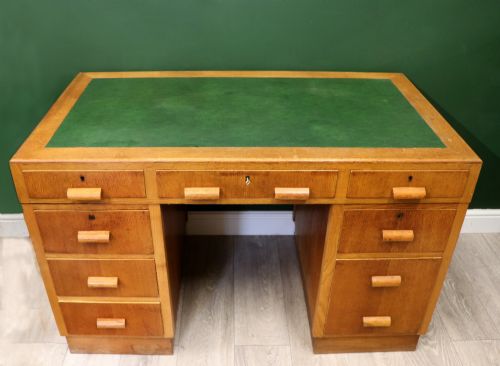
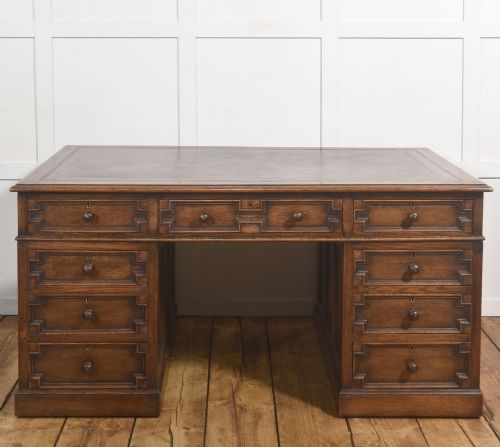
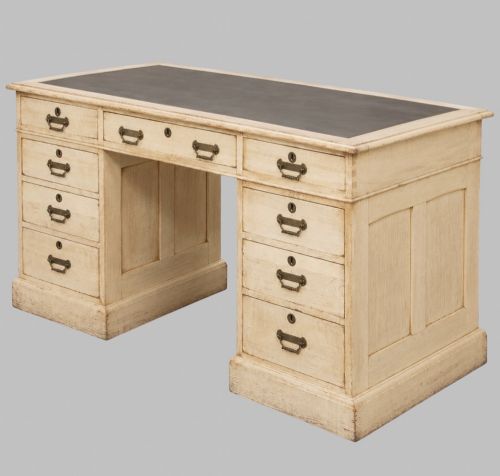
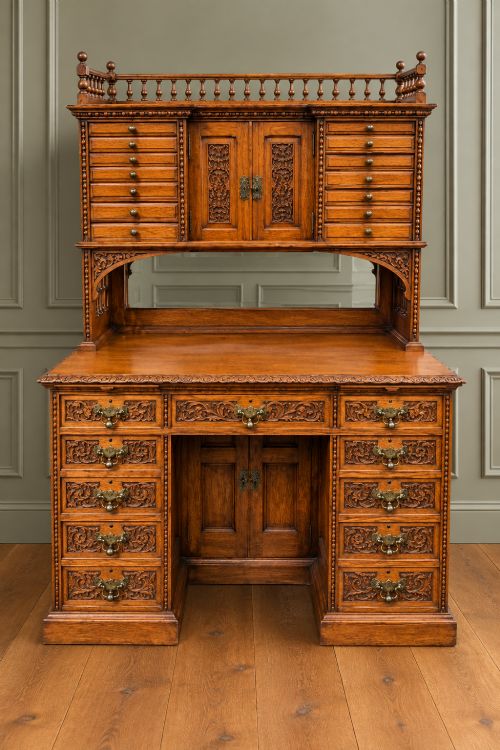
Oak Executive Writing Desk
An oak executive writing desk brings serious presence to a room, offering substantial workspace built in solid oak through the Victorian and Edwardian periods.
Oak Executive Writing Desk
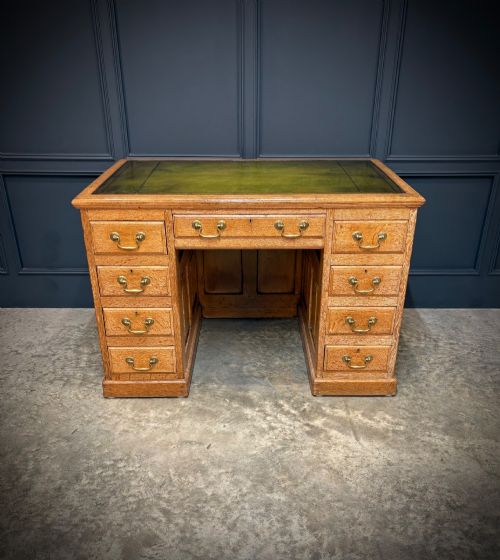
When you search for an oak executive writing desk, you encounter substantial freestanding furniture built to command a study, library or office. These pieces range from pedestal desks with banks of drawers to large partners desks designed for two people to work opposite one another.
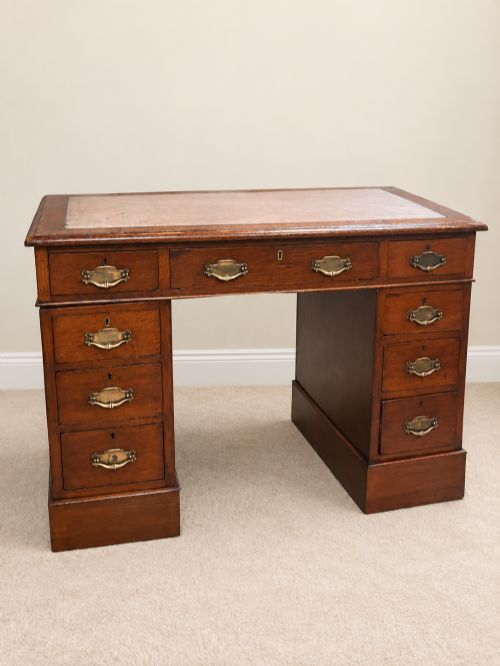
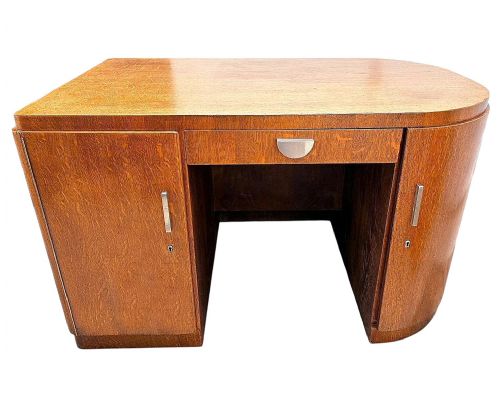
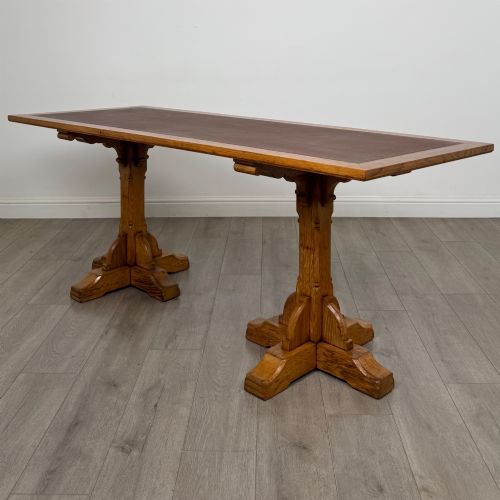
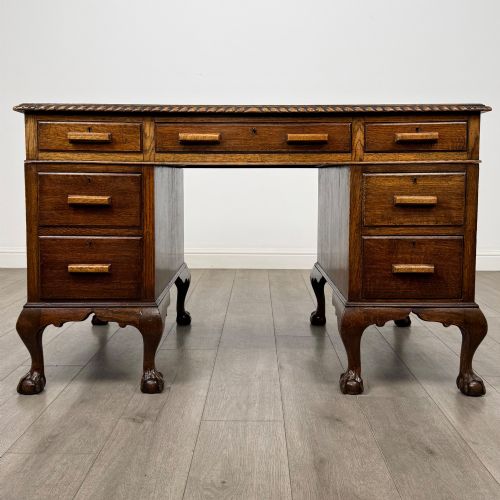
The pieces appearing on this page date principally from the Victorian and Edwardian eras, alongside early twentieth-century examples spanning Arts and Crafts and Art Deco styles. You will find kneehole desks, library tables and Dickens desks constructed primarily in oak, often accompanied by secondary timbers and decorative veneers.
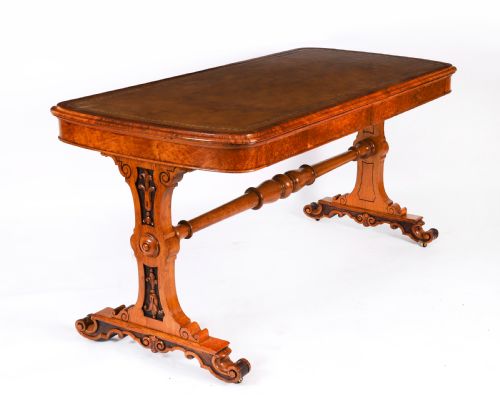
Makers and workshops of the nineteenth and twentieth centuries produced these items for estate managers, bankers and directors. The forms vary from straightforward functional office desks to exhibition-quality library tables featuring carved details and inset leather writing surfaces.
How they were made
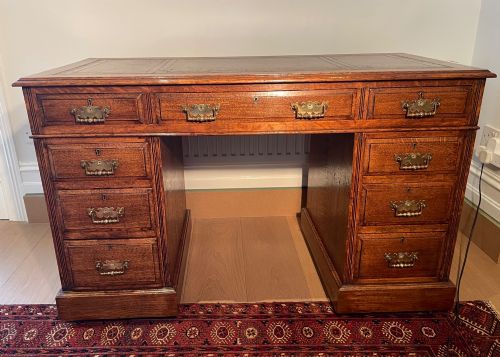
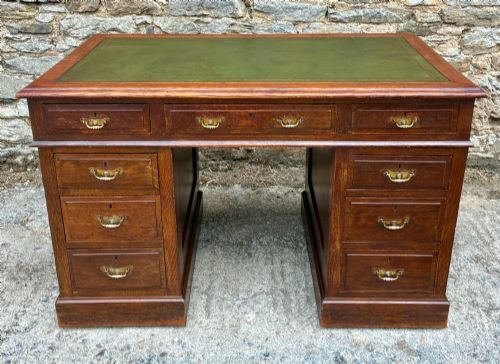
Cabinet makers constructed these desks using solid oak frames, drawer linings in secondary woods, and applied veneers such as burr walnut to add visual depth to drawer fronts and top panels. Workshops utilised brass hardware for handles and key escutcheons, alongside inset leather writing surfaces tooled with gilt borders.
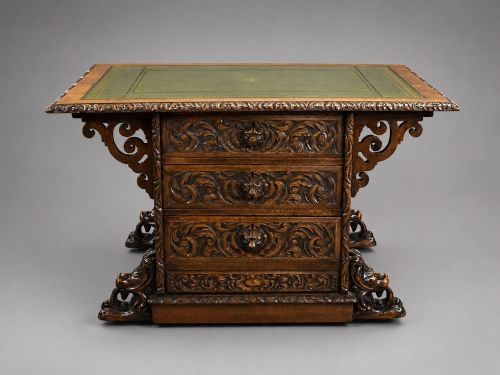
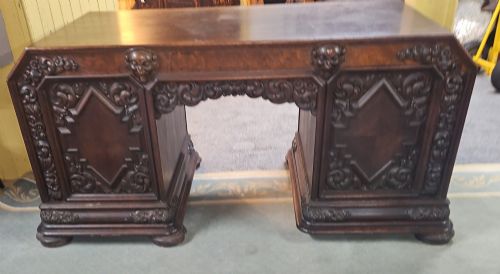
Construction methods rely on traditional dovetail joints for drawer construction and sturdy mortise and tenon framing to support heavy loads of books and ledgers. Carved elements, including linenfold panels, lion heads or revivalist motifs, were hand-chiselled by skilled artisans on Victorian and Edwardian pieces.
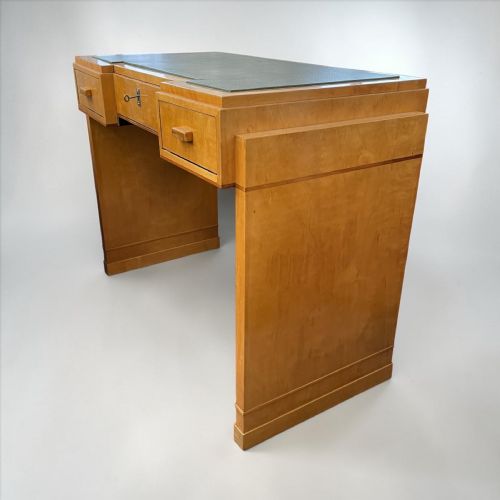
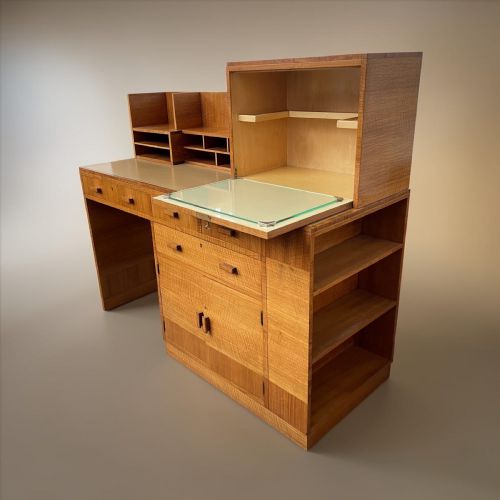
Later twentieth-century examples incorporate modernist influences, utilising chrome details and geometric D-end configurations while maintaining a core structure of oak or birch.
The listings span Victorian, Edwardian and Art Deco periods, showcasing materials from solid oak and burr walnut to brass and leather.
What varies in quality
Quality in an oak executive writing desk rests on the selection of timber and the ambition of the design. Pieces utilising figured oak, pollard oak or burr walnut veneers sit at the upper end of the scale, contrasted against plain utilitarian office desks.
The integrity of the construction dictates the tier of the piece, visible in the hand-cut dovetailing of the drawers and the presence of original brass locks and fittings. Workshop attribution, whether bearing a maker's label or executed in the manner of firms like Gillows, elevates the standing of an individual desk.
Proportion and scale also separate standard commercial furniture from exhibition-quality partners tables designed to be viewed from all four sides in the centre of a large room.
Gillows·Heal's·Étienne Kohlmann·T Wilson
The Oak Executive Writing Desk Glossary
- Partners desk
- A large pedestal desk designed with drawers and cupboards on both sides, allowing two people to sit and work opposite each other.
- Kneehole desk
- A writing desk featuring a central recess for the user's legs, flanked by two vertical banks of drawers.
- Burr oak
- Timber harvested from the growth excrescences on oak trees, yielding highly decorative swirling grain patterns used for cabinet veneers.
- Dickens desk
- A pedestal desk featuring a raised superstructure of pigeonholes and small drawers above the main writing surface.
- Library table
- A large freestanding table used for reading and writing, finished on all sides so it can stand in the centre of a room.
Oak Executive Writing Desk: Frequently Asked Questions
What is a partners desk?
A partners desk is a large double-sided desk built with matching sets of drawers and cupboards facing outward from both long sides. This layout enabled two professional colleagues or business partners to share the same workspace simultaneously.
These pieces typically occupy the centre of a large study or library rather than sitting against a wall. Their finished backs and substantial proportions distinguish them from standard single-sided pedestal desks.
How do I care for the leather top?
The leather writing surface requires gentle cleaning with a damp cloth and occasional treatment with specialist leather balms to prevent drying and cracking. Avoid using harsh chemical solvents or placing hot cups directly onto the leather.
Most antique desks retain their original or replacement leather inserts tooled with gold leaf borders, which respond well to minimal moisture and careful preservation.
Where should I place a large oak desk?
A large oak executive desk or partners table requires substantial floor space and functions best positioned centrally within a room with adequate clearance on all sides. Because many models are finished on the reverse, floating the desk away from the walls highlights its architectural form.
Ensure the room humidity remains stable, as solid oak and antique veneers react to excessive temperature fluctuations near direct heat sources.
How do I date an oak desk?
Dating relies on examining construction techniques, hardware, timber selection and stylistic cues such as Victorian carving or Art Deco geometry. Hand-cut dovetailing, secondary woods inside drawers, and original brass locks provide strong chronological indicators.
Maker labels, stamps or stylistic attributions to workshops like Gillows or Heal's further clarify the exact period of manufacture.