
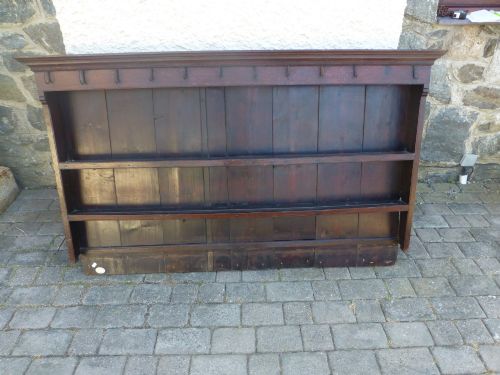
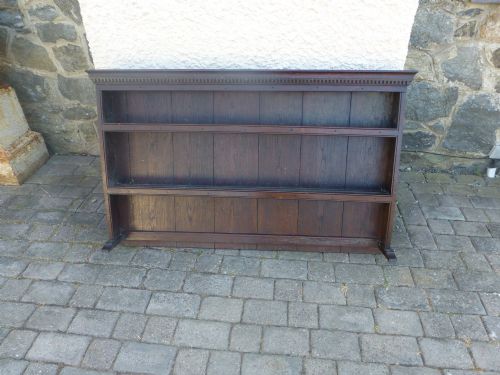
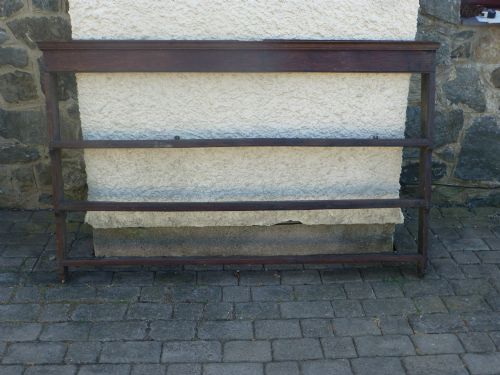
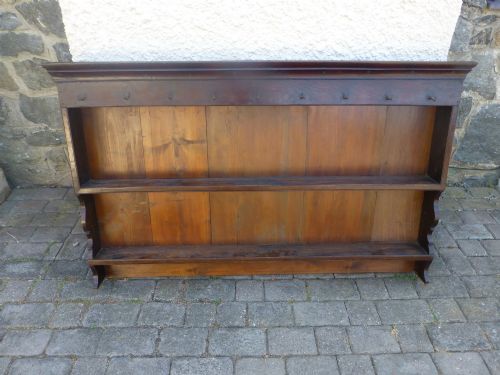
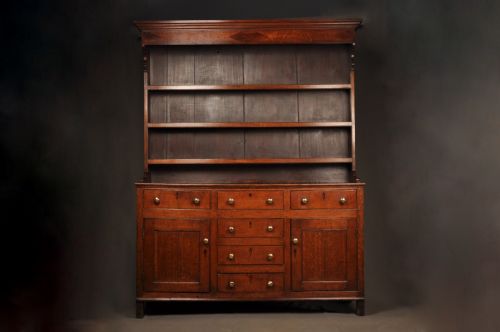


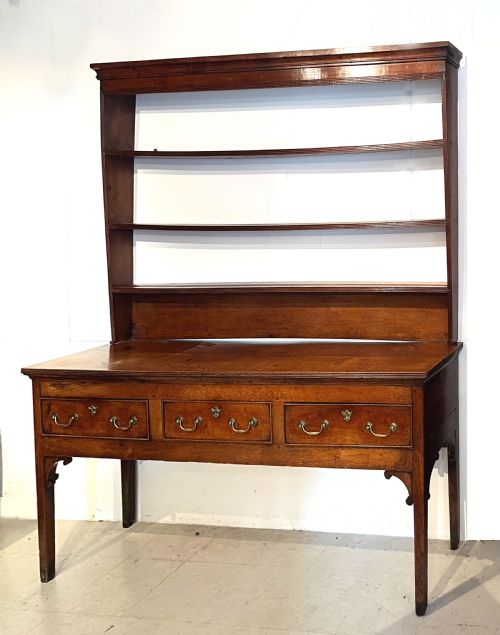
Oak Dresser Display Rack
An oak dresser display rack gives pride of place to pottery, bringing centuries of practical craftsmanship and regional style straight into the kitchen.
Oak Dresser Display Rack
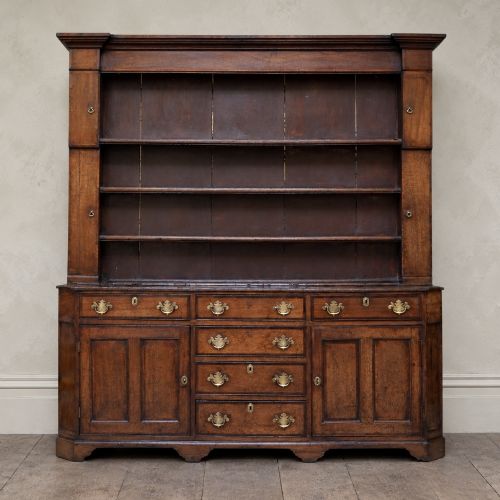
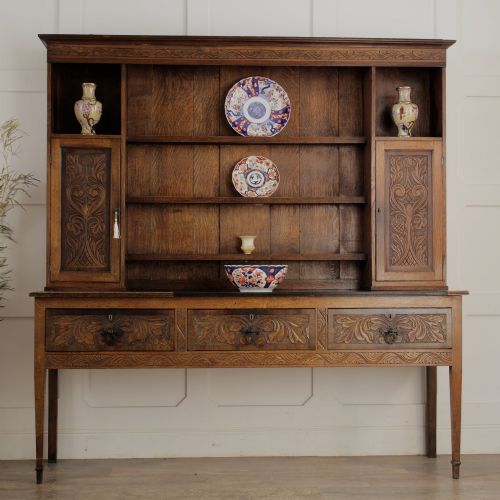
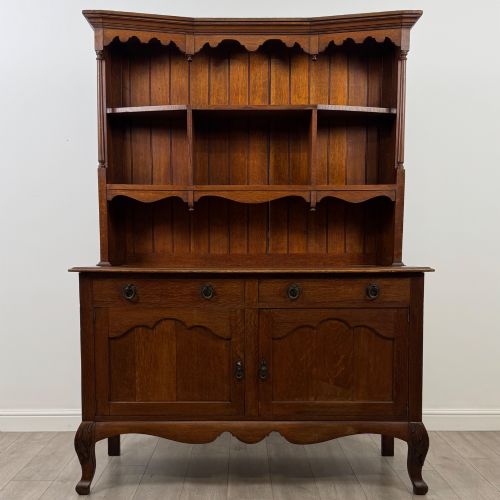
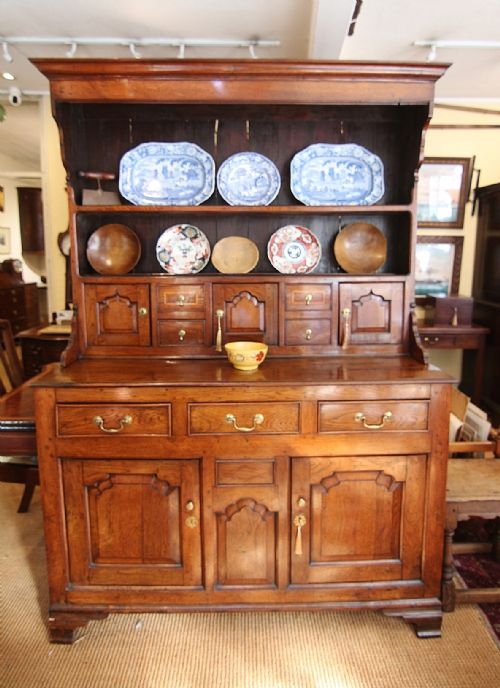
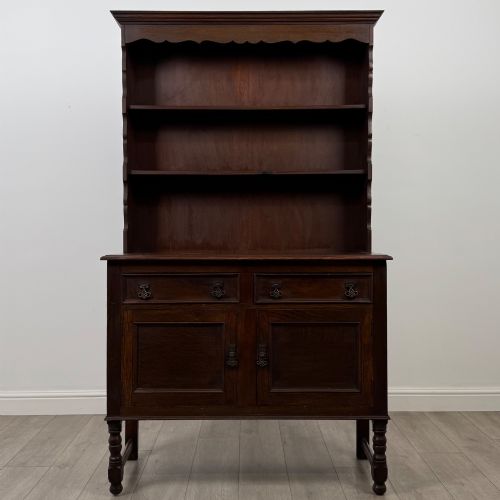
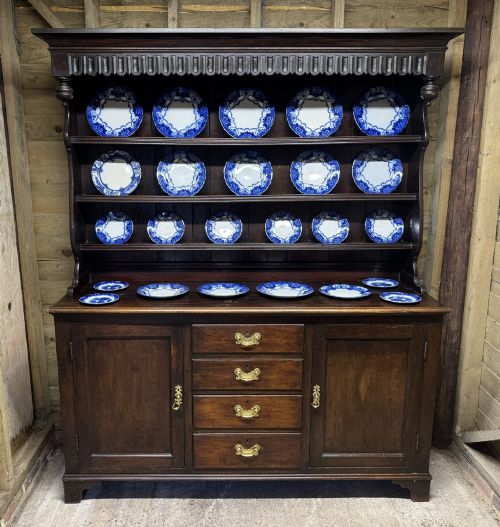
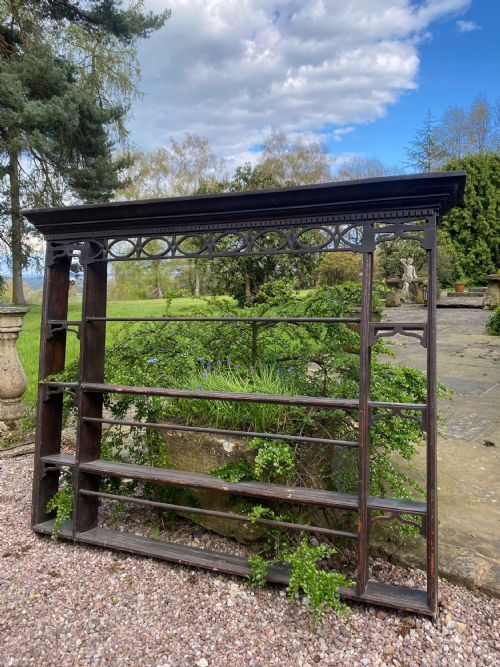
When you search for an oak dresser display rack, you are looking at the upper plate-holding tiers or the complete combined base and shelving units designed to show off ceramics. These pieces bridge the gap between utilitarian kitchen storage and formal dining room display, originating primarily from rural and vernacular traditions.
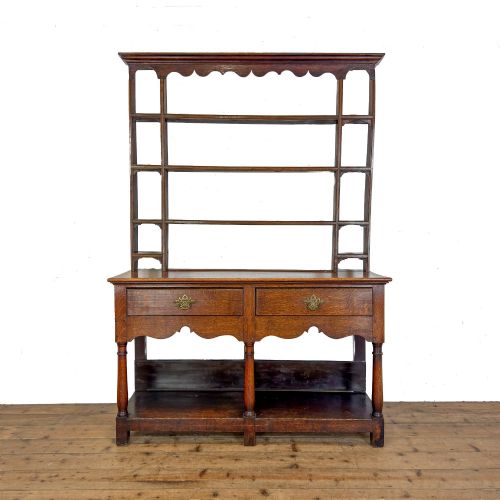
You are most likely to meet 18th-century Georgian examples and 19th-century country pieces on this page, often built in regional styles such as Welsh Country or Snowdonia. They vary from slim wall-mounted shelves to massive standing dressers complete with potboards and breakfront drawers.
The form exists to present delftware, plates and china securely to the room while keeping everyday kitchen crockery within arm's reach. Their enduring appeal lies in how effortlessly they anchor a rustic or traditional interior scheme.
Materials and construction methods
Makers relied heavily on solid oak, complemented occasionally by pine for internal elements or secondary backs, constructing frames using traditional joinery and pegged mortise and tenon joints. Iron and brass hardware, from butterfly hinges to drawer pulls, added necessary structural support and contrast to the warm timber.
Surface detail on these pieces ranges from plain country boards to elaborate hand-carvings, including Green Man motifs, inlaid details, and architectural elements like Corinthian columns. Stained finishes or natural wax applications protect the wood while highlighting the distinct grain patterns built up over generations of use.
Keep your eyes open for hidden drawer compartments tucked quietly beneath the plate shelves for stashing secret recipe notes.
Assessing quality and proportion
Quality in these racks and dressers rests on the crispness of the carpentry and whether the display tier remains with its original base. Superior examples display thoughtful proportions, such as slim profiles or balanced breakfront drawers, rather than clumsy additions made later in their lifespan.
The integrity of the timber and the subtlety of regional detailing distinguish a fine country piece from a heavier revival work. Well-preserved mouldings, original brass or iron fixtures, and honest surface patination elevate a utilitarian kitchen shelf into a notable example of vernacular furniture.
The Oak Dresser Display Rack Glossary
- Delft rack
- A wall-mounted or dresser-integrated set of shelves specifically grooved to hold plates upright without slipping. These racks were designed to showcase imported tin-glazed earthenware and family china.
- Potboard
- An open slatted lower shelf fitted between the legs of a Welsh dresser. Makers added this lower tier to store heavy pots and pans away from damp stone floors.
- Breakfront
- A cabinet or rack front where the central section projects forward past the flanking sides. This architectural arrangement creates depth and shadow on a kitchen wall.
- Vernacular
- Everyday domestic furniture built by local carpenters rather than metropolitan workshops. These regional pieces reflect local materials and practical household needs.
- Green Man
- A sculptural architectural ornament depicting a human face carved with leaves, vines and branches bursting from the mouth. Carvers used this pagan symbol of rebirth on later Victorian revival furniture.
Oak Dresser Display Rack: Frequently Asked Questions
How do I mount a wall rack?
Wall-mounted racks require secure fixing into solid masonry or direct attachment to wall studs using appropriate brackets. Because these heavy timber shelves will carry substantial rows of ceramic plates, proper weight distribution is essential.
Check the structural integrity of the backboards and frame before hanging. Ensure the fixings can bear the combined load of both the solid oak framework and your heavy earthenware display.
Are the racks removable from the base?
Many traditional dressers were constructed in two distinct sections, featuring a detachable upper plate rack that simply rests upon or pins into the lower sideboard base. This modular approach made transportation through narrow cottage doorways much easier for historical movers.
Examine the mating surfaces where the rack meets the top of the base for peg holes or fixing brackets. Some smaller or later iterations, however, were built as a single unified carcase.
How do I date an oak rack?
Dating relies on observing tool marks, timber selection, construction techniques, and stylistic clues such as cockbeading or carved motifs. Georgian pieces often display hand-sawn board widths and pegged joinery, whereas later Victorian or revival pieces utilise machine-cut elements.
Compare the timber patination between the upper display section and the lower sideboard if bought together. Discrepancies in wear or wood species can indicate a marriage of two different periods.
What is a Welsh dresser?
A Welsh dresser is a traditional kitchen storage unit combining a base of drawers and cupboards with an open shelved rack superstructure on top. Originating in Wales, they evolved from simple sideboards into grand display pieces for family ceramics.
These pieces often incorporate potboards at the floor level and distinctive regional timber choices like local oak. They served as the functional and visual heart of the rural farmhouse kitchen.