



Oak Dining Room Seating
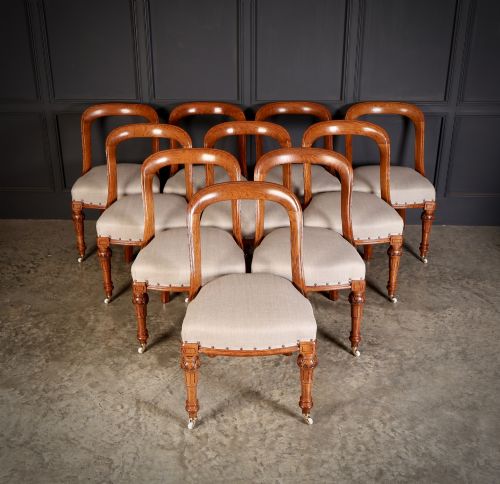
These oak dining room seating options bring solid timber frames and period character to the table, spanning Victorian, Edwardian, and Georgian eras.
Oak Dining Room Seating
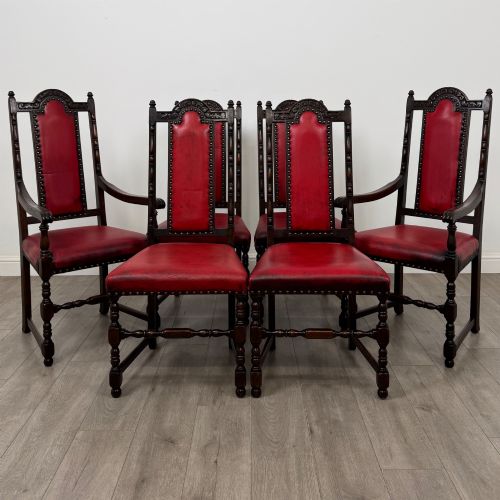
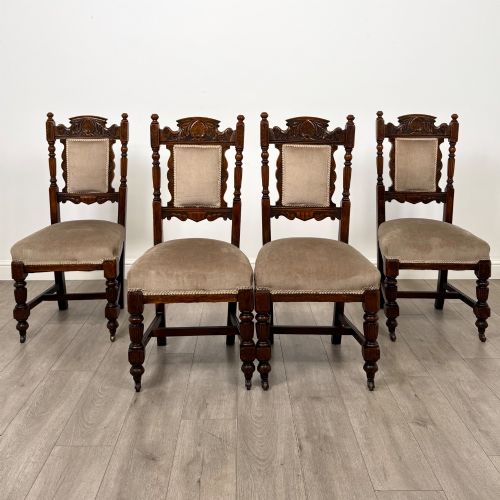
The pieces on this page draw from multiple eras, with Victorian and Edwardian examples appearing frequently alongside 19th-century and 20th-century sets. Revival styles such as Jacobean, Gothic, and Queen Anne shape the visual language of these dining chairs.
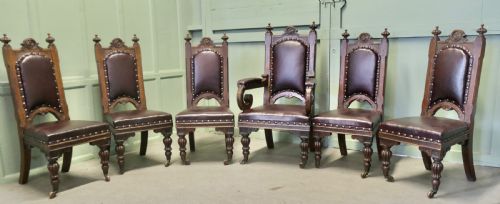
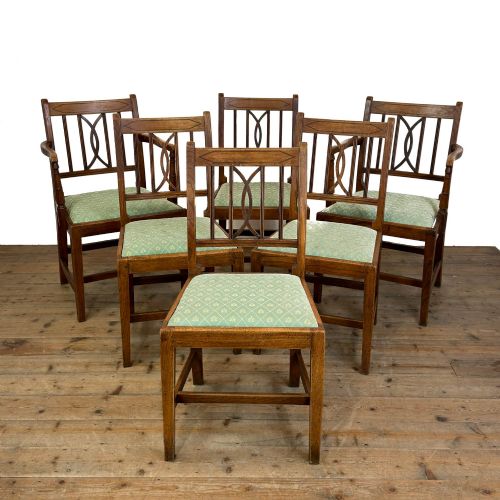
Forms vary from standard dining chairs to high-back carvers with arms. Country oak pieces sit alongside heavily carved Victorian designs and simpler Edwardian frames.
Materials and Construction
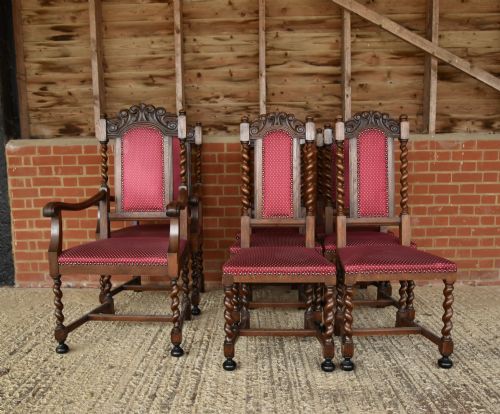
Solid oak provides the structural backbone for these chairs, often shaped through turning, such as barley twist legs, or detailed hand-carving along the crest rails and splats.
Seating portions incorporate diverse materials including leather, velvet, cane, and standard upholstery fabric. Brass details occasionally appear as hardware or nailhead trim on upholstered seats.
Some chairs carry historical weight, including a set specifically linked to Winston Churchill's time at Harry Warren House.
Assessing Quality and Execution
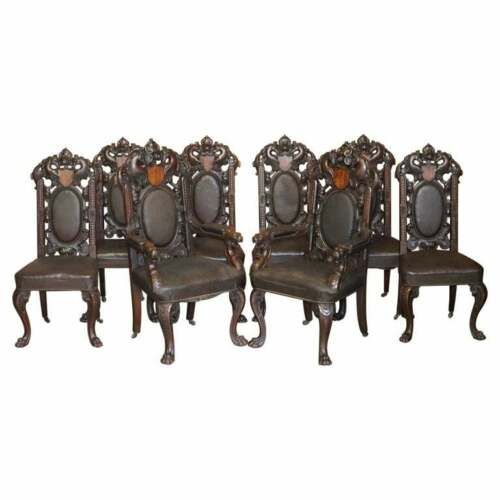
The depth and crispness of the carving distinguish finer seating from simpler production. Heavily carved Victorian and Jacobean Revival chairs rely on skilled handwork to define their ornamentation.
The completeness and scale of the set dictate its standing. Matched sets of eight or ten carry greater weight than smaller groups, while the original integrity of the oak frame and upholstery support remains central to the piece.
The Oak Dining Room Seating Glossary
- Carver
- An armchair designed to sit at the head of a dining table. These pieces usually feature matching side chairs in a larger set.
- Barley twist
- A decorative turning technique resembling a twisted rope, commonly found on the legs and stretchers of 17th-century revival chairs.
- Jacobean Revival
- A style popular in the 19th and early 20th centuries that imitates the heavier, rectilinear furniture of the early 17th century.
- High back
- A chair design featuring an elongated vertical backrest, frequently seen in Gothic and Jacobean styles to project formal authority.
Oak Dining Room Seating: Frequently Asked Questions
How many chairs come in a typical set?
Sets on this page generally range from four to ten chairs, often grouped to accommodate standard dining tables of the period.
Buyers will find both smaller arrangements and larger suites suited for formal dining rooms.
What periods do these chairs represent?
The selection spans the Georgian, Victorian, and Edwardian eras, extending into the early twentieth century.
Revival styles such as Gothic and Jacobean frequently draw inspiration from much older centuries while retaining their nineteenth or twentieth-century manufacturing dates.
Are these chairs suitable for daily use?
Solid oak construction provides inherent structural strength, making these chairs robust enough for regular dining room use.
Upholstered and cane seats may require inspection or minor restoration depending on their age and condition.
What is the difference between a carver and a dining chair?
Carvers include armrests, making them wider and more imposing than standard dining chairs. They are traditionally placed at the head and foot of the table.
Standard dining chairs lack arms, allowing them to tuck neatly along the sides of the table in larger sets.