


Oak Decanter Set
An oak decanter set secures spirits behind locks or within fitted boxes, offering a tactile piece of historic barware.
Oak Decanter Set
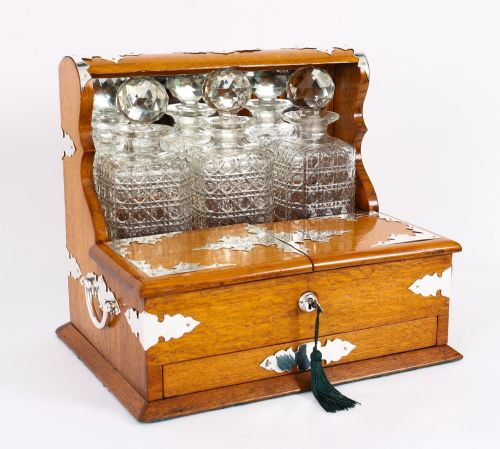
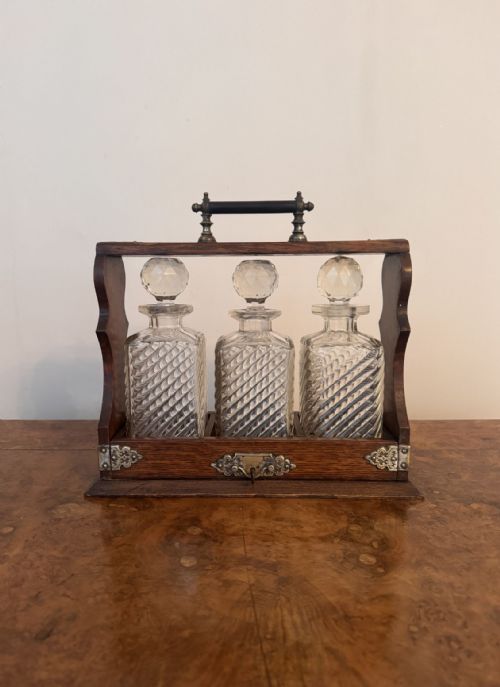
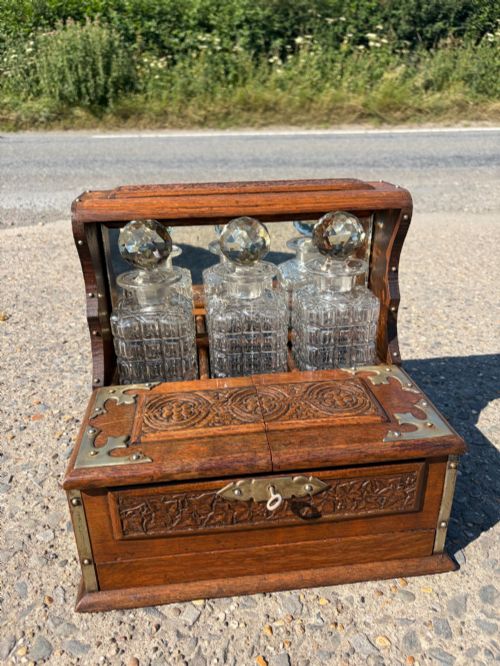
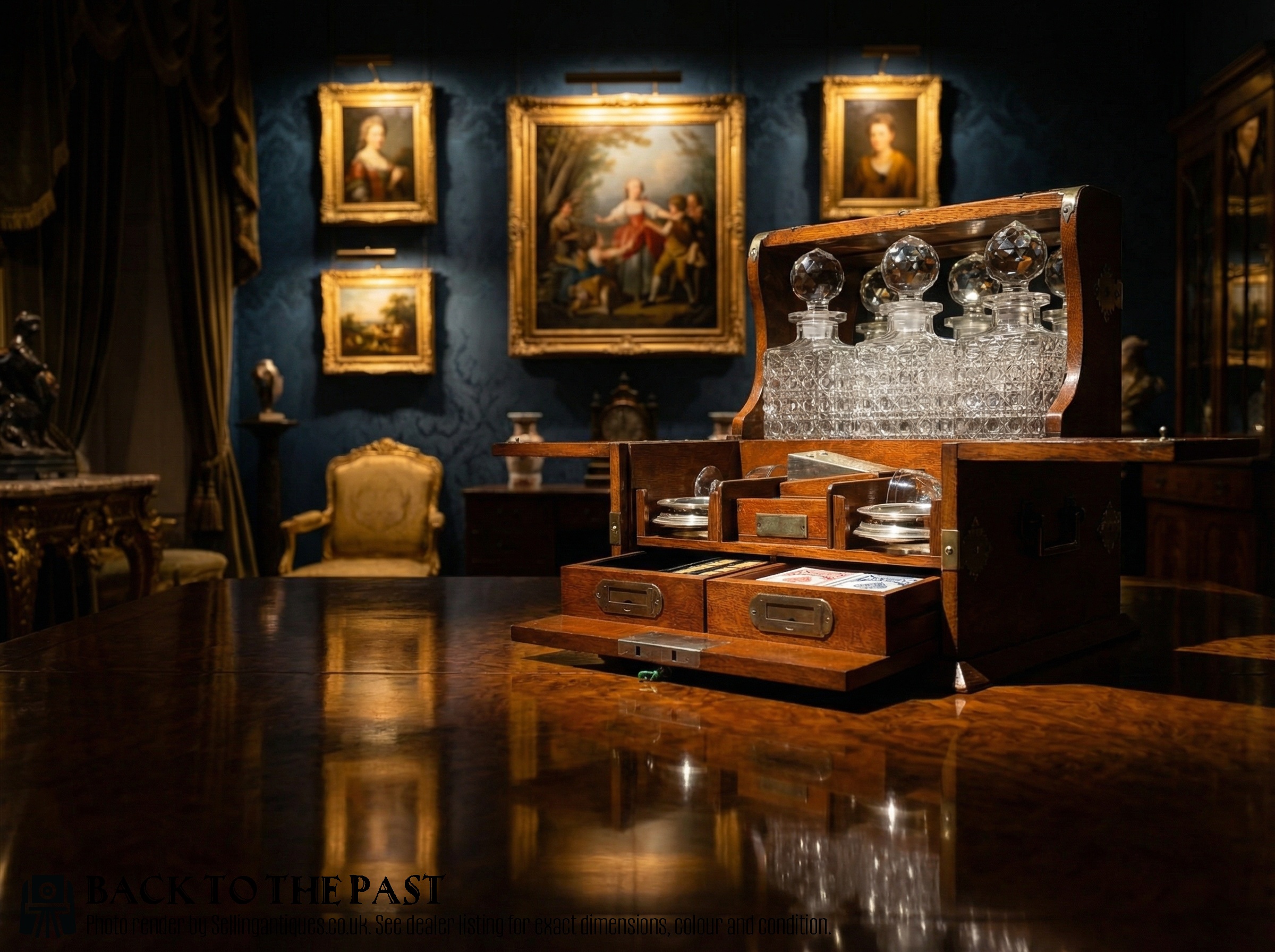
An oak decanter set combines fitted wooden storage with glass vessels, appearing most frequently on this page as a tantalus or a combined games compendium from the Victorian and Edwardian eras. These pieces range from single-bottle cases to large three-bottle dry bars equipped with locking mechanisms designed to restrict access to the spirits within.
The form adapts across periods from 1880 through the Edwardian years and into the 1930s, shifting from heavily brass-mounted Late Victorian boxes to streamlined Art Deco expressions and spirit cask sets. Alongside traditional tantalus frames, simpler boxed decanter sets in honey or blonde oak provide portable service for whiskey, gin, and brandy.
How they were made
Makers constructed the housings using oak, sometimes enhanced with marquetry stringing, and fitted them with metal mounts, brass hinges, and silver-plated locking bars. The internal frameworks require precise carpentry to securely hold cut glass or cut crystal decanters alongside gaming equipment in compendium formats.
Vessels within the sets consist of moulded glass or cut crystal, paired occasionally with silver plate or brass hardware to secure the bottles. Spirit cask sets utilise timber staves formed into small barrels, while tantalus frames employ sliding or locking metal frameworks to trap the decanter stoppers.
Listings feature oak cabinetry paired with cut glass, silver plate, and brass, spanning Victorian, Edwardian, and Art Deco styles.
What varies in quality
The sophistication of the mechanism and cabinetry sets examples apart, moving from plain single-bottle enclosures to elaborate three-bottle dry bars with integrated games compendiums. Marquetry stringing, substantial brass mounts, and the presence of original cut crystal vessels indicate higher execution.
Material selection within the oak itself, from standard honey finishes to blonde or golden oak selections, influences the visual weight of the piece. The inclusion of fully functioning locks with matching keys and undamaged silver-plated hardware further distinguishes finer specimens.
The Oak Decanter Set Glossary
- Tantalus
- A locking drink cabinet or frame that holds decanters securely by their stoppers, preventing the removal of liquid until unlocked with a key.
- Games compendium
- A multi-functional box containing equipment for various parlour games, frequently integrated beneath or beside the decanter storage in larger sets.
- Spirit cask set
- A collection of small wooden barrels mounted on stands, used for dispensing whiskey, gin, and brandy.
- Marquetry stringing
- Inlaid strips of contrasting wood used to create delicate linear patterns on the surface of the oak cabinet.
- Silver plate
- A thin layer of silver applied over a base metal, commonly utilised for the locking bars, handles, and mounts on Victorian and Edwardian examples.
Oak Decanter Set: Frequently Asked Questions
What is a tantalus?
A tantalus is a locking barware frame that holds glass decanters by their necks. It prevents guests or servants from accessing the contents without a key.
Most examples secure two or three bottles simultaneously. The metal mechanism locks over the glass stoppers to keep the bottles firmly in place.
How do I date an oak decanter set?
Dating relies on stylistic clues, hardware, and construction methods. Victorian pieces from around 1880 often feature heavy brass mounts and dark oak.
Edwardian and later examples from 1900 to 1930 tend toward lighter golden or blonde oak finishes. Integrated games compendiums also point toward the late nineteenth and early twentieth centuries.
Are the decanters original to the set?
Many sets retain their original cut glass or crystal decanters shaped specifically for the wooden frame. Because glass is fragile, replacement bottles do occur.
Checking that the decanters fit the cutouts and match the style of the case helps determine originality. The stoppers should also sit correctly beneath any locking bars.
How were these sets used?
They served as after-dinner barware in private homes, keeping spirits ready in the dining room or drawing room. The lock protected expensive imported liquors from unauthorised consumption.
Many versions doubled as entertainment hubs by incorporating cards and board games into the lower drawers or compartments.