





Fitted Games Box
A fitted games box is a portable repository for parlour pastimes, and you want one for its ingenious internal compartments that keep counters and cards in order.
Fitted Games Box
A fitted games box brings together the equipment for nineteenth and early twentieth-century parlour pastimes inside a single compartmented case. These pieces emerge from the Victorian and Edwardian eras, spanning years such as eighteen sixty, eighteen seventy-five, eighteen eighty, and nineteen ten.
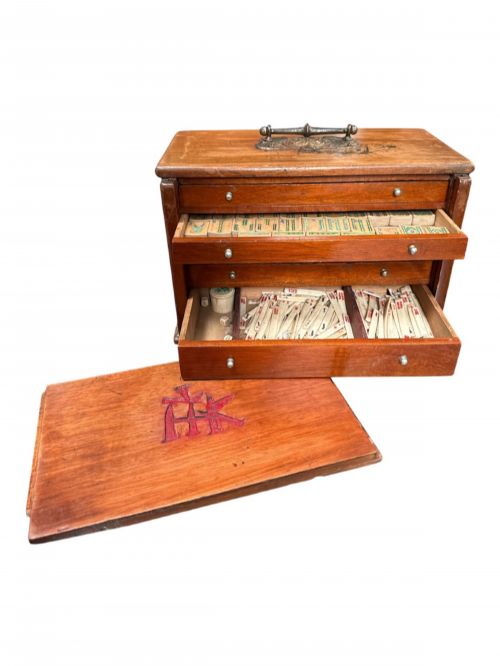
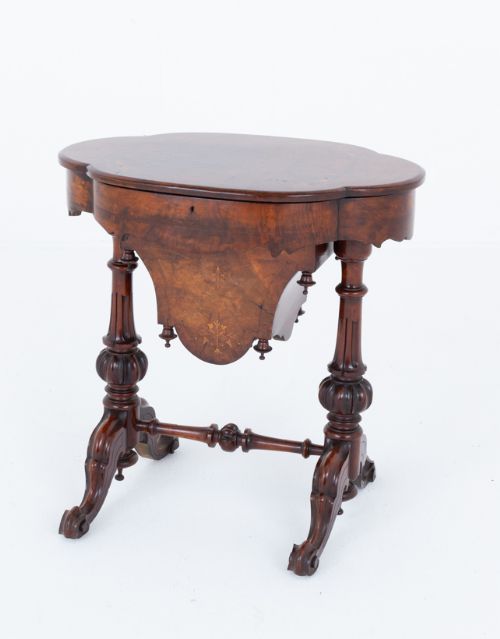
Most examples appear as dedicated wooden boxes or compendiums, alongside occasional tables, work tables, and sewing tables that incorporate fitted interiors. Materials range from burr walnut and golden oak to rosewood, mahogany, kingwood, amboyna, and brass-mounted walnut.
The objects serve as portable centres for social entertainment, holding everything from card game accessories to Chinese mahjong sets and decanters. You will find both compact table-top cases and substantial floor-standing cabinets designed for country house parlours.
How they were made
Cabinetmakers constructed the main carcass from dense timbers like walnut, oak, and mahogany, often applying decorative veneers such as burr walnut, kingwood, and amboyna. Surfaces frequently feature inlaid details and marquetry work, whilst brass mounts provide structural reinforcement and decorative contrast.
Interiors required precise carpentry to create custom compartments for bone gaming pieces, counters, and cards. Silk linings, leather surfaces, and specialised trays were integrated to protect the components during transport and storage.
Some Victorian compendiums hide their chess boards and card counters beneath false bottoms so clever guests had to solve the puzzle to play.
What varies in quality
The distinction between standard pieces and the finest examples rests on the selection of timber veneers and the intricacy of the internal arrangement. Superior boxes employ richly figured burr walnut, amboyna, or kingwood, paired with meticulous marquetry and robust brass hardware.
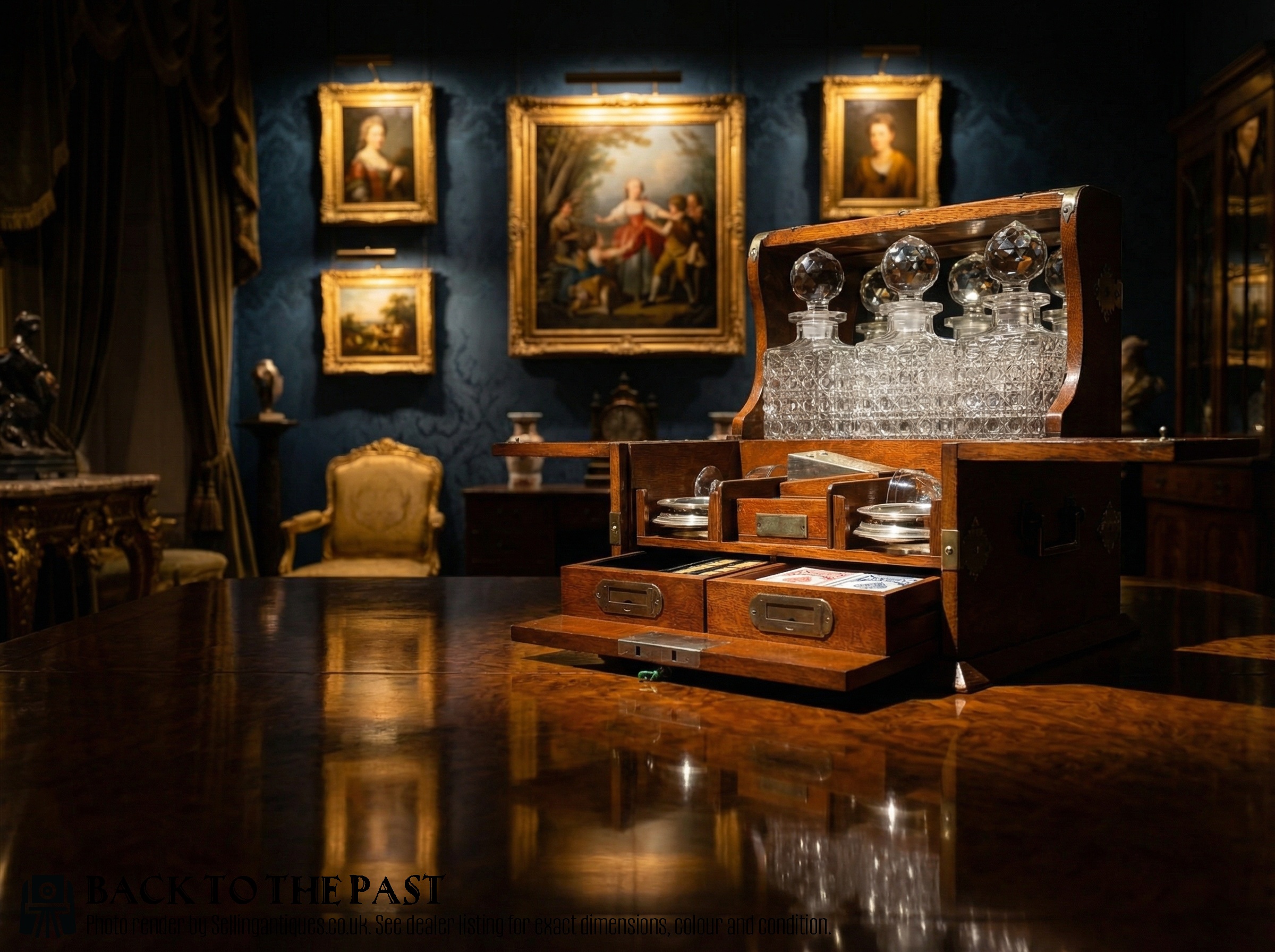
Another measure of distinction lies in the completeness and complexity of the internal fitments, such as integrated decanters, tantalus frames, and specialised game compendiums. Fully articulated interiors with matched sets of bone counters and tailored trays indicate a higher standard of original production.
Betjemann
The Fitted Games Box Glossary
- Games compendium
- A multi-game box containing the equipment and boards for several different pastimes in one fitted case. These comprehensive sets often include cribbage boards, chess pieces, and card counters.
- Burr walnut
- A highly decorative wood veneer taken from the knotted growths of walnut trees. It provides swirling, organic patterns prized by nineteenth-century cabinetmakers for high-end boxes and tables.
- Tantalus
- A locking drink cabinet frame that holds decanters visible but secure without a key. This mechanism prevents unauthorized access to spirits while displaying the glassware.
- Marquetry
- The art of applying pieces of veneer to a structure to form decorative patterns and pictures. Makers used contrasting timbers to create geometric or floral motifs on box lids.
- Work table
- A multi-functional piece of furniture featuring an internal compartment or basket for sewing and small tasks. Many examples incorporate fitted trays suitable for games or writing.
Fitted Games Box: Frequently Asked Questions
What games did these boxes hold?
These boxes typically contained the equipment for traditional nineteenth-century parlour pastimes, including cards, chess, draughts, and cribbage.
More elaborate compendiums also accommodated specialised sets like Chinese mahjong or incorporated dry bars with decanters.
How do I date a fitted games box?
Dating relies on identifying the primary wood species, construction techniques, and stylistic markers associated with the Victorian and Edwardian periods.
Burr walnut and rosewood dominate mid-nineteenth-century examples, whilst inlaid mahogany and lighter oak often point towards Edwardian production.
Are the games pieces usually original?
Many surviving boxes retain their original bone counters, cribbage boards, and tailored internal trays designed specifically for the compartment layout.
Some examples may feature replacement items where original pieces have gone missing over decades of use.
Where were these boxes used?
Owners kept them in drawing rooms and country house parlours as a ready source of evening entertainment for guests and family members.
Portable box variants allowed hosts to move the entertainment easily between rooms or pack the games away neatly after use.