



Whisky Decanter Frame
A whisky decanter frame is a sturdy holding device designed to secure spirit bottles under lock and key.
Whisky Decanter Frame
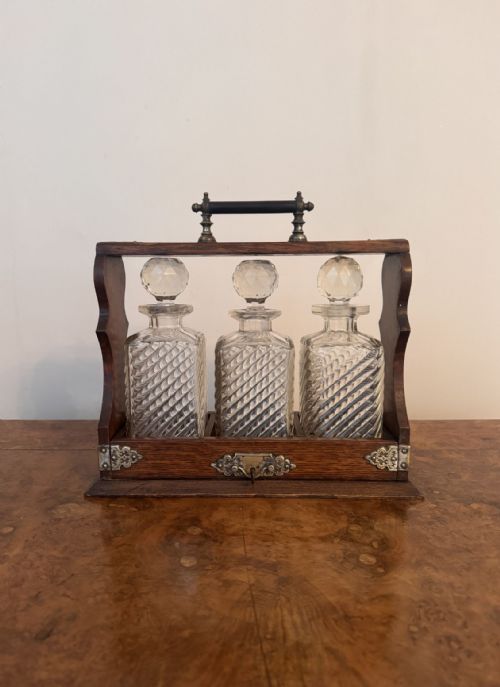
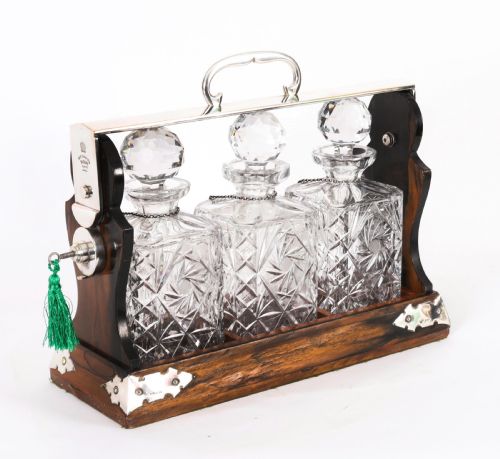
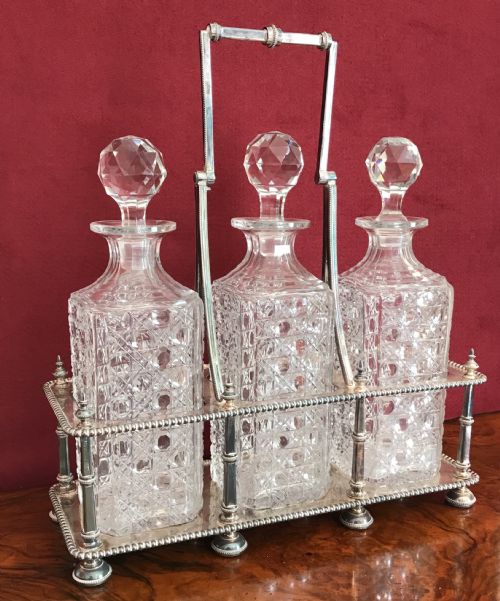
A whisky decanter frame secures spirit bottles within a rigid metal or timber carriage, often taking the form of a tantalus or fitted stand. These pieces date from the Victorian and Edwardian eras, spanning from the mid-nineteenth century up to the 1920s.
Most examples found here utilise oak or walnut frames, frequently mounted with silver plate, brass, or coromandel wood. They house either two or three cut glass and crystal decanters, designed to sit prominently on a sideboard or back in the dining room.
The locking mechanism is the defining characteristic of the tantalus variation, lifting to release the bottles only when a key is turned. Simpler decanter stands lack this security bar but offer the same stable housing for pouring spirits during an evening.
How they were made
Cabinetmakers constructed the wooden frames from solid oak, walnut, or coromandel, often incorporating meticulous joinery and inlaid details. Metalwork components, including carrying handles and locking bars, utilised cast brass or substantial silver plating over base metals.
Decanter bodies were formed from heavy cut glass or crystal, shaped with deep geometric facets to catch the light. Metal mounts and lock plates were then hand-fitted to the timber bases to ensure a secure housing for each vessel.
Listings feature frames dated across the Victorian and Edwardian periods, constructed in oak, walnut, and coromandel wood.
What varies in quality
The distinction between standard pieces and the finest examples lies in the weight of the timber and the complexity of the metal mounts. Better pieces feature substantial coromandel or quarter-sawn oak combined with heavy cast silver plating and crisp glass cutting.
Mechanism precision also marks the upper tier of production, where locks operate smoothly and swing bars release cleanly without binding. Maker attribution through stamped silver hallmarks adds a layer of distinction to the best-surviving frameworks.
Betjemann·Elkington·Hukin and Heath
The Whisky Decanter Frame Glossary
- Tantalus
- A locking spirit case that holds decanters firmly in place so they cannot be removed without a key. The name derives from the mythological figure of Tantalus, keeping the spirits just out of reach.
- Silver Plate
- A thin layer of silver fused to a base metal such as copper or nickel silver. This technique provided the gleam of solid silver at a lower manufacturing cost.
- Cut Glass
- Glass shaped and patterned by holding it against rotating abrasive wheels. The resulting facets scatter light through the contained spirit.
Whisky Decanter Frame: Frequently Asked Questions
How does a tantalus lock work?
A metal retaining bar runs across the stoppers of the decanters, preventing them from being lifted out of their wooden base. Turning a key in the side mechanism releases this bar to swing upwards.
Once the bar is upright, the decanters slide freely out of their individual compartments for pouring. Locking it back down secures the bottles again.
What is the difference between a tantalus and a decanter stand?
A tantalus incorporates a locking mechanism that restricts access to the bottles within the frame. This kept expensive spirits safe from household staff in Victorian homes.
A decanter stand holds the bottles securely for transport or display on a dining table without any locking mechanism. Both serve similar decorative purposes on sideboards.
How do I date an antique decanter frame?
Dating relies on timber choices, mount styles, and any accompanying silver hallmarks found on the metal plating. Victorian pieces often use heavy oak or exotic veneers with ornate cast mounts.
Edwardian examples tend towards simpler oak frames with cleaner lines and lighter silver-plated fittings. Hallmarks on the lock plates provide specific assay office years.
Can I replace missing decanters?
Finding exact replacement decanters to fit the precise slots and locking collars of an antique frame requires careful measurement. The neck height and body width must match the original dimensions.
Many frames survived with mismatched or replacement glass gathered over decades of use. Matching the cut pattern to the period adds to the visual consistency.