


Oak Cupboard on Legs
When you want an oak cupboard on legs, you are looking at timber furniture raised clear of the floor for storage.
Oak Cupboard on Legs
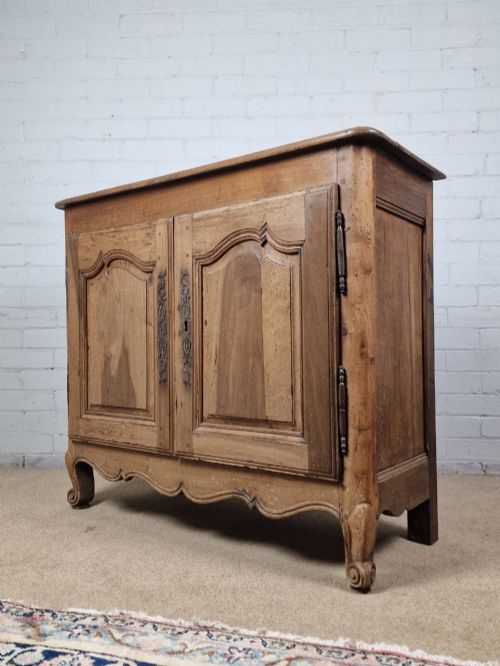
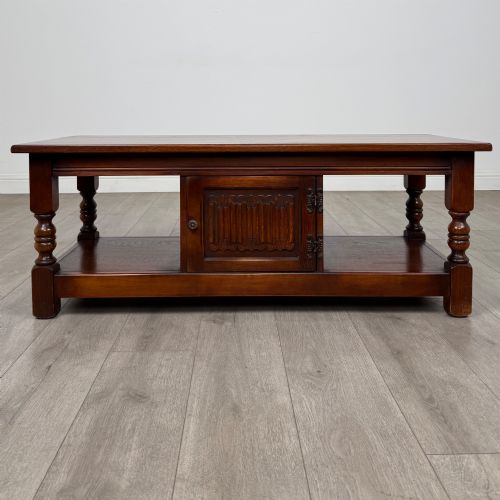
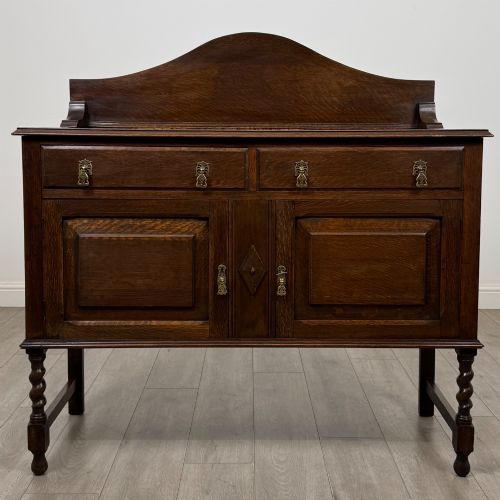
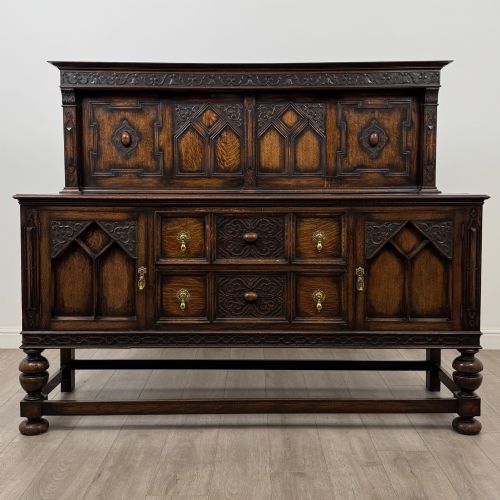
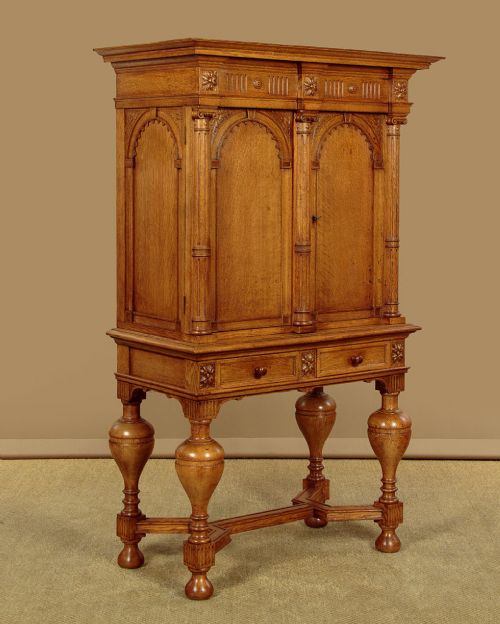
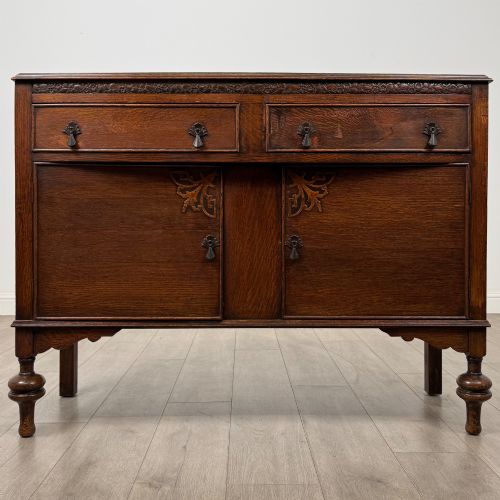
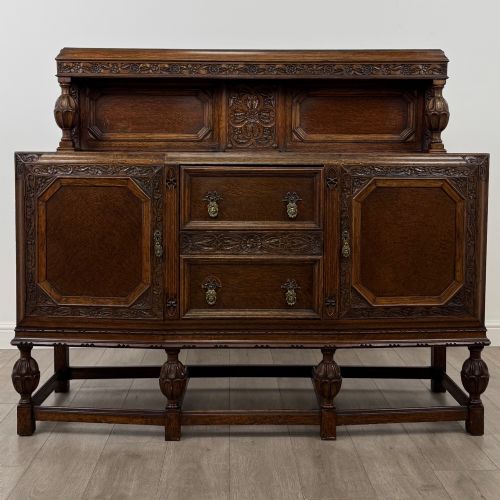
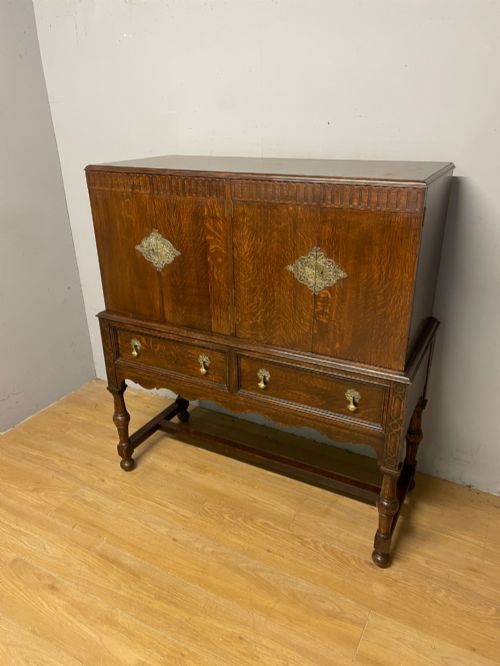
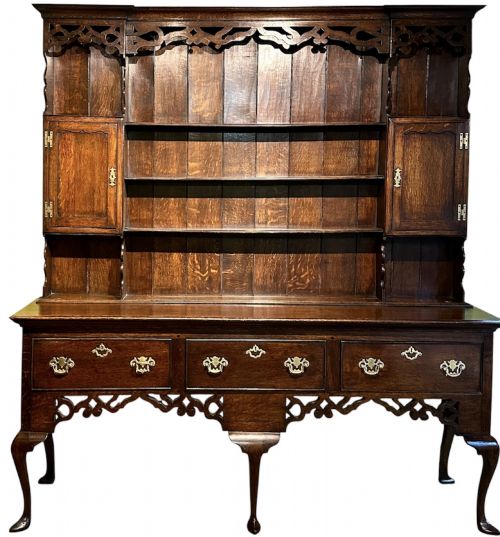
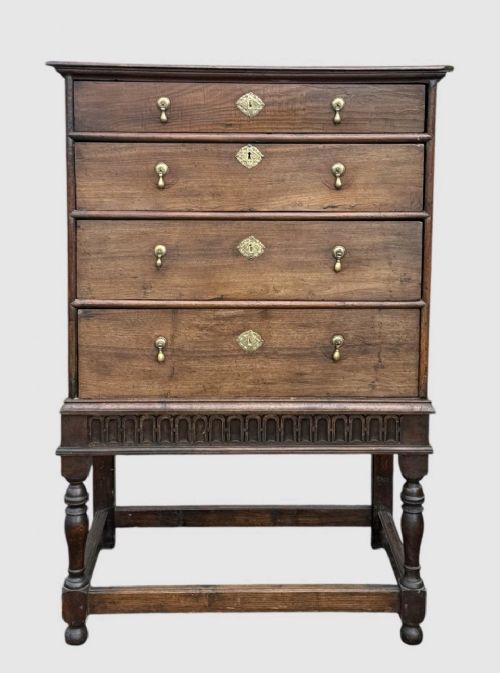
An oak cupboard on legs combines timber storage with an elevated stance, appearing in forms such as bedside cabinets, sideboards, chests on stand, and dressers. Pieces range from 18th Century and Georgian country designs to Edwardian and 1930s revival items.
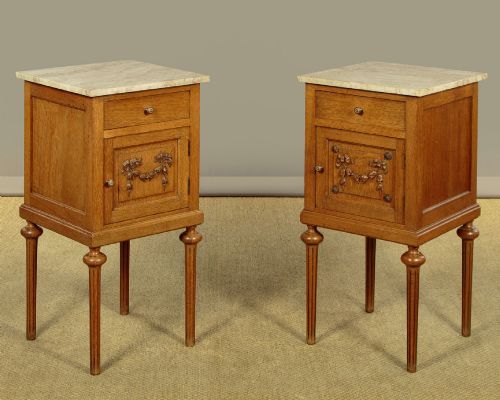
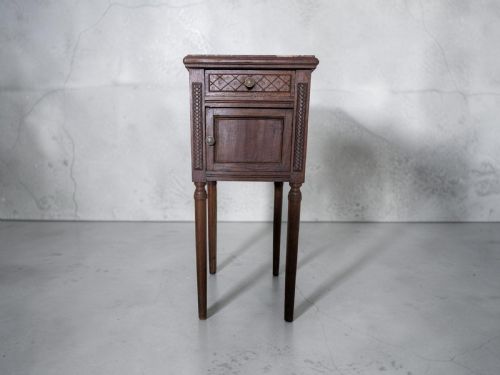
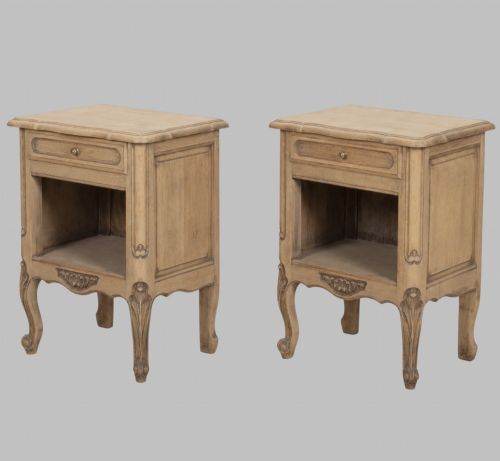
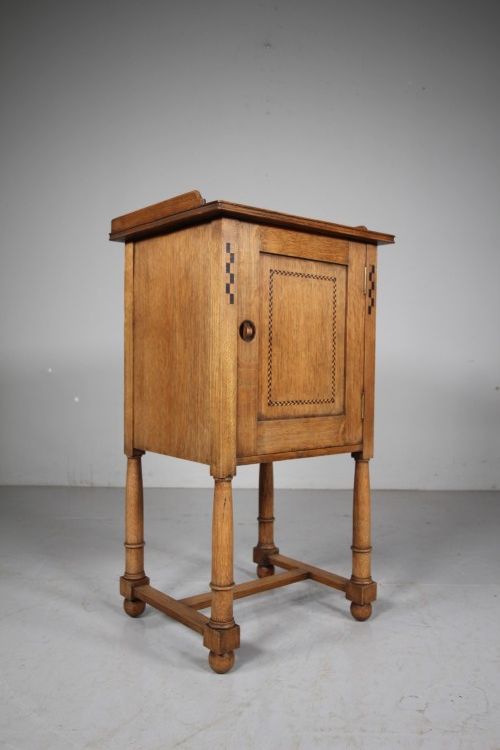
The most frequent examples on this page are bedside cabinets and side cabinets, often standing on short supports or cabriole legs. Larger formats include dressers and sideboards built from solid oak.
Materials and construction
Makers built these pieces primarily from solid oak, sometimes accented with ebony inlay or fitted with marble tops. Metal hardware such as brass handles and iron fittings provides functional contrast to the timber grain.
Carving and turning techniques define the surface work, utilising barley twist supports, green man motifs, and Jacobean Revival detailing. Construction relies on traditional joinery suited to heavy hardwoods.
Keep an eye out for spirited green man carvings hiding amongst the oak foliage, watching over your bedside essentials.
Distinctions in quality
Quality rests on the crispness of the carved details and the selection of the timber grain. Pieces with deep, hand-chiseled motifs or well-figured panels stand apart from plainer workshop production.
Integration of the legs with the main body dictates the structural integrity. Superior examples maintain balanced proportions where the elevated stand complements the weight of the upper cabinet.
Heals
The Oak Cupboard on Legs Glossary
- Cabriole leg
- A furniture leg that curves outward and then tapers inward, finishing in a pad or foot. This form draws on classical design and appears frequently on 18th Century and later dressers.
- Barley twist
- A turned wooden column resembling a spiralling rope. Makers utilised this decorative carving extensively on Edwardian sideboards and supports.
- Chest on stand
- A cabinet or drawer section elevated on a distinct open frame with legs. This configuration lifts storage off the floor.
- Livery cabinet
- A tall storage cupboard originally used for food or garments. These imposing items display substantial timber construction.
- Green man
- A sculptural face carved from leaves and foliage, symbolising rebirth. This motif surfaces on Victorian and revival oak carvings.
Oak Cupboard on Legs: Frequently Asked Questions
What is an oak cupboard on legs?
An oak cupboard on legs is a raised wooden storage unit designed to hold household items while keeping the base clear of the floor. These items range from compact bedside cabinets to substantial dressers.
The elevated design lightens the visual weight of the timber and protects the contents from floor dampness. They serve functional storage roles across bedrooms, living spaces, and dining rooms.
How do I date an oak cupboard?
Dating relies on observing construction methods, hardware types, and stylistic revivals such as Jacobean or French Provincial. Earlier pieces display hand-cut joinery and period-specific timbers.
Revival pieces from the Edwardian era or the 1930s often reproduce earlier aesthetics while utilising machinery-cut components. Examining the interior surfaces and fixings clarifies the age of the item.
Where should I place a bedside cabinet?
A bedside cabinet fits alongside a bed to hold lamps, books, and night-time essentials within arm's reach. Their elevated legs allow light to pass underneath.
Matching pairs create symmetry in a bedroom layout, while single cabinets work well in tighter spaces or guest rooms. Ensure the height aligns comfortably with your mattress level.
How do I care for antique oak furniture?
Antique oak benefits from dusting with a dry, soft cloth and occasional treatment with appropriate beeswax. Avoid placing timber furniture in direct sunlight or near heat sources.
Maintaining a stable room temperature prevents the wood from drying out or splitting. Gentle care preserves the natural patina developed over decades of use.