




Carved Oak Sideboard Stand
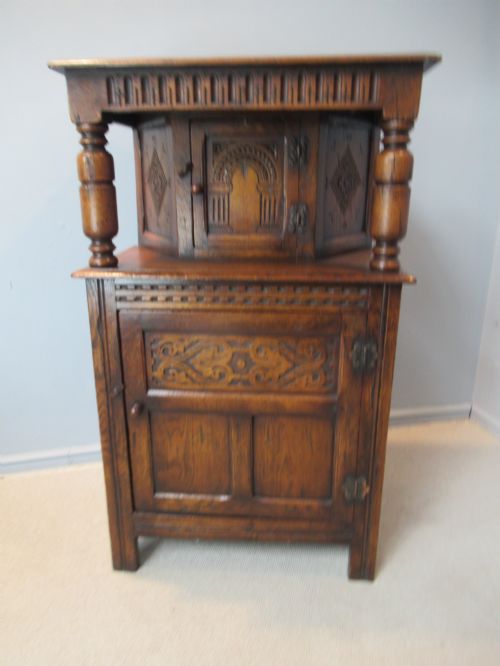
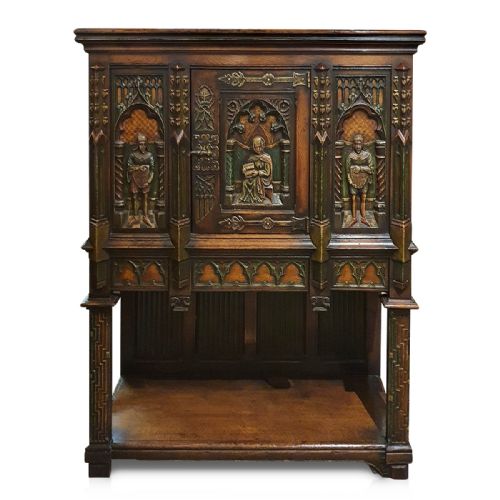
These carved oak sideboard stand pieces are substantial storage forms built from solid timber, offering enduring utility and traditional craft for period interiors.
Carved Oak Sideboard Stand
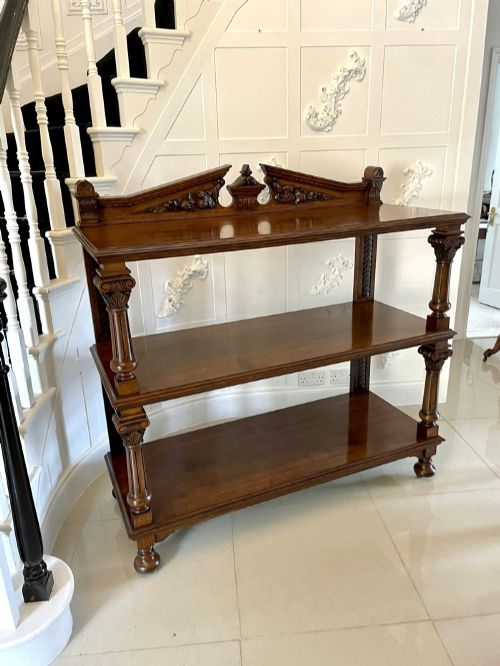
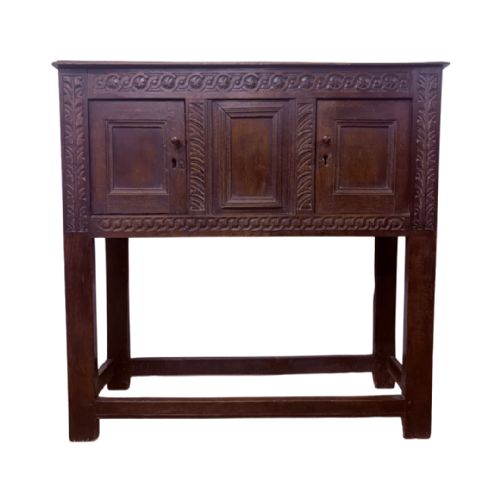
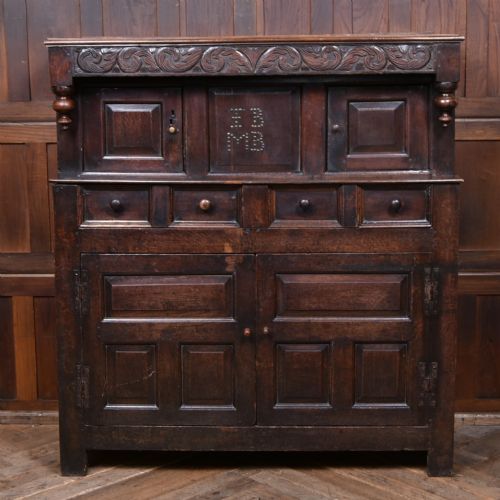
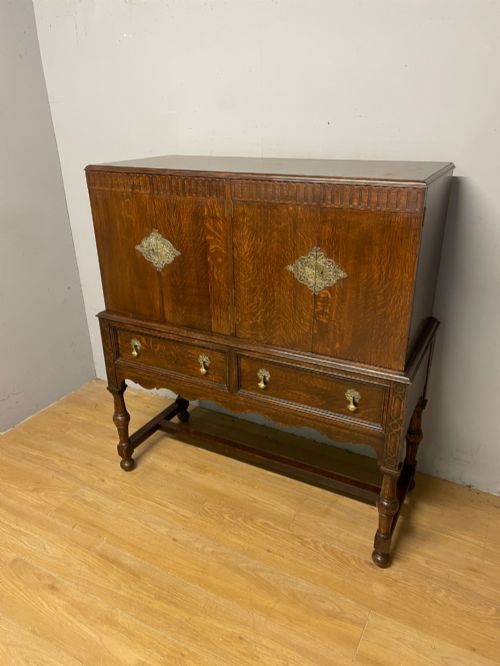
A carved oak sideboard stand encompasses heavy timber storage forms, ranging from joined cupboards on stands and court cupboards to side cabinets and dumbwaiters. These pieces emerge from periods including the seventeenth century alongside nineteenth-century revivals and early twentieth-century interpretations.
The most frequent form encountered on this page is the cupboard on stand or court cupboard, heavily represented by seventeenth-century examples and later revivals. Buyers also meet side cabinets and hall furniture sharing the same dark timber palette and carved surface treatment.
Origins span English workshops, Flemish cabinetmakers, and French makers, each contributing distinct regional carving motifs. Construction relies heavily on joined oak and English oak, occasionally accented with iron, brass, mirror glass, or inlaid wood.
Factors Determining Quality
Quality rests upon the crispness and depth of the timber carving, where deeply modelled relief work and balanced proportions indicate superior workshop execution. Finer examples display harmonious integration between the upper cabinet structure and its supporting stand or base.
The integrity of the timber and the retention of original brass or iron hardware heavily influence the standing of a piece. Earlier seventeenth-century pieces rely on authentic joined construction, whereas later revivals depend on the fidelity of their historical styling.
Flemish cabinetmakers occasionally added fierce carved lion masks to oak stands, glowering out to guard the household's finest pewter.
Waring & Gillows
The Carved Oak Sideboard Stand Glossary
- Court cupboard
- A traditional open or enclosed storage piece with multiple tiers, frequently utilised for displaying plate or storing provisions in seventeenth-century households.
- Joined oak
- Furniture constructed using interlocking mortise and tenon joints secured with wooden pegs, predating the widespread use of nails and screws.
- Jacobean Revival
- A nineteenth- and twentieth-century style imitating the geometric panels, strapwork, and heavy turnings of early seventeenth-century English design.
- Livery cupboard
- An upright storage cabinet originally ventilated with turned spindles to keep food rations cool and secure.
- Dumbwaiter
- A multi-tiered serving stand utilised in dining rooms for holding dishes or glassware without requiring servant attendance.
Carved Oak Sideboard Stand: Frequently Asked Questions
How do I identify a 17th century piece?
Seventeenth-century examples rely on joined oak construction, pegged joints, and hand-carved strapwork rather than modern mechanical fastenings. The timber develops a deep, patinated surface over centuries of use.
Examining the interior boards and the underside often reveals tool marks and hand-planed irregularities consistent with early workshop practices.
Where should I place a court cupboard?
These substantial storage forms suit dining rooms, large hallways, or living spaces where their height and depth can anchor the room. Ensure adequate wall clearance to let the carved details and projecting cornices stand clear.
Keep the timber away from direct heat sources and strong sunlight to prevent the oak from drying out or splitting.
How do revival pieces differ from original ones?
Revival pieces produced during the nineteenth and twentieth centuries adopt historical motifs like Jacobean carving or Gothic tracery but utilise contemporary workshop methods. They offer the visual weight of earlier furniture while fitting standard domestic dimensions.
Closer inspection of internal fixings, secondary woods, and sawing marks helps distinguish a nineteenth-century Gothic Revival cabinet from its seventeenth-century predecessor.
What maintenance does solid oak require?
Solid oak furniture benefits from occasional applications of beeswax to nourish the timber and maintain a soft, protective sheen. Avoid silicone-based sprays that can build up a sticky film over the carved surfaces.
Maintaining stable room humidity prevents the heavy timber panels from expanding or contracting too rapidly.