
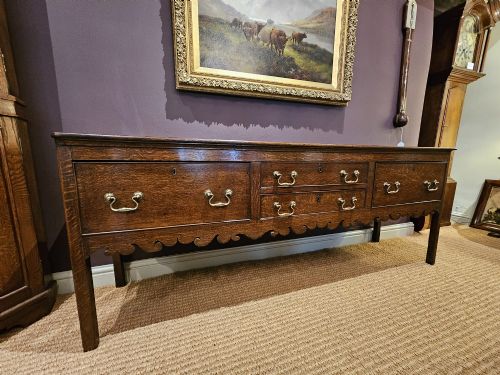
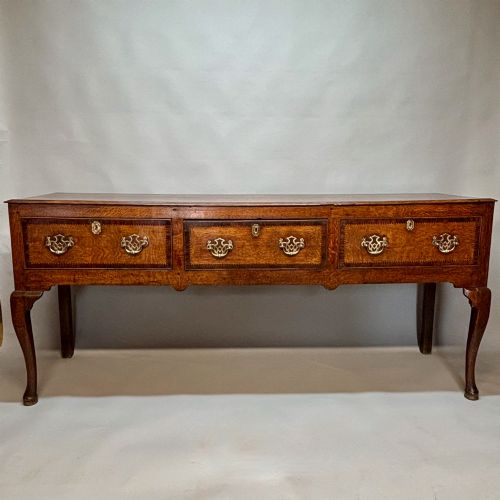
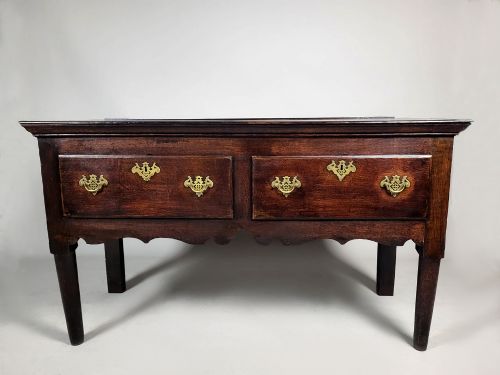
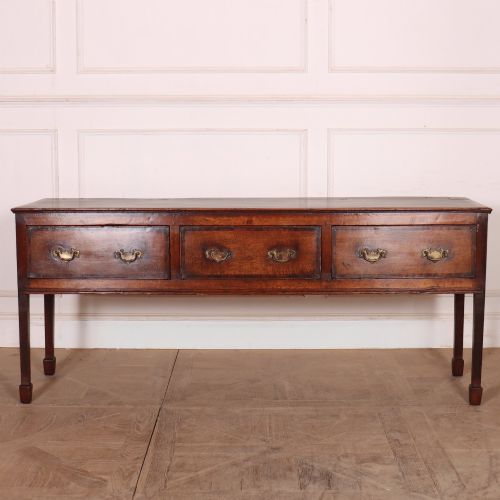

Oak Credenza Table
An oak credenza table brings substantial timber and historic utility into a room, serving as a practical surface rooted in centuries of cabinet-making.
Oak Credenza Table
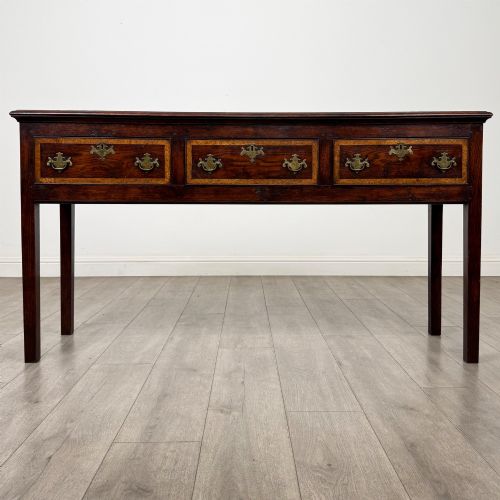
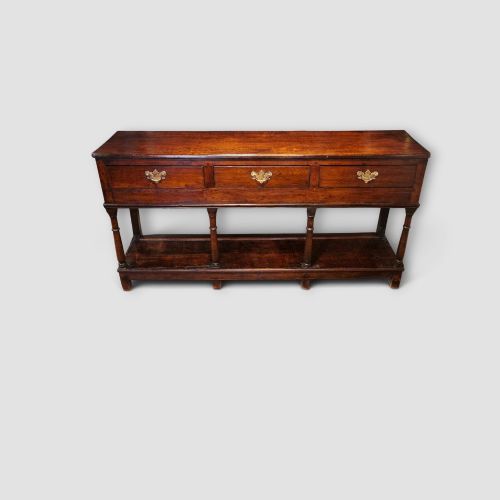
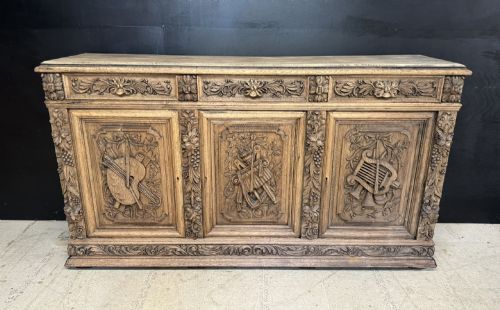
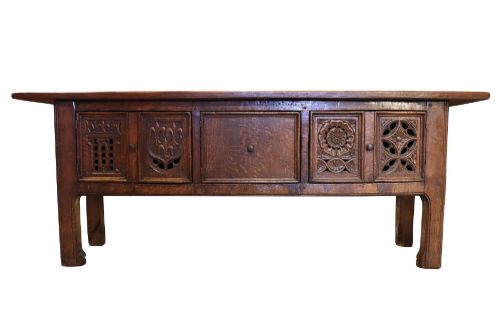
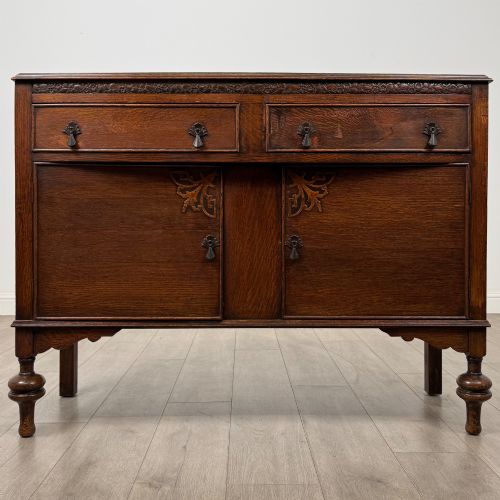
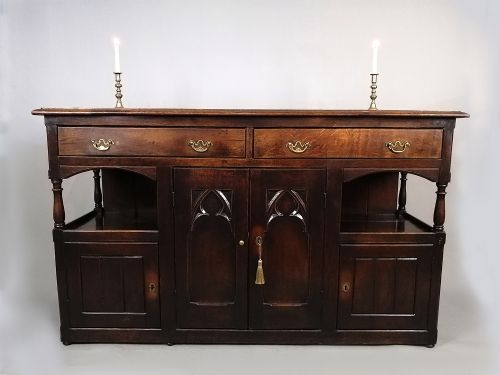
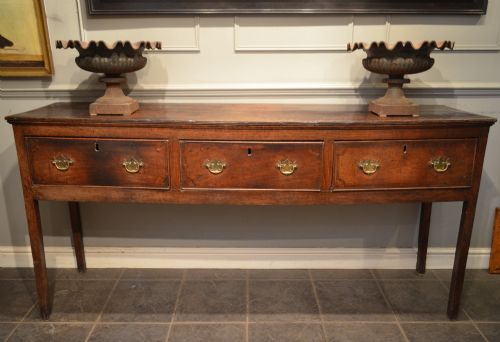
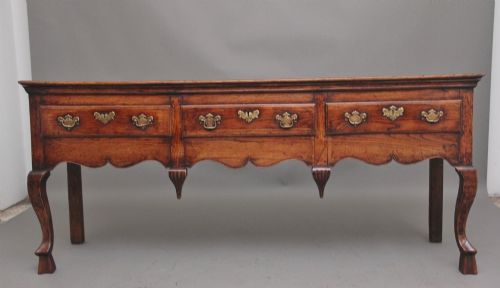
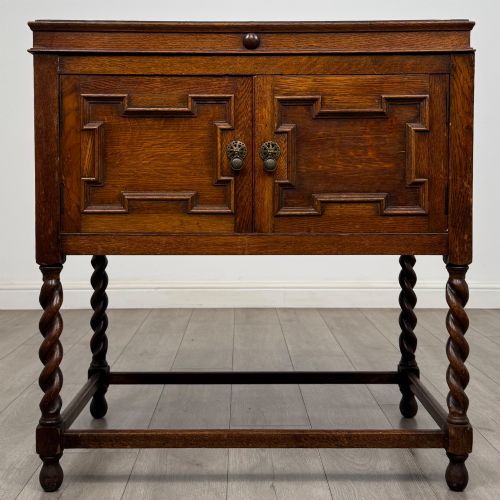
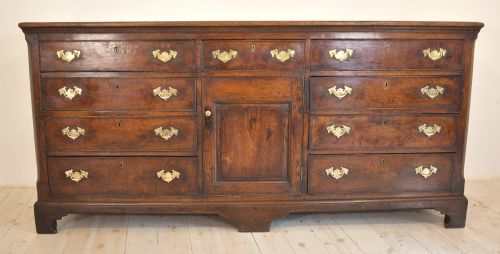
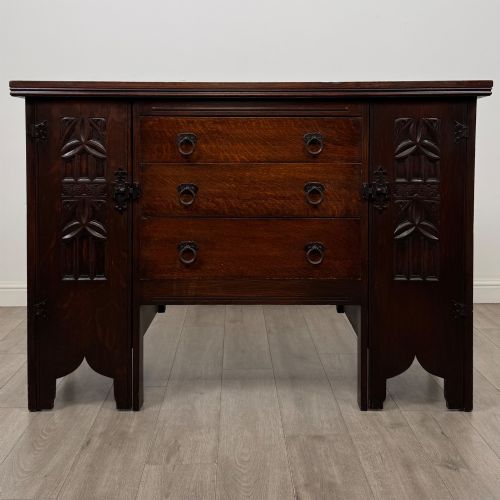
When you search for an oak credenza table, you encounter heavy timber furniture primarily recorded as dresser bases, sideboards, and serving tables. These forms date across the seventeenth, eighteenth, nineteenth, and twentieth centuries, reflecting diverse regional origins including English, Welsh, French, and Dutch workshops.
The pieces appearing on this page lean heavily toward eighteenth-century dresser bases and sideboards, alongside Edwardian revivals and later twentieth-century interpretations. They combine functional storage compartments, drawers, and open potboards beneath solid wooden surfaces designed for domestic use.
Makers and craftsmen of the past produced these items to anchor dining rooms and halls, utilising sturdy construction methods suited to heavy daily service. The inventory spans straightforward vernacular designs as well as pieces bearing distinct regional characteristics such as Lancashire or Welsh proportions.
What varies in quality
The degree of craftsmanship distinguishes simpler vernacular items from finer formal commissions, visible in the precision of the drawer dovetails and the integrity of the timber framing. Early pieces featuring untouched surfaces and original brassware carry greater historical weight than later reproductions.
Proportion and decorative restraint dictate the aesthetic tier of each piece, with narrow proportions or balanced carving schemes indicating superior design. The presence of secondary woods, such as elm drawer linings, adds context to regional construction standards.
Several pieces preserve original brasses that have witnessed centuries of domestic service without losing their grip.
The Oak Credenza Table Glossary
- Potboard
- An open lower shelf beneath a dresser base traditionally used for storing pottery and heavy kitchen utensils. This structural feature defines many regional British serving tables.
- Dresser base
- The lower section of a kitchen or dining dresser equipped with drawers and cupboards, standing independently as a sideboard. These pieces formed the main workspace in historic domestic interiors.
- Block front
- A cabinet front moulded into three vertical sections, where the outer sections project forward and the central section remains recessed. This technique adds architectural depth to seventeenth-century case furniture.
- Pollard oak
- Timber taken from trees that have been pollarded, producing dense burrs and highly figured grain patterns. Cabinet-makers used these veneers on high-status Victorian and nineteenth-century furniture.
- Blind silhouette legs
- Furniture legs cut or shaped into specific profile outlines rather than turned on a lathe. This detail appears on eighteenth-century regional cabinetry.
Oak Credenza Table: Frequently Asked Questions
What is an oak credenza table?
An oak credenza table is a heavy wooden sideboard or dresser base used for storage and surface display. These pieces originate from various historical periods ranging from the seventeenth century onwards.
They function as practical furniture items in modern dining rooms and hallways, providing cupboards and drawers built from solid oak.
How do I date an antique oak sideboard?
Dating relies on examining construction techniques, timber selection, and hardware styles. Hand-cut dovetails and original brass fixtures often point to eighteenth-century origins.
Revival pieces from the Edwardian era or the 1920s mimic earlier Jacobean or Georgian styles but display different interior secondary woods and machine-assisted finishing.
Where were these pieces made?
The listings show items originating from English workshops, Welsh counties, France, and the Netherlands. Regional traditions influenced the proportions and decorative carving.
For instance, Welsh and Lancashire dresser bases often feature distinct potboards and drawer arrangements suited to local domestic requirements.
Can I use a dresser base as a sideboard?
Dresser bases function naturally as sideboards because they lack the plate rack superstructure found on full dressers. They provide enclosed cupboard space and drawer storage at a convenient height.
Their sturdy oak surfaces tolerate everyday use in contemporary dining spaces and living rooms.