



Antique Credence Table
An antique credence table brings solid oak construction and folding top action into a hallway or living space with remarkable historical presence.
Antique Credence Table
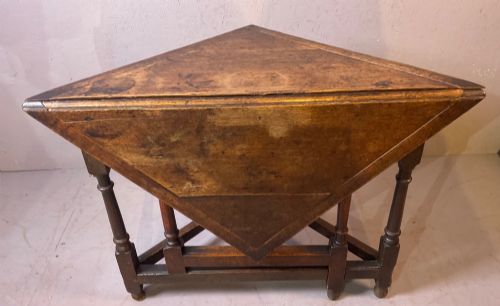
An antique credence table is a sturdy timber furnishing designed with a fold-over top supported by a swinging leg, creating a larger surface when opened. The examples you encounter on this page span the seventeenth century as well as later revival periods from the late nineteenth and early twentieth centuries. These pieces function well as side tables, hall tables, or small servers in modern homes.
The form typically rests upon turned legs connected by stretchers, grounding the heavy timber frame solidly on the floor. You will find both original seventeenth-century creations and subsequent revival interpretations dating from the Victorian and Edwardian eras. Each piece demonstrates the enduring appeal of heavy domestic timber furniture designed for practical daily utility.
Materials and construction methods
The primary material across these listings is solid oak, selected for its strength and durability in domestic service. Workshops utilised traditional joinery methods, including pegged mortise and tenon joints, to construct frames capable of withstanding the stress of folding top mechanisms. Iron hardware often appears on hinges and supports, providing functional reinforcement to the moving timber leaves.
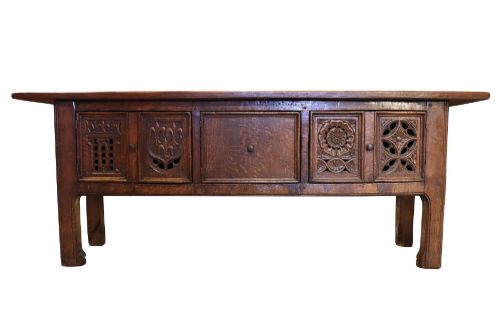
Surfaces frequently display hand-carved ornamentation, such as geometric strapwork or Gothic tracery, executed directly into the solid oak boards. Cabinetmakers shaped the structural supports using hand lathes, producing sturdy turned legs and stretchers that balance the weight of the heavy timber tops.
A box table hides secrets beneath a lid, proving that seventeenth-century carpenters understood the universal appeal of secret storage.
Judging quality in antique credence tables
Quality in these pieces rests upon the integrity of the timber and the precision of the pivoting mechanism for the folding top. Seventeenth-century originals demonstrate hand-tool marks and patination earned through centuries of use, whereas revival pieces from the nineteenth and twentieth centuries rely on the accuracy of their historical emulation. The crispness of hand-carved details also distinguishes finer examples from more utilitarian workshop production.
Proportion and scale play a significant role in the desirability of individual tables, particularly when dealing with narrow depths or unusual box configurations. The thickness of the oak boards used for the top and the stability of the frame under movement indicate the original maker's skill and the subsequent survival of the piece.
The Antique Credence Table Glossary
- Credence table
- A folding-top table originating in the medieval period and developed through the seventeenth century for domestic service. The hinged leaf swings outward to support an expanded surface.
- Jacobean
- A British design style spanning the early seventeenth century, characterised by solid oak construction, geometric mouldings, and straight architectural lines. Revival pieces later copied these robust proportions.
- Stretcher
- A horizontal timber rail connecting the legs of a table to provide structural rigidity and stability. These elements prevent the frame from wobbling under heavy weight.
- Gothic Revival
- An architectural and decorative style popular during the nineteenth century that reinterpreted medieval pointed arches, tracery, and carved motifs on wooden furniture.
- Demi-lune
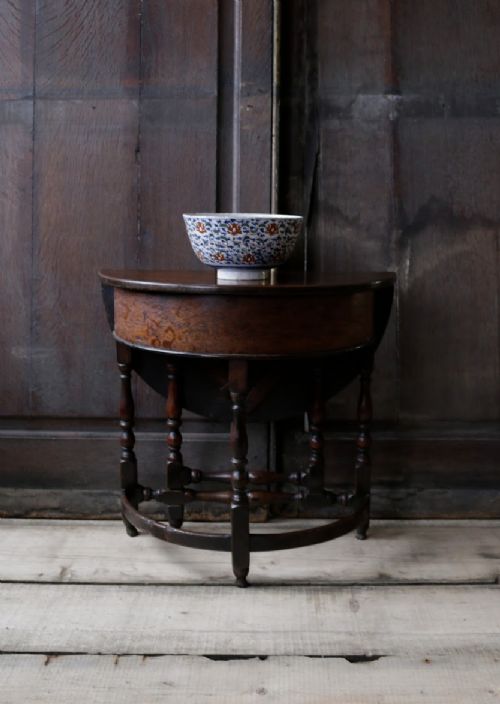
- A half-moon shape used for table tops and furniture fronts, allowing the piece to sit flush against a wall while offering surface space.
Antique Credence Table: Frequently Asked Questions
What is a credence table used for?
Historically, these tables served domestic and ecclesiastical functions, holding sacramental elements or household goods on their folding surfaces.
Today, they operate effectively as side tables, console tables, or hall tables where a compact footprint is required against a wall.
How do I tell a 17th century table from a revival?
Seventeenth-century originals display natural timber oxidation, hand-cut joinery marks, and wear patterns consistent with centuries of domestic handling.
Revival pieces from the nineteenth or twentieth centuries often utilise machine-assisted cuts and show a different consistency in the oak grain and surface finish.
Can I use an antique credence table daily?
Solid oak construction provides immense durability, making these tables well suited for regular placement of lamps, books, or decorative objects.
Care should be taken when operating the folding leaf mechanism to ensure the swinging leg bears the weight evenly without straining the original hinges.
Where should I place a credence table at home?
The flat back edge allows the table to sit securely against a hallway or living room wall without protruding too far into the floor space.
Opening the folding top transforms the piece into a larger surface, making it versatile for placement behind sofas or in dining areas.