


Oak Chest with Brasses
An oak chest with brasses brings utilitarian storage and tactile hardware together, offering centuries of dependable craftsmanship for daily interiors.
Oak Chest with Brasses
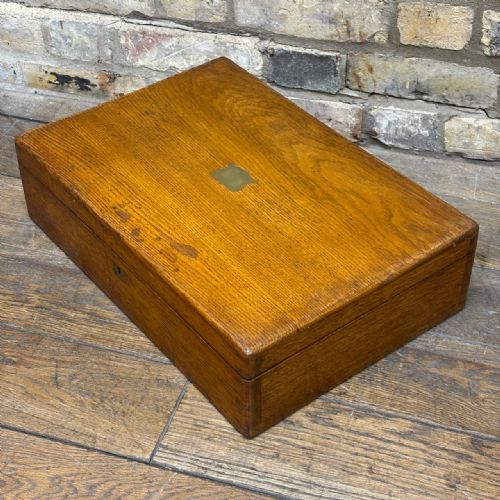
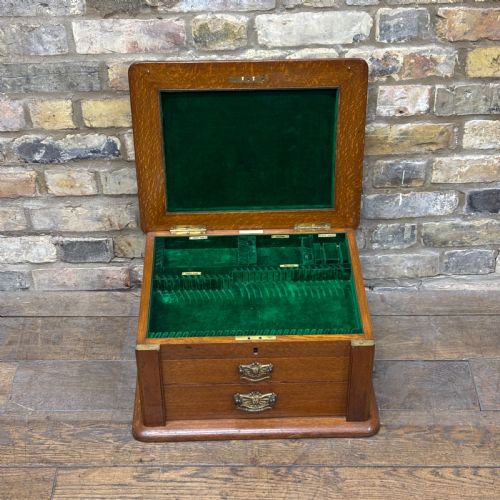
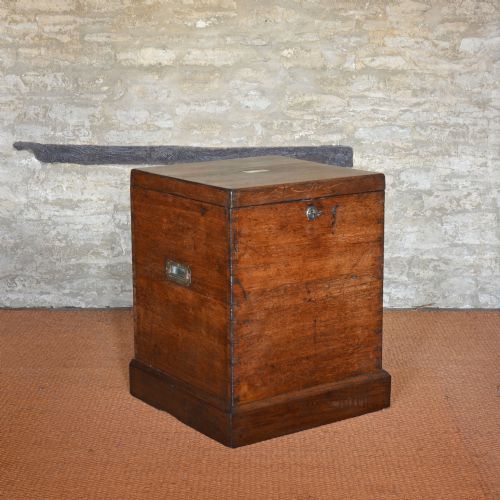
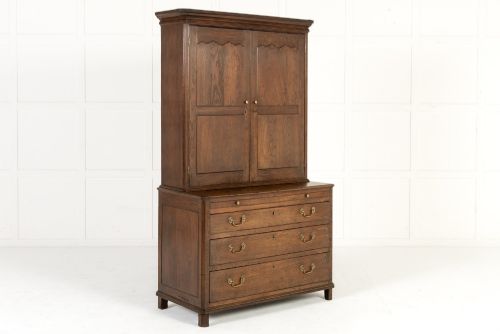
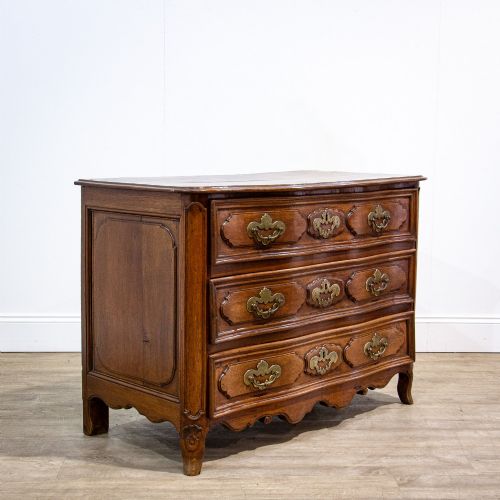
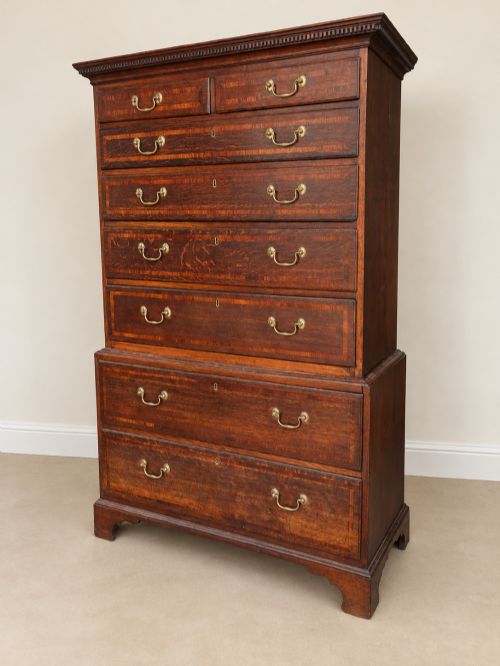
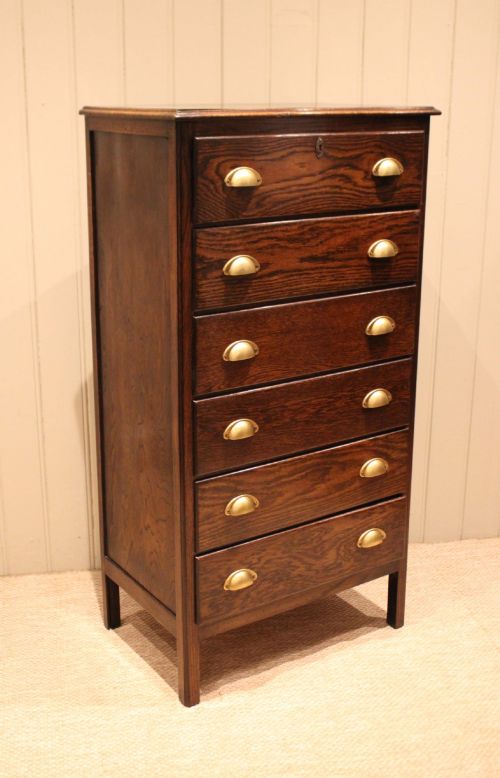
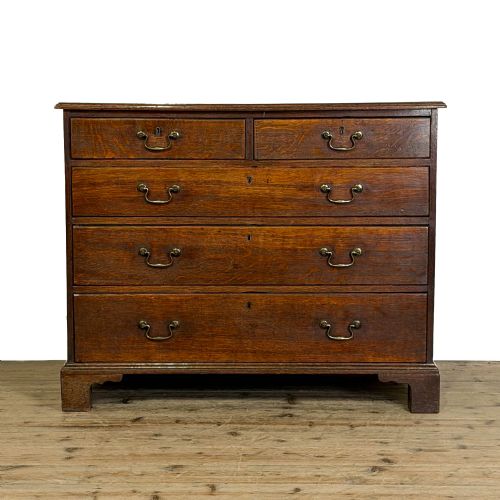
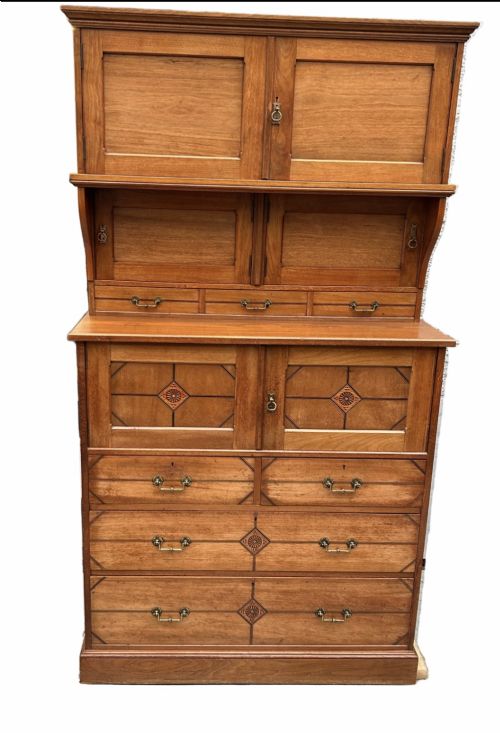
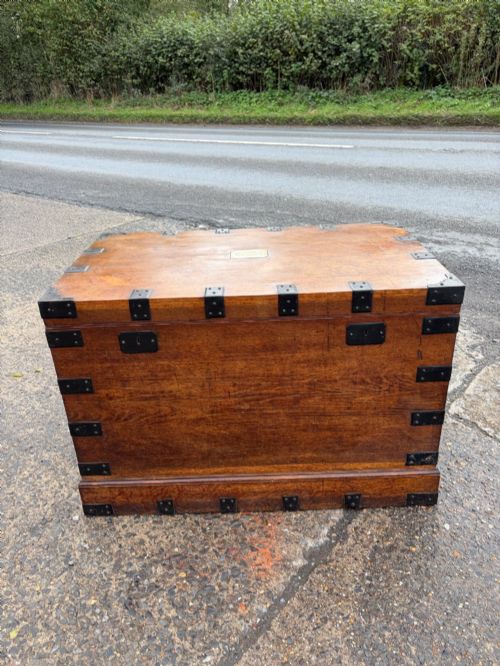
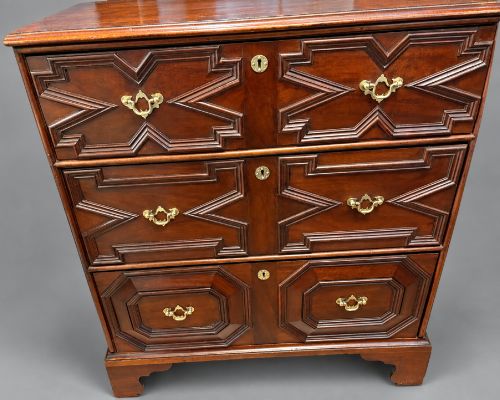
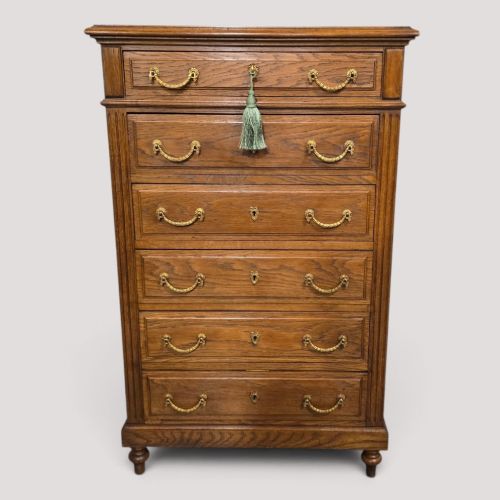
An oak chest with brasses comprises sturdy timber storage fitted with metal plates, drop handles, escutcheons or corner mounts. These pieces range from early provincial coffers and mule chests to formal Georgian drawer units and campaign travelling trunks.
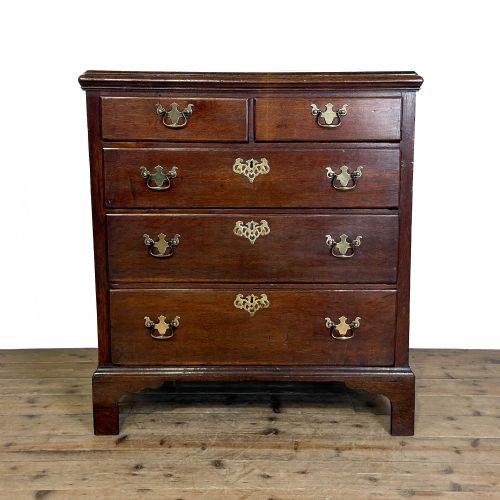
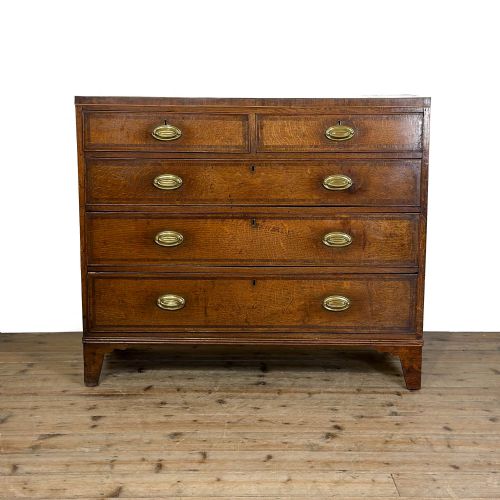
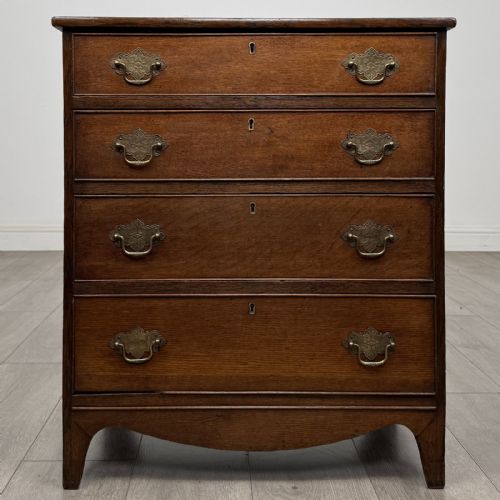
The version most commonly met on this page is the Georgian or 18th Century oak chest, often featuring multiple drawer configurations and substantial brass hardware. Mule chests with lower drawers and lift-up lids also appear frequently among the listings.
Makers and regional joiners utilised homegrown timber alongside imported metals, resulting in practical furniture designed for domestic linens, valuables and general household organisation.
Materials and construction
Construction relies heavily on solid oak, selected for durability and finished with hand-cut dovetails, panelled sides and occasionally mahogany crossbanding. Carpenters joined structural members using traditional tenons and pegs before securing metalwork.
Brass hardware including drop handles, backplates, acorn drops and corner brackets were cast or stamped, then fixed by hand. These metal mounts served a dual purpose of reinforcing high-stress areas while providing decorative contrast against the dark timber.
Oak Chest with Brasses Retail Price Guide 2026
Typical asking prices for oak chest with brasses among the pieces listed under this phrase on Sellingantiques today, from the lower quarter to the upper quarter. They describe what is for sale here now, not the wider market.
Several pieces include secret compartments designed to safeguard small valuables from curious household guests.
Standards of craftsmanship
Quality rests upon the integrity of the timber selection, the crispness of the original brass mounts and the retention of surface patination. Pieces that retain their original handles and untouched timber surfaces command greater interest from discerning buyers.
Finer examples display careful proportioning, such as tight dovetailing on drawer linings and unwarped panels that move naturally with age. The relationship between the weight of the oak body and the scale of the brass mounts dictates the overall visual balance.
Walker And Hall
The Oak Chest with Brasses Glossary
- Mule chest
- A storage chest featuring one or more drawers beneath a primary hinged compartment. This form bridges the gap between traditional coffers and modern chests of drawers.
- Escutcheon
- A protective metal plate surrounding a keyhole. It prevents the surrounding timber from splitting under the repeated pressure of inserting a key.
- Crossbanding
- A narrow strip of veneer laid across the grain of the primary timber. This technique creates a neat border around drawer fronts or table tops.
- Bracket foot
- A simple structural foot supporting the corners of a case piece. These feet often feature mitred joints and subtle moulded shaping.
- Patina
- The deep surface sheen developed through decades of handling, polishing and exposure to light. It indicates genuine age and careful maintenance.
Oak Chest with Brasses: Frequently Asked Questions
How do I care for an antique oak chest?
Keep the timber away from direct heat sources and sudden humidity fluctuations to prevent splitting or warping. Apply a microcrystalline wax sparingly to nourish the surface without attracting dust.
Handle the brass mounts gently and avoid using harsh metal polishes that might strip the historic finish from the plates.
Are the brass handles usually original?
Many surviving pieces retain their original brass handles, which leave distinct ghost marks and impression rings in the timber if they are ever removed or replaced. Examining the interior of the drawer fronts helps confirm whether the fixing holes match the age of the hardware.
Subsequent replacements are common in antique furniture due to heavy daily use over centuries.
How can I date an oak chest?
Dating relies on observing construction methods, such as hand-cut dovetails, timber thickness, moulding profiles and the style of the brass hardware. Earlier pieces from the seventeenth century often utilise panelled construction and pegged frames.
Later Georgian and Victorian examples introduce more refined drawer mechanics and standardised metal fixings.