



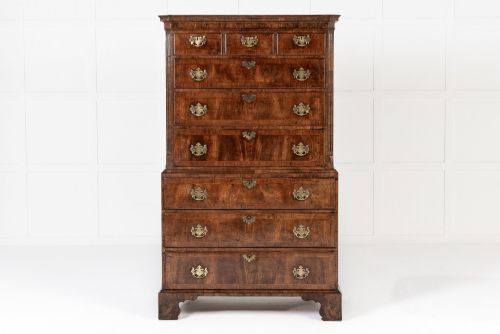


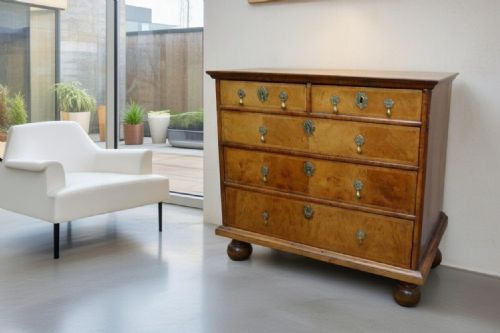


Queen Anne Oak Chest
A genuine queen anne oak chest brings warm timber tones and disciplined proportion to a room, built to last centuries.
Queen Anne Oak Chest
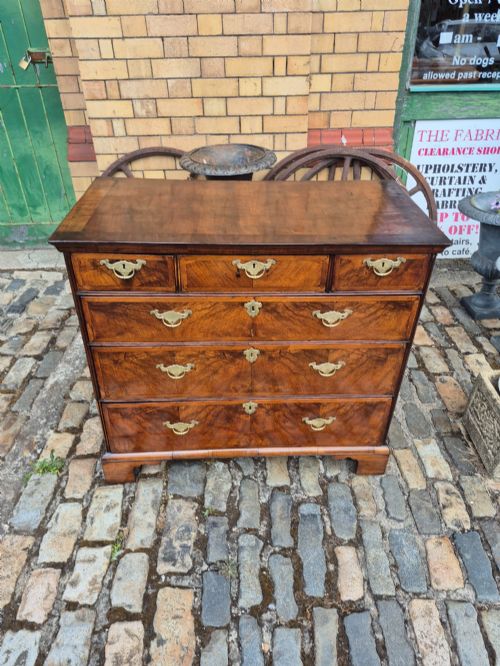
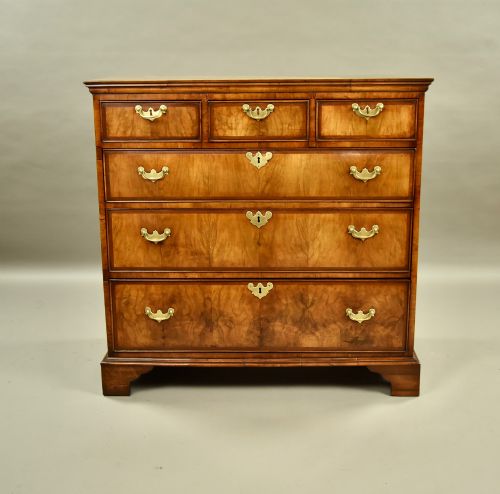
A queen anne oak chest is a domestic storage piece defined by clean lines, panelled construction and raised drawer configurations.
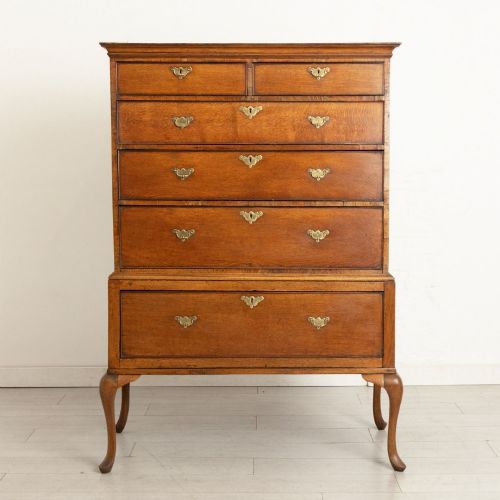
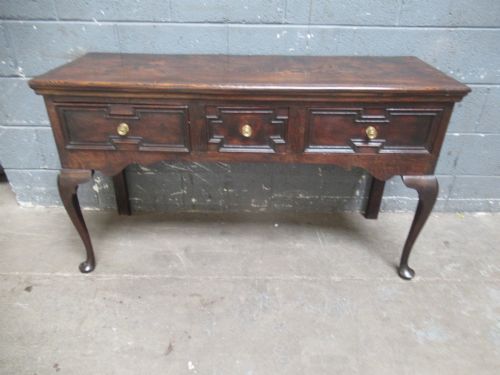
The pieces appearing here range from tall chests on stands and mule chests to compact blanket boxes and chests of drawers.
Most examples date to the eighteenth century or belong to later revival periods from the nineteenth and early twentieth centuries.
How They Were Made
Joiners built these chests using solid timber boards joined by frame and panel methods to accommodate wood movement.
Makers utilised native oak alongside secondary woods like elm, walnut, fruitwood and burr veneers for decorative contrast.
Hardware such as brass drop handles and escutcheons secured drawers and lids while adding functional detail.
Some miniature sword chests turned up in miniature proportions, proving that even heavy joinery occasionally practiced the art of shrinking.
What Varies in Quality
The calibre of a piece rests upon timber selection, showing in lively grain patterns and the careful matching of veneers.
Proportion and structural integrity distinguish finer examples, particularly where stands, legs and mouldings remain undisturbed.
The Queen Anne Oak Chest Glossary
- Chest on stand
- A two-part storage form comprising a drawer section elevated on a separate frame with legs.
- Mule chest
- A blanket chest fitted with one or more drawers in the base.
- Bracket foot
- A corner foot shaped like a bracket, commonly found on eighteenth-century case furniture.
- Escutcheon
- A protective plate surrounding a keyhole, often cast in brass.
- Joined chest
- A box or trunk constructed from framed panels rather than simple boards.
Queen Anne Oak Chest: Frequently Asked Questions
How do I date a chest?
Examine the construction methods visible inside the drawers and along the backboards. Hand-cut dovetails and timber shrinkage patterns often point to eighteenth-century origins.
Compare the timber species and secondary woods against known period examples. Revival pieces from later centuries usually display uniform machine-sawn components.
Where should I place it?
Position the piece away from direct heat sources and radiators to prevent the solid oak boards from splitting. Consistent indoor humidity keeps the timber stable.
Allow enough clearance around drawers and lids so they open freely without scraping against walls or surrounding furniture.
Can I store clothes inside?
Linen and wool garments rest safely inside these chests provided the interior surfaces remain clean and dry. Many period examples feature natural wood interiors.
Check that old linings or felt inserts are free from moisture retention before packing textiles away for long periods.
What is a chest on stand?
This form stacks a primary set of drawers directly onto an open frame equipped with four legs. It lifts the storage area higher off the floor.
Such pieces provide substantial capacity while maintaining a lighter visual footprint in smaller rooms compared to full-height wardrobes.