

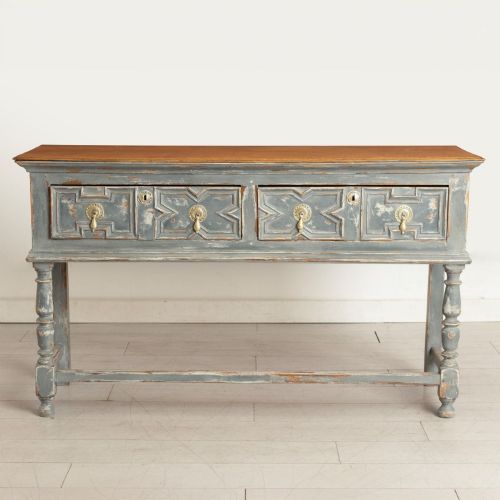
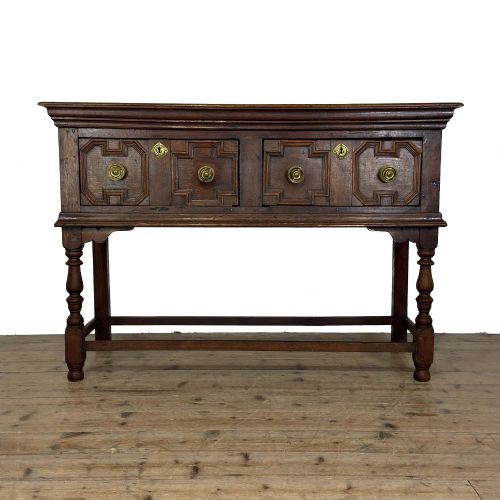
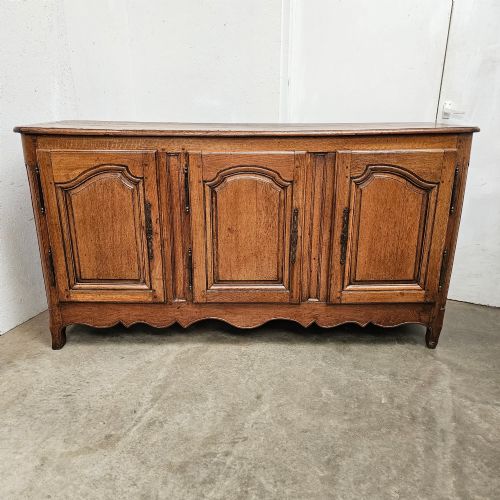
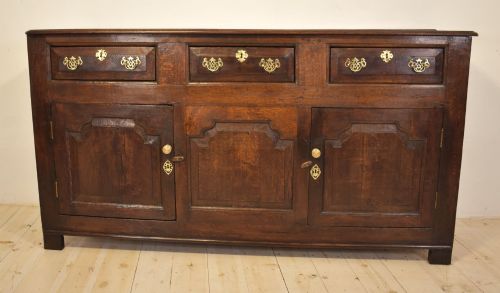
Oak Buffet Base
An oak buffet base provides heavy storage and surface space, bringing sturdy historical craftsmanship into modern rooms.

Oak Buffet Base
An oak buffet base is a low, substantial storage piece designed for dining rooms and kitchens, combining drawers and cupboards beneath a flat top. When searching for an oak buffet base, buyers encounter sturdy low boards rooted in country and formal traditions.
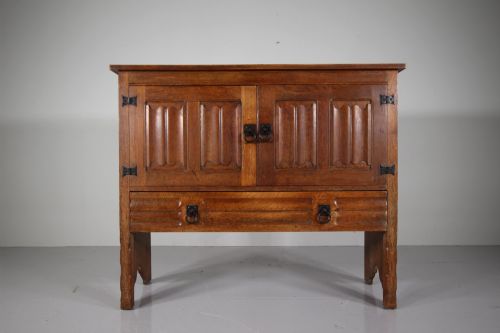
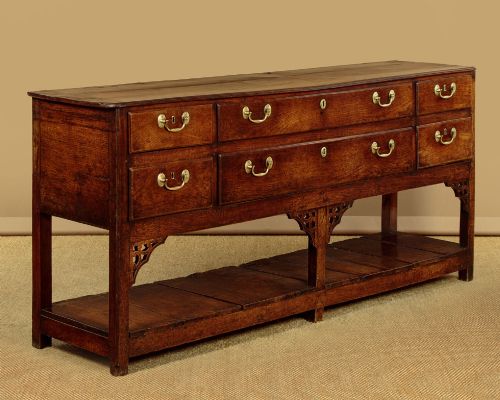
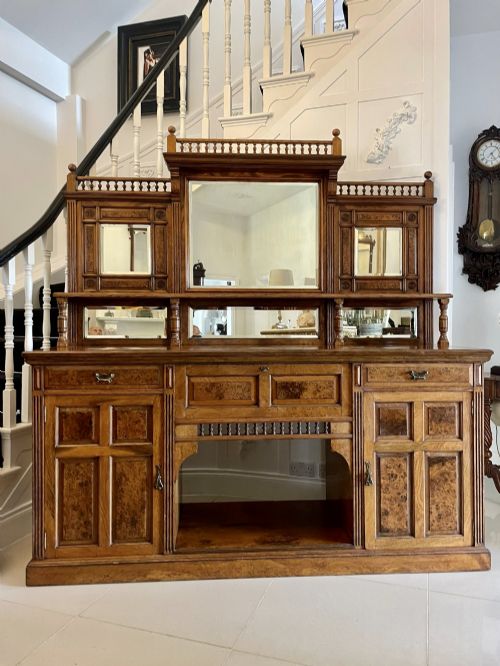
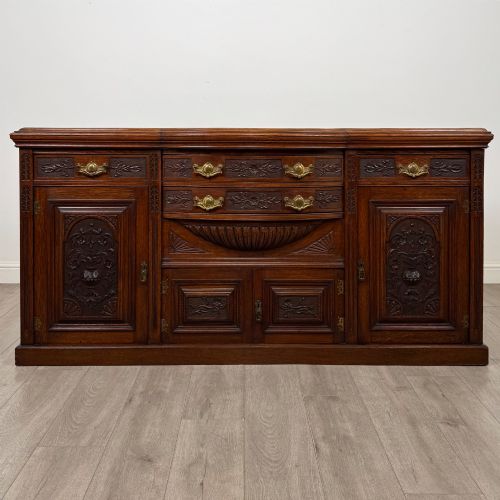
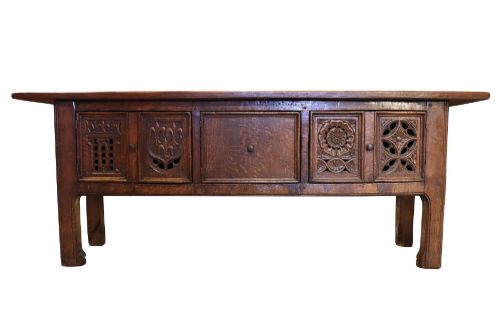
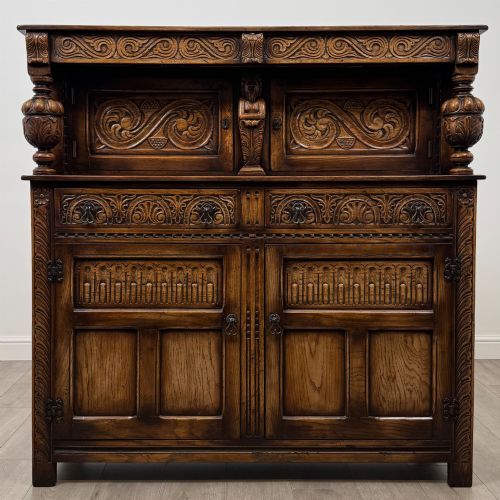
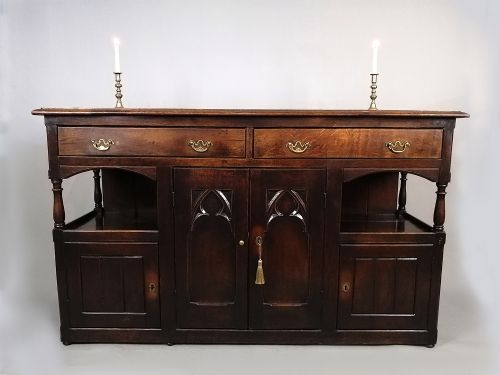
The pieces on this page span several centuries, including 18th century George III examples, Victorian interpretations, and later revival styles. Georgian potboard designs and narrow proportions frequently appear alongside Jacobean and Gothic revivals.
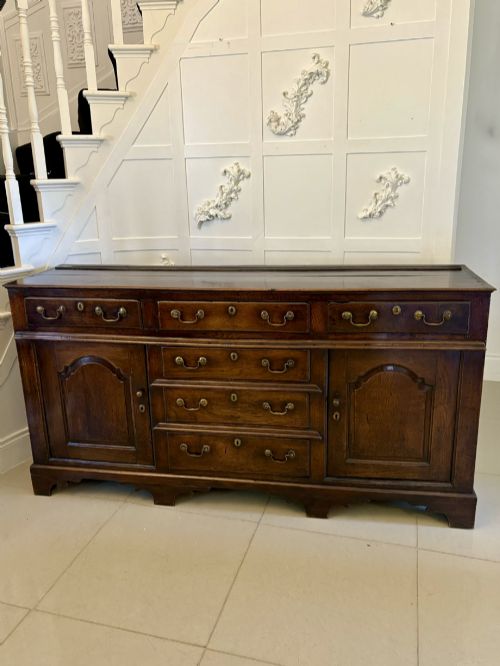
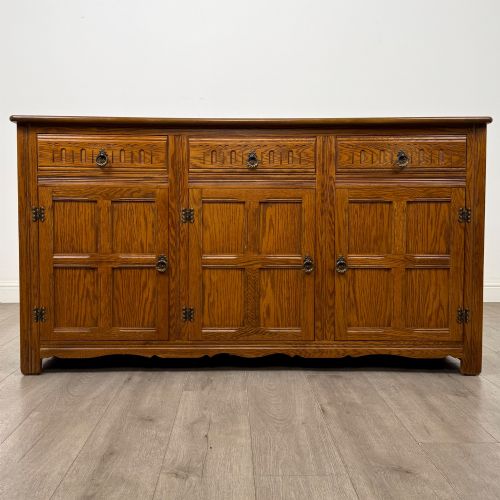
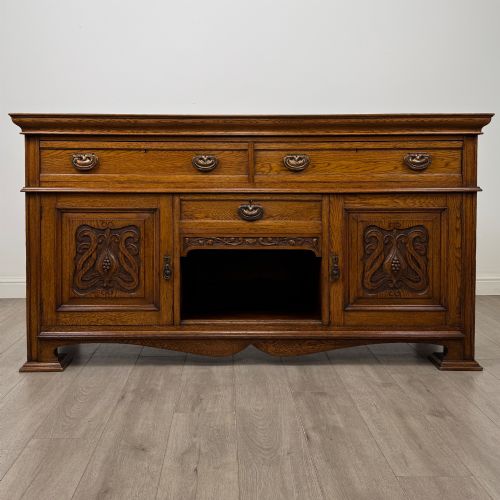
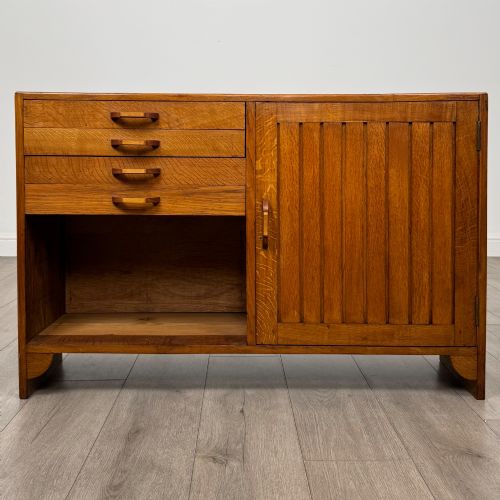
Formations range from open potboards with lower shelves to enclosed cupboards with brass or iron hardware. Many pieces function as sideboards, servers, or small dresser bases depending on their regional origins.
How they were made
Cabinet makers constructed these pieces primarily from solid oak, sometimes utilising fruitwood, pollard oak, or glass panels for contrast. Surfaces often display natural grain patterns developed through traditional hand planing and jointing techniques.
Hardware such as brass handles, drop pulls, and iron hinges secure the doors and drawers while adding functional detail. Carved ornamentation, linenfold panels, and barley-twist supports appear on revival and period pieces alike, applied by hand.
What varies in quality
The standard of a piece depends heavily on the crispness of hand carving and the integrity of the timber joints. Superior examples maintain original boards and structural framing without excessive modern replacement.
Proportion and surface finish distinguish finer workshop production from simpler utility items. Well-executed period mouldings and balanced drawer configurations indicate higher workshop skill.
The Oak Buffet Base Glossary
- Potboard
- An open lower shelf beneath a dresser base or buffet, originally designed for storing heavy pots and dishes.
- George III
- A British stylistic period spanning the mid to late 18th century, known for balanced proportions and refined cabinet work.
- Jacobean Revival
- A 19th or 20th century style copying 17th century motifs like heavy geometric panels and turned supports.
- Enfilade
- A long sideboard or cabinet with a line of three or more doors, commonly found in French provincial furniture.
- Fruitwood
- Dense timber from fruit-bearing trees such as pear or apple, utilised alongside oak for contrasting details.
Oak Buffet Base: Frequently Asked Questions
How do I date an oak buffet?
Dating relies on observing construction marks, hardware types, and stylistic carving details. Hand-cut dovetails and pegged joints generally indicate older 18th century origins.
Revival pieces from the Victorian or Edwardian eras often borrow earlier motifs while employing machine-assisted construction methods.
Where were these pieces used?
These low cupboards served primarily in dining rooms, halls, and large kitchens for storing serving dishes and cutlery. The flat top surface doubled as a serving counter during meals.
Modern interiors utilise them as credenzas, media consoles, or hallway storage units.
What is French provincial style?
French provincial furniture reflects rural craftsmanship from various regions of France during the 18th and 19th centuries. These pieces emphasise practical storage and subtle panel carving over formal court aesthetics.
They often pair oak with secondary woods like fruitwood to create lighter regional variations.