
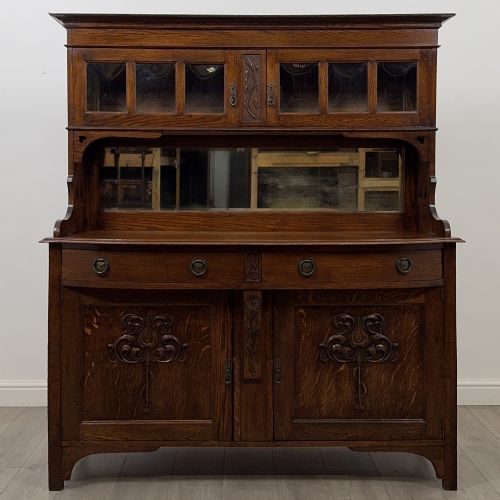
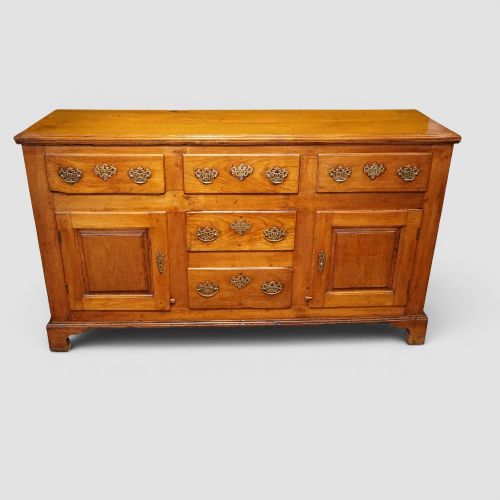
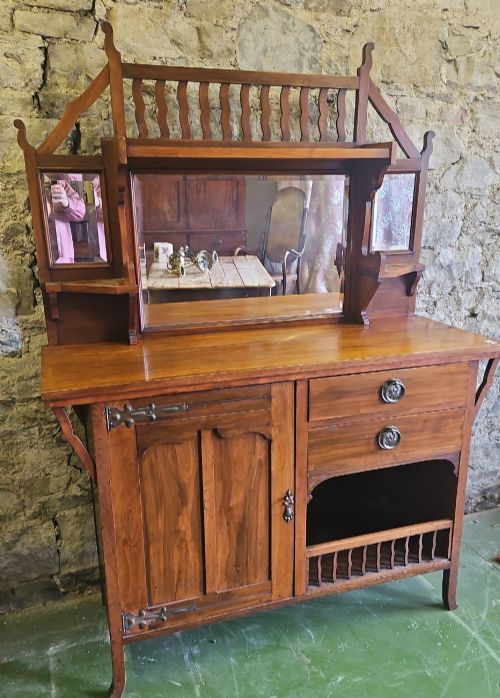

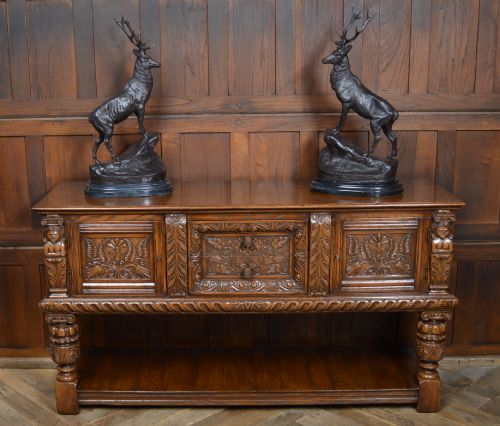
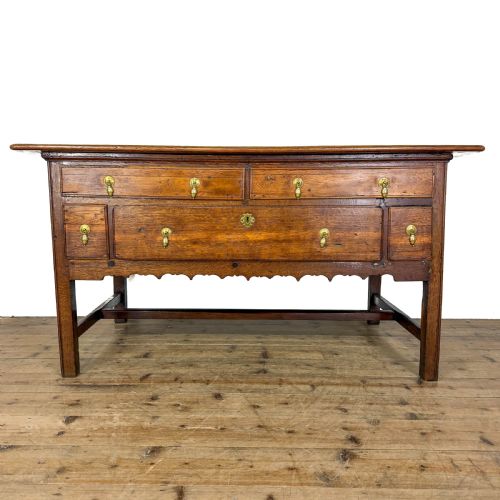
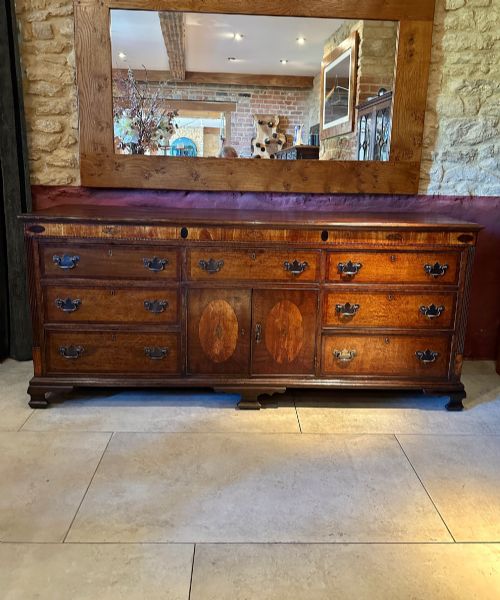

Warm Oak Credenza
A warm oak credenza brings substantial timber storage and deep grain character into a room, combining utility with centuries of cabinet-making history.

Warm Oak Credenza
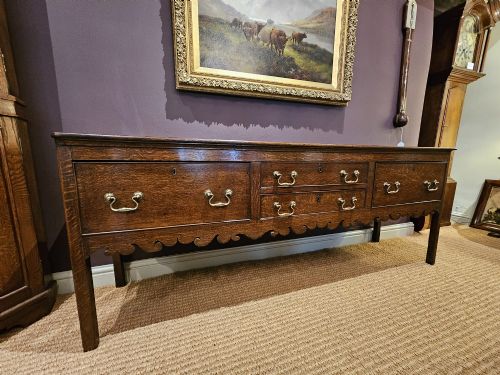
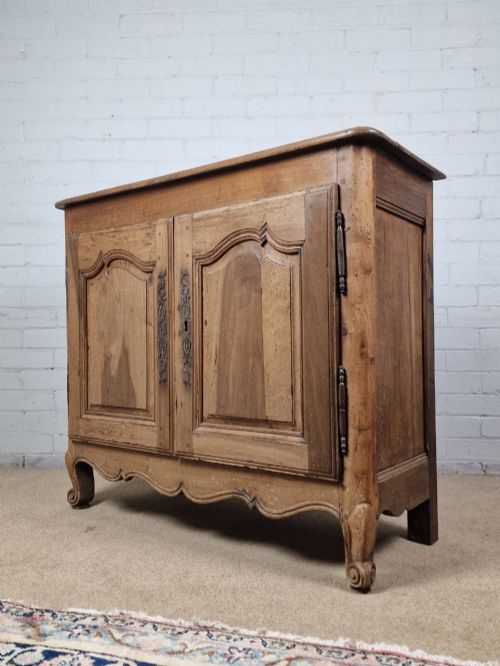
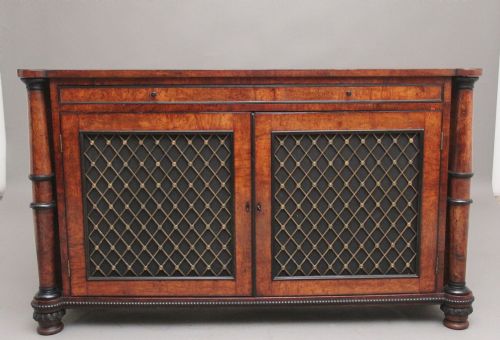
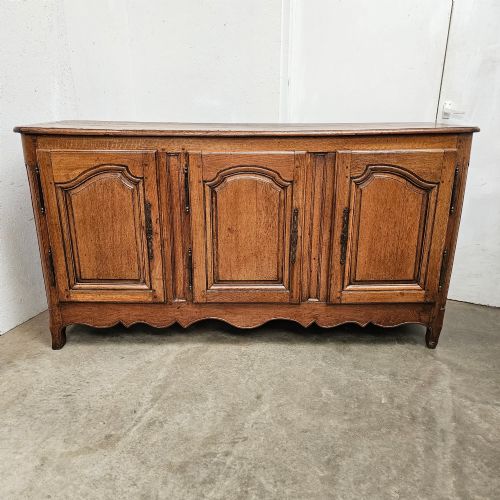
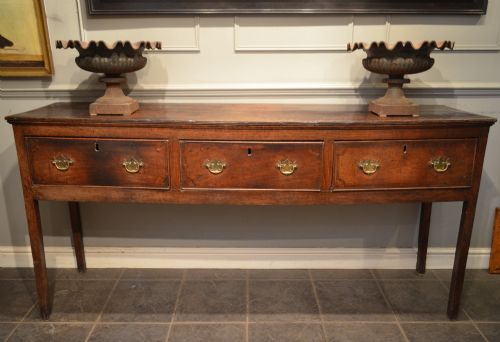
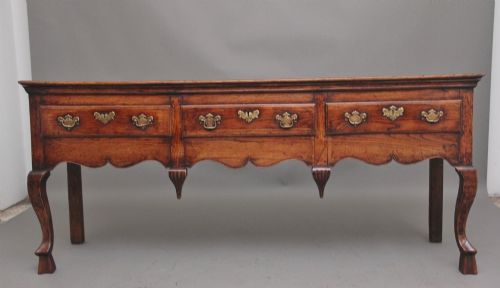
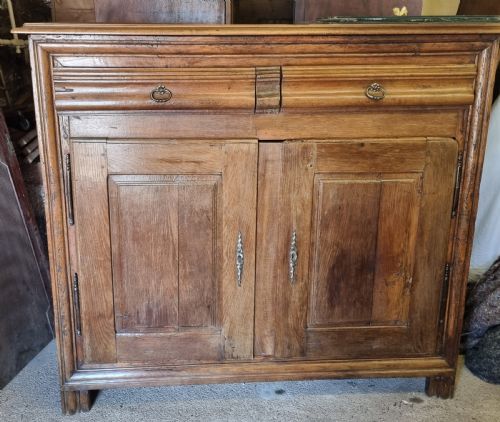
A warm oak credenza encompasses heavy timber storage furniture, appearing on this page mostly as eighteenth and nineteenth century dresser bases, sideboards, enfilades, and cabinets. These forms serve dining rooms, hallways, and living spaces with generous surface tops and deep cupboards or drawers.
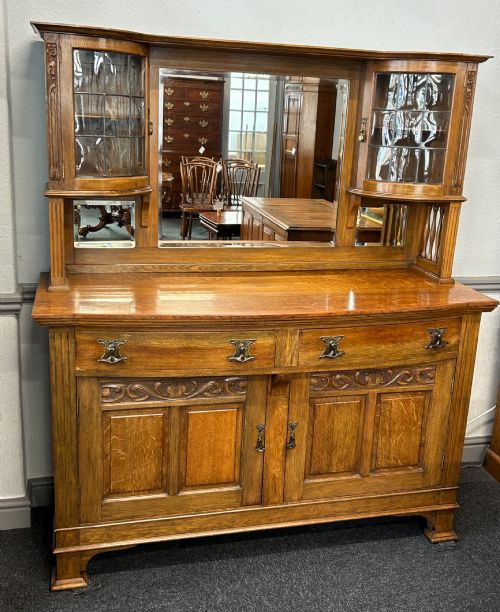
The selection ranges from early Georgian country pieces and French provincial enfilades to later Arts and Crafts sideboards and Edwardian server units. Oak dominates the construction, often paired with fruitwood, pollard oak, or mahogany highlights.
Buyers encounter regional variations such as Lancashire dresser bases and French sacristy cabinets alongside formal George III designs. Each piece delivers practical storage framed by period timber character.
How they were made
Construction relies heavily on solid oak timbers, chosen for strength and durable grain patterns, frequently combined with fruitwood, mahogany, or pollard oak veneers for decorative contrast. Cabinet makers shaped these woods using traditional joinery methods to build stable frames, panelled doors, and dovetailed drawers.
Metal fittings in brass and wrought iron provide functional hinges, drop handles, and escutcheons that secure doors and drawers. Glass panels occasionally appear in upper cabinet doors or mirrorback frames on later Arts and Crafts and Edwardian iterations.
Listings span the eighteenth century through to the 1920s, featuring oak, pollard oak, fruitwood, and mahogany.
What varies in quality
The distinction between standard examples and the top of the range rests on timber selection and timber figuring, such as the striking grain patterns found in pollard oak panels. Superior pieces display thoughtful proportions, crisp carving work, and original hardware rather than later replacements.
Construction integrity defines the upper tier, where drawer linings remain solid and timber movement is properly managed through traditional panel construction. Maker attribution also elevates certain pieces, distinguishing standard regional workshop production from documented cabinet makers.
Maple and Co·T Simpson and Son
The Warm Oak Credenza Glossary
- Enfilade
- A long sideboard or low buffet with a series of cabinet doors, traditionally used in dining rooms for serving food and storing tableware. This form is common in French provincial furniture.
- Dresser Base
- A low rectangular cabinet fitted with drawers and often a pot board shelf underneath, originating as a kitchen work and storage surface before moving into dining spaces.
- Pollard Oak
- Timber taken from trees that were pollarded, creating dense, highly figured wood grain with knot clusters prized for decorative cabinet doors and drawer fronts.
- Pot Board
- An open lower shelf beneath a dresser base or sideboard, originally intended for storing heavy pots and culinary utensils.
Warm Oak Credenza: Frequently Asked Questions
What is a warm oak credenza?
It is a heavy timber storage piece, found here under terms like sideboard, dresser base, enfilade, and cabinet.
These items span the eighteenth, nineteenth, and early twentieth centuries across English and French provincial styles.
How do I use a sideboard in a modern home?
These low cabinets provide surface space for lamps or serving food while offering deep interior storage for diningware or household items.
They anchor dining rooms, hallways, and large living spaces as focal storage furniture.
How do I tell an 18th century piece from a 19th century one?
Earlier eighteenth century examples often feature simpler planked construction, heavy mouldings, and country workshop traits like pot boards.
Nineteenth century iterations frequently introduce richer carved details, mirrorbacks, or heavier panelled doors influenced by Arts and Crafts design.
What is pollard oak?
Pollard oak comes from trees cut back at trunk height to promote dense branching, resulting in highly figured timber with complex grain patterns.
Cabinet makers used these distinctive panels on drawer fronts and doors to add visual depth.