
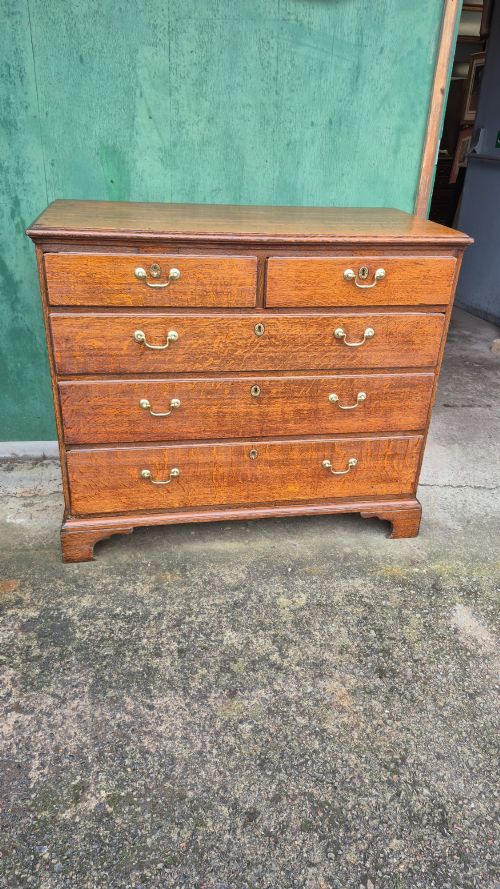
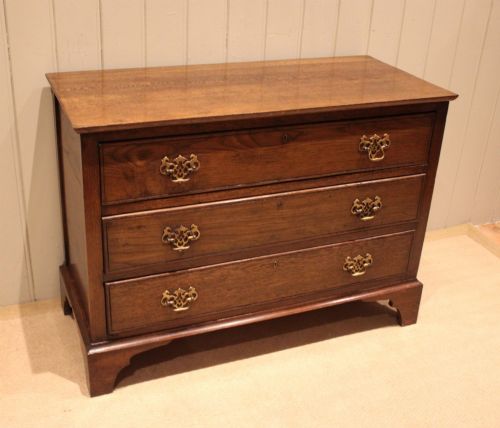
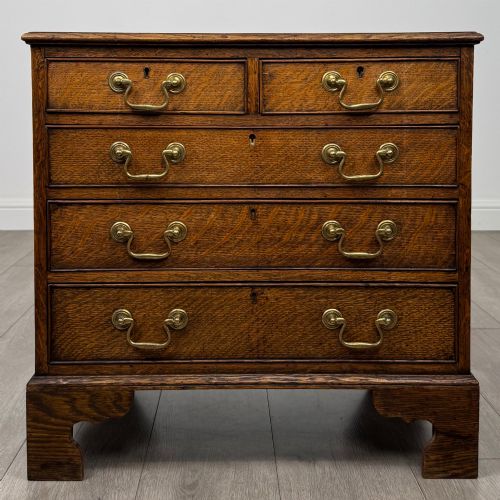
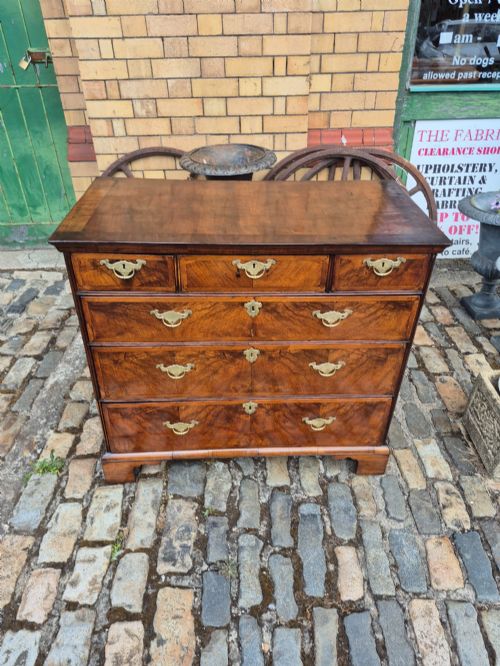
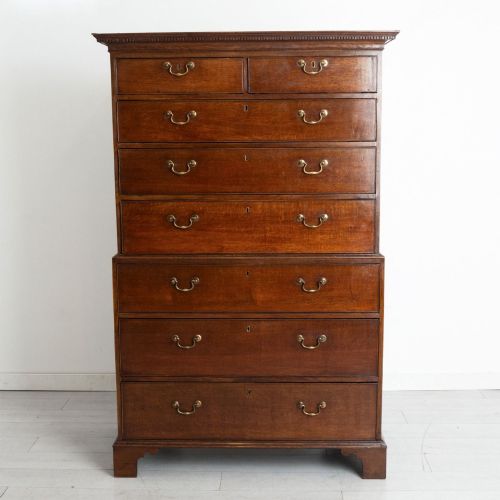
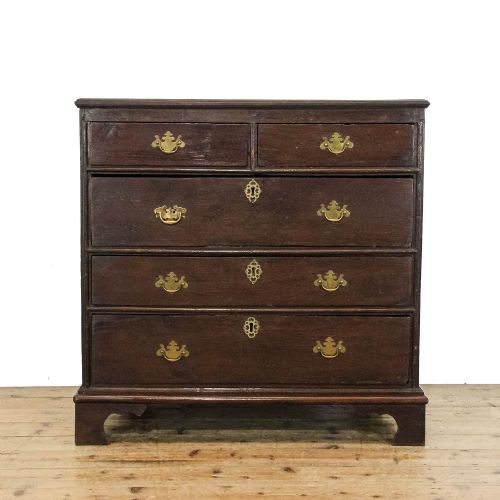
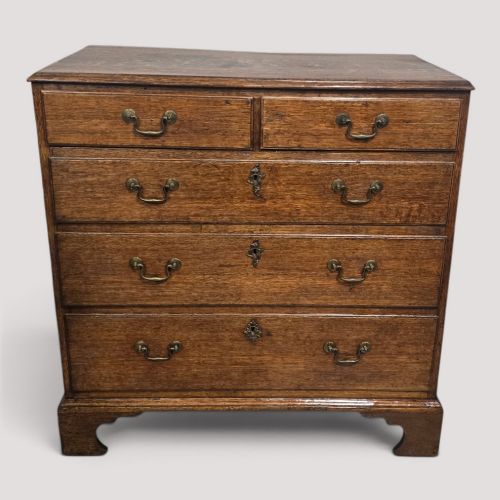
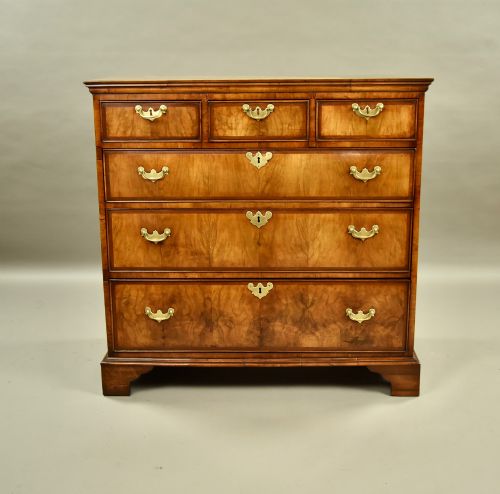
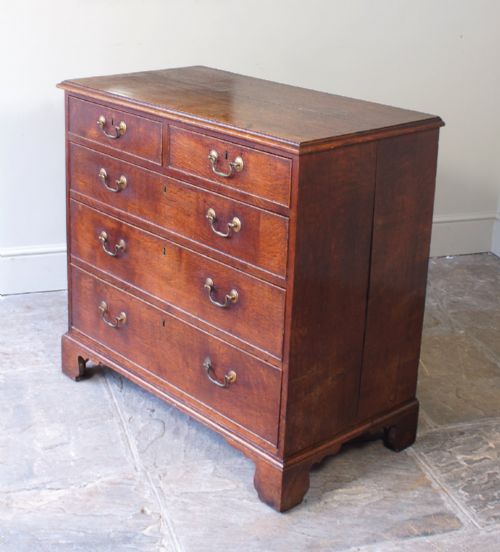
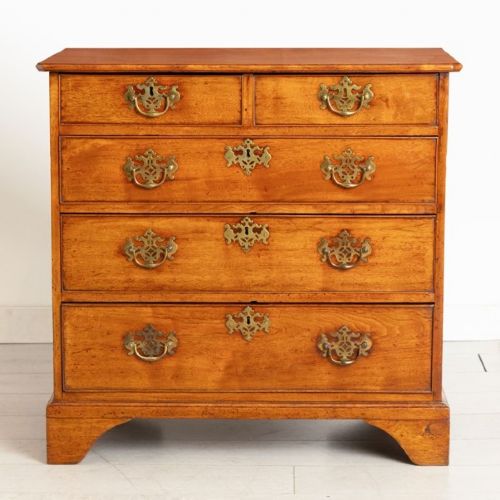
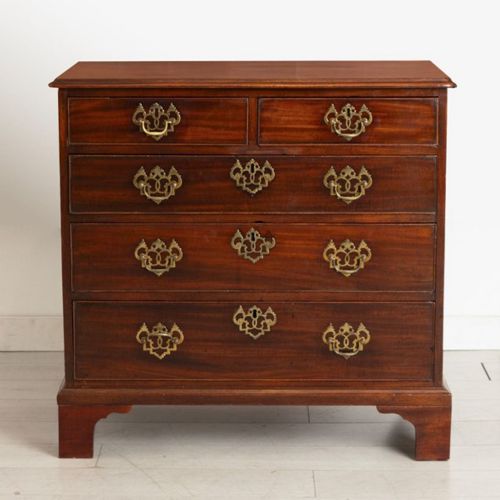
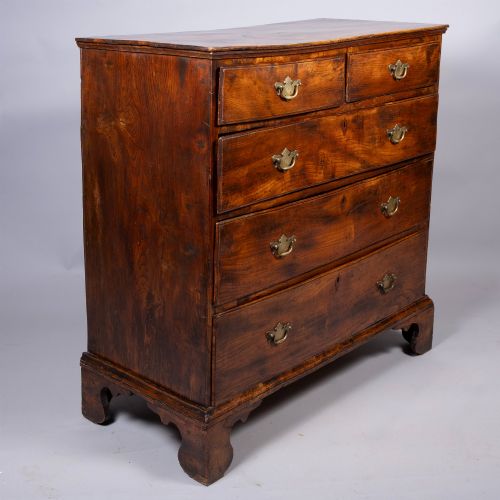
Oak Bracket Foot Chest
An oak bracket foot chest brings sturdy timber and elevated corner supports together, offering timeless bedroom storage.
Oak Bracket Foot Chest
Most entries on this page date to the eighteenth and nineteenth centuries, spanning Georgian and Victorian eras, with occasional Edwardian and later revival interpretations. Forms range from full-sized storage chests to smaller apprentice pieces and miniature furniture. The primary timber is invariably oak, frequently paired with mahogany, walnut, or fruitwood inlay to accent the drawer fronts.
Construction and Materials
Cabinetmakers built these pieces using solid oak planks for the primary carcass and drawer linings, often combining walnut, mahogany, or elm for figured surfaces and crossbanding. Iron and brass hardware, including original swing handles and escutcheons, secured the drawers and added functional contrast to the warm wood tones. Secondary timbers like fruitwood or yew wood appear in inlay work and smaller decorative details.
Joinery relied on traditional hand-cut dovetails for drawer construction and sturdy frame assembly to ensure longevity. Bracket feet were either applied directly to the base corners or formed as part of an integrated moulded plinth, elevating the heavy timber carcass off damp floors.
Miniature apprentice pieces let journeyman cabinetmakers prove their dovetailing skills before tackling full-sized furniture.
Assessing Quality and Character
Quality in these chests rests on the choice of timber figure, the crispness of the dovetailing, and the retention of original hardware such as brass handles and bracket feet. Pieces featuring figured elm or walnut crossbanding display a higher grade of craftsmanship than plain utility carcases. The proportion of the bracket feet relative to the main body dictates the visual balance of the piece.
Surface finish and patina distinguish well-preserved examples from heavily restored ones, with bleached or limed treatments altering the natural tone of the oak. Original backboards, undisturbed drawer linings, and intact foot brackets elevate a piece above those with modern replacements or extensive timber splicing.
The Oak Bracket Foot Chest Glossary
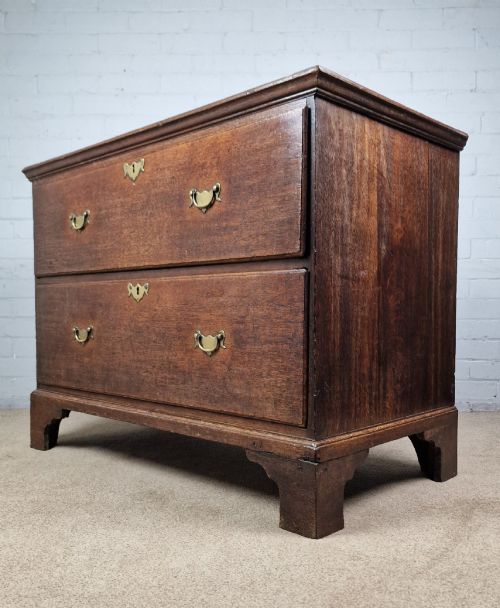
- Bracket foot
- A simple architectural foot supporting a case piece, shaped like a bracket and mitred at the corner. It lifts the cabinet cleanly off the floor.
- Crossbanding
- A strip of veneer applied to the border of a drawer front or top with the grain running perpendicular to the main panel. This technique frames the primary timber.
- Bachelor's chest
- A small, low chest of drawers featuring a pull-out folding writing slide above the top drawer. It served multiple practical functions in Georgian bedchambers.
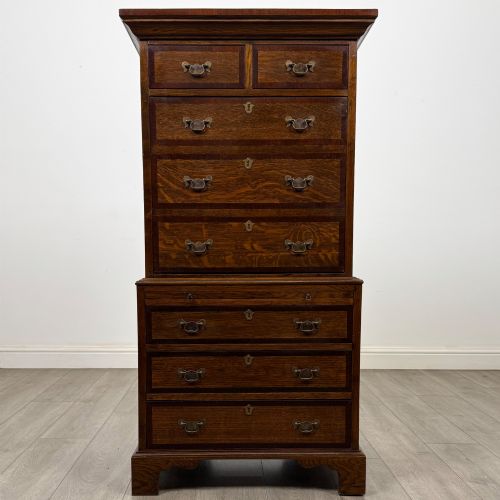
- Chest on chest
- A tall storage unit comprising a smaller upper chest stacked upon a deeper lower chest, also known as a tallboy. This form maximises vertical storage capacity.
- Bleached oak
- Oak timber treated to lighten its natural warm hue, a finish seen across several period examples. It softens the visual weight of heavy furniture.
Oak Bracket Foot Chest: Frequently Asked Questions
What is a bracket foot chest?
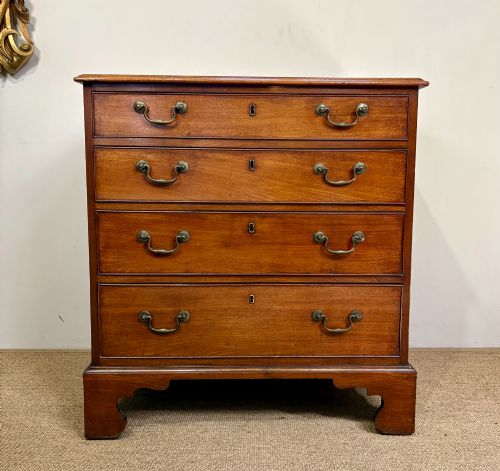
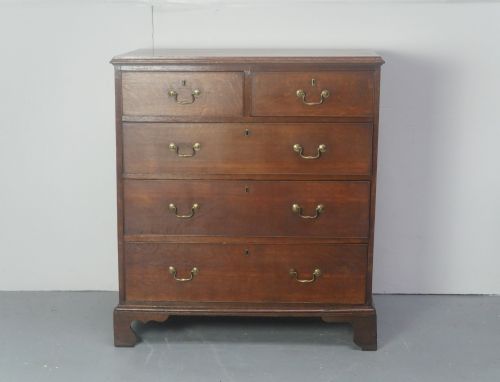
A bracket foot chest is a set of drawers raised on corner bracket supports rather than resting flat on the floor or on bun feet. These pieces provide sturdy domestic storage and date primarily to the Georgian era.
The design elevates the heavy timber frame, giving the case a lighter visual balance while protecting the bottom boards from wear.
How do I date an oak chest?
Dating relies on examining construction methods, timber selection, and hardware styles such as brass handles and drawer dovetails. Eighteenth-century examples typically show hand-cut joinery and native woods like oak, elm, or walnut.
Later Victorian and Edwardian pieces often display machine-sawn elements and different secondary timbers inside the carcass.
What is a bachelor chest?
A bachelor chest is a compact drawer unit that incorporates a pull-out wooden slide used for writing or sorting papers. They were popular in the eighteenth century for small bedchambers.
These pieces combine the storage capacity of a standard chest with the utility of a miniature desk.
How should I care for antique oak?
Antique oak benefits from stable room temperatures away from direct heat sources and strong sunlight that can dry out the timber. Regular dusting with a soft, dry cloth preserves the finish without building up heavy wax residues.
Applying a light, natural beeswax occasionally will nourish the grain and maintain the surface patina.