


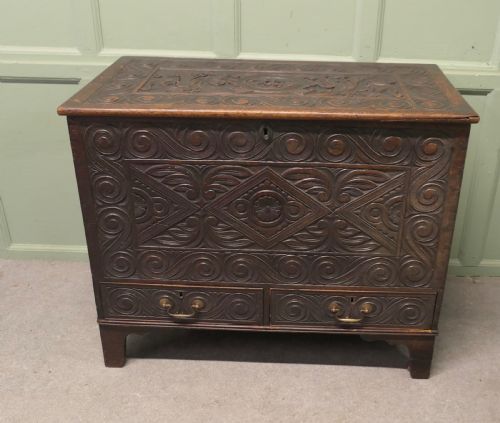


Oak Blanket Box with Drawers
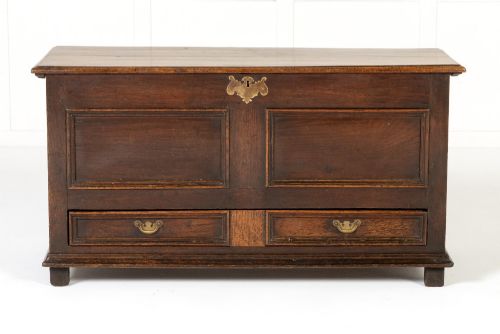
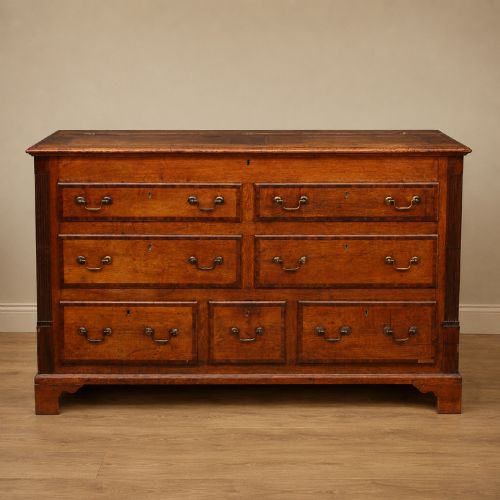
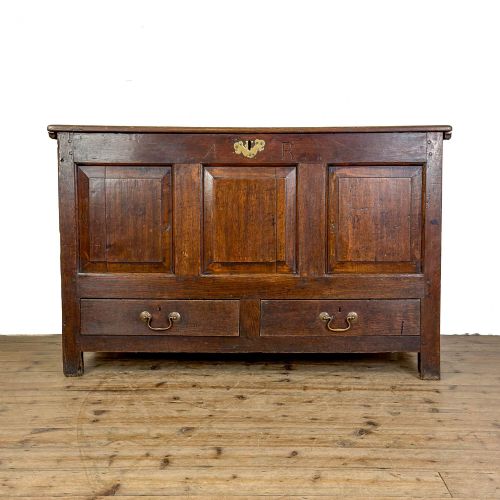
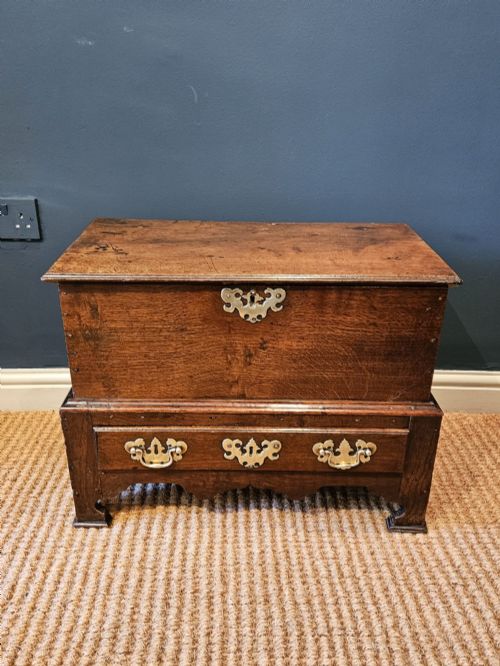
An oak blanket box with drawers combines upper lidded storage with lower pull-out drawers, uniting trunk and chest into one sturdy piece.
Oak Blanket Box with Drawers
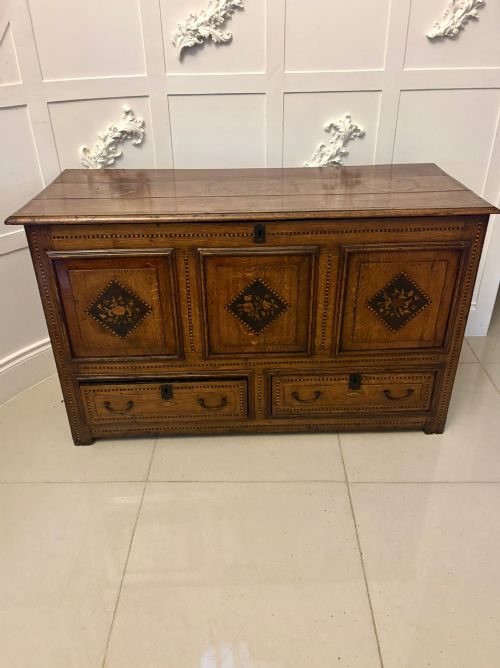
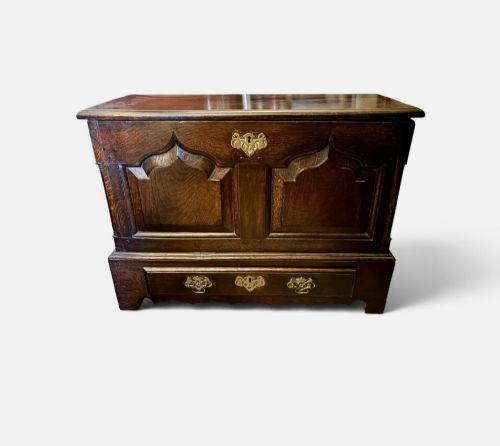
An oak blanket box with drawers appears most frequently as a mule chest or coffer, bridging the gap between a simple lidded trunk and a drawer chest. These items span from the seventeenth century through the Georgian period and into the nineteenth century, reflecting regional variations such as Welsh vernacular styles alongside English provincial workshop traditions.
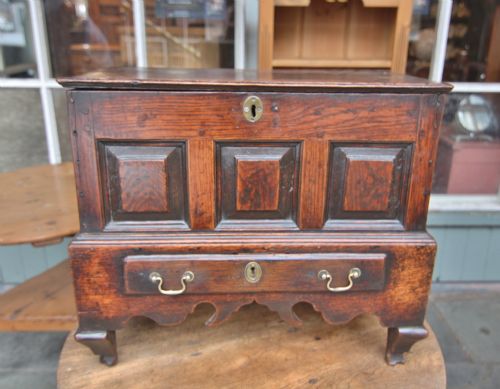
Smaller tabletop variants known as a coffer bach also occur within the selection, offering miniature proportions while retaining the characteristic lidded compartment above small drawers. Buyers encounter large multi-panel examples designed for domestic storage, often featuring three or four panel constructions typical of country house furniture.
Materials and construction
Solid oak forms the primary carcass of these pieces, frequently complemented by secondary timbers and decorative accents such as burr elm panels, marquetry inlay, or contrasting mahogany elements. Cabinetmakers utilised sturdy frame-and-panel techniques to accommodate the seasonal movement of timber, securing lids and structural joins with traditional pegging.
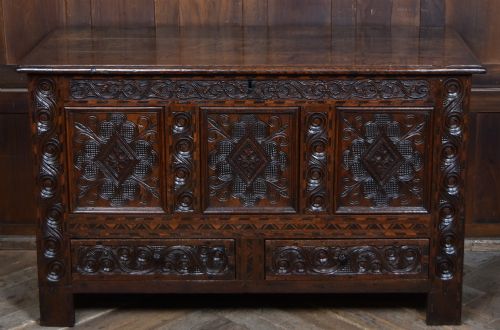
Brass and iron hardware, including drop handles, escutcheons, and hinges, provide functional and decorative contrast to the warm timber surfaces. Hand-carved detailing, such as Jacobean-style motifs or green man masks, occasionally adorns the drawer fronts and panels.
Some miniature Welsh coffers come equipped with secret drawers cunningly hidden behind the main compartment to outsmart curious visitors.
Judging the work
The standard of an oak blanket box with drawers rests upon the crispness of the joinery and the selection of timber figures, particularly when burr elm or marquetry is present. Pieces with well-proportioned drawer configurations beneath the main coffer section demonstrate superior balance and cabinetry skill.
Originality of surface patination and hardware significantly elevates a piece, distinguishing items that have aged naturally in domestic settings from those altered over time. The depth of the hand-carving and the integrity of the original panels further divide standard provincial furniture from exceptional examples.
The Oak Blanket Box with Drawers Glossary
- Mule chest
- A storage chest featuring one or more drawers positioned beneath the main lidded compartment. This hybrid form evolved during the late seventeenth century.
- Coffer bach
- A Welsh term for a small miniature coffer or chest, usually fitted with drawers and standing on feet. These compact pieces served as keepsake or marriage boxes.
- Marquetry inlay
- Decorative patterns formed by fitting contrasting veneers into prepared recesses within the solid timber surface. It appears on select seventeenth-century examples.
- Frame-and-panel
- A method of construction where a central floating panel sits within a grooved outer frame to allow for natural wood expansion. This technique prevents the timber from splitting.
- Patina
- The surface sheen and colour developed by wood over centuries of handling, exposure to light, and waxing. It indicates genuine age and use.
Oak Blanket Box with Drawers: Frequently Asked Questions
What is a mule chest?
A mule chest is a traditional storage piece that combines a lift-top coffer with one or more drawers built into the base. This design bridges the transition between simple blanket trunks and tall drawer chests.
Cabinetmakers developed the form to make stored textiles more accessible without requiring users to unpack the entire contents from the top lid.
How do I date an oak coffer?
Dating relies on observing construction methods, timber selection, and decorative styles such as Georgian framing or Jacobean carving. Tool marks, joint types, and the wear patterns on drawer runners offer further clues to the era of manufacture.
Earlier seventeenth-century pieces tend to show heavier peg construction and geometric mouldings, while eighteenth-century examples often feature cleaner drawer alignments and refined bracket feet.
What was a coffer bach used for?
A coffer bach served as a miniature storage chest in Welsh households, often commissioned to mark significant life events like weddings or births. Families used them to store precious documents, small linens, or personal valuables.
Their diminutive size allowed them to sit securely on tables or dressers within the home.
Where should I place a blanket box?
These chests suit bedrooms as practical linen storage at the end of a bed, or living spaces serving as coffee tables with hidden storage. Their robust construction allows them to function as occasional seating.
Keep them away from direct heat sources and strong sunlight to protect the historic oak surface from drying and cracking.