



Novelty Silver Mustard Pot
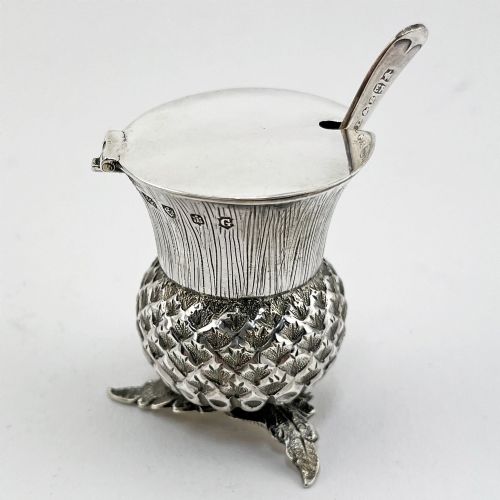
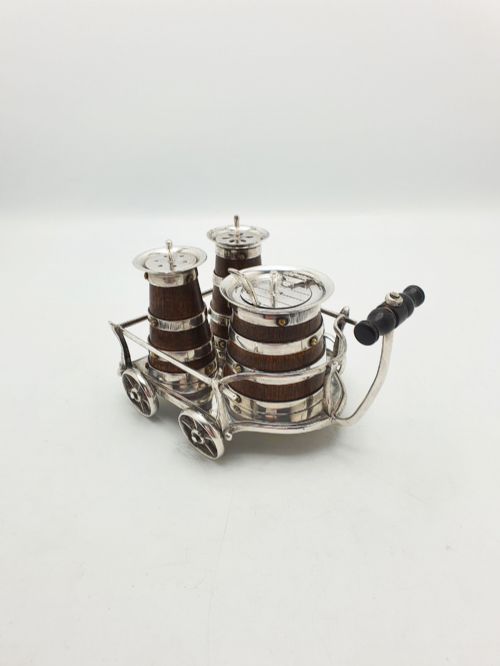
A novelty silver mustard pot turns a dining table into a stage, taking the form of an owl, a thistle, or a carriage.
Novelty Silver Mustard Pot
A novelty silver mustard pot is a whimsical condiment container designed to resemble everyday objects, animals, or transport. When you search for a novelty silver mustard pot, you find miniature coal scuttles, barrels, and birds serving a practical purpose with theatrical flair.
The pieces on this page span the Victorian and Edwardian eras into the mid-twentieth century, with Victorian silver plate and sterling silver dominating the selection. Makers drew inspiration from nature and daily life, shaping metal into thistles, owls, chicks, and carriages to amuse diners.
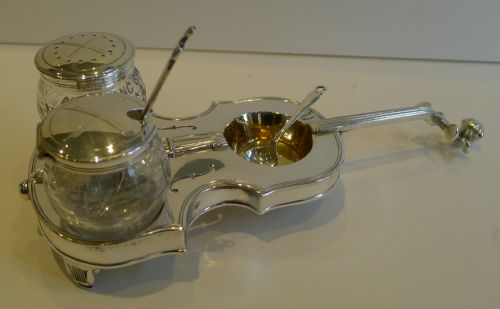
Beyond standalone pots, these items frequently appear as part of larger cruet sets or condiment holders alongside salt and pepper cellars. Whether formed as a violin, a sedan chair, or a butler's tray, each piece balances detailed figurative modeling with the hollow interior required to hold mustard.
How they were made
Silversmiths constructed these pots using sterling silver or silver plate over a base metal, frequently combining metalwork with cut glass liners, wood, or oak. The bodies were often cast or hand-beaten into complex animal and object shapes, then hinged to allow access to the condiment inside.
Interior liners made of blue glass or clear cut glass protected the silver from the corrosive properties of mustard while fitting snugly inside the outer shell. Details like feathers on an owl or grain on an oak barrel were chased, engraved, or applied via wirework to build texture and depth.
Listings feature novelty mustard pots shaped as owls, thistles, barrels, and carriages across Victorian, Edwardian, and mid-century periods.
What varies in quality
The distinction between ordinary and exceptional work lies in the sharpness of the casting and the naturalism of the form. Top-tier pieces capture anatomical detail or architectural proportion cleanly, whereas lesser examples blur fine engraving and rely on heavy plating to mask simple construction.
Condition and completeness also define the upper tier, particularly the presence of matching spoons and original glass liners that fit the interior without rattling. Pieces retaining crisp hallmarks and robust hinges command greater attention than those with worn plate or replaced components.
Richard Comyns
The Novelty Silver Mustard Pot Glossary
- Cruet set
- A matched collection of bottles, casters, and mustard pots held in a stand for the dining table. These sets often incorporate novelty themes across all their condiment containers.
- Silver plate
- A layer of pure silver fused to a base metal such as copper or Britannia metal. Many Victorian novelty pieces utilise this technique to achieve complex shapes at a lower cost than solid sterling.
- Sterling silver
- An alloy consisting of ninety-two point five percent silver and seven point five percent other metals, usually copper. This standard composition appears frequently in marked mustard pots from the nineteenth and twentieth centuries.
- Glass liner
- A removable insert fitted inside the metal body of a mustard pot to prevent vinegar and mustard from tarnishing the silver. Blue glass liners are particularly common in nineteenth-century figural pieces.
- Chasing
- A metalsmithing technique where a hammer and punches push the metal from the front to create raised surface decoration without removing material. This method defines the feather and fur textures on animal mustard pots.
Novelty Silver Mustard Pot: Frequently Asked Questions
How do I use an antique mustard pot?
These pots are entirely functional for modern dining, provided you use the original glass liner to protect the metal from mustard. Simply remove the lid by its hinge and serve the condiment with a small spoon.
Take care to wash and dry the glass liner by hand after use rather than leaving mustard to dry against the silver or glass surface.
Are these pots made of solid silver?
The pieces span both sterling silver and silver plate over base metals like brass or copper. Hallmarks stamped on the metal will indicate solid sterling, while unmarked items or those showing base metal underneath wear points are silver plated.
Both materials were standard in period production, with silver plate allowing makers to create larger or more complex figural shapes affordably.
Why do some pots have glass inserts?
Mustard is acidic and will corrode silver if left in direct contact with the metal over time. Removable glass liners were manufactured to protect the interior while remaining easy to lift out for cleaning.
Finding a piece with its original liner intact adds significantly to the integrity of the object.
How do I date a novelty mustard pot?
Dating relies on a combination of hallmarks, manufacturing techniques, and stylistic clues like Victorian or Edwardian design motifs. Assay office marks and date letters stamped on sterling pieces provide the exact year of manufacture.
Unmarked silver plated items are dated through stylistic comparison with documented pieces from the nineteenth and twentieth centuries.