


Norwich School Landscape Art
Norwich school landscape art captures local Norfolk scenery through atmospheric oils and watercolours.
Norwich School Landscape Art
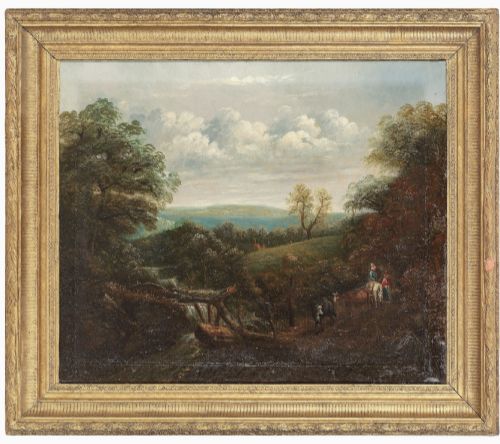
Norwich school landscape art encompasses paintings and drawings produced by artists working in Norfolk during the late eighteenth and nineteenth centuries. These works frequently depict local scenery, including rivers, windmills, cottages, and flatland vistas characteristic of the region.
The pieces available here include original oil paintings on canvas and wood panel alongside watercolours and graphite drawings. Buyers encounter works from various decades of the nineteenth century, framed in gilt wood and executed in the distinctive regional style.
Works attributed to notable figures such as Thomas Lound, Henry Bright, John Joseph Cotman, John Thirtle, and Joseph Paul appear within the collection. Each piece reflects the characteristic observation of light and topography cultivated by this pioneering provincial art movement.
Materials and construction methods
Artists utilised watercolour pigment on paper, often supported by graphite underdrawing, to capture transient weather and light effects across Norfolk. Alternatively, oil paint was applied to canvas and wood panels to build up richer textures and deeper tonal ranges.
Many of these works are housed in period gilt wood frames that complement the visual weight of the paintings. The combination of traditional pigments, paper, canvas, and panel reflects the standard studio practices of nineteenth-century British artists.
Several watercolours document damp Norfolk riverbanks where artists undoubtedly shivered while chasing the changing East Anglian light.
Factors determining quality and execution
Quality in these landscapes rests upon the handling of light, atmospheric depth, and the confidence of the brushwork or watercolour wash. Superior examples demonstrate a keen sensitivity to Norfolk topography and weather, moving beyond rigid documentation to evoke a genuine sense of place.
The condition of the paper, canvas, or wood panel, alongside the preservation of the original pigments and the integrity of the frame, influences the standing of an individual piece. Works by more established practitioners within the circle command greater attention for their assured execution and historical association.
Thomas Lound·Henry Bright·John Joseph Cotman·John Thirtle·Joseph Paul
The Norwich School Landscape Art Glossary
- Norwich School
- A regional movement of painters active in Norfolk from the early nineteenth century onwards, focused primarily on local landscapes. This group represents the first provincial art movement in Britain outside London.
- Wood Panel
- A rigid support base made from timber used by artists for oil paintings before canvas became universally dominant. Panels provide a smooth, stable surface for detailed brushwork.
- Watercolour Pigment
- Finely ground colour suspended in a water-soluble binder, applied to paper to achieve translucent washes. It allows artists to capture rapid changes in sky and water.
- Gilt Wood
- Timber framing finished with a thin layer of gold leaf or metallic gilt paint. Such frames were designed to enhance the visual presentation of nineteenth-century paintings.
- Graphite
- A form of crystalline carbon used for initial sketching and drawing beneath watercolours. It provides precise outlines before pigment is applied.
Norwich School Landscape Art: Frequently Asked Questions
What is Norwich school landscape art?
It refers to paintings and drawings created by artists associated with the Norfolk region during the nineteenth century. These works document local scenes such as rivers, windmills, and rural cottages.
The movement is celebrated as the first provincial school of painting in Britain, showcasing the distinct topography of East Anglia.
How should I display these watercolours?
Works on paper require careful placement away from direct sunlight to prevent the fading of watercolour pigments and paper degradation. Using UV-protective glazing helps preserve the integrity of the drawing.
Maintaining stable indoor humidity levels also protects both the paper and the historic frames from warping or deterioration.
What subjects appear in these paintings?
Common motifs include local waterways like the River Yare and Breydon Water, alongside windmills, coastal staithes, and country paths. Figures engaged in daily labour or travel often populate the foreground.
These subjects reflect a deep attachment to the Norfolk landscape and rural industry of the Victorian era.
How do I identify a wood panel painting?
Oil paintings on wood panel feature a rigid wooden support rather than flexible woven canvas. This surface often shows the natural grain of the timber beneath or through thin layers of paint.
Panels were frequently utilised for smaller, highly detailed landscape studies during the nineteenth century.