

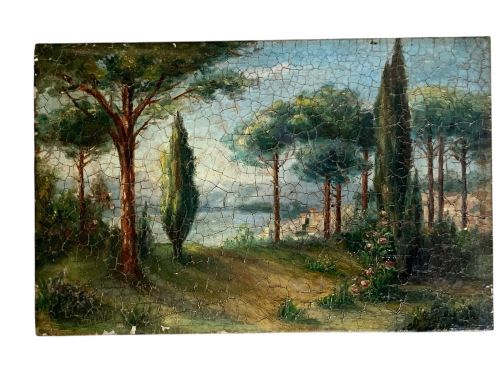
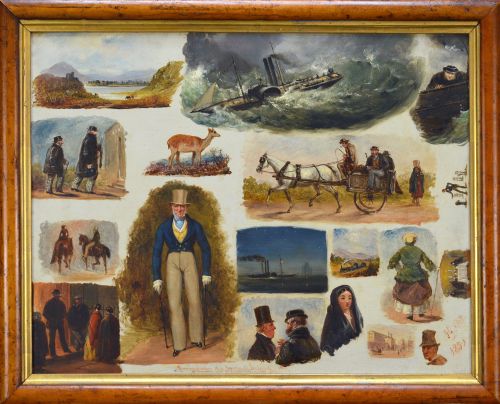
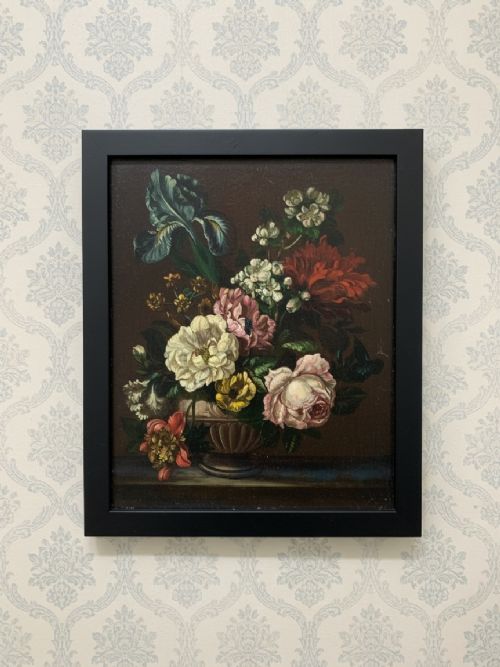
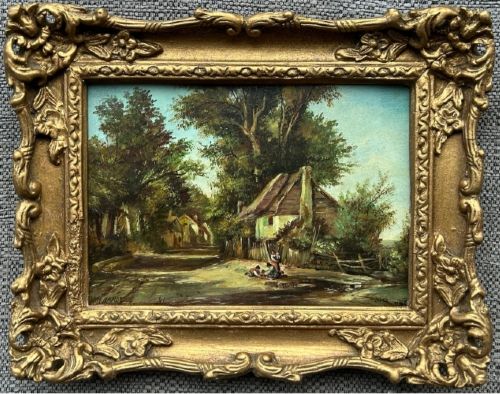




Oil Painting on Wood Panel
Discover an oil painting on wood panel, offering rich textures and intimate historical scenes from centuries of fine art tradition.
Oil Painting on Wood Panel
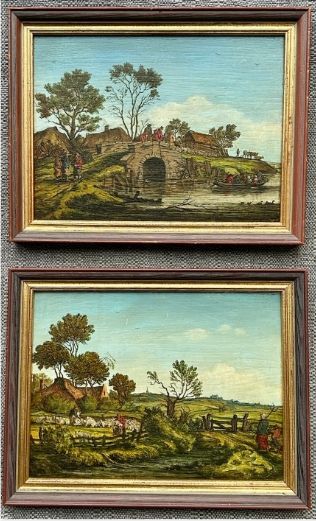
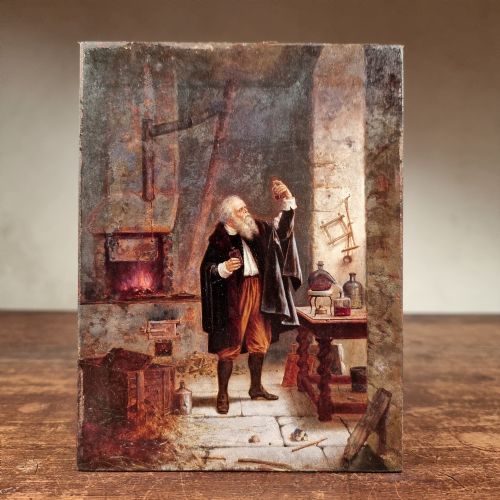
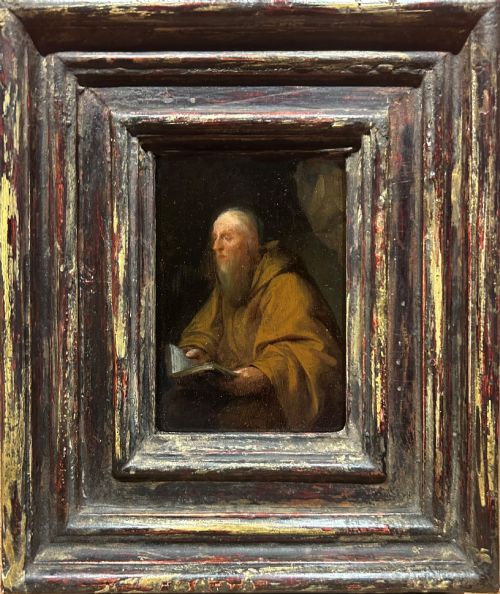
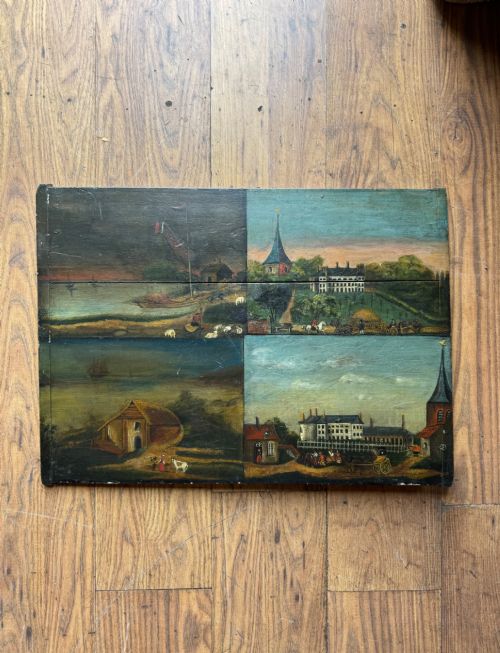
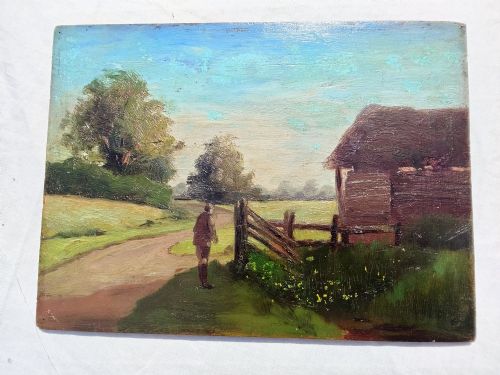
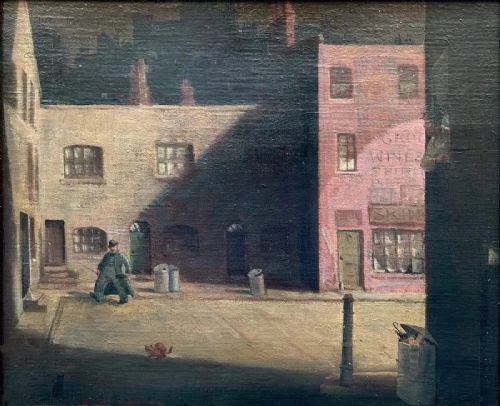
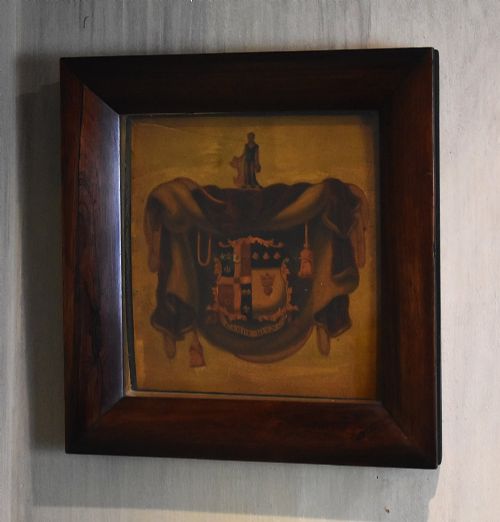
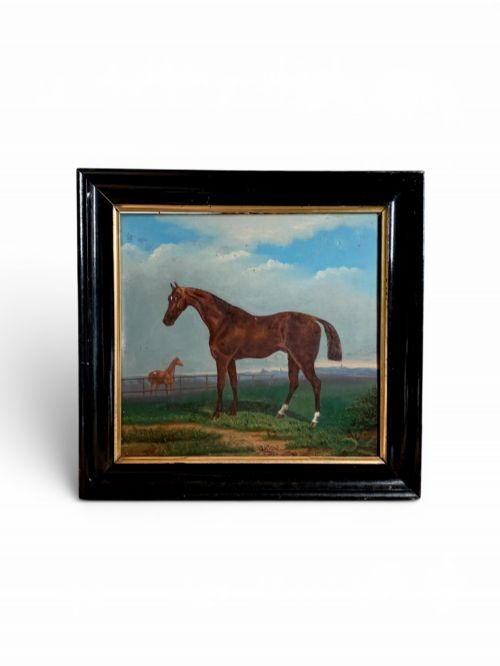
When searching for an oil painting on wood panel, buyers encounter works ranging from seventeenth-century portraits to mid-twentieth-century landscapes. These pieces include independent artworks, decorative architectural elements, and functional items like painted mirrors and coach panels.
The selection spans various regional schools, featuring Dutch still lifes, British pastoral scenes, Italian coastal views, and French impressionist studies. Many examples remain housed in their period frames, preserving the complete historical object.
Subjects stretch from detailed portraits and animal studies to folk art and architectural capriccios. The rigid support allowed artists to achieve remarkable precision and longevity compared to standard canvas.
How They Were Made
Painters applied oil paint directly onto prepared timber supports, frequently using oak, mahogany, or general wooden boards. The stable wooden substrate provided a firm foundation for building delicate layers of pigment and glaze.
Many works incorporate ornate framing materials such as gilt wood and gold leaf, enhancing the visual depth of the central composition. Master artisans carefully seasoned the wood panels to prevent warping and cracking over centuries.
Oil Painting on Wood Panel Retail Price Guide 2026
Typical asking prices for oil painting on wood panel among the pieces listed under this phrase on Sellingantiques today, from the lower quarter to the upper quarter. They describe what is for sale here now, not the wider market.
Listings feature works spanning from the 17th century to the mid 20th century, executed in oil paint on wood panels.
What Varies In Quality
The standard of execution separates works by established studio artists from provincial naive pieces, showing in the handling of light, anatomical precision, and brushwork control. Superior panels exhibit careful preparation of the ground layer, ensuring long-term adhesion of the oil pigments.
Preservation of the original timber support and the integrity of the paint surface dictate the desirability of a piece. Examples retaining their matching period frames command greater interest among collectors of fine art.
Michelangelo Meucci·Florence Adelina Hess·Paul Elie Gernez·Cornelius Johnson·Hans Temple
The Oil Painting on Wood Panel Glossary
- Wood Panel
- A flat piece of timber used as a rigid support for painting instead of stretched canvas.
- Trumeau Mirror
- An antique wall mirror featuring a decorative painted panel set into the upper section.
- Gilt Wood
- Carved timber coated with a thin layer of gold leaf or gold paint for decorative effect.
- Trompe l'Oeil
- An artistic technique designed to create optical illusions of three-dimensional objects on a flat surface.
- Capriccio
- An architectural painting combining buildings, archaeological ruins, and other elements in a fictional fantasy composition.
Oil Painting on Wood Panel: Frequently Asked Questions
How should I clean a wooden panel painting?
Dust the surface very gently with a soft, dry brush to remove loose particles without disturbing the aged pigments. Avoid using any liquid cleaners, moisture, or chemical solvents on the fragile paint layers.
Consult a professional conservator if the artwork requires deeper cleaning or stabilization. Improper cleaning techniques can permanently strip historical glazes and varnishes from the timber support.
Why did artists paint on wood instead of canvas?
Wood panels offered a completely rigid and smooth surface that allowed for exceptionally fine brushwork and detailed glazing techniques. This support was particularly favoured by early Dutch and Flemish masters.
Wooden boards also provided greater durability against punctures compared to woven fabrics. Many nineteenth and twentieth-century artists continued the tradition for smaller studies and plein air works.
How can I tell the age of the wooden support?
Examine the reverse of the board for tool marks, grain patterns, and signs of historical ageing like oxidation and shrinkage. Oak and mahogany were common choices depending on the century and regional school.
Bevelled edges, dowels, and carpenter stamps often provide additional clues regarding the period of the timber. Frame construction and framing methods also help corroborate the dating of the artwork.
Where should I hang these paintings at home?
Display panel paintings on interior walls away from direct sunlight, heating vents, and damp areas to protect the wood from warping. Stable room temperatures ensure the timber and oil paint expand and contract uniformly.
Pair smaller cabinet pieces in intimate spaces where viewers can appreciate the fine details up close. Larger landscape and portrait panels serve as striking focal points above mantelpieces or sideboards.