
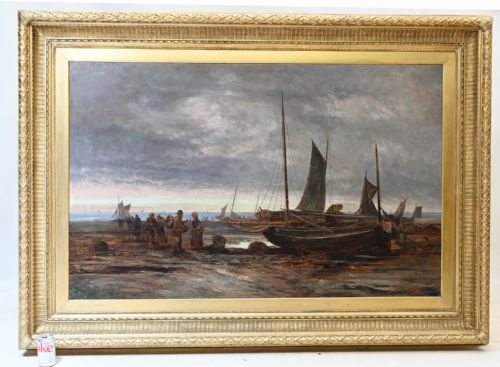


Norfolk Landscape Artwork
Norfolk landscape artwork captures the distinct light, waterways and coastlines of the county through oil and watercolour.
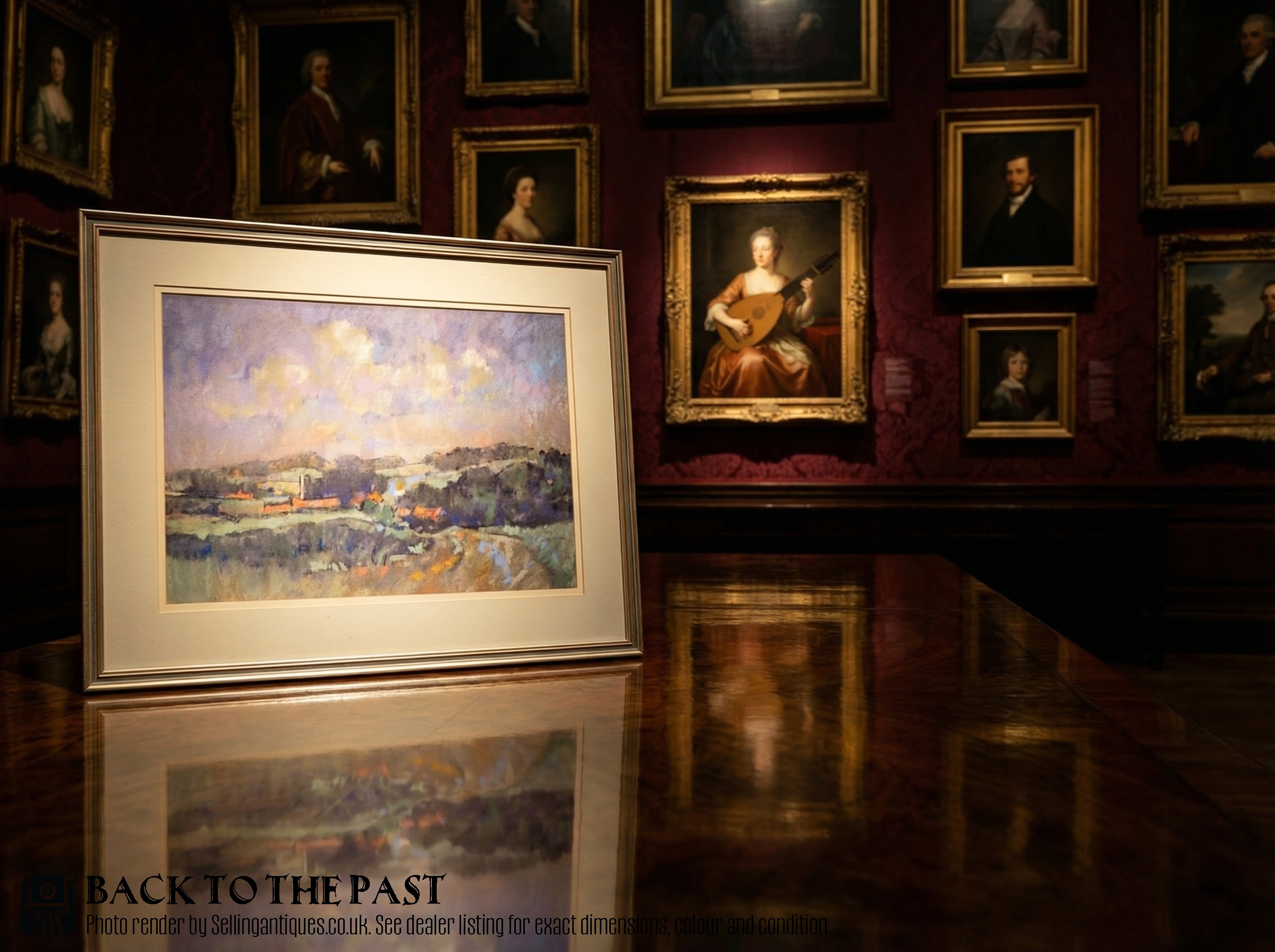
Norfolk Landscape Artwork
Norfolk landscape artwork encompasses paintings and drawings depicting the scenery of the region, ranging from broads and rivers to coastal marshes. Buyers seeking norfolk landscape artwork encounter works spanning the nineteenth century through the mid twentieth century.
The selection includes Victorian watercolours and oils alongside post war impressionist pieces. Regional depictions often focus on specific locations such as Cromer, Brancaster Staithe, and the Norfolk Broads.
Represented styles vary from the Norwich School and Victorian British Impressionism to Modern British Impressionism. Works take the form of individual paintings, framed watercolours, and architectural studies.
Materials and methods
Artists painted using watercolour pigment on paper and card, often mounted behind glass. Larger compositions utilised oil paint on canvas supported by wooden stretches.
Framing frequently involved wood and giltwood surrounds to house the paintings and drawings. Pigments capture atmospheric coastal conditions and inland waterways.
Listings span the nineteenth century to the nineteen sixties, employing oil on canvas, watercolour pigment, and card.
Judging quality
Quality rests upon the artist's handling of light and regional topography, distinguishing competent regional recording from masterly execution. Handled brushwork and atmospheric depth separate proficient works from standard topographical views.
The condition of the paper, canvas, and original framing contributes to the standing of a piece. Works by recognised regional painters demonstrate superior draughtsmanship and tonal control.
Sir Thomas Newenham Dean·Edward Seago·Frederick William Hattersley·John Edward Bale·Leslie Rackham·Charles Harmony Harrison·H.E. Tidmarsh·George De Paris·John Joseph Cotman·Henry Bright·John Thirttle·Thomas Lound
The Norfolk Landscape Artwork Glossary
- Norwich School
- A regional group of artists inspired by the Norfolk landscape, notable for realistic and atmospheric depictions of local scenery.
- Staithe
- A landing stage or wharf by a river or coast, frequently featured in local maritime and landscape scenes.
- Broads
- A network of navigable rivers and lakes in Norfolk and Suffolk, providing a primary subject for regional painters.
- Giltwood
- Wood carved and coated with gold leaf or a gold coloured finish, commonly used for nineteenth century picture frames.
- Watercolour pigment
- Finely ground colour suspended in a water soluble binder, applied to paper or card to create translucent washes.
Norfolk Landscape Artwork: Frequently Asked Questions
What subjects appear in these paintings?
The works depict local rivers, churches, coastal staithes, and marshlands.
Scenes frequently centre on the Norfolk Broads and coastal towns like Cromer.
How do I date an old watercolour?
Dates rely on artist signatures, framing materials, and paper characteristics.
Nineteenth century pieces often feature distinct Victorian mounts and handwriting.
Where should I hang these works?
Watercolours require placement away from direct sunlight to prevent pigment fading.
Oil paintings suit traditional reception rooms alongside wooden furniture.
What is the Norwich School?
It is a provincial movement of artists dedicated to recording local scenery.
Members focused heavily on the natural environment of Norfolk.