




Green Countryside Painting
A green countryside painting brings the quiet fields, rivers and woodlands of past centuries directly onto an interior wall.
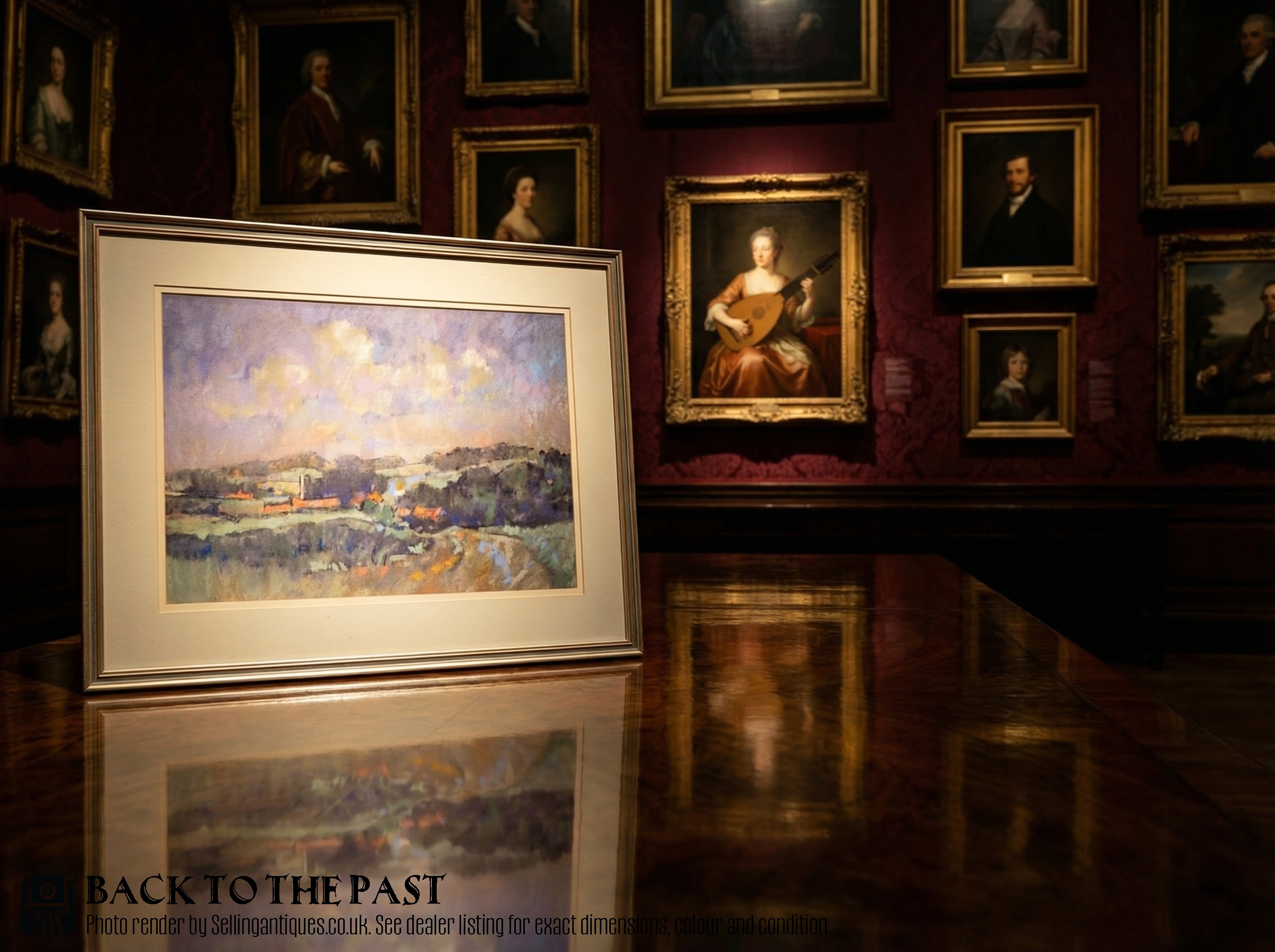
Green Countryside Painting
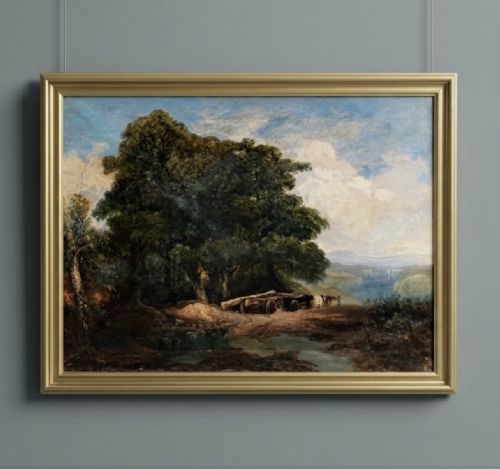
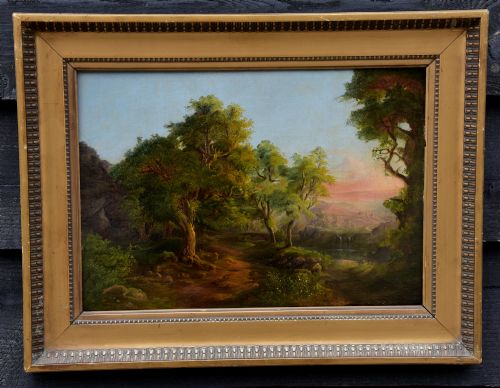
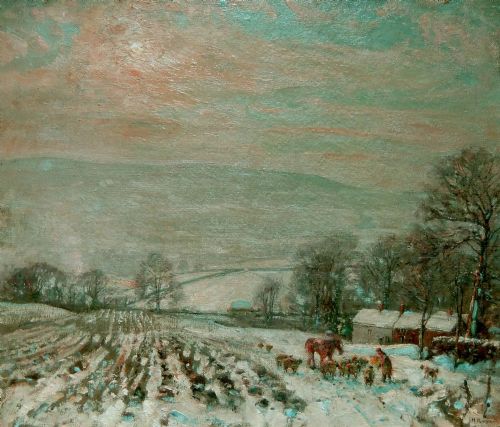
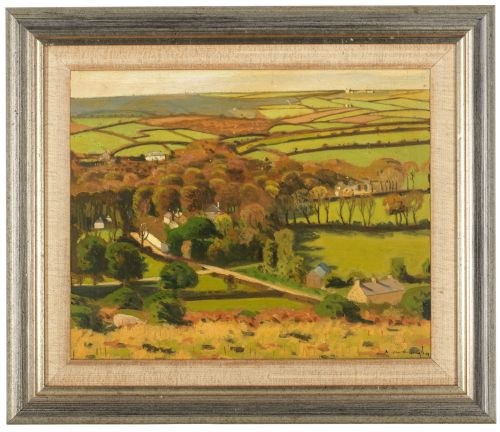
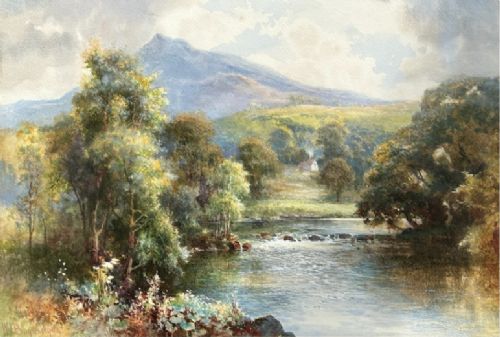
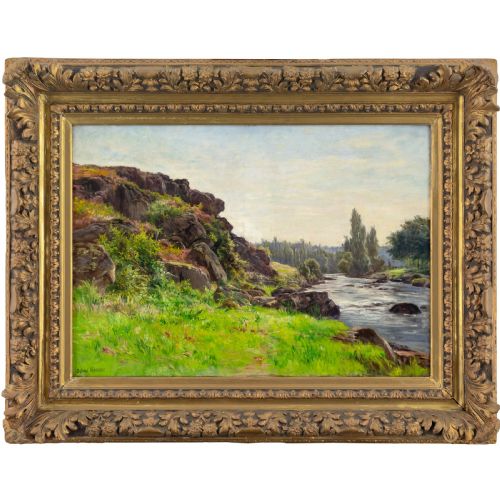
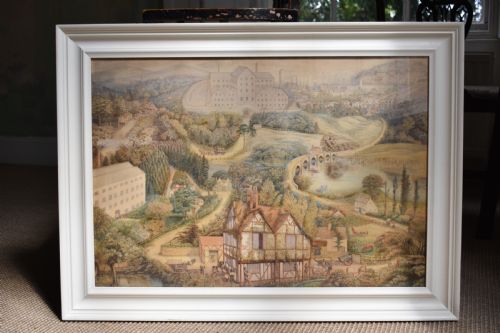
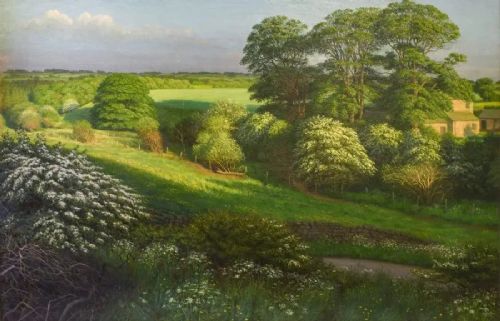
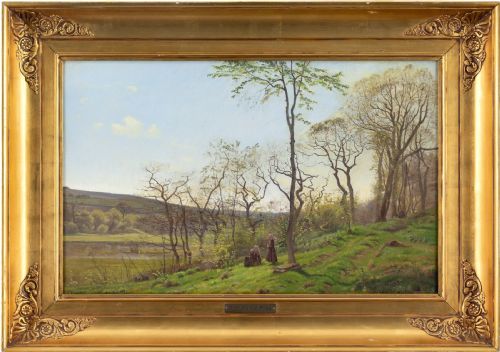
A green countryside painting captures rural vistas, pastoral scenes and river valleys through the eyes of artists working from the nineteenth century to the mid twentieth century. These works depict rolling hills, woodlands, farmyards and riverbanks under varied seasonal light.
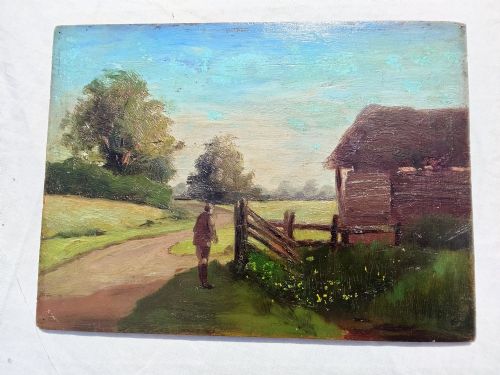
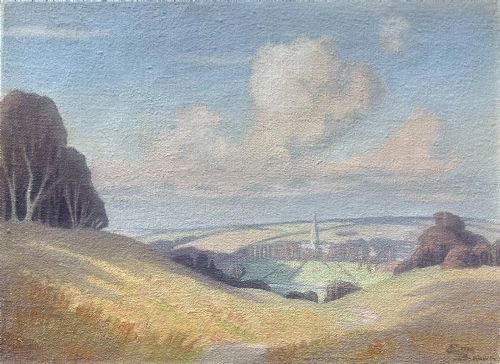
Most pieces encountered on this page belong to the British and European schools, spanning Victorian naturalism through to early modern impressionism. The versions most commonly found take the form of framed oil paintings on canvas or wood panel, alongside watercolours on paper.
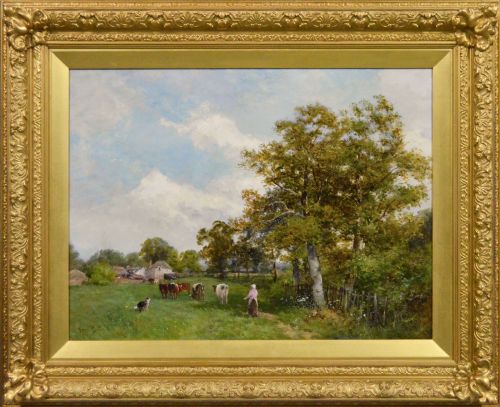
Subjects frequently incorporate figures, livestock or quiet rural structures such as cottages, bridges and barns set within expansive greenery. Each canvas reflects the specific landscape traditions of its period, ranging from precise topographical detail to looser atmospheric brushwork.
Materials and construction
The physical build of these works relies primarily on oil paint applied to stretched canvas or wooden board, alongside watercolours executed on heavy paper. Canvas supports are often secured to wooden stretcher frames, while watercolour works sit beneath protective glass within traditional frames.
Artists layered oil pigments to build depth in foliage and terrain, sometimes using impasto techniques to give texture to fields, trees and hedgerows. Gilt wooden frames frequently enclose the paintings, providing a decorative border that complements the pastoral palette.
Several canvases faithfully record cows lingering by rivers, proving that nineteenth century artists possessed infinite patience for stubborn livestock.
Factors determining quality
Quality in these rural landscapes rests upon the artist's handling of light, atmosphere and perspective within the natural setting. Works that successfully convey depth, spatial harmony and the specific qualities of seasonal light stand apart from formulaic topographical records.
The preservation of the paint surface and the stability of the support material also define the standard of a piece. Original framing, clear provenance and the direct touch of a skilled hand elevate individual examples above standard decorative output.
Richard Sebastian Bond·William H Myers·George Graham·Frederick Marriott·Herbert Royle·Robert Morson Hughes·William Joseph Boyes·Gabriel Mathieu·David Bates·Harald Foss·Frederick Walker·Eric Brown·Henri Ottmann·Richard Redgrave·Ernest Higgins Rigg·Peter Newcombe·George Oyston·Rene Levrel·Russell Sidney Reeves·Alexander Wellwood Rattray·John Horace Hooper·Hubert Wellington·Edgar Woollatt·Joseph Edward Hennah·Charles Gregory
The Green Countryside Painting Glossary
- Canvas
- A heavy woven fabric stretched across a wooden frame to serve as a stable support for oil painting. It forms the primary ground for many nineteenth and twentieth century rural scenes.
- Impasto
- A technique where paint is laid onto a canvas in thick areas, leaving brush or palette knife marks visible. This method adds tangible texture to foliage, water and earth.
- Watercolour
- A paint consisting of pigment suspended in a water-soluble vehicle, typically applied to paper. It creates transparent washes of colour suited to lighter atmospheric effects.
- Provenance
- The chronological record of ownership and custodial history for an artwork. Documented origin helps verify the authenticity and attribution of historical paintings.
- Wood Panel
- A rigid wooden board utilised as a painting support instead of fabric canvas. Panels offer a smooth, stable surface frequently found in smaller historical works.
Green Countryside Painting: Frequently Asked Questions
What periods do these landscape paintings cover?
The available selection spans from the nineteenth century through the Edwardian era and into the mid twentieth century. Artists from these various decades interpreted the natural world through shifting stylistic lenses.
Victorian naturalism gives way to early twentieth century impressionist approaches, reflecting changing artistic movements across Britain and Europe.
How should I hang an oil painting?
Secure hanging requires appropriate wall anchors matched to the weight of the framed canvas and its wooden structure. Hardware should be evenly balanced to ensure the piece remains level.
Keep the artwork away from direct sunlight and excessive humidity sources to protect both the painted surface and the wooden frame.
Are watercolours framed differently from oils?
Watercolour paintings on paper require glass protection and mount boards to prevent direct contact between the pigment and the glazing. This setup safeguards the delicate paper from atmospheric moisture and dust.
Oil paintings on canvas or board are traditionally displayed open to the air within a decorative frame, lacking glass covers.
How do I identify a rural landscape subject?
Subject matter typically centres on unbuilt environments such as woodlands, river valleys, agricultural fields and coastal hills. Human figures or livestock often appear integrated into the natural scenery.
Titles and signatures frequently provide additional context regarding the specific geographic region or artist responsible for the work.