
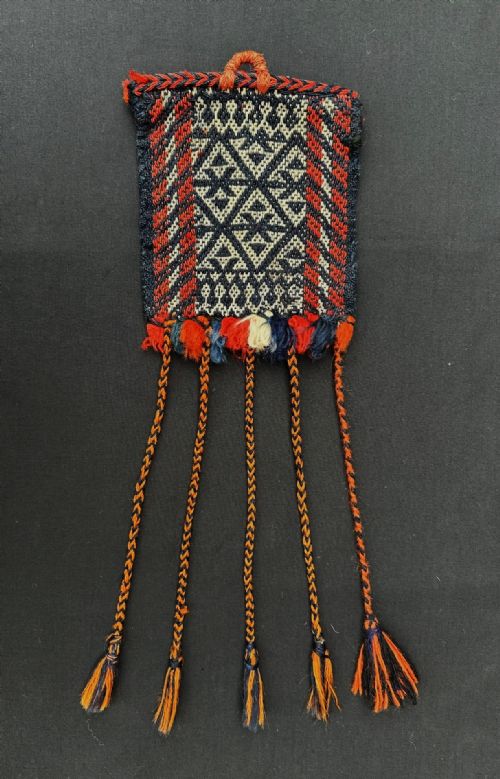
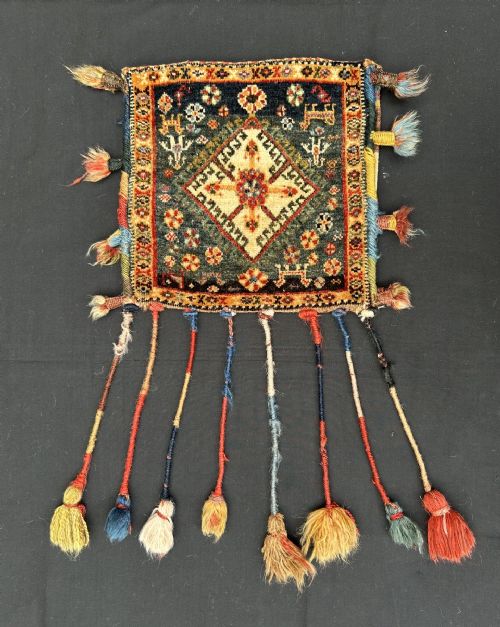
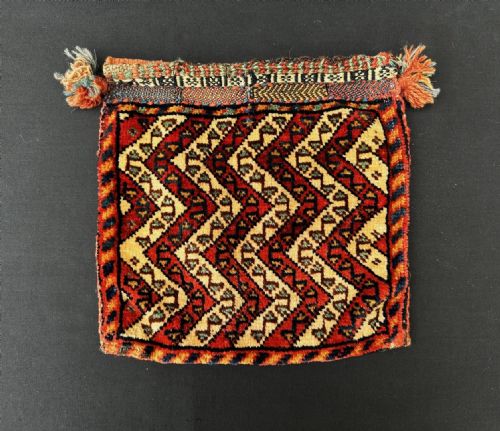
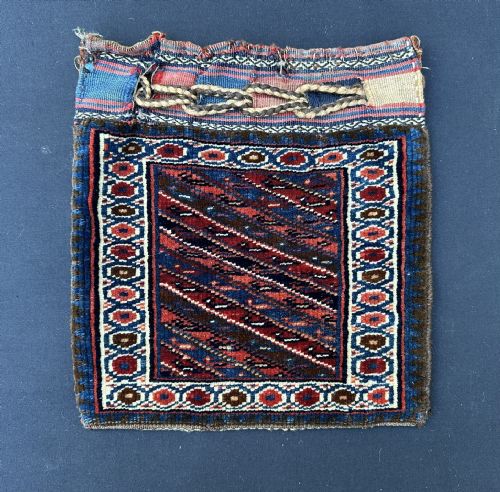
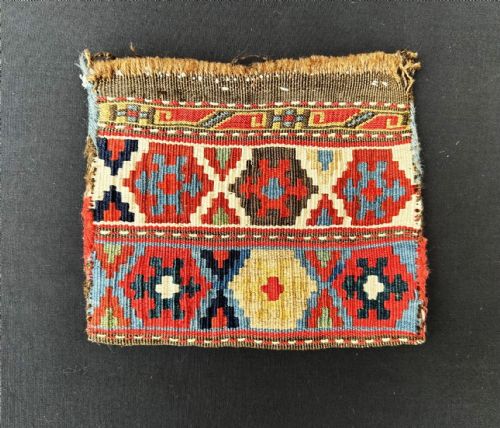


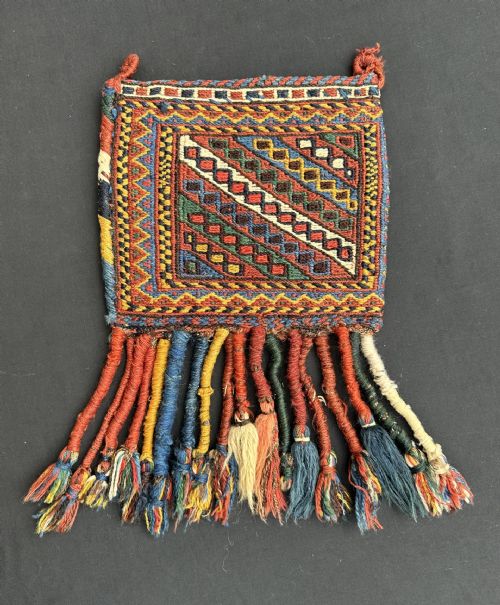
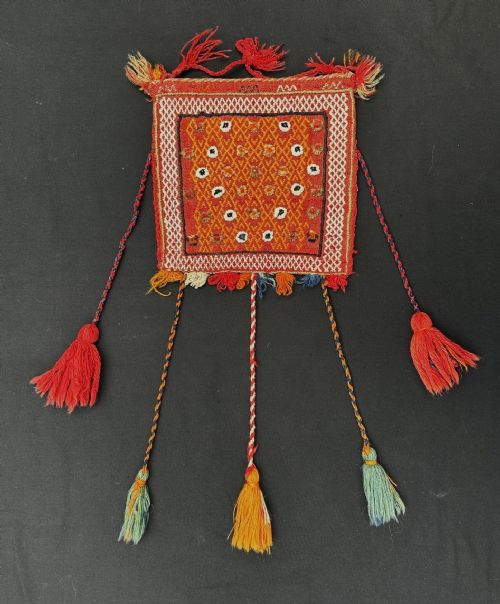


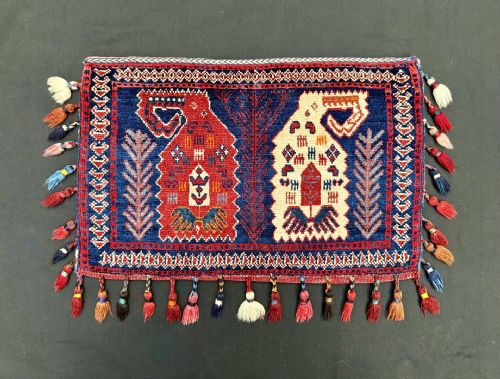
Nomadic Wool Vanity Pouch
These nomadic wool vanity pouch examples are woven bags created by tribal groups across Persia, offering tactile glimpses into nomadic craft.
Nomadic Wool Vanity Pouch
A nomadic wool vanity pouch represents small tribal storage vessels created by various confederacies and groups throughout Persia during the nineteenth and early twentieth centuries. These textile items typically served practical storage functions within tribal camps, displaying distinct regional patterns and weaving structures unique to specific sub-tribes.
The pieces encountered on this page span several specific geographic origins, including the Fars Province, Azerbaijan, Kerman Province, and North Persia. Buyers will primarily find examples attributed to groups such as the Qashqa'i Confederacy, Shahsevan nomads, Afshar tribes, and Baluch weavers.
Object types within these listings appear variously described as tribal bags, storage pouches, vanity-bags, and tribal textiles. Each item reflects the specific utilitarian traditions of its maker, ranging from single compartment pouches to double sided formats.
Factors separating quality grades
Quality in a nomadic wool vanity pouch relates to the tightness of the weave and the precision of the tribal motifs executed across the surface. Finer examples display greater knot density and more intricate geometric or figural arrangements.
The vibrancy and complexity of the natural dyes also distinguish superior pieces, along with the intact condition of structural elements like wool foundations and applied cowrie shells. Greater fidelity to regional tribal designs elevates individual pouches within the range.
Several pouches incorporate sea shells harvested far from the mountains, carried inland by nomads to decorate their wool work.
The Nomadic Wool Vanity Pouch Glossary
- Confederacy
- A union of multiple tribes or clans acting under shared leadership. In these listings, large confederacies like the Qashqa'i encompass various sub-tribes with distinct weaving styles.
- Natural Dyes
- Colourants derived from plants, insects, and minerals rather than synthetic chemical processes. These materials produce the nuanced, variable hues observed in older tribal textiles.
- Cowrie Shells
- Marine gastropod shells utilised as decorative adornments on nomadic objects. They often carry protective or auspicious meanings within tribal cultures.
- Hand-spun Wool
- Fleece processed and twisted into yarn by hand rather than via industrial machinery. This method creates the irregular, tactile character inherent to authentic tribal work.
- Double Sided
- A bag structure featuring usable woven faces on both sides of the piece. This format requires additional labour and planning during the creation process.
Nomadic Wool Vanity Pouch: Frequently Asked Questions
What is a nomadic wool vanity pouch?
These items are small woven containers made by tribal groups in Persia for personal storage and daily use.
Nomads utilised them inside tents to hold small personal belongings during seasonal migrations.
How were these pouches used?
Tribal members used them to store personal items, mirrors, or small valuables within the nomadic household.
Their portable nature suited the mobile lifestyle of groups moving between seasonal pastures.
How do I date a tribal pouch?
Dating relies on examining the natural dye palette, wool quality, and structural characteristics relative to known tribal periods.
Pieces on this page date from the mid-nineteenth century through the early twentieth century.
How should I care for wool textiles?
Keep them out of direct sunlight to prevent natural dyes from fading over time.
Gentle vacuuming through a mesh screen helps remove dust without damaging the hand-spun wool fibres.