
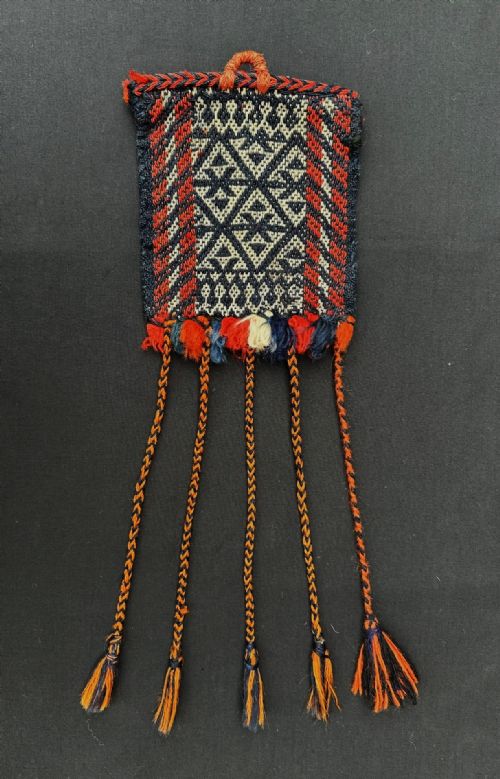
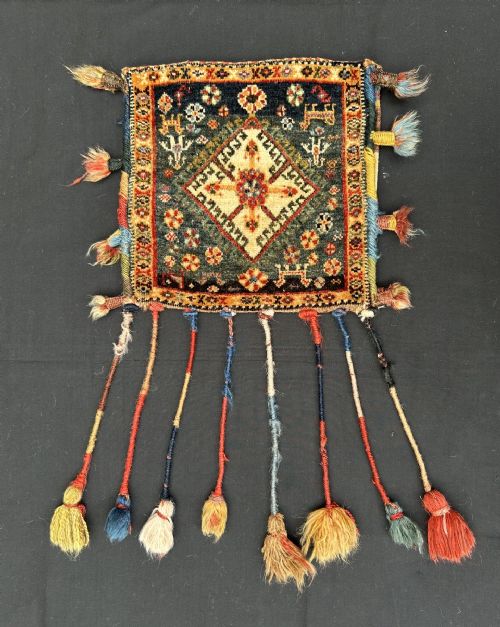
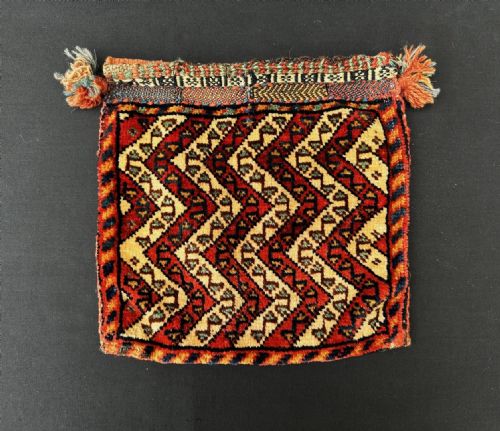
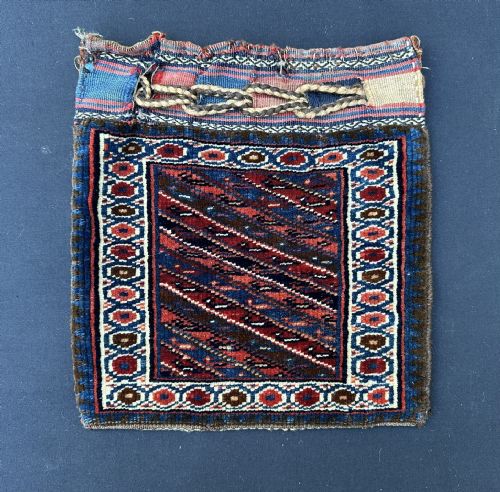

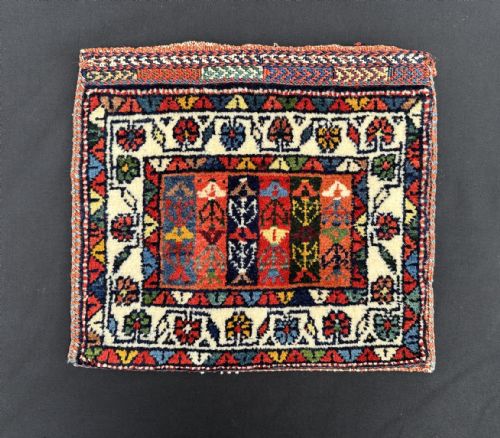

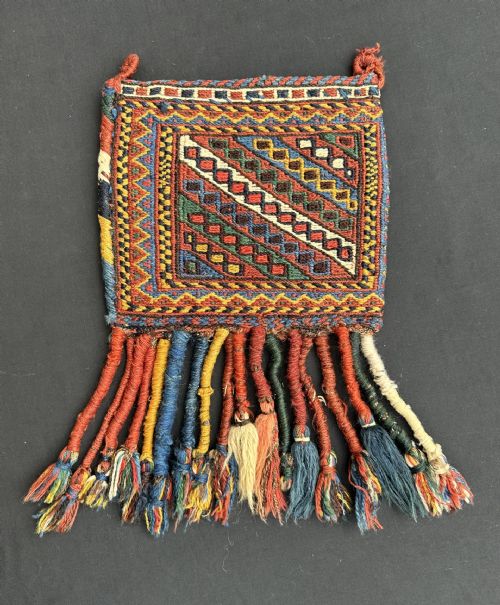
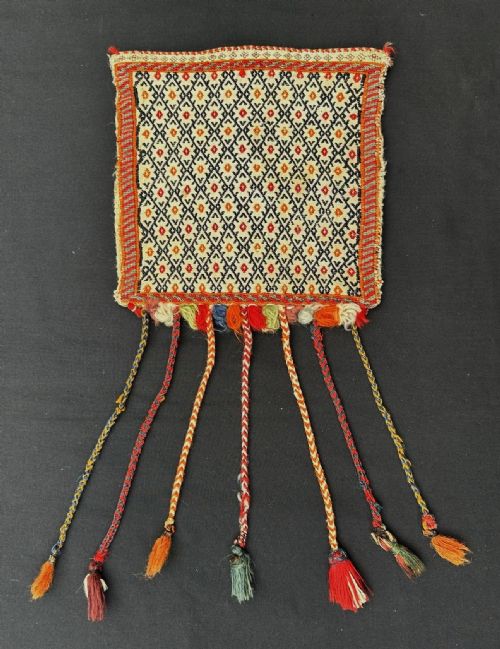
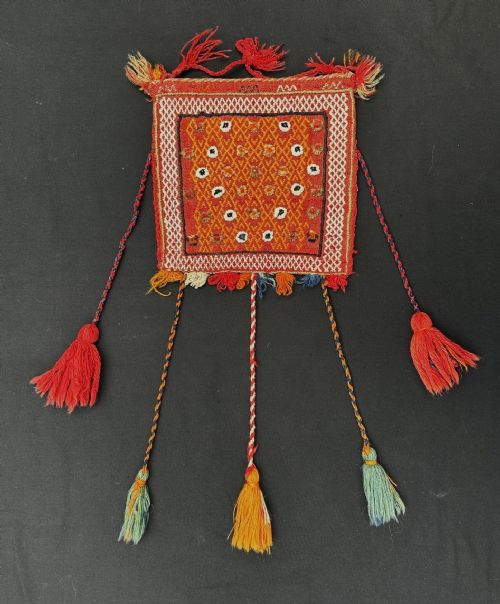


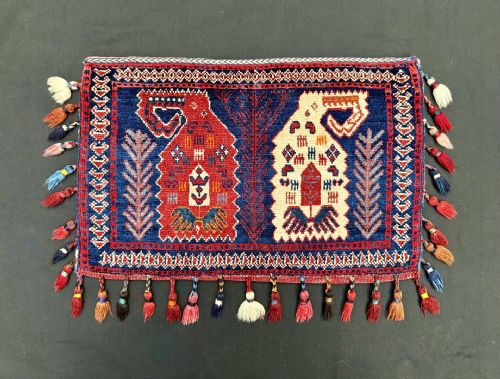
Wool Persian Vanity Bag
These wool persian vanity bag examples are tribal storage pouches woven by nomadic confederacies across Persia, offering tactile links to historic village and tribal craft.
Wool Persian Vanity Bag
When you search for a wool persian vanity bag, you are looking at small tribal storage pouches and textile bags produced by groups such as the Qashqa'i Confederacy, Afshar nomads, and Baluch tribes. These pieces originated in regions like Fars Province, Kerman, Khorassan, and Varamin between the mid-nineteenth century and the early twentieth century.
The examples most commonly met on this page are authentic tribal bags attributed to specific sub-tribes and confederacies, including the Bolvardi, Kashkuli Tayefeh, Darrehshuri, and Sistan Baluch. They function as portable storage items constructed by nomadic women for daily utility within pastoral households.
How they were made
The construction relies heavily on wool and cotton foundations, utilising natural dyes to achieve rich, saturated hues across the textile surface. Artisans integrated structural elements such as cowrie shells for ornamentation, fastening them directly to the woven fabric.
Weavers employed traditional tribal techniques specific to regional groups like the Afshar and Baluch, resulting in dense, durable pile or flatwoven structures intended for practical nomad use.
The listings span from eighteen-sixty to nineteen-twenty, featuring wool, cotton, natural dyes, and cowrie shells from Persian tribal groups.
What varies in quality
Quality in these bags rests upon the fineness of the weave, the clarity and depth of the natural dyes, and the integrity of the structural wool and cotton foundation. Pieces with well-preserved cowrie shell ornamentation and tightly packed knots represent the higher end of the range.
The precision of the tribal iconography and the preservation of the original edges and base materials further distinguish finer examples from standard utilitarian pouches.
The Wool Persian Vanity Bag Glossary
- Confederacy
- A union of independent nomadic tribes joined under central leadership for political and economic strength. Qashqa'i groups are a primary example found in southern Persia.
- Tribal Bag
- A portable textile container woven for storage or transport of personal belongings by nomadic populations. These items utilise traditional wool and cotton materials.
- Natural Dyes
- Colourants derived from plant, insect, and mineral sources prior to the widespread adoption of synthetic alternatives. They create the nuanced palettes seen in nineteenth-century weaving.
- Cowrie Shells
- Marine gastropod shells sewn onto tribal textiles for decorative, protective, or symbolic purposes. Their presence adds tactile and visual dimension to the piece.
Wool Persian Vanity Bag: Frequently Asked Questions
What is a wool persian vanity bag?
A wool persian vanity bag is a small tribal storage pouch or textile bag created by nomadic confederacies in regions such as Fars and Kerman.
These pouches were woven by groups including the Afshar, Qashqa'i, and Baluch to hold personal items within nomadic domestic settings.
How were these bags used?
Nomadic women utilised these pouches for storing personal possessions, small valuables, or grooming items during seasonal migrations.
The sturdy construction in wool and cotton allowed the bags to withstand the rigorous demands of pastoral life.
How do I date a wool persian vanity bag?
Dating relies on examining the natural dyes, wool quality, and structural wear characteristic of nineteenth and early twentieth-century production.
Tribal attributions and specific regional weaving traits also help place a piece within periods spanning from eighteen-sixty to nineteen-twenty.
Which tribes made these bags?
The pieces originate from various nomadic groups across Persia, notably the Qashqa'i Confederacy and its sub-tribes, Afshar nomads, and Sistan Baluch weavers.
Each group incorporated distinct regional motifs and structural techniques into their textiles.