
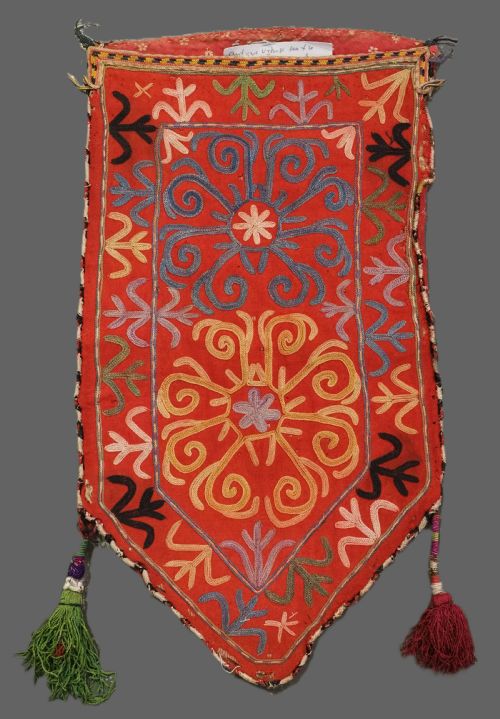
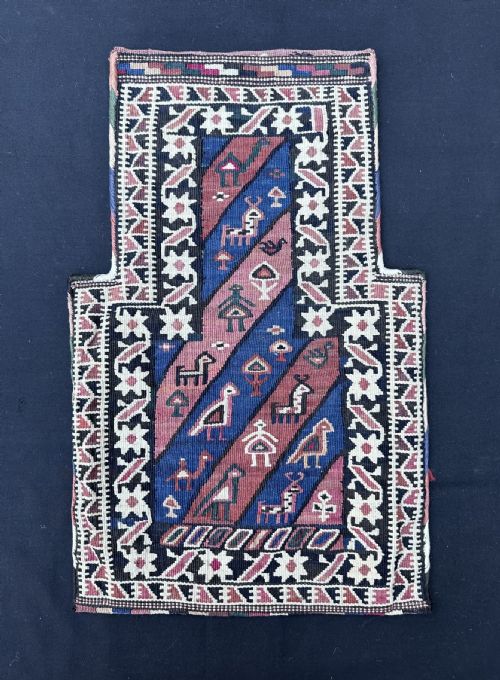
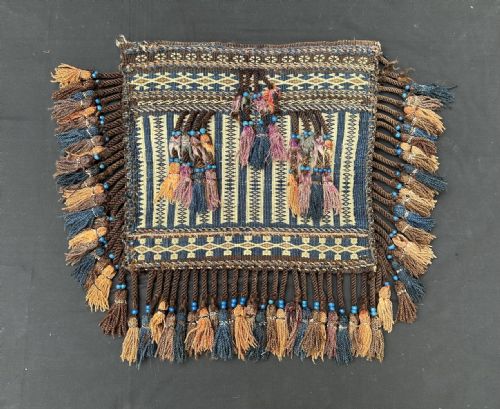
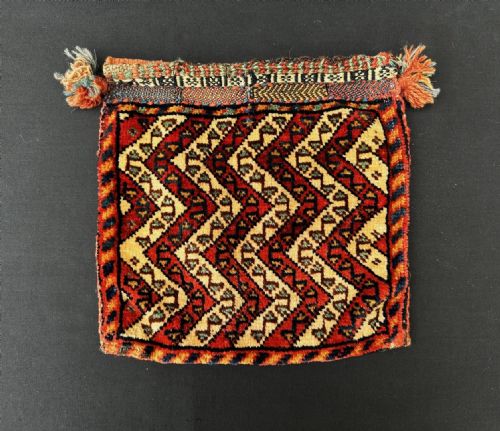


Tribal Wool Storage Pouch
A tribal wool storage pouch is a woven textile made for nomadic use, combining practical utility with intricate tribal artistry.
Tribal Wool Storage Pouch
A tribal wool storage pouch represents the functional textile art of nomadic and village weavers across Central Asia and Persia. These pieces include specific forms such as salt-bags, vanity-bags, spindle-bags, and larger storage bags or chuvals created for household utility.
The examples gathered here span from the late nineteenth century to the early twentieth century, originating from groups including the Yomut, Tekke, Baluch, Kordi, and Qashqai. Each regional group employed distinct formats, such as the double-faced uut kap ilgich or the spindle bag known as an igsalyk.
Buyers will encounter both complete bags retaining their original plain weave backs and fragments or front faces designed for wall hanging. The variety ranges from Trans-Caspian steppe weaving to pieces originating in Khorassan and southwest Persia.
Materials and construction
The foundational structure relies heavily on hand-spun wool and dyed yarn, frequently paired with cotton and occasionally accented with silk. Natural dyes provided the deep, saturated palettes characteristic of late nineteenth-century nomadic textiles.
Weavers utilised techniques such as banded weft work and pile weaving alongside plain weave backs to ensure durability for daily camp life. Specific items incorporate glass beads for surface ornamentation, adding tactile dimension to the dense wool structure.
Spindle bags were made specifically to cradle women's wool-spinning tools, keeping vital implements safe during migration.
Evaluating quality and condition
Quality in a tribal wool storage pouch rests upon the density of the weave, the precision of the tribal motifs, and the vibrancy of the natural dyes. Superior pieces demonstrate exceptional control over the geometric or gul patterns, maintaining symmetry and crisp detail across the face.
The presence of original elements, such as plain weave backs and complete borders, elevates the integrity of a textile. The condition of the wool, the stability of the structure, and the retention of secondary materials like glass beads further define the standing of each piece.
The Tribal Wool Storage Pouch Glossary
- Gul
- A primary octagonal medallion motif repeated across Turkmen carpets and storage bags. Each tribe utilised distinct gul variations to signal lineage and identity.
- Torba
- A small utilitarian bag used for household storage within a nomadic tent. These rectangular pieces often feature elaborate pile-woven faces and plain weave backs.
- Chuval
- A large storage bag traditionally used by Turkmen tribes for bedding and household goods. They are among the larger formats encountered in nomadic textiles.
- Uut kap
- A large hanging bag or container used in Central Asian yurt interiors for storing household items. They often feature double-faced construction or elaborate ornamental bands.
Tribal Wool Storage Pouch: Frequently Asked Questions
What were tribal storage pouches used for?
Nomadic communities utilised these woven pouches inside tents for storing personal possessions, salt, spindle tools, and bedding. Their construction accommodated the mobile lifestyle of pastoral groups.
Over time, these utilitarian items became expressions of tribal identity and status, featuring distinct patterns passed down through generations.
How do I hang a textile on the wall?
Mounting a storage pouch requires non-invasive methods that distribute the weight evenly along the top edge. A fabric sleeve stitched to a plain weave back allows a padded rod to support the piece securely.
Avoid direct sunlight and high-humidity areas to protect the natural dyes and wool fibres from degradation over the years.
How can I tell different tribal designs apart?
Tribal attribution relies on specific structural layouts, colour palettes, and repeating motifs such as the Tekke gul or Yomut border patterns. Regional groups in Persia and Central Asia maintained strict design traditions.
Comparing the knotting style, secondary materials like cotton or silk, and overall geometry helps identify the specific weaving group.
Are these bags complete with their original backs?
Many surviving examples retain their original plain weave backs, which provided durability against the ground or tent walls. Complete pieces include both the decorative pile face and the utilitarian backing.
Listings specify whether a piece is complete with its back or presented as a face for wall hanging.