






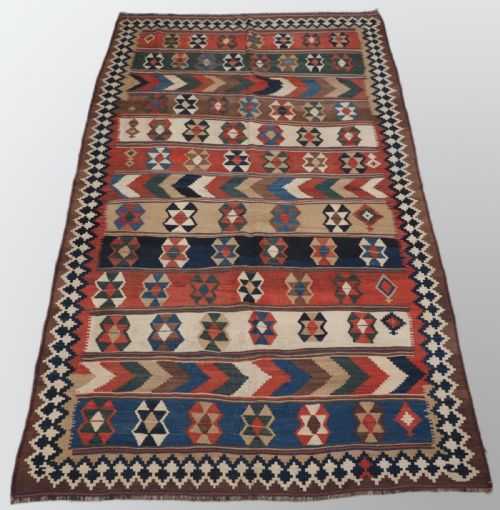

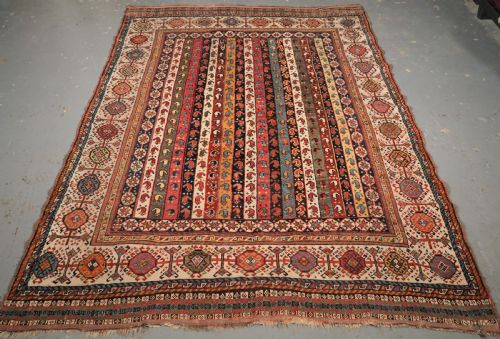
Nomadic Striped Wool Carpet
When you search for a nomadic striped wool carpet, you uncover tribal textiles woven with bold linear bands by nomadic groups.
Nomadic Striped Wool Carpet
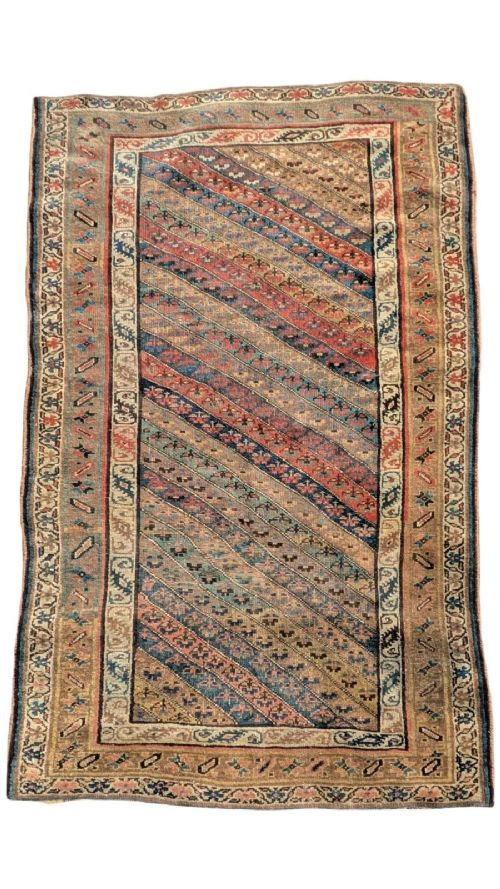
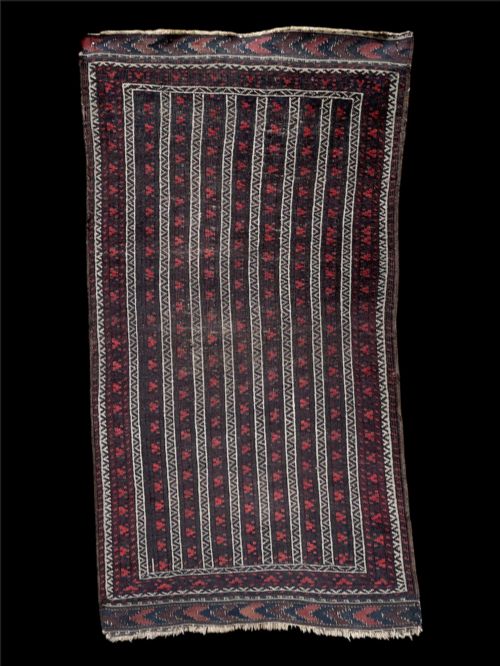
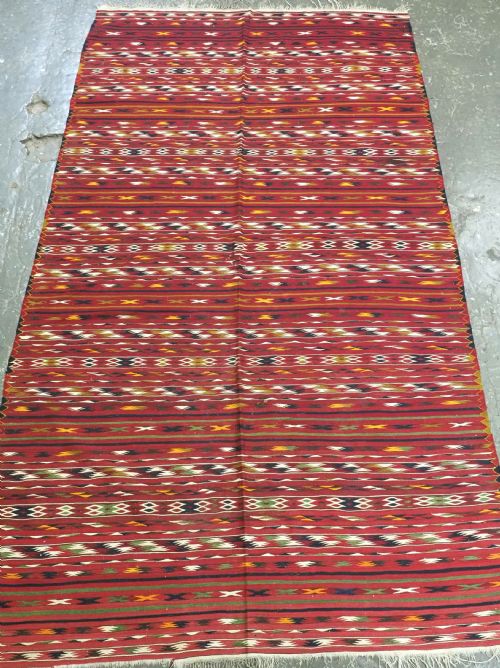
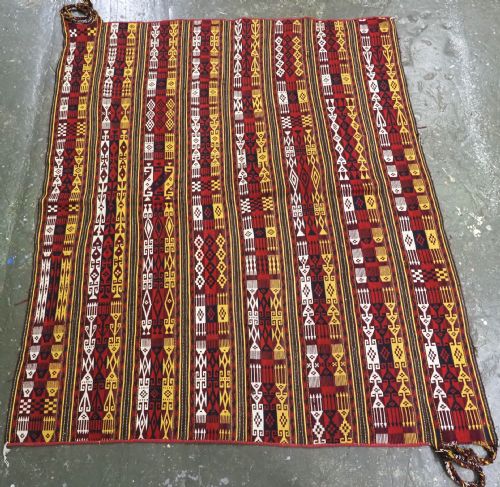
A nomadic striped wool carpet brings together tribal rugs, flatweaves, kilims and runner formats originating from Central Asian, Persian and Caucasian groups. These pieces date across the nineteenth century and the early decades of the twentieth century, including items like mafresh panels, tent bands and Sofreh dining kilims.
The versions most commonly met on this page feature linear banded designs, chevron patterns and graphic stripes. Tribal makers from Kurdish, Yomut Turkmen, Uzbek, Baluch, Shahsavan, Qashqai and Luristan backgrounds produced these textiles for utilitarian nomadic life.
Buyers encounter flatweave kilims alongside pile rugs, showcasing how diverse tribal weaving traditions shared a common vocabulary of stripes and bands. Each piece reflects the specific heritage of the region where it was knotted or flatwoven.
Materials and Technique
Weavers relied primarily on wool and hand-spun wool, often combined with cotton foundations and occasional camel hair for durability. These natural fibres were dyed using natural dyes that yielded deep, lasting tones across the striped compositions.
The construction methods alternate between pile knotting and flatweave techniques, including slit-tapestry kilim weaving used for tent bands and storage bags. Many pieces were constructed in panels or woven in two parts before being joined for domestic use.
Object types recorded across the site include Kilim Rugs, Sofreh dining kilims, Mafresh panels and runner formats.
Judging Quality
The standard of a piece rests on the fineness of the weave and the precision of the graphic banding. Tightly compacted structures and well-balanced proportions distinguish superior examples from simpler utilitarian objects.
The harmony and depth achieved through natural dyes dictate visual success. Strong saturation and skilful colour transitions elevate individual carpets above standard regional output.
The Nomadic Striped Wool Carpet Glossary
- Kilim
- A flatwoven carpet or rug produced without a pile, common across Central Asian and Persian tribal traditions. These textiles rely on the interlacing of warp and weft threads to create sharp geometric patterns.
- Mafresh
- A rectangular storage bag face or panel woven by nomadic tribes for household organisation. They were frequently constructed in banded flatweave designs before later being adapted into smaller rugs or kilims.
- Sofreh
- A specialised dining kilim or spread used by tribal groups during meals. These textiles often display linear organisation and hard-wearing wool construction.
- Tent band
- A long, narrow woven strip utilised structurally within nomadic encampments. When repurposed, they often provide the basis for finely banded runner formats.
- Natural dyes
- Colourants derived from plants, insects and minerals utilised before the widespread adoption of synthetic alternatives. They age gracefully, developing nuanced patinas over decades of exposure.
Nomadic Striped Wool Carpet: Frequently Asked Questions
What is a nomadic striped wool carpet?
A nomadic striped wool carpet is a textile created by tribal weavers using wool, hand-spun wool and natural dyes. These items encompass flatweave kilims, runner rugs and pile carpets featuring distinct linear and banded designs.
Originating from regions including Central Asia, Persia and the Caucasus, these pieces served practical functions within nomadic communities. Their patterns rely on bold graphics, chevrons and stripes passed down through generations of weavers.
How were these carpets used originally?
Nomadic groups utilised these textiles for daily domestic and structural purposes within tents and settlements. Items functioned as floor coverings, blankets, dining spreads and storage containers for household goods.
Many striped pieces started life as utilitarian objects such as tent bands, mafresh panels or Sofreh spreads. Their robust wool and flatweave construction ensured they could withstand the demanding lifestyle of nomadic migration.
How do I care for an antique wool carpet?
Protect antique wool textiles by placing them in areas away from direct, harsh sunlight to preserve the natural dyes. Regular, gentle vacuuming without a beater bar removes trapped dust without straining the delicate historic foundation.
Consult a specialist rug cleaner experienced in antique tribal textiles for any washing or major maintenance. Allowing the wool to breathe and avoiding excessive moisture keeps the natural fibres sound.
How can I tell different tribal designs apart?
Tribal designs vary according to the specific heritage of groups such as the Yomut Turkmen, Uzbek, Qashqai or Baluch. Each culture utilised particular colour palettes, structural widths and geometric motifs within their striped or banded compositions.
Examining the weave type, such as a fine Gajeri kilim or a heavy Kurdish pile carpet, offers clues to geographic origin. Secondary materials like camel hair or cotton foundations also help narrow down the specific tribal provenance.