





Brown Striped Wool Rug
These tribal textiles and flatweaves deliver the graphic punch of a brown striped wool rug through centuries of nomadic craftsmanship.
Brown Striped Wool Rug
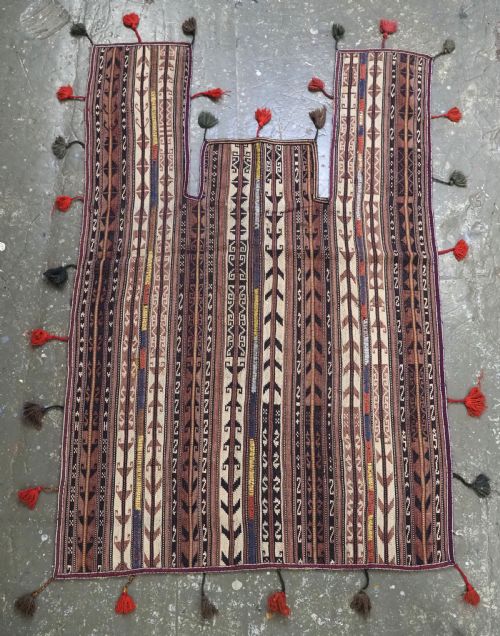
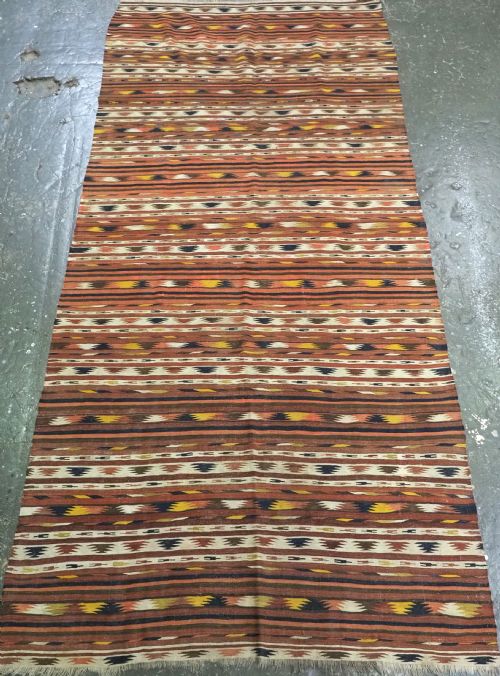
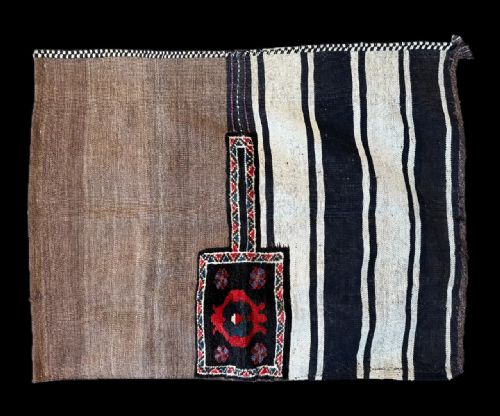
A brown striped wool rug search leads directly to tribal flatweaves, runner rugs, and kilims originating from Central Asian, Persian, and Caucasian regions. These pieces include horse blankets, mafresh panels, wheat-sacks, and Sofreh dining kilims produced across the late nineteenth and early twentieth centuries. The banded and striped designs reflect traditional nomadic weaving patterns intended for utilitarian and ceremonial use within tribal communities.
Most examples found in this selection date from the late nineteenth century through to the early twentieth century, spanning decades of nomadic production. The forms range from small kilims and saddle bags to larger runner formats and ceremonial covers. Buyers seek these items for their distinct linear motifs, earthy palettes, and genuine tribal provenance.
Materials and construction
These textiles rely primarily on wool and hand-spun wool, supplemented occasionally by camel hair, cotton, leather, and metal elements. Weavers utilised natural dyes to achieve the deep brown tones and contrasting hues seen across the banded and flatweave surfaces. The construction involves dense, fine weaves designed to endure heavy nomadic use while maintaining structural integrity.
The methods span flatweaving techniques, pileless kilim construction, and complex banded designs executed by tribal groups such as the Yomut Turkmen, Shahsavan, Luri-Bakhtiari, and Uzbek communities. Each piece demonstrates traditional loom work passed down through generations, utilising locally sourced animal fibres prepared by hand.
Listings feature pieces spanning the period from 1870 to 1910, executed in wool, natural dyes, hand-spun wool, and camel hair.
Assessing quality in tribal flatweaves
Quality rests upon the tightness of the weave and the precision of the banded or striped layout. Finer weaves require greater time and skill from the weaver, resulting in a firmer structure and sharper pattern definition.
The depth and stability of the natural dyes also dictate standard, alongside the integrity of the original edges and ends. Pieces retaining their complete tribal form or utilising specific materials like camel hair command distinct interest from collectors.
The Brown Striped Wool Rug Glossary
- Kilim
- A flatwoven textile or rug produced without a pile. These pieces are created by tightly interweaving warp and weft strands to form flat geometric surfaces.
- Mafrash
- A storage bag or panel traditionally used by nomadic tribes for bedding and household goods. They often feature striking banded or striped flatweave designs.
- Sofreh
- A ceremonial dining cloth or spread used by tribal groups for sharing meals. These textiles frequently display linear and symbolic designs.
- Tacheh
- A traditional wheat-sack made by tribal weavers for agricultural storage. They combine durable wool construction with bold graphic patterns.
- Warp
- The stationary longitudinal threads stretched upon a loom before weaving begins. The weft strands pass over and under these foundational threads.
Brown Striped Wool Rug: Frequently Asked Questions
What is a brown striped wool rug in tribal terms?
The search translates practically into antique flatweaves, kilims, and runner rugs created by nomadic groups in Persia, the Caucasus, and Central Asia. These items utilise banded designs and natural wool fibres for functional domestic or ceremonial roles.
They serve today as decorative floor coverings or wall hangings, bringing historic textile art into modern interiors through durable animal materials.
How were these tribal flatweaves used originally?
Nomadic communities used these textiles as horse blankets, storage containers, wheat-sacks, and dining spreads. Every format fulfilled a specific daily purpose within migration and camp life.
Over time, panels from larger storage bags were repurposed into smaller kilims, preserving the original weaving while adapting to new utilitarian needs.
How should I care for an antique wool rug?
Protect the textile by placing a suitable underlay beneath it to prevent slipping and reduce friction against hard floors. Gentle vacuuming without a rotating brush helps remove embedded dust.
Keep the piece away from direct, prolonged sunlight to preserve the natural dyes, and consult a specialist textile conservator for professional cleaning.
How do I identify the period of a tribal rug?
Dating relies upon examining the natural dye palette, the consistency of the hand-spun wool, and the specific tribal motifs characteristic of nineteenth-century production. Structural clues within the weave help narrow the decade of origin.
Comparing construction methods against documented examples from specific groups like the Yomut Turkmen or Shahsavan provides reliable chronological markers.