


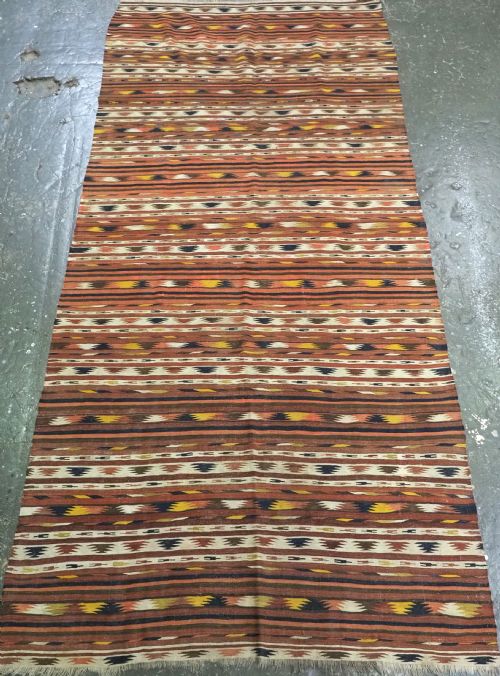


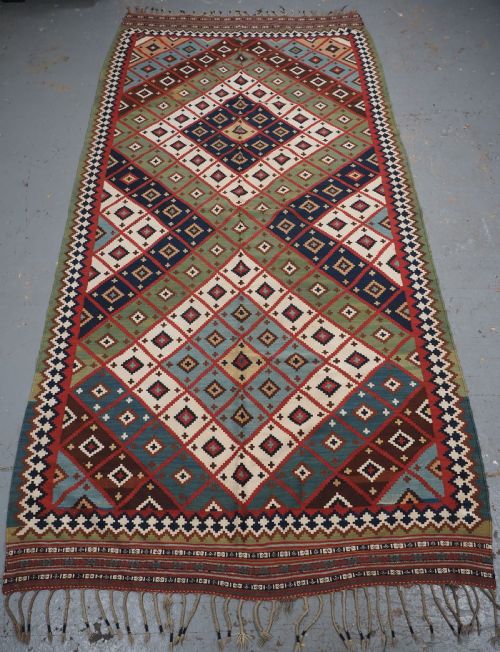

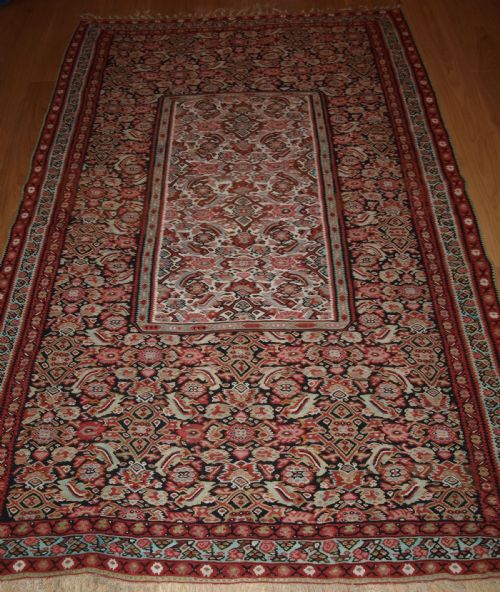
Flatweave Floor Runner
These flatweave floor runner pieces bring tactile tribal patterns and historical textile craft straight to your hallway.
Flatweave Floor Runner
A flatweave floor runner is a long, narrow textile designed for corridors and passageways, utilising traditional tribal and nomadic weaving methods without a raised pile.
The selections here span from the late nineteenth century through the early twentieth century, originating from regions including Anatolia, Central Asia, the Caucasus, and North Africa.
Buyers encounter forms such as traditional kilims, soumak carpets, and narrow Moroccan Berber formats, often displaying repeat geometric or medallion motifs.
Materials and construction
Weavers constructed these runners primarily from wool and cotton foundations, employing interlocking weft techniques to build durable, flat structures.
Natural dyes provide the palette across these historical textiles, yielding soft reds and earthy tones that age gracefully over decades of use.
Some nineteenth-century runners feature long kilim ends left intentionally trailing, offering a tactile glimpse straight off the tribal loom.
Distinctions in quality
Quality rests in the tightness of the weave and the precision of the tribal motifs, where finer structures demand greater skill from the maker.
The integrity of the long kilim ends and the clarity of the natural dye palette separate standard production from superior examples.
The Flatweave Floor Runner Glossary
- Kilim
- A flatweave carpet or rug produced by tightly interweaving warp and weft strands to create a smooth surface without pile.
- Soumak
- A brocade-like flatweaving technique involving wrap-around weft threads that add texture and structural weight to the reverse side.
- Warp
- The stationary vertical threads stretched across a loom that form the structural foundation of the textile.
- Weft
- The horizontal threads passed through the warp to build the visible pattern and colour of the runner.
Flatweave Floor Runner: Frequently Asked Questions
How do I clean a flatweave floor runner?
Gentle regular surface cleaning and professional textile washing preserve the wool fibres and natural dyes.
Avoid harsh chemical treatments that strip the historical integrity of the weave.
Where should I place a runner in my home?
These narrow textiles suit hallways, corridors, and high-traffic passageways where low profiles are practical.
They protect wooden flooring while introducing distinct historical pattern and colour.
How do I date an antique runner?
Examination of the natural dye palette, structural materials like wool and cotton, and specific tribal motifs points to an era of production.
Weavers working around nineteen hundred utilised distinct regional patterns that differ from later periods.
What is the difference between a kilim and a soumak?
Kilims are flat-surfaced tapestries woven with interlocking weft threads that show the design clearly on both sides.
Soumak weaves incorporate wrapping techniques that leave trailing threads on the reverse and create a heavier, ridged texture on the face.