



Nomadic Rug Cushion
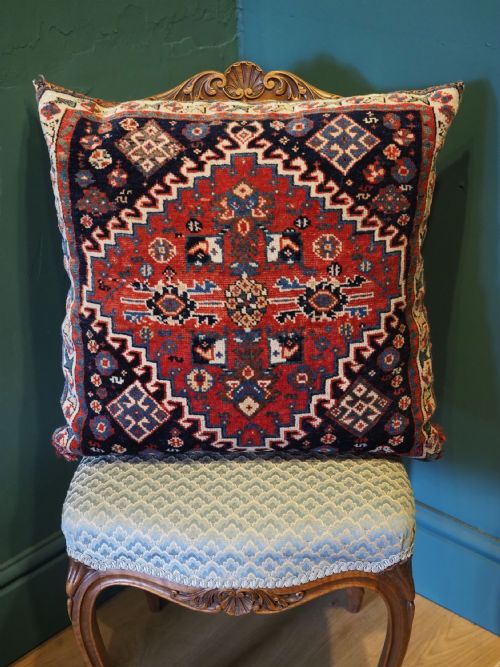
A nomadic rug cushion brings tribal heritage into the home, formed from antique bags and trappings woven by nomadic groups across Persia and Central Asia.
Nomadic Rug Cushion
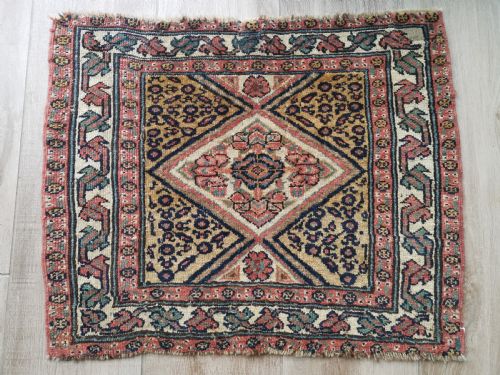
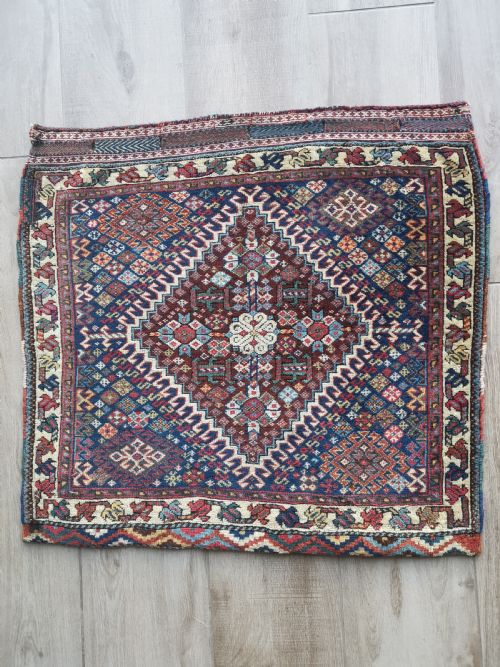
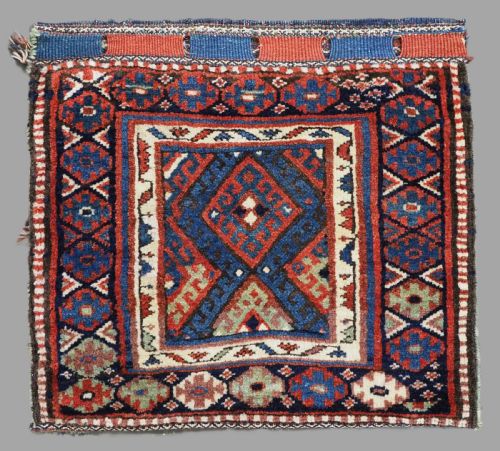
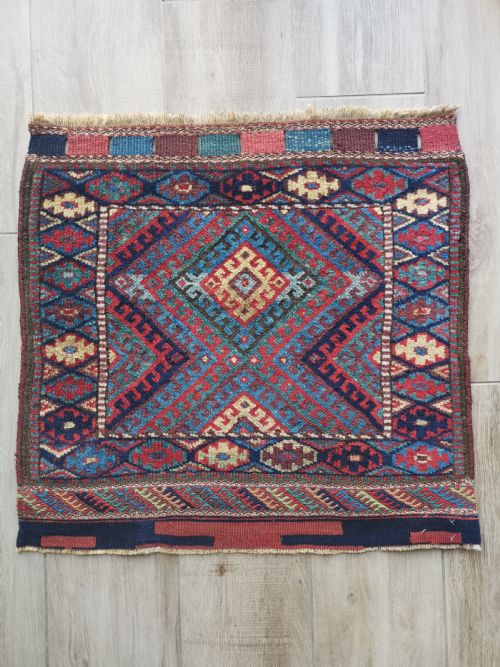
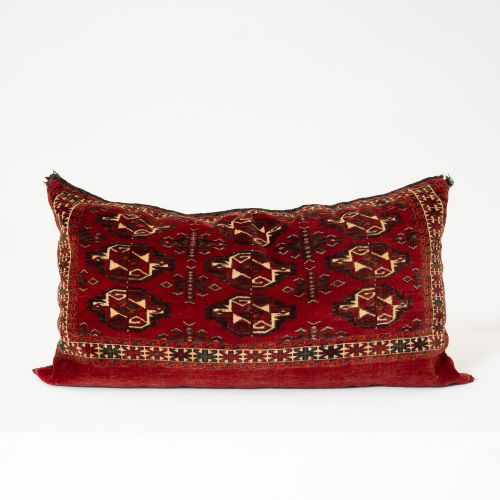
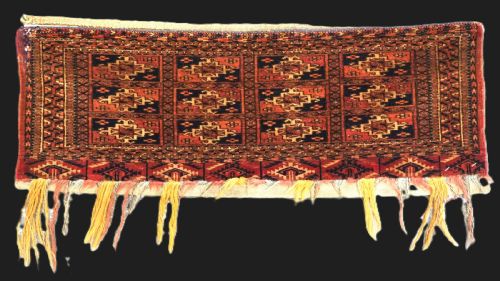
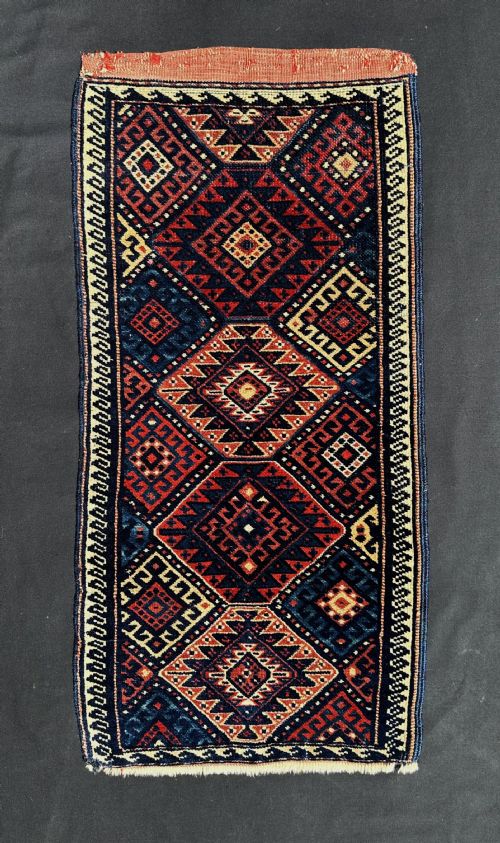
A nomadic rug cushion is typically created from repurposed portions of antique tribal weaving, such as bagfaces, saddlebags, torbas, chuvals and wheat sacks. These textiles originate from nineteenth-century and early twentieth-century groups including the Qashqai, Kurdish, Turkmen, Baluch, Shahsevan and Afshar tribes.
The most common form encountered on this page is the bagface or half-saddlebag face, which has been converted into a soft furnishing while retaining its original woollen face and frequently its plain weave back. Pieces span various regional identities from the Fars province to Khorassan and the Trans-Caspian steppes.
Makers utilised utilitarian items made for daily pastoral life, transforming grain sacks and storage pouches into decorative cushions. Each piece carries traditional tribal iconography specific to the confederation or clan that wove it.
How They Were Made
These textiles rely primarily on hand-spun wool and cotton, constructed through knotted pile or flatweave techniques such as soumac and banded weft work. Goat hair is also utilised in the construction for added durability along the edges and structural supports.
Dyers employed natural dyes to achieve the deep reds, blues and earthy tones visible across the pieces, derived from local plants and minerals. The weaving was executed on portable horizontal looms set up in nomadic camps across Persia, the Caucasus and Central Asia.
The listings here feature wool, cotton, and goat hair, incorporating natural dyes across nineteenth-century and early twentieth-century nomadic tribal bagfaces and cushions.
What Varies in Quality
Quality rests in the fineness of the knotting or the tightness of the flatweave, alongside the clarity and complexity of the tribal design. Pieces with balanced proportions, highly detailed motifs like guls or botehs, and complete structural integrity sit at the upper end.
The choice of materials and the depth of natural colour saturation also determine excellence. Examples that retain their original backs, tassels and structural edges demonstrate superior preservation compared to heavily altered fragments.
The Nomadic Rug Cushion Glossary
- Bagface
- The decorative front panel of a nomadic storage bag or saddlebag. This section typically displays the primary tribal motifs and is the part most frequently converted into a cushion.
- Torba
- A small horizontal storage bag made by Turkmen and other tribal groups. They were traditionally used inside tents for storing domestic items.
- Chuval
- A large Turkmen tent storage bag used for bedding and household goods. Surviving faces show intricate repeat patterns of tribal guls.
- Soumac
- A flatweave technique where supplementary weft threads are wrapped around the warp threads. This creates a durable structure with a braided texture on the face.
- Gul
- A medallion or repeated octagonal motif used by Turkmen and Central Asian tribes. Each design often identifies a specific clan or tribal grouping.
- Boteh
- A stylised floral or almond-shaped motif of Persian origin. It appears frequently in tribal weaving symbolising life and eternity.
Nomadic Rug Cushion: Frequently Asked Questions
How were these tribal bags originally used?
Nomadic tribes utilised these woven containers for practical daily storage during seasonal migrations across Persia, the Caucasus, and the Trans-Caspian steppes. Items like torbas, chuvals, and wheat sacks held grain, bedding, clothing, and personal possessions inside tribal tents.
Saddlebags and half-saddlebags were draped across pack animals to transport goods across rugged terrain. Over time, surviving fragments and complete bagfaces are converted into cushions to preserve the textile art.
How do I care for an antique rug cushion?
These cushions require gentle care appropriate for fragile antique textiles containing hand-spun wool and natural dyes. Light vacuuming with a low-suction attachment helps remove surface dust without catching on the pile or flatweave.
Professional specialist cleaning is recommended if the textile requires deeper maintenance. Direct exposure to strong sunlight should be avoided to prevent natural colours from fading over time.
How can I tell different tribal designs apart?
Tribal groups are distinguished by characteristic motifs, colour palettes, and weaving structures specific to their geographic regions. For instance, Turkmen tribes frequently utilise repeating octagonal guls in deep madder reds, while Qashqai and Khamseh weavers incorporate detailed geometric medallions and animal figures.
Structure also aids identification, as specific flatweave techniques and wool qualities point towards distinct regional workshops and nomadic confederations in Persia or Central Asia.