


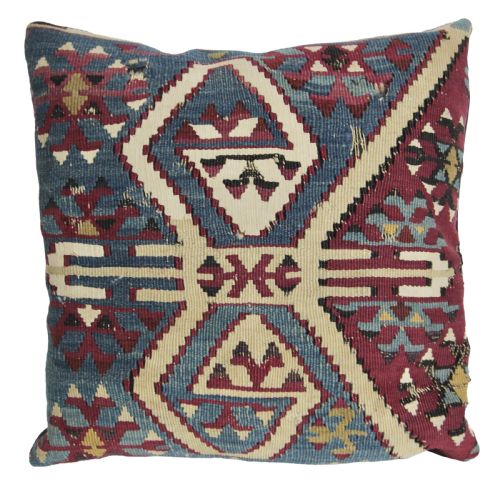
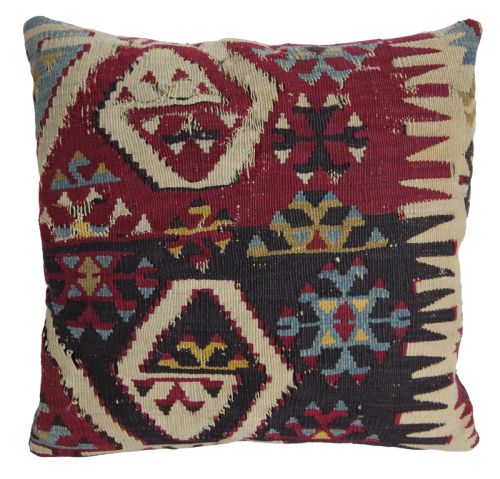


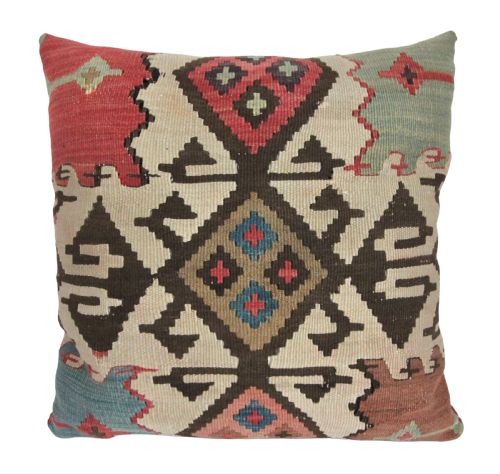
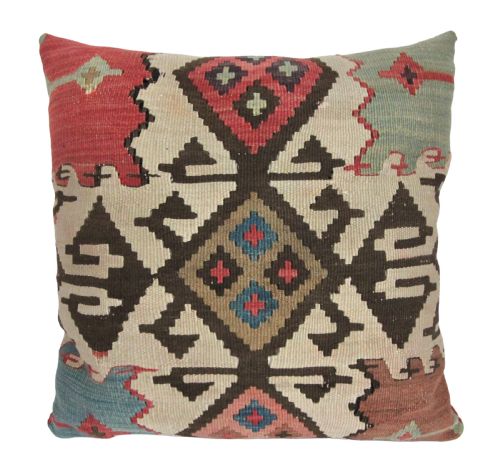


Bohemian Woven Cushion
These bohemian woven cushion examples bring authentic tribal pattern and rich wool texture into a room.
Bohemian Woven Cushion
When you search for a bohemian woven cushion, you find antique kilim cushion and bag face cushion examples shaped by tribal traditions. These pieces originate from nineteenth-century and early twentieth-century nomadic traditions.
The most common version on this page is the antique kilim cushion, often utilising textiles woven around eighteen fifty or eighteen seventy. Collectors also encounter bag face cushion examples bearing tribal nomadic designs from nineteen twenty and the nineteenth century.
How they were made
Makers utilised hand-spun wool and cotton, working within Anatolian tribal traditions to produce durable flatweave textiles. The wool provides a heavy, tactile surface designed for practical nomadic use.
Weavers employed traditional Anatolian techniques to construct geometric patterns that survived decades of daily wear before conversion into cushions and pillows.
Every piece listed on this page takes the form of a cushion or pillow.
What varies in quality
The character of the hand-spun wool and the tightness of the weave separate the finest tribal textiles from simpler examples. Early nineteenth-century pieces display superior dye depth and structural integrity.
Subtle variations in traditional Anatolian and tribal nomadic motifs demonstrate the skill of the individual weaver, distinguishing standard utility items from remarkable tribal artistry.
The Bohemian Woven Cushion Glossary
- Kilim
- A flatwoven textile produced without a pile, forming the primary face of these cushions.
- Bag face
- The decorative front panel of a nomadic storage bag, repurposed here as a cushion.
- Hand-spun
- Wool spun by hand rather than machinery, resulting in a varied and textured yarn.
- Nomadic tribal
- A style originating from wandering pastoral groups who wove geometric patterns from memory and tradition.
Bohemian Woven Cushion: Frequently Asked Questions
What is a bohemian woven cushion?
A bohemian woven cushion utilises antique flatwoven textiles such as kilims or bag faces. These pieces bring historical nomadic patterns into modern interiors.
They combine heavy wool textures with geometric designs rooted in nineteenth-century Anatolian traditions.
How old are these cushions?
The pieces listed span from eighteen fifty through the nineteenth century and up to nineteen twenty. Each cushion uses textiles woven during these specific historical periods.
Older examples incorporate hand-spun wool characteristic of nineteenth-century nomadic production.
What materials were used?
Makers constructed these textiles primarily from wool, cotton, and hand-spun wool. These natural fibres provided the durability needed for tribal nomadic life.
The materials age gracefully, maintaining rich textures over the decades.
How do I style a kilim cushion?
These cushions suit neutral seating where their tribal patterns and wool textures can stand out. They add warmth and historical depth to a room.
Mix traditional Anatolian designs with plain fabrics to highlight the flatweave texture.