
Nineteenth Century Wooden Chest
Nineteenth century wooden chest forms are robust items of furniture built for storage and travel, offering rich timber grains and practical compartments for modern interiors.
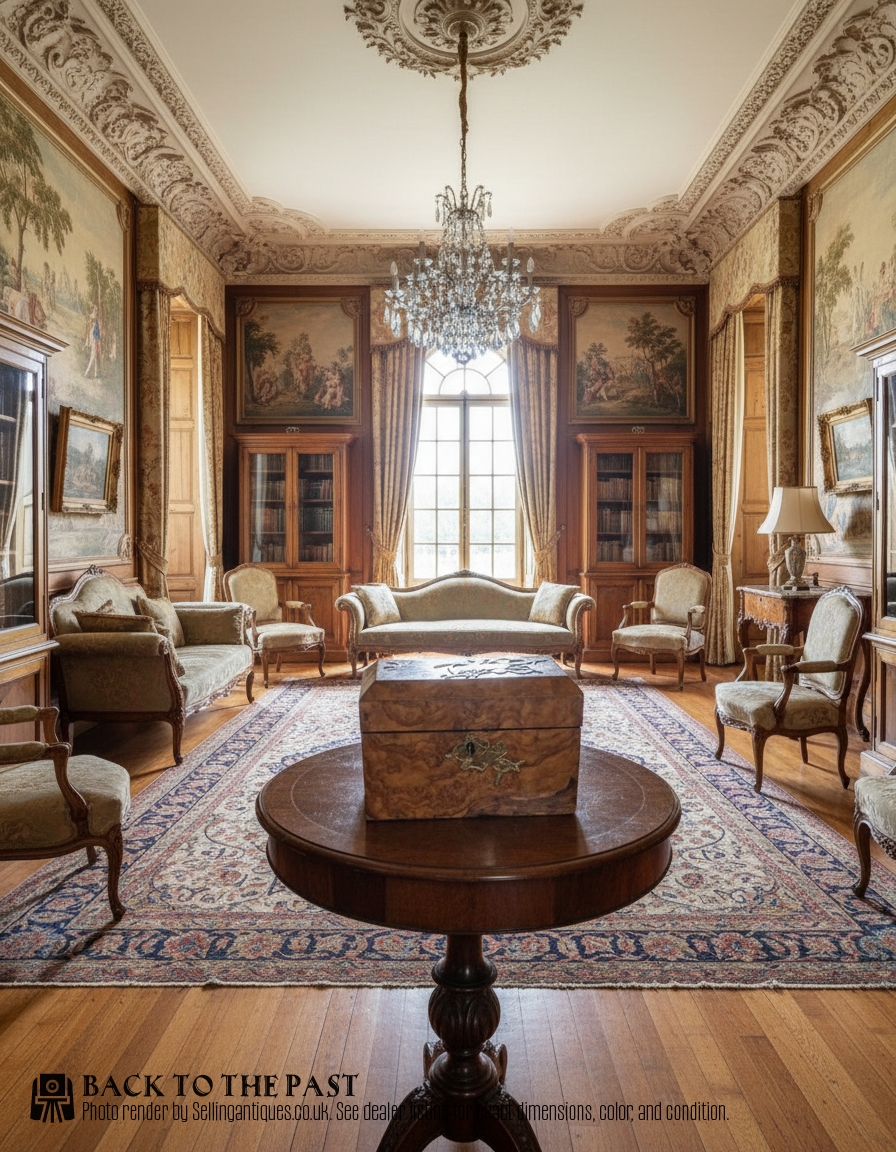
Nineteenth Century Wooden Chest
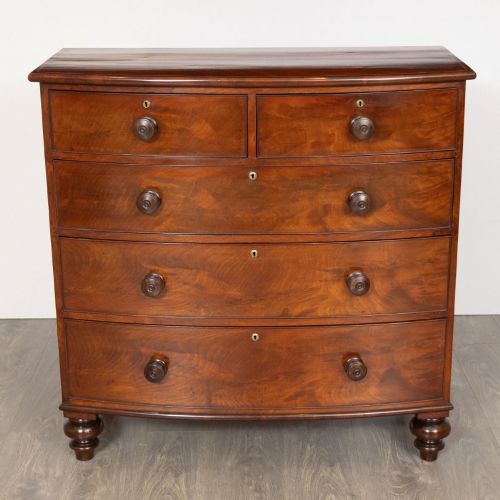
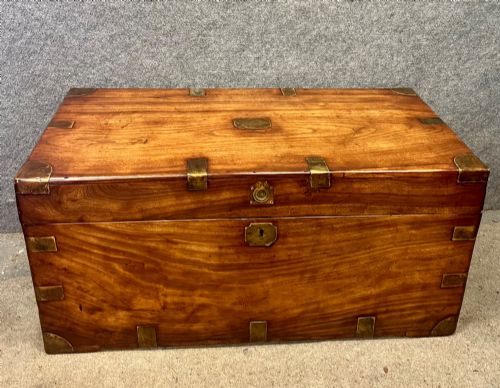
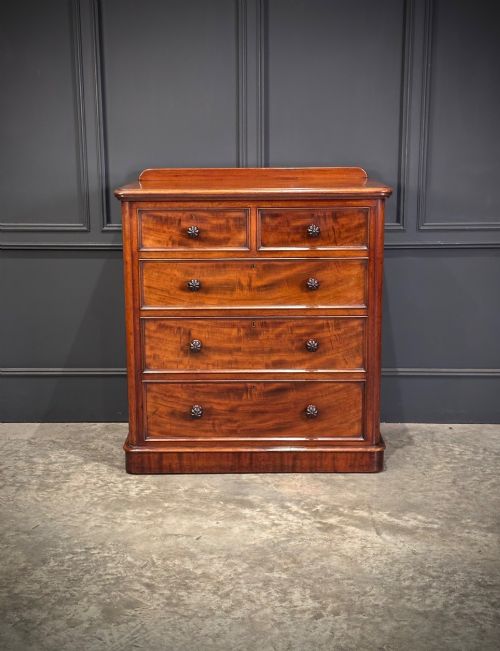
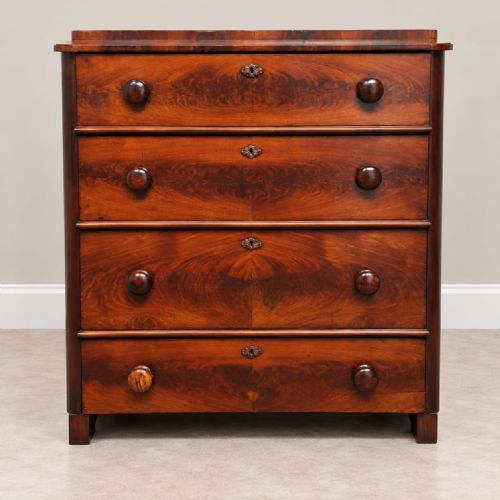
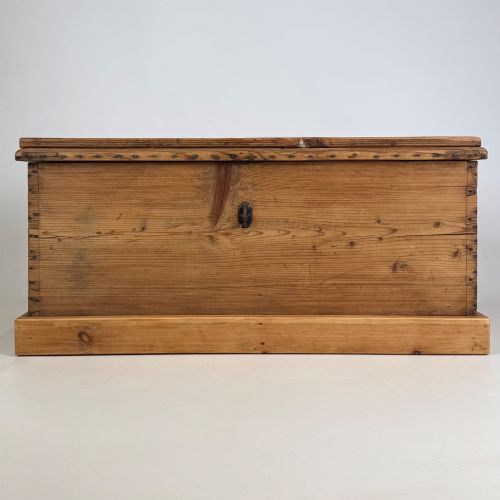
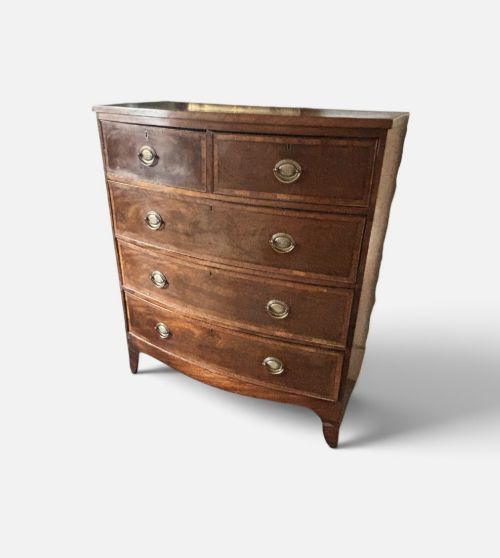
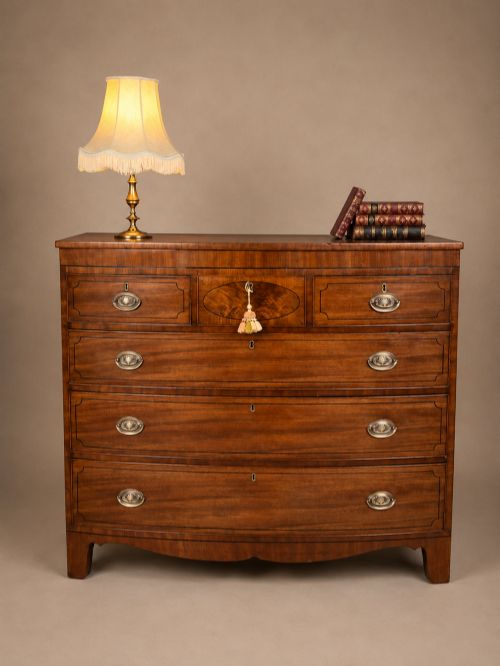
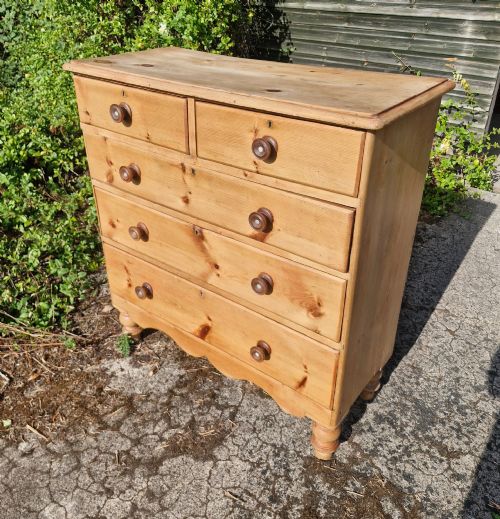
A nineteenth century wooden chest encompasses a broad range of storage furniture, from large campaign trunks designed for travel to formal bow-front chests of drawers intended for domestic bedrooms. These pieces reflect the varied domestic and travel needs of the period through robust construction and practical internal compartments.
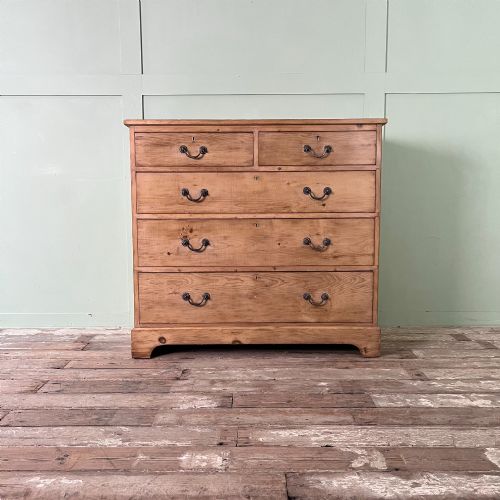
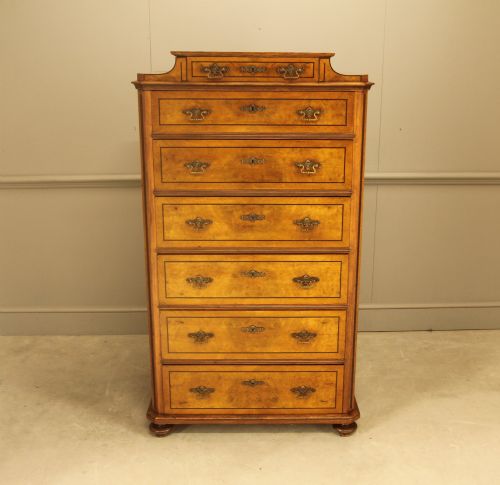
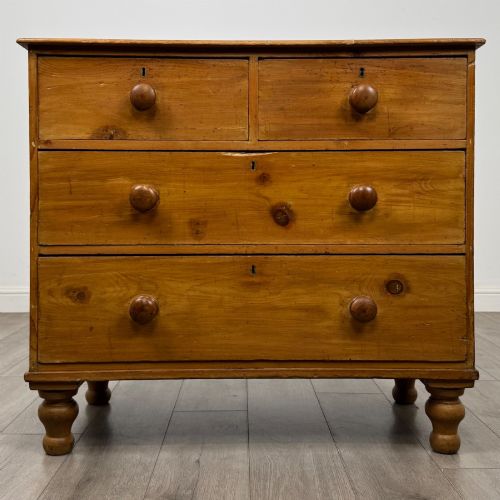
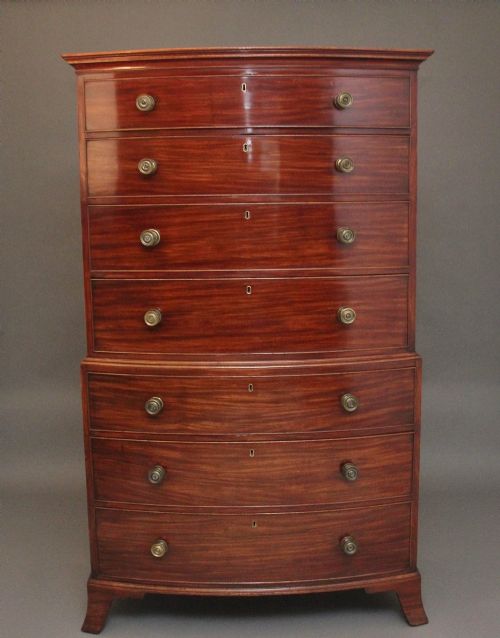
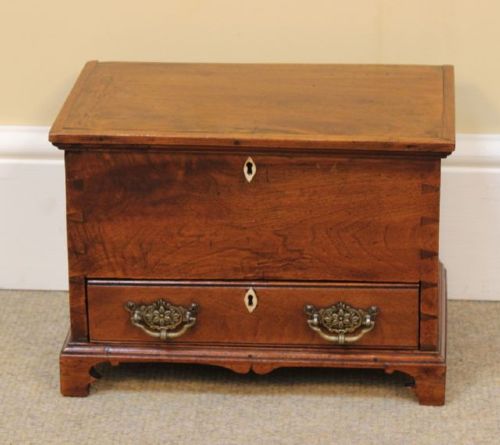
Buyers browsing this selection will most frequently encounter mahogany chests of drawers from the Victorian and Regency eras. These range from standard straight-front and bow-front designs to tallboys, miniature apprentice pieces, and campaign trunks reinforced with brass and iron.
Materials and construction methods
Cabinet makers relied heavily on solid mahogany, pine, and oak for structural integrity, often applying flame mahogany or satinwood veneers to prominent exterior surfaces for visual depth. Secondary timbers such as pine and oak were utilised for drawer linings and internal framing.
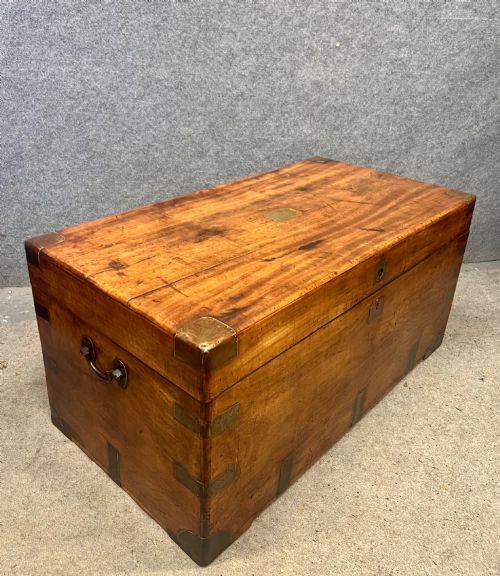
Hardware played an essential structural role, particularly in campaign pieces where brass corners, flush drawer pulls, and iron straps protected the timber during transit. Dovetail joints secured the drawer construction, while crossbanding added decorative borders to top surfaces.
Apprentice pieces allowed young woodworkers to demonstrate their mastery of dovetails and miniature proportions before joining the guild.
Distinguishing quality and craftsmanship
Quality in a nineteenth century wooden chest depends on the selection of timber veneers, such as well-matched flame mahogany or decorative satinwood crossbanding, and the precision of the joinery. Superior pieces display tight dovetails, smooth drawer operation, and original hardware.
Proportion and architectural detail elevate finer examples above standard utility items. The integration of secondary woods, original locks, and well-executed decorative styling set master cabinet work apart from simpler regional workshop production.
Howard and Sons
The Nineteenth Century Wooden Chest Glossary
- Bow front
- A convex curved cabinet front popular during the Regency and Victorian periods. This curved design softens the rigid geometry of standard rectangular storage furniture.
- Campaign trunk
- A portable chest built in sections with recessed brass hardware for military officers on the move. These pieces separate into modular units to ease long-distance transport.
- Crossbanding
- A narrow strip of veneer laid across the grain of the primary surface to form a decorative border. This technique frames drawer fronts and tabletops with contrasting timber grain.
- Tallboy
- A tall chest of drawers featuring one chest stacked directly on top of another. This form maximises vertical storage capacity while occupying a compact floor footprint.
- Dovetail
- An interlocking joint formed by interlocking wedge-shaped fingers. This traditional method secures drawer corners with high tensile strength.
Nineteenth Century Wooden Chest: Frequently Asked Questions
How do I date a nineteenth century wooden chest?
Dating relies on examining construction techniques, timber choices, and hardware styles across different decades. Regency pieces often display sleek bow fronts and rosewood details, while later Victorian examples frequently utilise heavier proportions and mahogany veneers.
Secondary woods inside the drawers also offer clues, as oak linings generally point towards earlier pieces and pine becomes more common in later Victorian utility furniture.
Can I use a campaign trunk as a coffee table?
Campaign trunks make sturdy and practical coffee tables because their flat tops and robust timber construction withstand daily use. The integrated brass corners and side handles also add industrial character to modern living spaces.
Ensure the internal depth suits your storage needs for blankets or books before placing items on top.
How should I care for antique mahogany surfaces?
Maintain antique mahogany by dusting regularly with a soft, dry cloth and avoiding placement near direct heat sources or strong sunlight. These precautions prevent the timber from drying out and protect the delicate wood veneers from splitting.
Apply a traditional beeswax polish sparingly when the wood appears dry, buffing gently to preserve the natural lustre of the finish.