
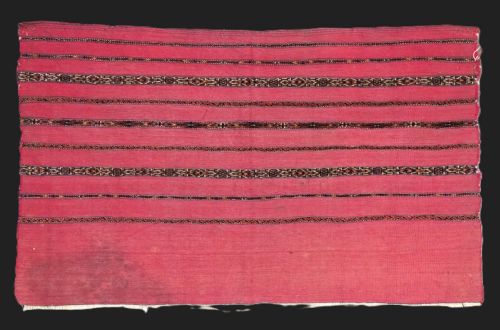


Nineteenth Century Turkmen Weaving
Nineteenth century turkmen weaving brings dense tribal geometry and rich madder tones into your interior through authentic nomad textiles.
Nineteenth Century Turkmen Weaving
Nineteenth century turkmen weaving encompasses tribal textiles, rugs, and wall hangings created by nomadic groups across Central Asia. You will most frequently encounter chuval faces, torba bags, and rugs originating from tribal makers during the middle and late decades of the nineteenth century.
The objects served practical functions within nomadic life, acting as tent bags, storage sacks, or carpets for dwellings. Pieces range from small spindle bags and torba faces to larger chuval storage sacks and tent bands designed for daily utility.
Tribal groups such as the Tekke, Yomut, Ersari, Saryk, and Kizil Ayak produced these distinctive textiles. Each group utilised specific structural formats and medallion types that identify the origin of the weaving.
Materials and Construction
These textiles rely primarily on wool foundation and pile yarns, supplemented by natural dyes to achieve deep crimson and madder hues. Selected pieces incorporate cotton and silk details for contrast within the primary motifs.
Weavers knotted the pile tightly onto wool or cotton warps, often finishing the works with plain weave backs and original borders. Natural dyeing techniques produced the lasting colour saturation observed across the surviving examples.
Listings feature wool, natural dyes, cotton, and silk across pieces dated from eighteen fifty to eighteen ninety.
Evaluating the Weaving
Quality rests upon the density of the knotting and the precision of the drawing within the main medallions. Finer weaves show crisp definition in complex gul patterns and maintain balanced proportions across the field.
The richness and depth of the natural dyes influence the visual impact of each textile. Examples retaining original backs and complete borders demonstrate superior preservation compared to truncated fragments.
Tekke Turkmen·Yomut Turkmen·Ersari Turkmen·Saryk Turkmen
The Nineteenth Century Turkmen Weaving Glossary
- Gul
- The primary repeating medallion motif found across Turkmen carpets and bag faces. These octagonal or polygonal designs often identify the specific tribe that wove the textile.
- Chuval
- A large tent bag used by nomadic families for household storage. They were traditionally woven with a patterned face and a plain weave back.
- Torba
- A smaller storage bag utilised within the nomad tent for personal items or utensils. These pieces frequently display detailed medallion arrangements on the face.
- Ensi
- A tribal carpet designed to hang over the doorway of a yurt or tent. They typically feature a characteristic quartered field layout.
- Ikat
- A dyeing technique where yarns are tied and dyed before weaving to create characteristic blurred pattern edges. This method appears on specific Ersari pieces.
Nineteenth Century Turkmen Weaving: Frequently Asked Questions
What is a gul motif?
A gul is the principal medallion design repeated across the field of Turkmen textiles. These octagonal forms carry specific tribal identities and geometric variations.
Different tribal groups like the Tekke or Yomut developed distinct variations of these medallions to mark their lineage and heritage.
How were these bags used?
Nomadic families utilised these woven pieces for storing household goods, bedding, and personal belongings inside portable tents. Chuvals served as large storage sacks, while smaller torbas held utensils or smaller items.
Many of these textiles were constructed with flatweave backs to attach securely against the interior lattice walls of the dwelling.
How do I identify a Tekke rug?
Tekke pieces typically display neat rows of primary guls paired with secondary cruciform motifs across a deep madder ground. The weaving is often exceptionally fine and compact.
Their prayer rugs and chuvals show disciplined geometry and controlled colour palettes dominated by rich reds and aubergine tones.
Are these textiles made from wool?
Wool forms the primary material for both the foundation warps and the knotted pile of these tribal pieces. Natural dyes derived from plants and insects provided the saturated colours.
Selected examples incorporate minor highlights in white cotton or crimson silk to accentuate specific details within the primary design.