


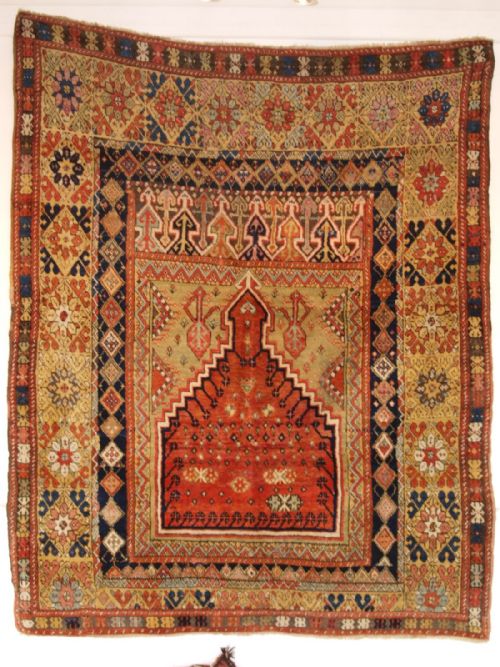
Nineteenth Century Turkish Carpet
Nineteenth century turkish carpet pieces bring rich Anatolian warmth to a floor, offering deep historical character through traditional village and town weaving.
Nineteenth Century Turkish Carpet
When you search for a nineteenth century turkish carpet, you examine woven floor coverings spanning from the Victorian era back to eighteen hundred. The examples encountered on this page encompass various regional traditions including Ushak, Konya, Kirsehir, Ghiordes, Mut, Sivas, Antep, and Mujur.
These textiles appear as rugs, area rugs, and prayer rugs originating from Anatolia, displaying Ottoman styles that range from tribal to formal workshop designs. Buyers select these pieces to anchor a room with centuries of weaving heritage and authentic village artistry.
What varies in quality
Quality in a nineteenth century turkish carpet depends upon the finesse of the knotting, the depth and stability of the natural dyes, and the clarity of the regional design. Finer wool selection and careful preparation of dye materials elevate certain village and town pieces above standard production.
Preservation of the original pile, borders, and structural integrity separates superior examples from heavily restored or worn alternatives. The visual impact rests on how successfully the weaver balanced intricate prayer mihrabs or field geometries within traditional proportions.
Nineteenth Century Turkish Carpet Retail Price Guide 2026
Typical asking prices for nineteenth century turkish carpet among the pieces listed under this phrase on Sellingantiques today, from the lower quarter to the upper quarter. They describe what is for sale here now, not the wider market.
The inventory spans Victorian-era production alongside pieces dated precisely from eighteen hundred to nineteen hundred.
The Nineteenth Century Turkish Carpet Glossary
- Anatolian
- Pertaining to the geographic region of Asia Minor that constitutes the heartland of Turkish carpet production. This term covers both settled town workshops and nomadic tribal areas.
- Prayer rug
- A small rug featuring a mihrab niche design that indicates the direction of Mecca during daily prayers. These pieces often serve as compact devotional items.
- Natural dye
- Colouring matter derived from plants, insects, and minerals rather than synthetic chemical agents. These dyes age gracefully to develop a rich patina over decades.
- Kilim
- A flatwoven carpet or rug produced without a pile by tightly interweaving warp and weft threads. Mut examples represent this distinct non-pile technique.
- Ushak
- A historic town in western Anatolia renowned for large-scale carpets and distinctive floral or medallion designs. Ushak production represents a major pillar of Turkish weaving.
Nineteenth Century Turkish Carpet: Frequently Asked Questions
Where were these carpets made?
These textiles originate from various regions across Anatolia, encompassing central, southern, and western weaving centres. Specific towns and districts like Ushak, Sivas, and Mujur each developed distinct aesthetic traditions.
Village workshops produced bolder, geometric styles, while urban centres favoured refined floral motifs and expansive room-size formats.
What materials make up the pile?
The pile is predominantly spun wool, occasionally supplemented by soft angora wool for added texture and sheen. Foundations rely on cotton or wool warps and wefts to provide structural support.
Natural dyes colour these fibres, ensuring the wool retains a rich visual depth that evolves gracefully as the carpet ages.
How should I care for an antique rug?
Protect the textile by placing it in low-traffic areas away from direct, harsh sunlight to prevent natural dye fading. Regular, gentle vacuuming without a rotating brush roll helps remove embedded dust without damaging fragile antique fibres.
Consult a specialist in historic textiles for professional cleaning rather than attempting wet washing at home.
What distinguishes Ushak carpets?
Ushak carpets are celebrated for their monumental scale, luminous wool, and sophisticated use of soft madder reds, saffron yellows, and pale blues. These workshop pieces often feature grand central medallions or sprawling floral sprays.
Their distinct aesthetic made them highly sought after by European and American collectors throughout the nineteenth century.