


Nineteenth Century Terracotta
Nineteenth century terracotta brings sculptural warmth to an interior through fired earth modelled into classical figures, portrait busts and garden statues.
Nineteenth Century Terracotta
Nineteenth century terracotta encompasses sculpted figures, portrait busts and garden ornaments created during the Victorian era and the decades spanning the late nineteenth century. These pieces reflect the period fascination with classical antiquity, mythology and naturalism.
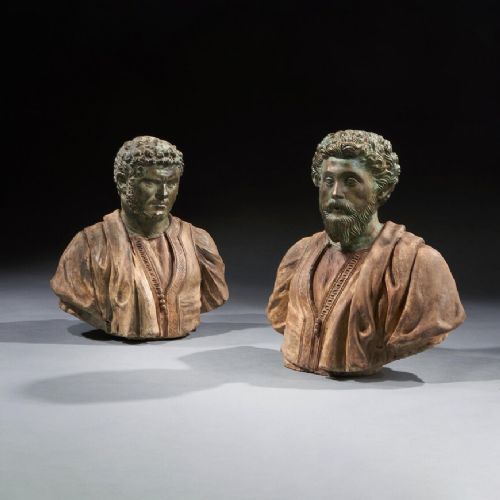
The objects represented on this page range from portrait busts of Roman emperors to figural sculptures of mythological figures and fisher girls. Formats include both standalone sculptures and larger architectural or garden pieces.
Materials and Technique
Makers shaped refined clay and earthenware before firing the pieces in kilns to achieve the characteristic porous, reddish-brown ceramic body. Certain works received a bronzed or painted surface treatment to mimic heavier metal or stone.
Modelling required considerable skill from the sculptor to retain crisp detail in the damp clay prior to firing. Factories and individual modellers utilised moulds or hand-sculpting methods depending on the intended scale and edition size.
Listings feature nineteenth century terracotta alongside majolica jardinières, ceramic animal sculptures and earthenware jars from Victorian Europe.
Assessing Quality
Quality rests in the crispness of the modelling and the sensitivity of the facial expressions and drapery. Superior pieces capture fine anatomical details and textures without losing definition during the firing process.
The reputation of the maker or foundry dictates the standing of a sculpture within the marketplace. Well-known European ceramic houses and documented sculptors command greater attention than anonymous factory output.
Richard Avrilli·Goldscheider pottery·Bernard Bloch
The Nineteenth Century Terracotta Glossary
- Terracotta
- An unglazed or glazed fired ceramic made from coarse or refined clay. The term translates from Italian as baked earth.
- Bust
- A sculpted or cast representation of a person's head, shoulders and upper chest. This format proved popular for depicting historical rulers and classical figures.
- Earthenware
- Pottery fired at lower temperatures than stoneware or porcelain, remaining porous unless glazed. It serves as the primary material base for these sculptural works.
- Grand Tour
- A cultural journey undertaken by wealthy young Europeans to explore the art and antiquity of Italy. Souvenirs from these travels included small sculptures and architectural studies.
Nineteenth Century Terracotta: Frequently Asked Questions
How do I clean nineteenth century terracotta?
Dust the porous surface gently with a soft, dry brush to prevent dirt settling into the microscopic pores of the fired clay. Avoid liquid cleaners entirely, as moisture can penetrate the unglazed material and cause structural degradation over time.
Keep the sculpture in a stable indoor environment away from excessive humidity or direct moisture sources. Proper placement protects the fragile ceramic body from accidental impacts and dampness.
Where were these terracotta sculptures made?
Continental European workshops and major potteries produced the majority of these sculptural works during the Victorian period. Factories in France, Germany and Italy dominated the commercial output of figures and busts.
Individual artists also modelled independent pieces for exhibition and private commission. These studio works often bear signatures or foundry stamps on the base.
Are these pieces glazed?
Most nineteenth century terracotta remains unglazed to preserve the natural matte texture of the fired red earthenware. This porous surface allowed makers to achieve sharp details during the modelling process.
Some examples received subsequent surface treatments such as paint or bronzing powder. These finishes altered the appearance to resemble cast bronze or carved stone.
How can I identify the subject of a bust?
Portrait busts frequently depict historical Roman emperors, mythological figures or classical literary subjects. Inscriptions on the plinth or reverse often provide the name of the sitter.
Stylistic cues such as laurel wreaths or specific armour details help distinguish classical emperors like Marcus Aurelius or Caracalla. Contemporary portraiture from the period often relies on archival records or foundry catalogues for exact identification.