

Nineteenth Century Table Lamp
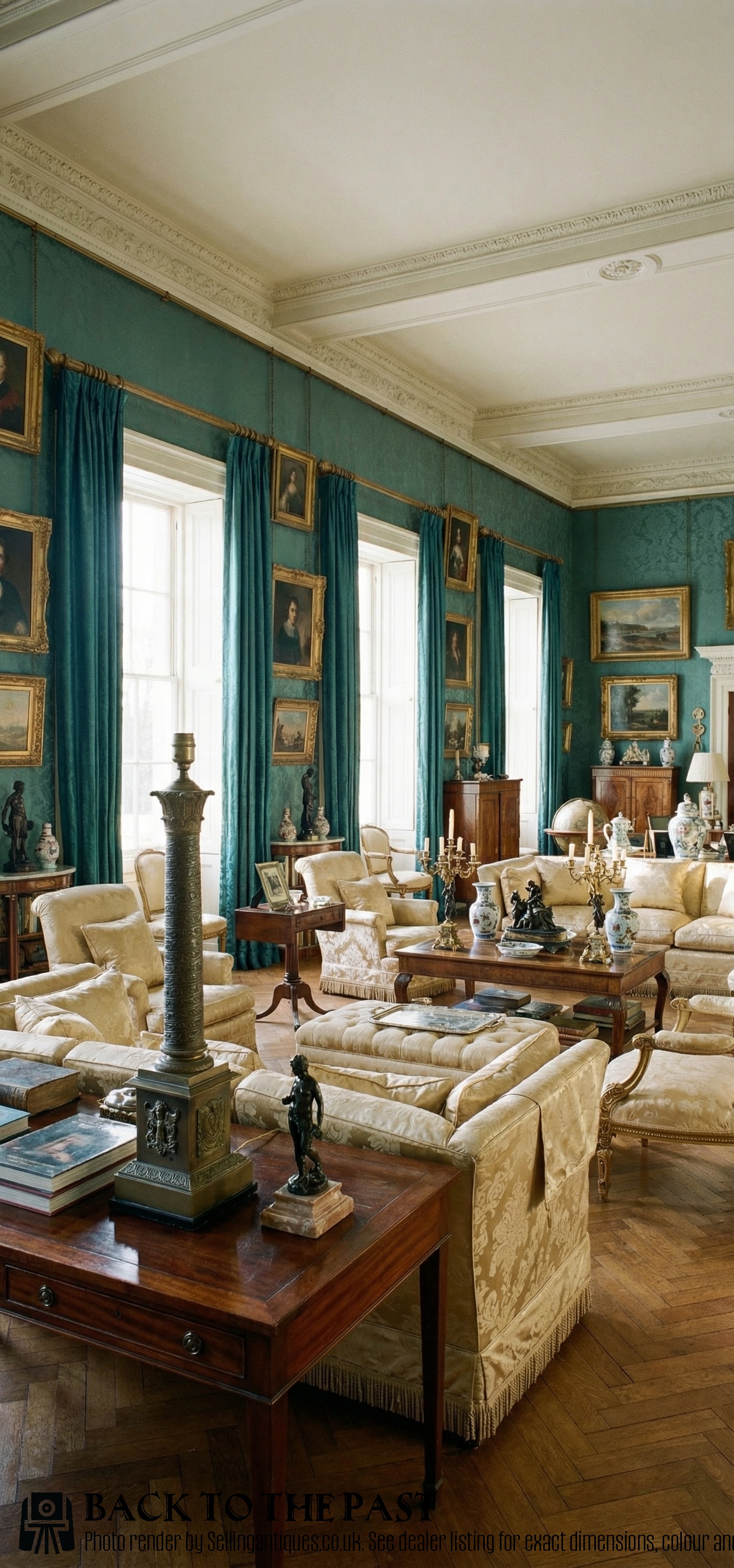
A nineteenth century table lamp brings weight and steady illumination to a room, drawing on classical and oriental forms adapted for domestic use.
What the nineteenth century table lamp is
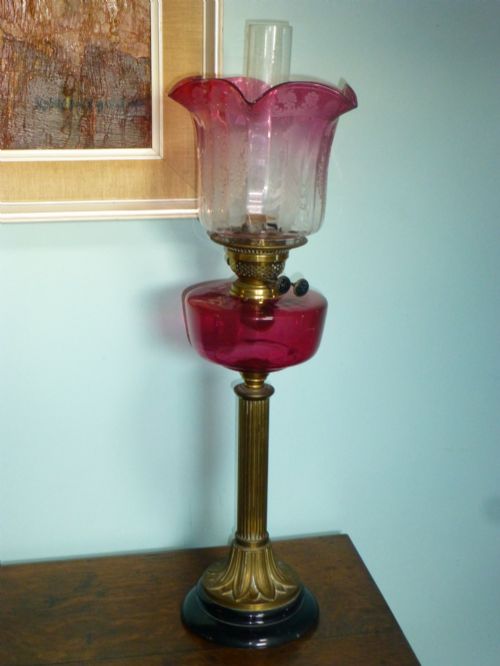
A nineteenth century table lamp takes many forms, ranging from towering Corinthian columns to converted oriental vessels and glass vessels. Buyers searching for a nineteenth century table lamp encounter items shaped by William IV, Victorian, Neoclassical, and French Empire tastes.
The materials span gilt bronze, brass, silver plate, porcelain, enamel, and decalcomania glass. Many examples originate from the conversion of earlier vases, jars, and columns into functional electric or oil lighting.
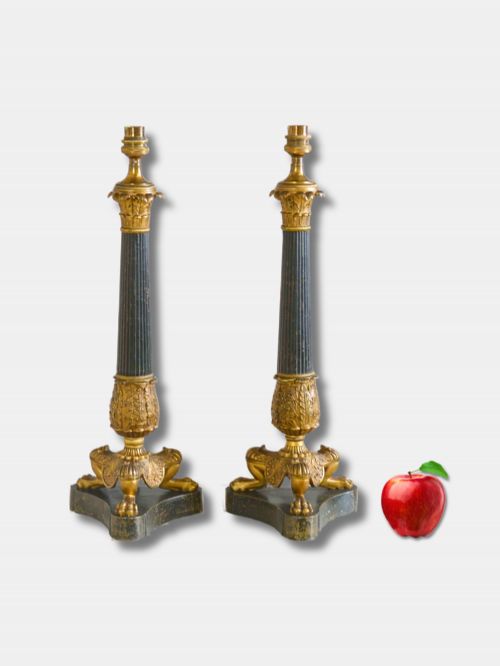
Architectural columns in patinated brass or gilt bronze dominate the current selection, while earlier archive pieces lean towards decorated glass and converted jars. Each variation reflects the evolving domestic interior of the period.
Materials and construction
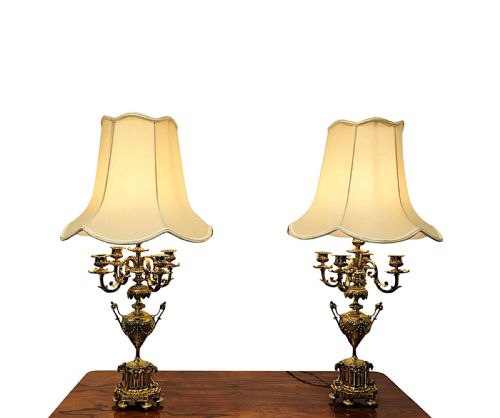
Makers utilised cast metals such as brass, gilt bronze, and ormolu to build sturdy structural bases, often incorporating faux lapis lazuli or painted surfaces for added visual depth. Corinthian capitals and classical column shafts required precise metalworking and turning.
Ceramic and glass bodies, including porcelain and decalcomania glass, were frequently fitted with gilt mounts to adapt them for lighting use. Oriental jars and vases were similarly repurposed, combining imported ceramics with domestic metal mounts.
Retail Price Guide 2026
Typical UK retail prices for nineteenth century table lamp, calculated from the Sellingantiques database of over a million retail prices indexed since 2003. This retail price guide relies exclusively on Sellingantiques data; no external sources or auction records are used, so the figures do not describe the wider market.
Listings feature items from the nineteenth century using brass, porcelain, gilt bronze, and decalcomania glass.
Distinctions in quality
Quality rests in the crispness of the cast ornamentation, such as the sharp acanthus leaves on a Corinthian capital or the fine detail of gilt bronze mounts. Heavier gauge metals and rich, uncompromised patination distinguish the finest pieces from simpler productions.
The coherence of the conversion matters deeply, as does the integration of mounts onto porcelain or glass bodies. Superior examples maintain structural harmony between the original vessel or column and its later lighting fittings.
The Nineteenth Century Table Lamp Glossary
- Corinthian column
- An architectural support featuring an ornate capital decorated with rows of acanthus leaves. This classical form appears frequently in metal table lamp bases.
- Decalcomania
- A technique of transferring printed designs onto glass surfaces from prepared paper. Nineteenth century lamps often used this method on glass bodies.
- Ormolu
- Finely ground high-carat gold applied to a bronze base using a mercury amalgamation process. It yields a rich, warm metallic finish seen on French Empire pieces.
- Famille Verte
- A Chinese porcelain palette dominated by green enamel colours. Vases decorated in this style were frequently mounted as lamps in the nineteenth century.
Frequently Asked Questions
What styles define these lamps?
The selections span William IV, Victorian, Chinoiserie, Neoclassical, and French Empire aesthetics.
These varied origins show how diverse cultural influences shaped domestic lighting during the period.
Were these lamps originally electric?
Most surviving examples started as oil lamps, candlesticks, or decorative vessels before later conversion.
Metal columns and porcelain vases were adapted to house electrical wiring while preserving their decorative exteriors.
What materials are common?
Common materials include gilt bronze, brass, silver plate, porcelain, enamel, and decalcomania glass.
Combination pieces often pair ceramic bodies with metal bases and mounts.
How do I identify a column lamp?
Column lamps typically feature a vertical shaft resting on a stepped base, topped with a classical capital.
Materials range from patinated brass to gilt bronze with decorative faux stone elements.